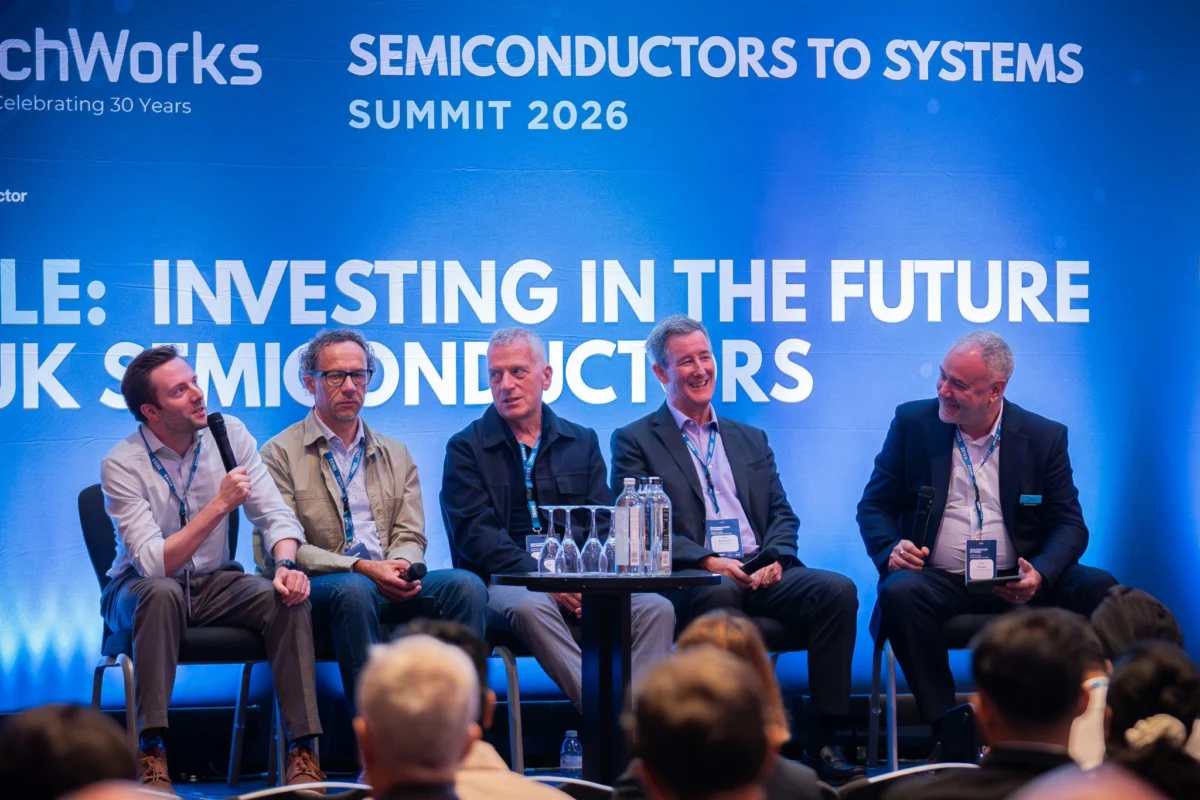
In a season typically defined by the quietude of the European summer, London became the epicenter of a high-stakes industrial transformation. Over 700 semiconductor executives, researchers, and policymakers descended upon the capital for the inaugural TechWorks Semiconductors to Systems Summit (S2S26). The event did more than just fill a conference hall; it served as a powerful statement of intent for the U.K. deep-tech sector, signaling a departure from fragmented silos toward a unified, national strategy for chip sovereignty and innovation.
As the industry grapples with global supply chain complexities, geopolitical shifts, and the relentless demand for advanced compute power, the S2S26 summit provided a rare platform for the U.K. to showcase its resilience. The event, which coincided with the 30th anniversary of the National Microelectronics Institute (NMI)—the lineage from which TechWorks evolved—highlighted a critical pivot in how the British semiconductor industry organizes itself, lobbies for support, and engages with the international community.
A Unified Voice: The Birth of the UKSIA
The most significant development to emerge from the summit was the announcement of the UK Semiconductor Industry Association (UKSIA). For decades, the U.K. semiconductor landscape has been a constellation of specialized but often disconnected communities, including the NMI, the Automotive Electronic Systems Innovation Network (AESIN), and the IoT Security Foundation (IoTSF). While these groups successfully nurtured niche interests, the industry lacked a singular, authoritative body capable of engaging effectively with the levers of government.

Charles Sturman, CEO of TechWorks, described the formation of the UKSIA as a "natural evolution" of the ecosystem. "The key here is that while semiconductors are all-pervasive, there are organizations in aerospace, defense, and cybersecurity where semiconductors are not their primary focus, but they have a critical interest in them," Sturman explained in an interview with EE Times.
The UKSIA will function as a centralized umbrella, designed to streamline government dialogue and provide a coherent, singular route for industry members to access roadmaps and funding. Crucially, the association will work in tandem with the publicly funded UK Semiconductor Centre (UKSC). By aligning industry needs with the national interest mandates of the UKSC, the UKSIA aims to provide a credible, unified counterpart for international partnerships. Despite this consolidation, specialized interest groups like AESIN and IoTSF will continue to operate, ensuring that domain-specific technical expertise remains robust while the broader industry benefits from a collective political and strategic voice.
Chronology of an Industrial Pivot
The path to S2S26 is rooted in a long-standing desire to modernize the U.K.’s hardware ecosystem. The journey from the original NMI, founded in 1996, to the launch of the UKSIA reflects a broader shift from basic microelectronics research toward the complex, interconnected "systems-to-silicon" approach required by modern AI and autonomous infrastructure.

- 1996: The National Microelectronics Institute (NMI) is established, laying the foundation for what would become a key networking body for the British chip industry.
- 2010s: TechWorks expands its scope, fostering the creation of specialized communities like AESIN to address the rising importance of automotive electronics.
- 2023-2024: Heightened global awareness of chip shortages and supply chain fragility leads the U.K. government to place a renewed focus on domestic semiconductor capabilities, culminating in the launch of the UK Semiconductor Centre (UKSC).
- September 2026: The S2S26 Summit marks the culmination of these efforts, with the formal announcement of the UKSIA, creating a single industry body to interface with the UKSC.
This progression mirrors a global trend: nations are moving away from laissez-faire semiconductor policies toward active state-industry partnerships. The S2S26 summit was not merely a retrospective celebration of the NMI’s 30-year history, but a forward-looking operational launch for the UKSIA.
The Data Behind the Hype: A 65% Funding Surge
Beyond the rhetoric of unity, the tangible metrics of the U.K. chip sector reveal a compelling growth story. Data pulled from Tracxn shows that U.K. semiconductor companies secured approximately $432.9 million in funding between January 1, 2026, and September 3, 2026. This represents a staggering 65% increase compared to the total $262.3 million raised in the entirety of 2025.
This surge in capital suggests that investors are increasingly confident in the U.K.’s deep-tech value proposition. The funding is not concentrated in a single sub-sector; rather, it is flowing into a diverse array of companies spanning power electronics, AI accelerators, and advanced packaging.

This financial momentum was the backdrop for the four core tracks of the S2S26 summit: Build, Create, Secure, and Scale. These tracks were designed to map the lifecycle of modern technology:
- Build: Focusing on advanced materials, fabrication, and manufacturing processes.
- Create: Addressing silicon design, software co-development, and IP creation.
- Secure: Tackling the critical need for post-quantum security and hardware-level protection.
- Scale: Exploring investment pathways and the transition from prototype to mass-market integration.
Official Perspectives and Strategic Implications
The industry’s enthusiasm for S2S26 was mirrored by the presence of international partners from Japan, Germany, the Netherlands, and Canada. This international participation is critical; no nation can dominate the semiconductor value chain in isolation.
"The response to S2S26 demonstrates the extraordinary level of ambition and capability that exists across U.K. deep tech," said Sturman. "What was particularly striking was the sense of common purpose: people want to work together, and there is real confidence about what the U.K. can achieve."

The strategic implication of this gathering is clear: the U.K. is attempting to bridge the "valley of death" that often separates academic research from commercial system integration. By connecting researchers, designers, and manufacturers through the UKSIA/UKSC nexus, the U.K. hopes to become a more agile player in the global semiconductor market.
The challenge now shifts to execution. As the industry moves toward AI-enabled manufacturing, chiplets, and software-defined architectures, the U.K. must prove that its new, centralized structure can deliver faster results than the fragmented, albeit innovative, approaches of the past.
The Road Ahead: Maintaining Momentum
The success of S2S26 highlights a broader reality: the semiconductor industry is no longer just about chips—it is about the convergence of AI, photonics, and cybersecurity into a single, seamless architecture. The summit served as a melting pot for these disciplines, with discussions ranging from GaN power semiconductors to digital twins and autonomous systems.

While events like Hardware Pioneers Max and Microelectronics U.K. remain vibrant parts of the ecosystem, the S2S26 has established itself as the strategic anchor for the industry. The U.K. has spent decades building the individual components of a world-class semiconductor sector; the creation of the UKSIA is the first step in assembling those components into a functional, competitive system.
For the participants at the London summit, the message was clear: the era of working in isolation is over. In an industry where technological interdependency is the new normal, the U.K.’s ability to act as a single, coordinated entity will likely determine its success on the global stage. As the industry looks toward the remainder of 2026 and beyond, the focus will shift from the energy of the summit to the long-term impact of these new institutional structures on U.K. competitiveness.
The momentum is there, the funding is flowing, and the organizational framework is now in place. For the British semiconductor industry, the next chapter of its 30-year story promises to be its most critical.