Twenty-five years ago, in a theater filled with the hum of anticipation, Steve Jobs unveiled the "Digital Hub" strategy. It was a vision that positioned the Mac as the sun around which all other digital devices orbited—a central manager for our cameras, music players, and handhelds. Today, that vision has undergone a radical metamorphosis. The peripherals have dissolved into the glass of the smartphone, and the Mac is no longer the sole master of the domain. In the era of Artificial Intelligence, the iPhone has ascended to become the "Intelligent Personal Hub"—a central manager not just of our devices, but of our lives.
During Apple’s highly anticipated "Surprise and Shine" event this week, CEO John Ternus underscored this evolution. With the launch of the new iPhone 18 lineup and the much-rumored iPhone Duo, Apple has signaled that it is no longer just selling hardware; it is selling an AI-integrated lifestyle designed to manage the complexity of the modern world.
The Evolution of the Digital Hub
"As we look ahead, we see a future filled with enormous discovery and transformation," Ternus stated during his opening keynote. "AI makes entirely new kinds of experiences possible. An AI can become even more useful when it brings together your life with the apps, services, and products you use every day. And this means the product at the center of your experiences becomes even more essential—what I like to think of as an intelligent personal hub."
This is the cornerstone of the new Apple philosophy. By leveraging "Siri AI" and contextual intelligence, the iPhone is shifting from a passive tool into an active agent. Users can now manipulate complex files, orchestrate network tasks, and organize social calendars using nothing more than natural language commands. The breakthrough lies in the intersection of massive computational power and a deep, privacy-focused understanding of the user’s personal context.
Chronology of a Transformation
The journey to this moment was not without its hurdles. For years, critics questioned whether Apple could maintain its privacy-first ethos while competing in the data-hungry arena of generative AI.
- The Foundation: In the early 2000s, Apple established its dominance by tethering devices to the Mac.
- The Transition: Throughout the 2010s, the iPhone gradually cannibalized the utility of standalone cameras, GPS units, and media players.
- The AI Pivot: In recent years, Apple focused its R&D on on-device processing, ensuring that AI tasks are performed locally to protect user data.
- The "Surprise and Shine" Event: This week, Apple finally unveiled the hardware ecosystem designed to run this localized, high-performance AI: the iPhone 18 Pro series and the company’s first-ever foldable device, the iPhone Duo.
The Hardware Portfolio: Power and Precision
The hardware lineup introduced at the event was designed to accommodate the heavy lifting required by modern AI. The iPhone 18 Pro series remains the standard-bearer for performance, featuring the next generation of Apple Silicon, which the company claims is the most potent mobile processor in existence.
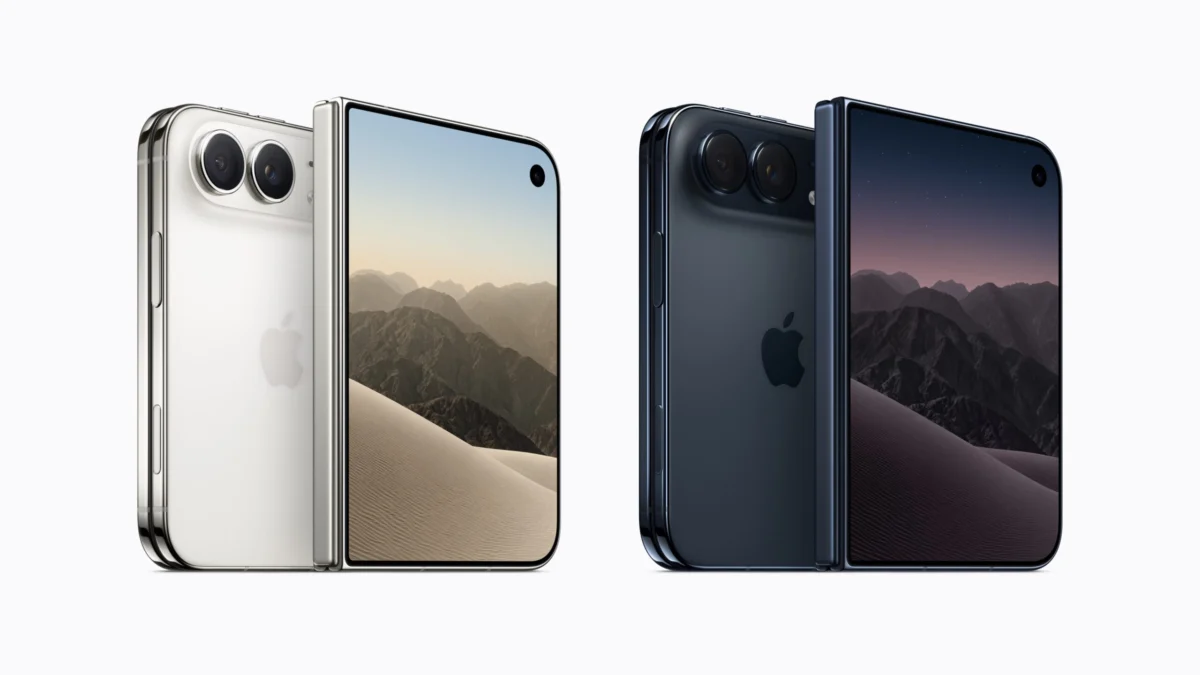
However, the spotlight was indisputably stolen by the iPhone Duo. As Apple’s first foray into the foldable market, the device serves as a physical manifestation of the "productivity powerhouse" concept. With a starting price of $1,999, Apple has aggressively positioned itself against competitors like Samsung. While the Galaxy Z Fold 8 starts at a lower price point, Apple’s Duo offers superior build quality, including an IP68-rated dust and water resistance rating that far exceeds the industry standard.
Detailed Pricing and Specs
- iPhone 18 Pro (Entry): $1,199
- iPhone 18 Pro Max (2TB): $2,499
- iPhone Duo (Entry): $1,999
- iPhone Duo (2TB): $3,199
The decision to keep accessory pricing stable while introducing these high-end devices suggests that Apple is banking on high-margin hardware to fund its AI services ecosystem.
Implications for the Tech Ecosystem
The introduction of the iPhone Duo poses a significant question for the industry: Can a foldable device replace the tablet?
The technical specifications of the Duo, combined with the power of the latest mobile processor, suggest that the device is capable of handling workflows previously reserved for iPads or laptops. As app developers integrate deeper support for Siri AI, the utility of a pocket-sized, folding display becomes clear. With over 300,000 apps already optimized for Siri AI and a daily volume of 2.5 billion requests, the infrastructure for this "intelligent hub" is already deeply embedded in the consumer experience.
IDC analyst Francisco Jeronimo noted the significance of this shift: "Apple entered the foldable market and, in one keynote, set the price and the standard every rival will now be measured against. It is a direct test of whether Apple can use design, ecosystem integration, and premium positioning to reshape a segment that has so far remained selective."
Privacy as a Competitive Moat
Perhaps the most critical aspect of Apple’s AI strategy is the "brake" it is putting on data exposure. While competitors race to cloud-based AI models that often require harvesting vast amounts of personal user data, Apple is doubling down on on-device processing. This privacy-centric approach is intended to be the foundational "moat" that protects Apple from the regulatory and ethical scrutiny facing other tech giants.
By keeping the "intelligent personal hub" local to the device, Apple is betting that consumers will pay a premium not just for hardware, but for the assurance that their AI-driven digital lives remain their own.
A Future for the Affluent and the Professional
It is important to acknowledge that the iPhone Duo is not, at this stage, a mass-market device. At a starting price of $1,999, it is targeted toward C-suite executives, creative professionals, and early adopters—the same demographic that turned the original iPad into a global phenomenon.
History has shown that Apple’s strategy often follows a "top-down" trajectory. By introducing the most advanced technology to the premium segment, Apple creates a blueprint that eventually trickles down into more affordable models. In five years, the "Duo" form factor may well be the standard for the average consumer, but for now, it stands as a testament to the company’s ambition to redefine mobile computing.
Conclusion: The Path Forward
Apple has successfully transitioned from the era of the "Digital Hub" to the era of the "Intelligent Personal Hub." By integrating advanced AI directly into the fabric of the iPhone, the company is attempting to make the smartphone the ultimate, indispensable partner in our daily lives.
As John Ternus remarked, "iPhone sits at the center of an amazing ecosystem of intelligent features and experiences that work seamlessly across the products you use every day." While the iPhone Duo may be the flashy new star of the show, the true story is the underlying intelligence—the ability of the device to anticipate, organize, and execute on behalf of the user. Whether or not the market fully embraces this vision remains to be seen, but one thing is certain: Apple is no longer just managing your devices; it is setting the stage to help manage your life.