The integration of artificial intelligence into the Radio Access Network (RAN) is poised to usher in a significant investment cycle for mobile operators, promising enhanced capacity, operational efficiencies, and a transformed customer experience. This technological leap, moving beyond AI’s established roles in customer service and network planning, represents a pivotal moment for the telecommunications industry.
The core business proposition for AI-RAN is compelling: leveraging artificial intelligence to extract greater capacity from critically expensive spectrum, automate complex network operations, elevate customer satisfaction, and potentially repurpose mobile infrastructure as distributed AI computing power. This paradigm shift is not merely theoretical; leading operators are already showcasing tangible benefits, moving AI-RAN from the realm of possibility to demonstrable reality.
The Substantial Opportunity: A Shifting Investment Landscape
The potential for AI-RAN is substantial, with market analysts forecasting significant revenue growth. Dell’Oro Group, a respected industry research firm, projects cumulative AI-RAN revenue to reach an impressive $35 billion between 2026 and 2030. However, it’s crucial to note that this growth is not expected to inflate the overall RAN market size. Instead, AI-RAN spending is likely to augment or supplant existing conventional network investments. This suggests that operators will be strategically reallocating capital, prioritizing AI-driven enhancements over broad infrastructure expansions.
The Dell’Oro Group’s AI-RAN market forecast raises a critical question for mobile operators: can the gains in network capacity and operational savings generated by AI justify the increased expenditure on software, computing power, and energy consumption? This economic calculus will be the determining factor in the widespread adoption of AI-RAN technologies.
A Chronicle of Innovation: Operators Paving the Way
The journey of AI-RAN is marked by a series of groundbreaking initiatives by leading mobile operators, each contributing to a growing body of evidence supporting its efficacy.
SoftBank: Achieving Tangible Spectral Efficiency Gains
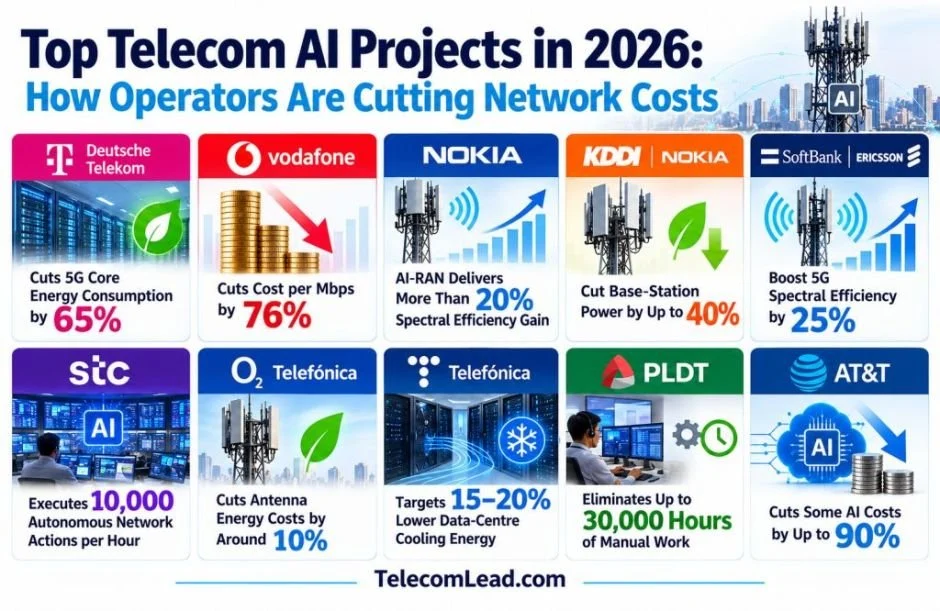
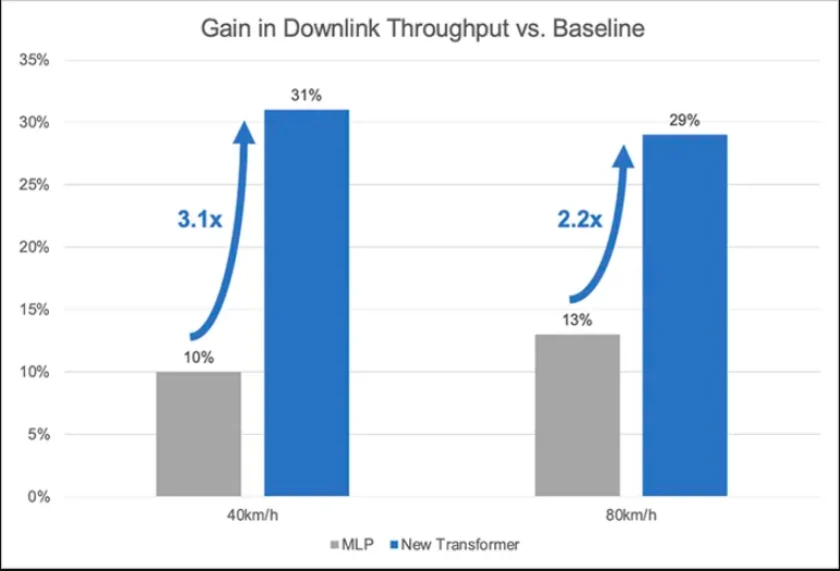
One of the most compelling real-world demonstrations of AI’s impact on existing 5G networks comes from SoftBank. In August 2026, in collaboration with Ericsson, SoftBank conducted a trial of an AI-native scheduler on its 5G network. The results were remarkable. Compared to traditional scheduling methods, the trial achieved an extraordinary improvement of up to 25% in spectral efficiency and a significant boost of up to 50% in downlink user throughput.
Crucially, across all evaluated locations, both spectral efficiency and downlink throughput saw a consistent improvement of approximately 10%. This SoftBank-Ericsson commercial 5G AI trial underscores the near-term business case for AI-for-RAN. Spectrum is one of the most significant investments for mobile operators. By enabling them to carry more traffic over the same frequencies and with existing radio equipment, AI can potentially delay the need for costly capacity upgrades in congested areas and reduce the cost per bit of data transmission.
Nokia: Ambitious Targets for Spectrum Maximization
The long-term potential for capacity enhancement through AI-RAN is even more pronounced. In July 2026, Nokia launched its AI-native RAN platform, a strategic integration of its anyRAN software with NVIDIA’s Aerial AI-RAN platform. Nokia claims that its AI-driven radio technologies have already demonstrated spectral efficiency improvements exceeding 20%.
The company has set ambitious targets, aiming for a 50% gain by 2027 and a staggering increase of over 100% by 2028. This effectively means Nokia is striving to double the capacity available from operators’ existing spectrum assets. The Nokia AI-native RAN platform is designed with flexibility in mind, supporting various migration paths. These include accelerated computing for existing AirScale infrastructure, standalone GPU-powered AI-RAN nodes, and cloud-native deployments, offering operators a tailored approach to AI integration.
If operators can achieve these gains economically in their commercial networks, AI could fundamentally alter the traditional correlation between traffic growth and network capital expenditure (CapEx). Instead of defaulting to acquiring more spectrum, radios, or cell sites to address capacity issues, operators may increasingly rely on software and AI processing to boost capacity. However, a critical consideration remains: telecom operators will need to meticulously weigh the value of this enhanced capacity against the costs associated with GPUs, software subscriptions, and the increased demand for computing power.
NTT DOCOMO: Elevating Customer Experience Through Predictive AI
NTT DOCOMO, in partnership with Samsung, is exploring AI-RAN at the individual subscriber level, focusing on enhancing customer experience. Their innovative technology employs AI to understand each user’s specific radio conditions, movement patterns, and service requirements. This allows the network to proactively predict potential service degradation and automatically select the optimal network configuration for that user.
A validation conducted in January 2026, utilizing network data and a local 5G trial environment, demonstrated a significant reduction in communication-speed degradation. The frequency of such degradation dropped from 13.1% to 7.2%, an improvement of 5.9 percentage points. The DOCOMO-Samsung user-level AI-RAN project highlights that the return on investment for AI-RAN does not solely depend on increasing overall network capacity.
Improved network quality can translate into fewer customer complaints related to congestion, while simultaneously supporting bandwidth-intensive services like video streaming, online gaming, and video conferencing. Furthermore, predictive optimization is likely to become increasingly vital as operators transition towards autonomous 5G-Advanced and future 6G networks.
Deutsche Telekom: Slashing Network Response Times from Hours to Minutes
Operational expenditure (OpEx) presents another significant business case for AI-RAN. Deutsche Telekom, leveraging Google Cloud technology, has developed its RAN Guardian Agent. This agentic AI system is designed to identify traffic events, detect potential network problems, and autonomously adjust network parameters.
Since its deployment in November 2025, RAN Guardian has achieved a remarkable feat: reducing the time required to manage major network events from hours to approximately one minute, an improvement exceeding 95%. In its initial month of operation, the system autonomously initiated over 100 remediation actions. During Germany’s Carnival season in 2026, the system identified 237,000 events. It detected around 130 events and parades, each anticipated to draw over 10,000 attendees, and proactively checked 611 mobile sites. Only five sites experienced peak-load conditions that necessitated optimization.
Following its successful deployment in Germany, Deutsche Telekom is expanding RAN Guardian into other European markets, beginning with the Czech Republic and Croatia. This autonomous RAN initiative by Deutsche Telekom illustrates a crucial economic opportunity presented by AI-RAN: operators may be able to manage increasingly complex networks without a proportional increase in engineering resources, leading to substantial cost savings.
T-Mobile US: Unlocking New Revenue Streams
T-Mobile US is looking beyond mere cost reduction, exploring the potential for AI-RAN to generate new revenue. In collaboration with NVIDIA, Ericsson, and Nokia, T-Mobile is developing AI-RAN technologies that integrate radio processing with accelerated computing. The operator believes that AI can optimize spectral efficiency and capacity in real-time, anticipate congestion, and proactively allocate network resources.
The longer-term vision is to utilize this distributed infrastructure for third-party AI workloads. Potential applications are vast and include the deployment of large language models, vision-language models, industrial digital twins, robot fleet orchestration, spatial computing, and interactive digital avatars.
If telecom operators can successfully monetize spare AI computing capacity at the network edge, AI-RAN could become a significant revenue generator, complementing its cost-reduction benefits. While this model is less proven than AI-driven network optimization, it represents a critical strategic differentiator between AI-RAN and traditional RAN upgrades.
Navigating the Challenges: Energy and GPU Costs
The primary concern challenging the widespread adoption of AI-RAN is the potential for increased AI computing costs to offset the savings. While GPU-based RAN solutions offer enhanced programmability and the ability to share infrastructure between connectivity and AI workloads, deploying accelerated computing across mobile networks could also lead to higher equipment and electricity expenses.
This economic reality suggests that the initial large-scale opportunities for AI integration may lie in AI-for-RAN applications rather than a complete overhaul to GPU-based AI-RAN. Operators can strategically introduce AI into areas such as scheduling, interference management, traffic prediction, fault detection, energy optimization, and capacity planning, while largely retaining their existing radio and baseband infrastructure.
Dell’Oro’s projections indicate that near-term adoption will likely be dominated by AI-for-RAN solutions, single-purpose applications, distributed RAN, and non-GPU architectures. Consequently, AI-RAN is expected to evolve gradually through software upgrades and targeted accelerated computing deployments, rather than through wholesale network replacement.
The Economic Imperative: From Theory to Real-World Networks
The evidence emerging from operators in 2026 points to four distinct business cases for AI-RAN:
- Capacity Enhancement: SoftBank’s achievements in spectral efficiency and downlink throughput demonstrate the potential for significant capacity gains.
- Customer Experience Improvement: NTT DOCOMO’s success in reducing communication-speed degradation highlights the direct impact on user satisfaction.
- Operational Savings: Deutsche Telekom’s dramatic reduction in network event management times showcases substantial OpEx efficiencies.
- New Revenue Streams: T-Mobile US is pioneering the exploration of AI-RAN infrastructure as a platform for enterprise AI workloads, opening up new monetization opportunities.
Nokia’s ambitious target of over 100% spectral efficiency improvement by 2028 introduces a potentially transformative fifth element: the ability to extract dramatically more value from spectrum assets that operators already own.
With AI-RAN revenue forecasted to reach $35 billion cumulatively by 2030, the technology is clearly moving toward commercial scale. However, operators are unlikely to adopt AI-RAN solely because it introduces GPUs or AI into their mobile infrastructure. The ultimate determinant of success will be the architecture that demonstrates a measurable reduction in the cost per bit of data delivered.
For global mobile operators, the decision to invest in AI-RAN will hinge on a comprehensive assessment of whether the combined benefits – higher spectrum efficiency, delayed network expansion, reduced operating costs, improved customer experience, and new edge-AI revenue opportunities – can demonstrably outweigh the additional costs of computing, software, and energy. The AI-RAN revolution is not just about technological advancement; it’s about a fundamental reshaping of the economic landscape for mobile communications.