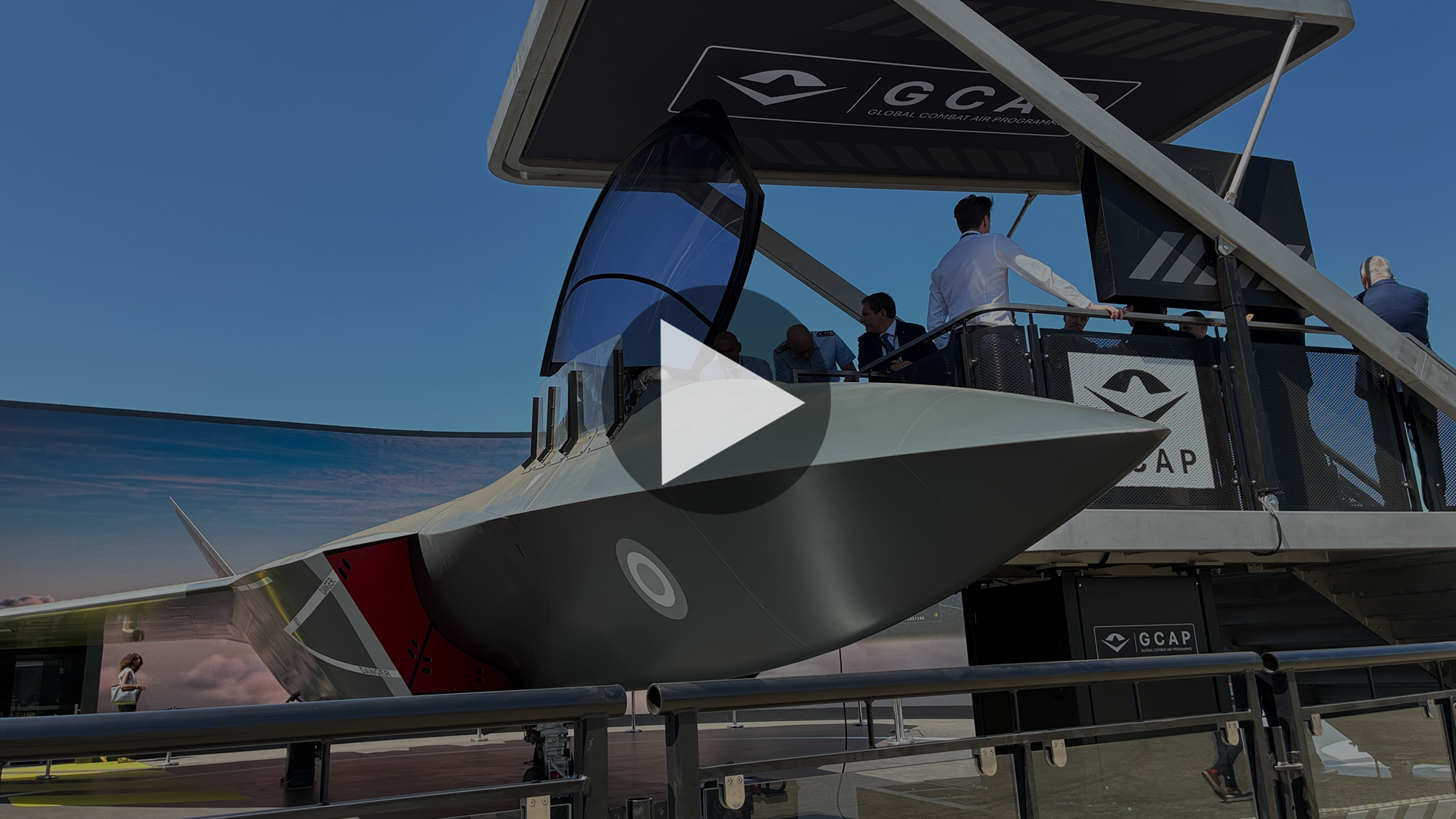
The geopolitical map of European air defense is undergoing a seismic shift. For years, the Future Combat Air System (FCAS)—the ambitious tri-national project led by France, Germany, and Spain—was viewed as the cornerstone of the continent’s quest for strategic autonomy. However, the program’s recent collapse has sent shockwaves through the defense industry, effectively leaving the Global Combat Air Programme (GCAP)—a partnership between the United Kingdom, Italy, and Japan—as the sole viable path toward a sixth-generation manned platform.
But in the high-stakes world of aerospace engineering and national security, nature abhors a vacuum. As the dust settles on the FCAS wreckage, a complex, multi-faceted strategy is emerging across the continent. European airpower is no longer tethered to a single monolithic project; instead, it is diversifying. From aggressive upgrades to legacy fleets and the omnipresent dominance of the American F-35, to the potential emergence of independent Swedish designs and a renewed focus on domestic sovereign production, the continent is entering a new era of "Airpower 2.0."
Chronology of a Strategic Pivot
To understand the current volatility, one must look at the timeline of European defense cooperation, which has been characterized by high ambitions followed by industrial friction.
- 2017-2018: The Genesis of Cooperation. President Emmanuel Macron and Chancellor Angela Merkel announce the FCAS initiative, aiming to build a "system of systems" that would define European aerial dominance through the 2040s and beyond.
- 2019-2021: The Rise of GCAP. Meanwhile, the UK, looking for post-Brexit defense relevance, joins forces with Italy and eventually Japan to launch the Tempest program, which later evolved into the GCAP.
- 2022-2023: Industrial Friction. FCAS begins to stall due to disagreements over intellectual property, work-share distribution between Dassault and Airbus, and diverging requirements regarding exportability and nuclear capabilities.
- Early 2024: The Collapse. Formal efforts to reconcile the industrial disputes within FCAS fail. While the individual nations continue to pursue localized defense goals, the integrated sixth-generation vision effectively dissolves.
- Present Day: The Diversification Era. European defense ministries are now in "re-evaluation mode," balancing the immediate necessity of current fleet maintenance against the long-term requirement for next-generation systems.
Supporting Data: The Current European Airpower Inventory
The reality of European airpower is that it remains a fragmented mosaic. While sixth-generation dreams dominate headlines, the actual operational capability rests on a mix of 4.5 and 5th-generation assets.
The F-35 Dominance
The Lockheed Martin F-35 Lightning II has become the de facto standard for many European NATO members. By 2030, the continent will host one of the largest concentrations of 5th-generation stealth fighters outside of the United States. Countries including Germany, Italy, the Netherlands, Belgium, Poland, and the UK have committed to the platform. This reliance on a US-made system creates a paradoxical dependency: while it ensures interoperability, it undermines the goal of European "strategic autonomy."
The "4.5 Generation" Bridge
Programs like the Eurofighter Typhoon and the Dassault Rafale are undergoing extensive mid-life updates (MLUs). These upgrades include AESA (Active Electronically Scanned Array) radars, new electronic warfare suites, and integration with advanced unmanned "loyal wingman" drones. These platforms are expected to remain the backbone of European air forces well into the 2040s, acting as a bridge to whatever follows them.
Saab’s Strategic Position
Sweden’s Saab, through its Gripen E program, remains a wild card. While many nations have opted for the F-35, the Gripen offers a lower cost-of-entry and a high degree of sovereign control—a major selling point for nations wary of the "black box" nature of American stealth systems.
Official Responses and Expert Analysis
In a recent roundtable discussion hosted by Breaking Defense, editors Aaron Mehta, Tim Martin, and Elisabeth Gosselin-Malo, joined by Douglas Barrie of the International Institute for Strategic Studies (IISS), dissected the aftermath of the FCAS dissolution.
"The collapse of FCAS is not the end of European airpower, but it is the end of the illusion that a single, unified European aerospace industrial base is a foregone conclusion," noted Douglas Barrie. "We are seeing a move toward ‘coalitions of the willing.’ Nations are prioritizing their immediate security requirements—often tied to the F-35—over the long-term, high-risk development of a bespoke sixth-generation jet."
Official statements from the French Ministry of the Armed Forces emphasize that France remains committed to the "Future Combat Air System" concept in principle, though it is now exploring bilateral partnerships that prioritize French industrial sovereignty. Conversely, UK officials have leaned heavily into the GCAP framework, touting the trilateral partnership with Japan and Italy as the "gold standard" for future industrial collaboration.
Implications for the Future of European Defense
The shift away from the FCAS model carries profound implications for the European industrial base and regional security.
1. The Fragmentation of Industrial Sovereignty
The failure to consolidate the European market means that competition will remain fierce. Instead of one European "super-champion" in aerospace, companies like Dassault, BAE Systems, and Saab will continue to compete for a shrinking pool of procurement dollars. This risks a "race to the bottom" regarding margins, potentially hindering R&D investment.
2. The Unmanned Revolution
The most significant takeaway from the roundtable was the consensus that the platform (the manned jet) is becoming secondary to the network (the system of systems). Future airpower will be defined by how well a manned aircraft can command a swarm of autonomous, attritable drones. The "Manned-Unmanned Teaming" (MUM-T) capability is now the primary metric of success for any sixth-generation effort. If a country cannot master AI-driven wingman integration, their fighter jets will essentially be obsolete, regardless of their stealth profile.
3. The Geopolitical Balancing Act
Europe is trapped in a classic dilemma: it needs the immediate, combat-proven capability of American stealth technology to deter aggression, yet it needs to develop its own industrial base to ensure that it isn’t beholden to shifting political winds in Washington. The result is a hybrid strategy where nations buy the F-35 to fill the current capability gap, while simultaneously investing in GCAP or domestic drone initiatives to secure the future.
4. Fiscal Realities
The cost of developing a sixth-generation platform is astronomical. With the global economy facing headwinds and social spending pressures, the appetite for massive defense budget increases is cooling. This reality will likely force a consolidation of programs even beyond what we see today. It is entirely possible that, by 2035, the GCAP program itself will face its own "FCAS moment" regarding cost-sharing and industrial requirements, leading to further mergers or pivots.
Conclusion: A Pragmatic Path Forward
The "European Airpower roundtable" highlights a maturing perspective within the defense establishment. The dream of a unified, singular European fighter program may have faltered, but the strategic necessity of maintaining a technological edge remains paramount.
As Europe moves forward, the focus will likely shift from building the "perfect" aircraft to building the most resilient ecosystem. This means prioritizing interoperability between disparate platforms, accelerating the development of unmanned combat aerial vehicles (UCAVs), and accepting that the F-35 will remain a cornerstone of the European defense architecture for the foreseeable future.
The collapse of FCAS was not a death knell; it was a reality check. By abandoning the pursuit of an unattainable, monolithic vision, European nations are now free to pursue more pragmatic, manageable, and ultimately more effective avenues to air superiority. Whether through the GCAP partnership or independent national upgrades, the future of European skies will be shaped by those who can best integrate the pilot, the machine, and the algorithm into a cohesive, lethal whole.
For more in-depth analysis on the evolving landscape of European defense, stay tuned to Breaking Defense and visit the Breaking Defense Europe portal for the latest updates, expert insights, and upcoming episodes of our airpower roundtable series.