WASHINGTON — In the rapidly shifting landscape of modern warfare, where the proliferation of low-cost, high-impact unmanned systems has rewritten the doctrine of peer-to-peer conflict, the U.S. Army finds itself at the center of a brewing controversy. Recent reports confirming that the Army is transitioning a specialized, Europe-based "unmanned systems battalion" back into a conventional infantry unit have ignited a firestorm of criticism from Capitol Hill, forcing senior leadership to go on the defensive.
As the 3rd Battalion of the 504th Parachute Infantry Regiment—part of the storied 173rd Airborne Brigade—reverts to its traditional infantry role, the service is struggling to communicate its long-term vision for autonomous integration. While lawmakers fear a retreat from the technological frontier, the Army insists that the "experiment" was never meant to be permanent, but rather a temporary engine for institutional learning.
Main Facts: The Transition of the 173rd
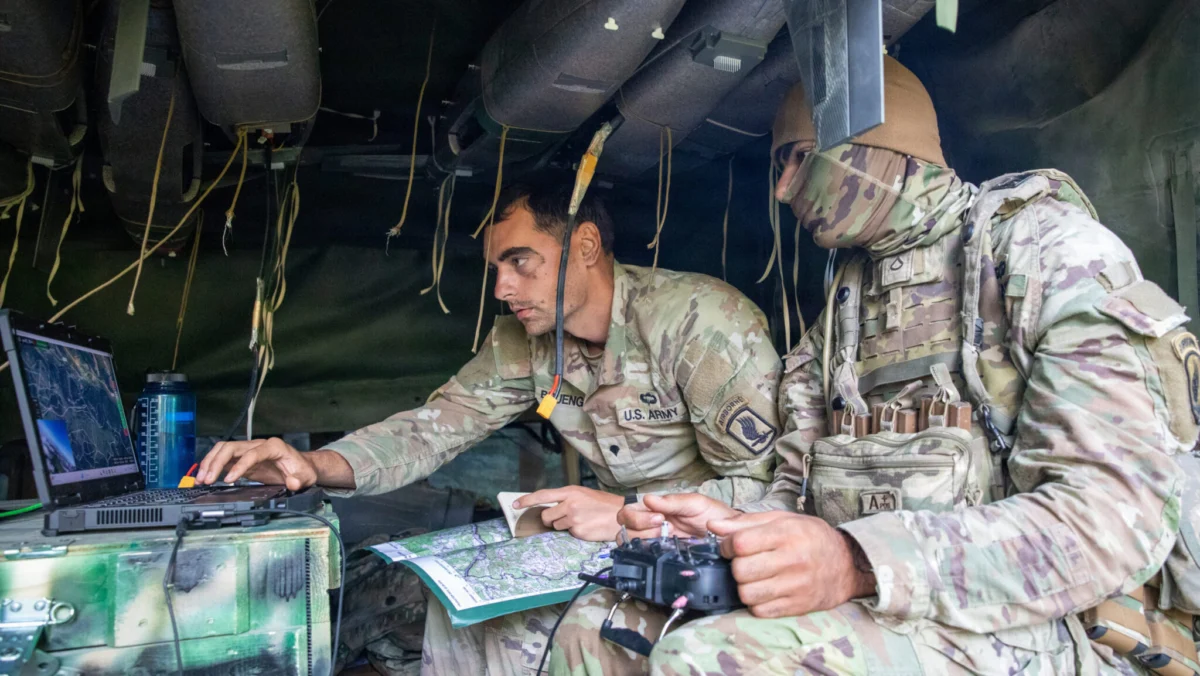
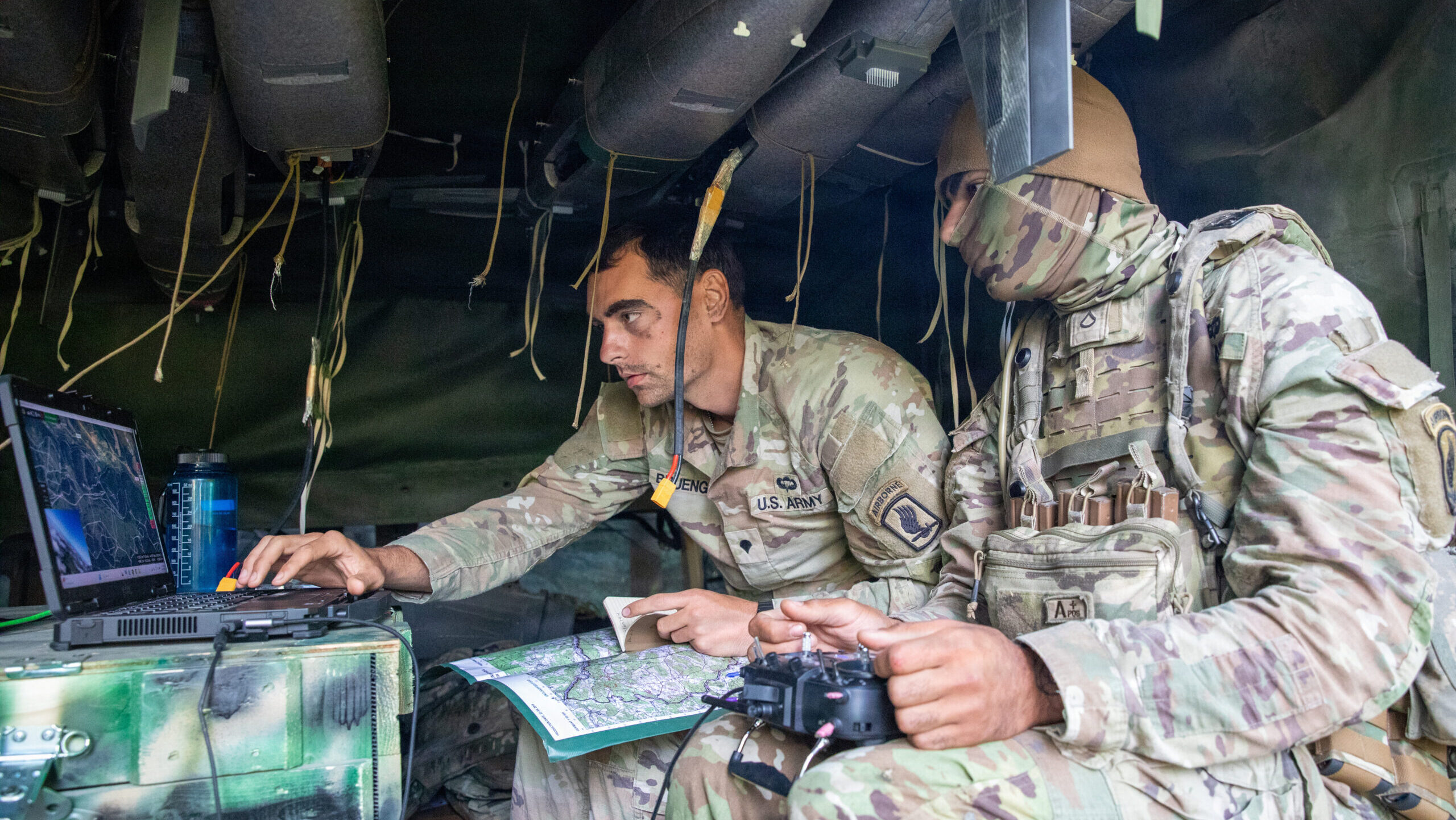
The unit in question, based in Germany, was officially redesignated as an "unmanned systems battalion" in January 2026. Its mission was distinct: to serve as a crucible for integrating drone technology into the infantry maneuver force. Drawing heavily on the hard-won lessons of the war in Ukraine, the battalion spent months conducting exercises and interfacing with Ukrainian operators to synthesize the realities of a battlefield dominated by loitering munitions, first-person view (FPV) drones, and electronic warfare.
However, in August 2026, Acting Chief of Staff of the Army Gen. Christopher LaNeve issued a directive to return the battalion to its standard infantry designation. This decision, finalized following the conclusion of Exercise Saber Junction 26, effectively ended the unit’s specialized experimental phase.
The core of the Army’s current argument, articulated by Chief Technology Officer Alex Miller, is that the service never intended for a "drone corps" or a single centralized unit to hold the monopoly on autonomous expertise. Instead, the Army contends that the goal was to extract actionable data from the 3rd Battalion and disseminate that knowledge across the wider force.
Chronology: A Short-Lived Experiment
The lifecycle of the specialized battalion was marked by rapid mobilization and equally rapid institutional pivot:
- January 2026: The 3rd Battalion, 504th Parachute Infantry Regiment is officially redesignated as an "unmanned systems battalion," signaling the Army’s intent to prioritize drone-infantry integration at the tactical level.
- Spring 2026: The battalion engages in a series of collaborative training events, including high-level exchanges with Ukrainian drone experts, focusing on reconnaissance, target acquisition, and integrated electronic warfare.
- August 2026: Acting Chief of Staff Gen. Christopher LaNeve orders the unit to begin transitioning back to a conventional infantry battalion.
- Late August 2026: During Exercise Saber Junction 26 at the Joint Multinational Readiness Center in Hohenfels, Germany, soldiers demonstrate advanced drone tactics, which would serve as the final "capstone" for the unit’s specialized mission.
- September 2026: News of the unit’s dissolution as a "drone battalion" leaks, triggering an immediate inquiry from congressional oversight committees and sparking public debate regarding the Army’s commitment to modernization.
The Congressional Backlash
The decision to revert the unit has not gone unnoticed by lawmakers, who view the move as a potential step backward in the face of evolving threats. A group of concerned legislators, including members of the Senate Armed Services Committee, penned a formal letter to the Army leadership—specifically addressing the late Secretary Dan Driscoll and Gen. LaNeve—requesting a detailed explanation for the change.
"We have deep concerns that eliminating this specialized drone unit will limit our ability to learn from allies, particularly the Ukrainian Armed Forces, and hinder our efforts to modernize drone warfare at the speed necessary to compete on the modern battlefield," the lawmakers wrote.
The letter highlights a growing bipartisan sentiment: that the lessons of the Ukraine-Russia conflict and regional tensions in the Middle East demand a more aggressive approach to institutionalizing drone warfare. By dismantling a unit that had spent months building specialized muscle memory, critics argue the Army is inadvertently signaling a lack of urgency to adversaries who are iterating at breakneck speed.
Official Responses: "We Are Not Walking Away"
In response to the mounting pressure, Alex Miller, the Army’s Chief Technology Officer, has taken a proactive stance in attempting to clarify the service’s rationale. Speaking to reporters in Washington, Miller emphasized that the perception of a retreat is a misunderstanding of the Army’s underlying strategy.
"Let me be very clear: we are not slowing down on drones or autonomous systems, and we are not walking away from them," Miller stated. "I don’t want anybody to take that as a perception that we’re walking away or this is less important."
Miller’s defense centers on the concept of scalability. He argues that creating a centralized "drone hub" would have created a bottleneck rather than a force multiplier. By treating the 173rd as a temporary "innovation engine," the Army intended for those soldiers to act as "seed corn," training other units across the force in the tactics, techniques, and procedures (TTPs) developed in Germany.
"They were never flagged to be a permanent centralized drone unit," Miller explained. "In fact, we pushed back on having something like a drone corps since its inception, because our theory of the case is, if you centralize that in one place, what you lose is the ability to actually scale that learning."
According to Miller, the Army’s failure to adequately manage public and congressional expectations led to the current narrative. "We’re sort of combating this narrative that we stood something new up and then we killed that new thing and we’re going to sacrifice it at the altar of technology. That’s just not true."
Implications: The Future of Distributed Autonomy
The controversy surrounding the 173rd Airborne Brigade highlights a fundamental tension in modern military organization: Centralization vs. Diffusion.
1. The Decentralization Doctrine
The Army’s current leadership clearly believes that every infantry platoon, not just a specialized battalion, must eventually become a "drone-capable" unit. By dissolving the specialized unit, the Army is attempting to force-multiply drone expertise across the entire Brigade Combat Team (BCT) structure. If successful, this ensures that no single unit becomes a "one-trick pony," but rather that the entire force becomes more lethal through pervasive autonomous integration.
2. The Risk of Institutional "Brain Drain"
Conversely, the risk of this approach is the dilution of expertise. Critics argue that by folding the unit back into a traditional infantry structure, the specialized drone operators may be subsumed by routine administrative and conventional training requirements. Without a dedicated unit to iterate on new software, payload configurations, and counter-drone measures, the "lessons learned" may quickly become obsolete as the battlefield environment changes.
3. The "Ukraine Factor"
The integration of lessons from Ukraine remains the litmus test for the U.S. Army. Ukrainian forces have demonstrated that innovation often comes from the bottom up—individual units repurposing commercial tech to achieve strategic effects. The U.S. Army’s pivot suggests they want to mirror this grassroots innovation, embedding the "Ukraine model" into the bedrock of the conventional infantry rather than sequestering it in a niche unit.
Conclusion
Whether the transition of the 3rd Battalion is a strategic masterstroke or a tactical error remains to be seen. The Army’s insistence that it is "scaling" rather than "de-emphasizing" drone warfare will be tested in the upcoming budget cycles and training rotations.
For now, the service is under immense pressure to prove that its "diffusion" strategy is more than just a convenient excuse for budgetary consolidation. As the battlefield continues to evolve, the Army’s ability to turn lessons from the 173rd into institutional knowledge across all its formations will determine whether it maintains its competitive edge or falls behind in the race for autonomous dominance. The controversy has served as a wake-up call for the Pentagon: when it comes to the future of warfare, communication is just as important as the technology itself.