The landscape of generative AI development is shifting beneath our feet. For non-technical creators and developers alike, the primary challenge has never been the quality of the models themselves—Gemini, Imagen, and Veo have long proven their capabilities—but rather the orchestration of those models. In July 2025, Google Labs introduced Opal, a no-code environment designed to bridge the gap between natural language prompts and functional AI applications.
As of February 2026, Opal has undergone a significant transformation. The introduction of the "Agent" step represents more than a mere feature update; it marks a transition from static, pre-wired workflows to dynamic, autonomous systems. This article explores the mechanics of this evolution, the implications for developers, and a practical guide to building intelligent, state-aware applications using Google’s latest framework.
The Chronology: From Experimental Lab to Developer Standard
When Opal first debuted, it functioned primarily as a visual builder for Breadboard, an internal framework pioneered by Google engineer Dimitri Glazkov. At that stage, users could chain together "Generate" nodes, selecting specific models to perform singular, predictable tasks. It was, in essence, a flowchart-based interface for prompt engineering.
However, the trajectory of Opal suggests a rapid maturation. In the months following its July 2025 launch, the platform operated within the Google Labs ecosystem—a sandbox for high-risk, high-reward innovation. By early 2026, the tool was formally migrated to the Google for Developers site. This is a crucial "signal" in the tech industry: moving from a "Lab" experiment to the "Developer" domain typically signifies that a tool has achieved product-market fit and is slated for long-term support. The addition of the "Agent" step in February 2026 serves as the centerpiece of this new, more robust phase of the platform’s life cycle.

Understanding the "Agent" Paradigm Shift
The fundamental difference between the original "Generate" step and the new "Agent" step lies in decision-making autonomy. In the traditional workflow, a builder dictated the architecture: User Input → Gemini Pro (Text) → Output. The sequence was immutable.
The Agent step, by contrast, functions as a high-level orchestrator. Instead of assigning a specific model to a task, the builder provides a goal. The Agent evaluates the requirement in real-time, deciding which model or tool is most appropriate for the current state of the application.

The Core Intelligence Tools
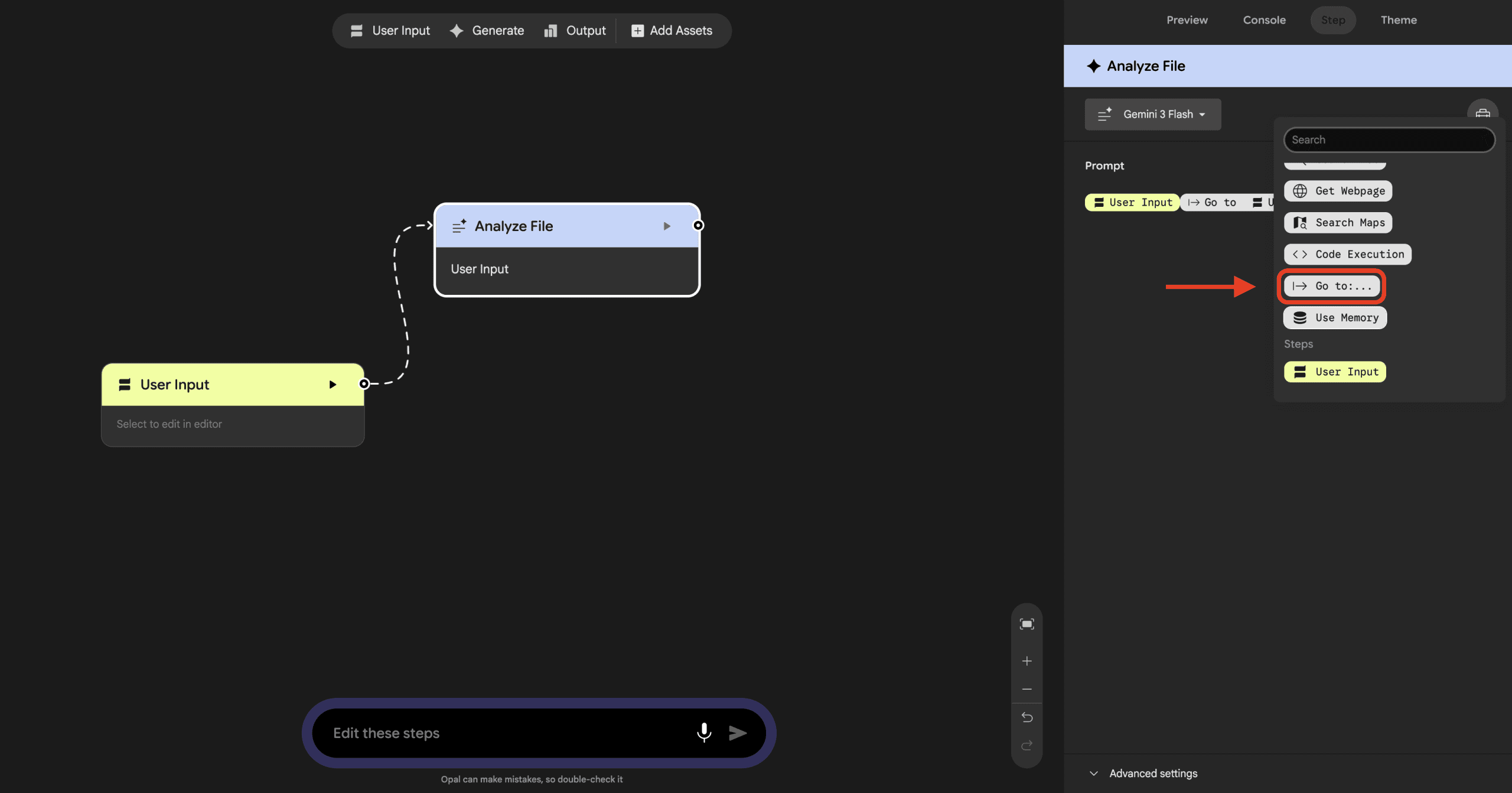
The Agent step is powered by a triad of new, integrated functionalities that allow for sophisticated behavior:
- Memory: Unlike previous versions that "forgot" the user context the moment a session ended, the new Memory tool allows the application to retain state. It can store user preferences, history, or specific data points across multiple interactions.
- Dynamic Routing: This is the "brain" of the Agent. It determines the path of execution based on the input. If a user asks for information that requires real-time data, the Agent routes the request to a web search tool. If the user asks for creative text, it sticks to the language model.
- Interactive Chat: This allows the Agent to pause the workflow. If an application requires a specific input (such as a job title for a resume analysis) that the user hasn’t provided, the Agent can initiate a dialogue to solicit that information before proceeding.
Supporting Data: The Expanded Model Roster
The utility of an autonomous Agent is only as good as the tools at its disposal. Opal’s model library has expanded significantly, providing a diverse set of "workers" for the Agent to command.
| Model Category | Capabilities |
|---|---|
| Agent | Orchestrator; selects models/tools based on goal |
| Gemini Flash | High-speed, efficient text and reasoning |
| Gemini Pro | Deep, multi-step logical reasoning |
| Nano Banana | Precision image generation and editing |
| Nano Banana Pro | Visuals requiring integrated text rendering |
| AudioLM | Natural-sounding text-to-speech generation |
| Veo | High-fidelity video generation and manipulation |
| Lyria 2 | Instrumental music and soundscape generation |
Practical Build: The AI Interview Prep Coach
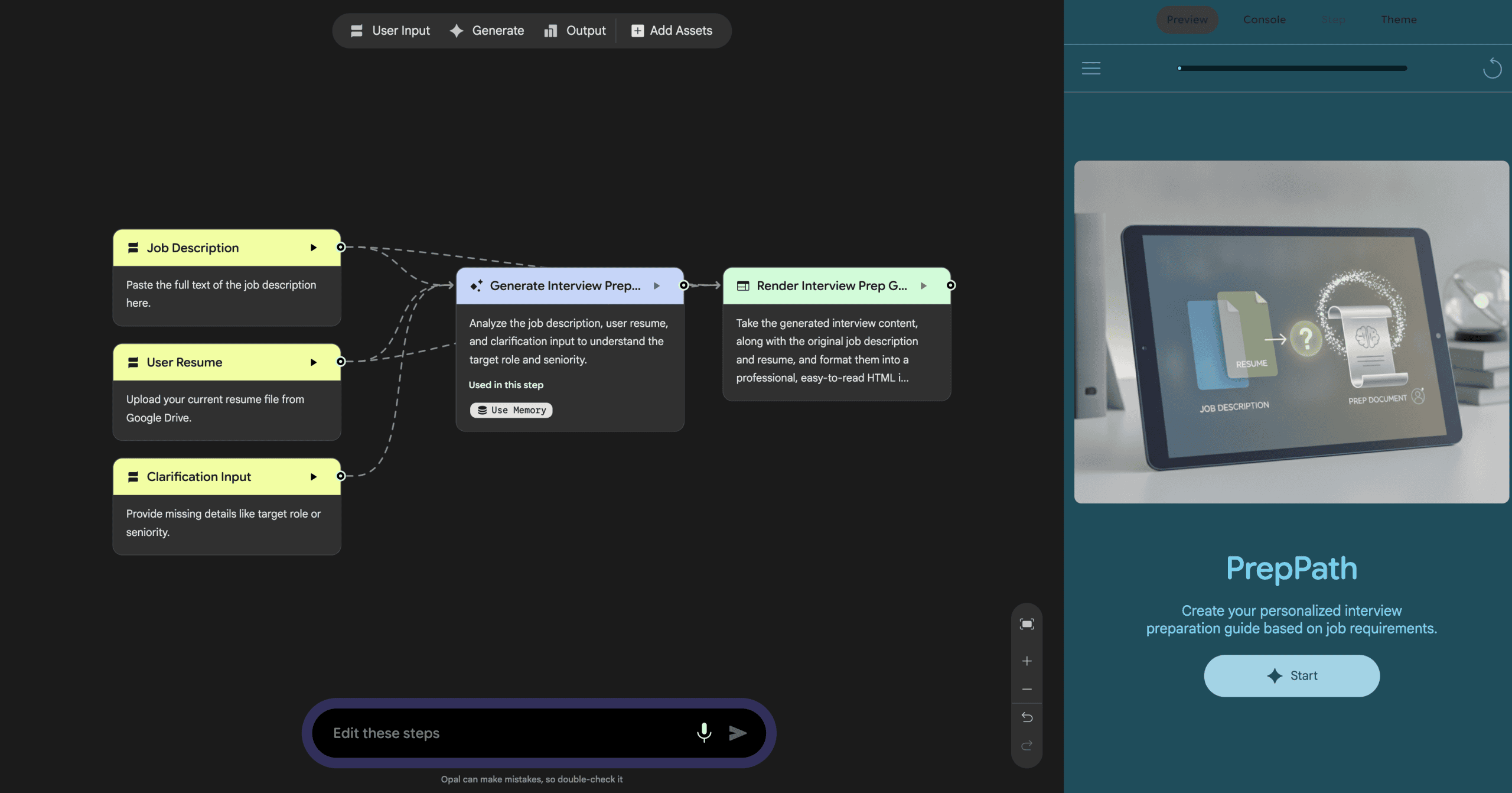
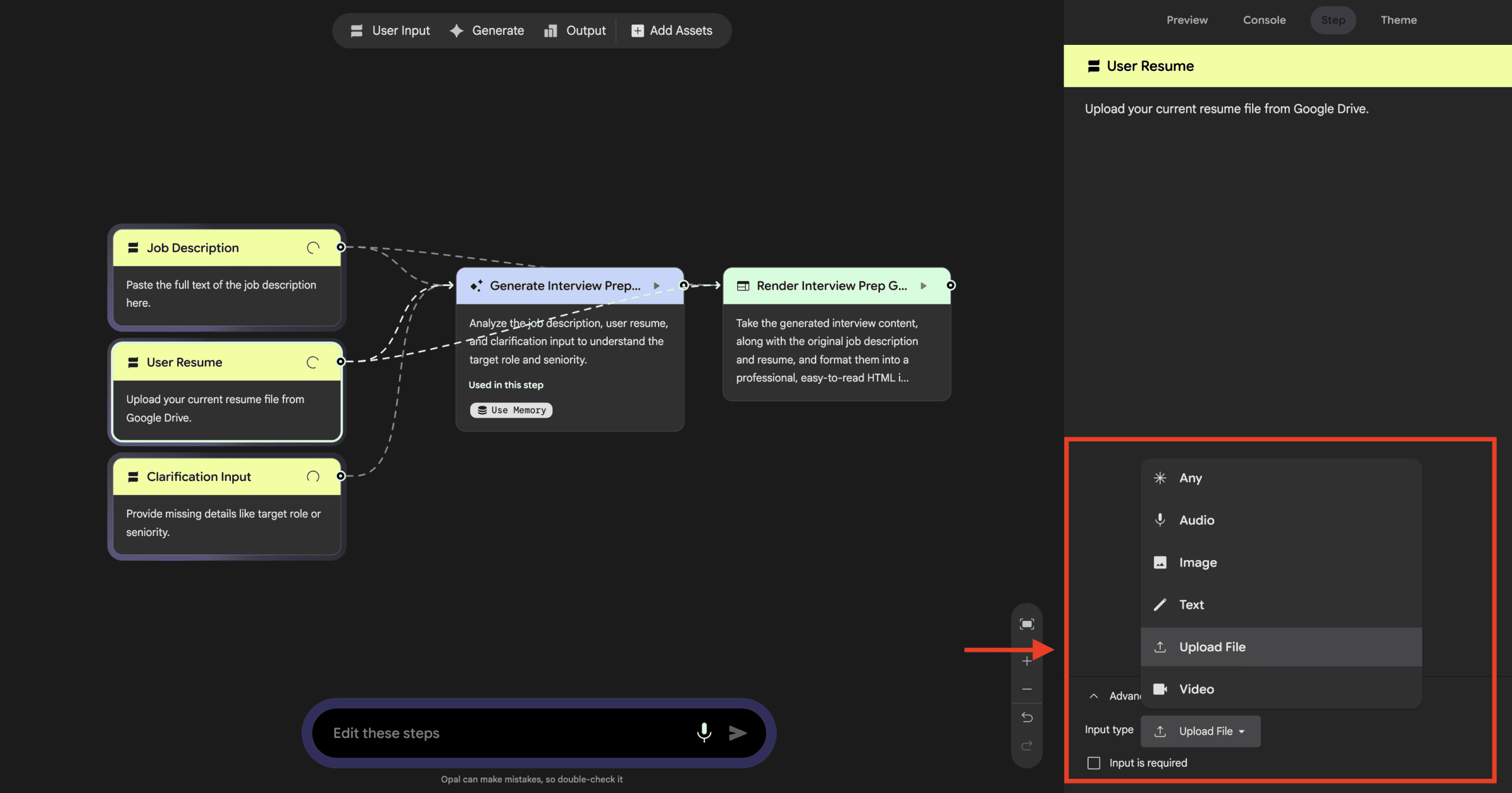
To demonstrate the power of these changes, we can build a sophisticated application: an AI-driven Interview Prep Coach. This app is designed to ingest a job description and a resume, identify missing context, perform external research, and output a tailored prep document.
Phase 1: Designing the Architecture
Start by defining the high-level goal in the initial prompt:
"Build an application that collects a job description and a resume. If details like target role or seniority are missing, ask the user. Research interview questions for the specific company if necessary, and generate a prep document with talking points and practice questions."

Phase 2: Implementing Logic
Within the Editor, you will notice the Agent node now acts as the central hub. By using the @ symbol in the prompt field, you attach Memory and Interactive Chat.
When a user interacts with this app, the Agent evaluates the resume. If the resume is present but the "Target Role" is missing, the Interactive Chat triggers a follow-up question. Once the criteria are met, the Agent uses Dynamic Routing to decide if it needs to search the web for the company’s specific interview style. This variability makes the app feel less like a rigid script and more like a human consultant.
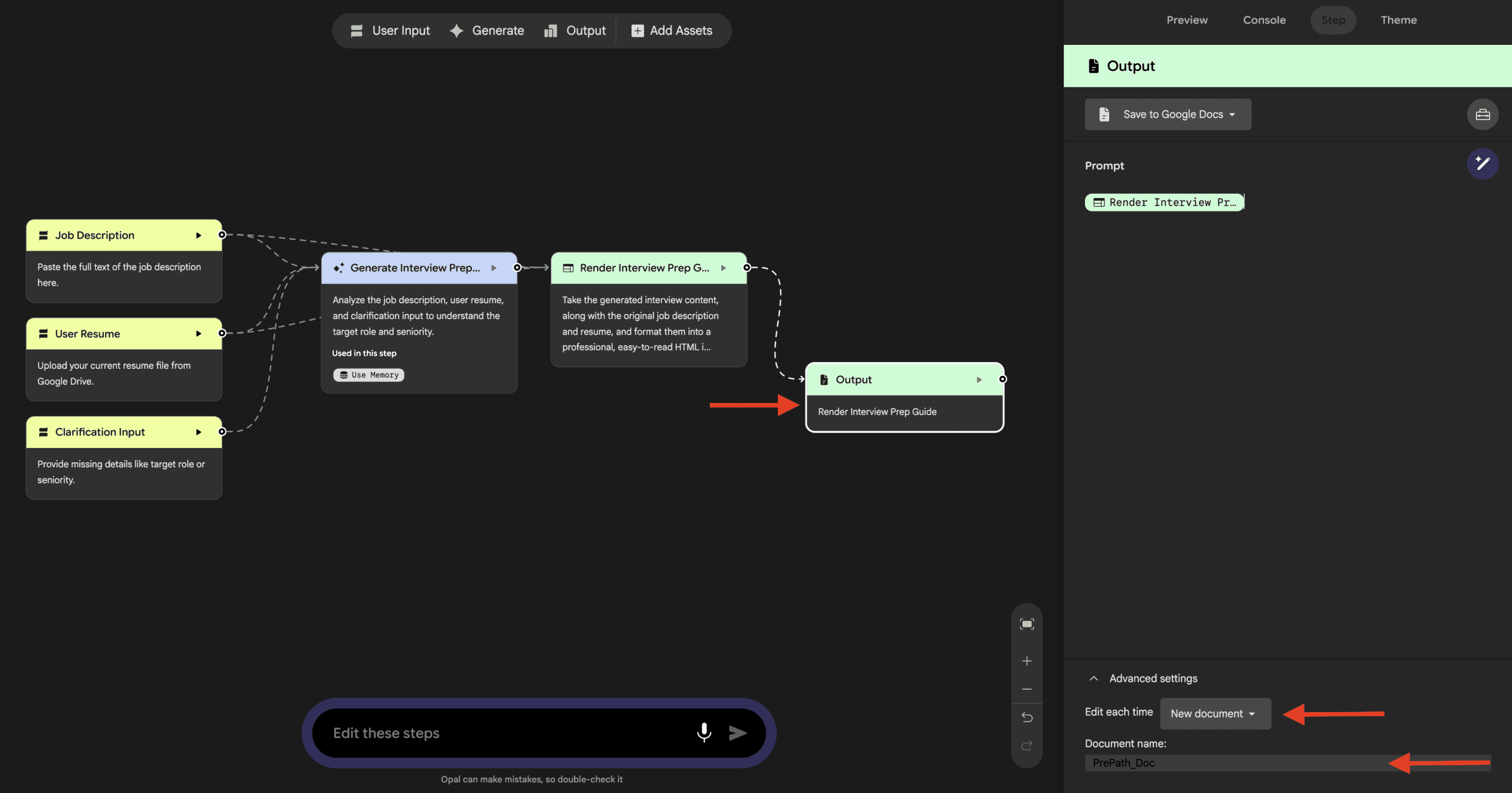
Phase 3: The Output
The final step is the generation of a Google Doc. By mapping the extracted variables (Role, Company) into the title field, you ensure that the end-user receives a well-organized document in their Google Drive, ready for review.
Implications for the Future of Development
The transition to agent-driven, no-code development has several implications for the industry:
1. Democratization of AI Orchestration
Historically, building a "multi-step" AI app required knowledge of Python, API rate limits, and asynchronous data handling. Opal abstracts this complexity. By removing the need to manage infrastructure or deployment pipelines, Google is effectively lowering the barrier to entry for business analysts, marketers, and non-technical founders to build enterprise-grade automations.
2. The Shift from "Scripting" to "Goal-Oriented" Design
The most profound shift is in the mindset of the builder. In the past, builders had to account for every edge case. With Agent-driven systems, the builder focuses on defining the intent and the constraints. The AI handles the "how." This mirrors the shift in software engineering toward declarative programming, where the outcome is prioritized over the implementation details.

3. The "Experimental" Disclaimer
While the capabilities are impressive, it is vital to remember that Opal remains an experimental product. There is no current path to export an Opal app into a production-grade enterprise codebase. For developers, this means Opal is an exceptional prototyping tool for validating concepts, but scaling an Opal-built app to a production environment likely requires a migration to the Gemini API or a similar enterprise-grade framework.
Furthermore, as of this writing, there is no formal documentation regarding rate limits or enterprise-grade security (SSO/Audit logs). Organizations should use the platform for internal experimentation rather than mission-critical, public-facing infrastructure until the service reaches general availability.
Conclusion
The evolution of Google Opal is a testament to the speed of the current AI revolution. By moving from fixed, linear workflows to intelligent, agent-driven systems, Google has transformed a simple "no-code" tool into a potent prototyping environment.
The Interview Prep Coach described here is merely one example of what is possible when an application is allowed to "think" about its own execution path. As the platform continues to add new models and tools, the ceiling for what can be built by a single person in an afternoon is rising rapidly. For those looking to stay ahead of the curve, the message is clear: stop building sequences, and start building agents. The next version of the platform will likely bring even more autonomy, making this the ideal moment to master the current generation of agent-driven design.
About the Author
Shittu Olumide is a software engineer and technical writer dedicated to demystifying the complexities of artificial intelligence. His work focuses on the intersection of human creativity and machine intelligence. You can follow his explorations into the future of tech on LinkedIn and Twitter.