In the span of just eight weeks this summer, the artificial intelligence landscape underwent a fundamental transformation. Between June 30 and July 9, 2026, the industry’s "Big Four" labs—OpenAI, Anthropic, Google, and xAI—all pushed their latest frontier models into the wild. Claude Sonnet 5, Grok 4.5, GPT-5.6, and Gemini 3.1 Pro arrived in such rapid succession that the traditional industry metric—"which model is the smartest"—has effectively lost its utility.
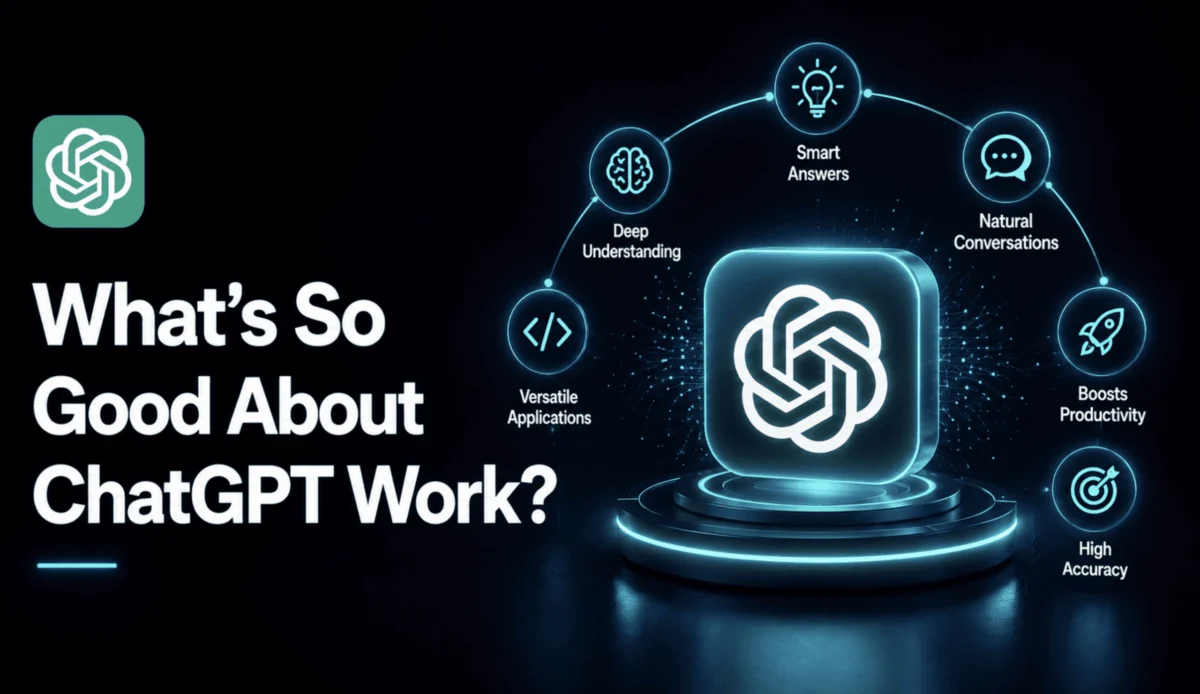
In this environment, where the title of "world’s most capable model" shifts on a weekly basis, the focus for enterprises has pivoted. The question is no longer which model wins a static benchmark, but rather: which product ecosystem allows a team to translate raw intelligence into tangible business outcomes? This is the core premise of ChatGPT Work, an interface designed not merely to answer questions, but to execute complex, multi-step workflows.
The Chronology of the 2026 AI Summer
The current state of AI is defined by a blistering pace of innovation. The timeline of recent releases highlights the intense competition:
- June 30, 2026: Anthropic releases Claude Sonnet 5, setting a new bar for in-repo coding tasks and specialized reasoning.
- July 8, 2026: xAI rolls out Grok 4.5, doubling down on cost-efficiency and deep integration with developer environments like Cursor.
- July 9, 2026: OpenAI launches GPT-5.6, introducing a tiered model architecture designed to optimize both performance and operational expenditure.
- Ongoing (Summer 2026): Gemini 3.1 Pro continues to iterate, focusing on long-context window handling and multimodal processing.
This rapid-fire deployment has led to a "diminishing returns" effect in benchmarking. When four models are all within a 5% margin of error on most standard tests, the differentiator becomes the application layer.
The Strategic Shift: Tiered Intelligence
OpenAI’s decision to release GPT-5.6 as a structured, three-tiered family (Sol, Terra, and Luna) marks a departure from the "one-size-fits-all" model approach. By offering distinct performance tiers, OpenAI allows engineering and business teams to route routine queries to the high-speed, low-cost "Luna" model while reserving the "Sol" flagship for high-stakes, reasoning-intensive tasks.
This approach provides a pragmatic answer to the "cost-versus-capability" dilemma. While Anthropic’s Fable 5 currently outperforms Sol on specific benchmarks like SWE-Bench Pro (80% vs. 64.6%), the economic reality favors OpenAI’s approach for high-volume enterprises. Fable 5 commands a premium price—double that of Sol—for a performance gain that, for many organizations, is not strictly necessary for day-to-day operations. OpenAI’s strategy effectively bets that "good enough, much faster, and dramatically cheaper" is a more sustainable business model than chasing marginal gains in theoretical benchmarks.
Supporting Data: Efficiency Over Ego
To understand why companies are choosing ChatGPT Work, one must look beyond the marketing. The "real-world" performance data is compelling:
- Terminal-Bench 2.1: Sol achieved an 88.8% success rate in standard mode and 91.9% in "Ultra" compute mode, proving its reliability in agentic coding tasks.
- Token Economics: Because Sol achieves comparable results to competitors using fewer tokens and less inference time, the total cost of ownership (TCO) for a standard enterprise deployment is significantly lower than that of rival models.
Furthermore, for organizations with strict data residency requirements, OpenAI has introduced gpt-oss-120b and gpt-oss-20b. These open-weight models, released under the Apache 2.0 license, represent a strategic hedge against the "black box" nature of cloud-only models. By enabling self-hosting via vLLM or Ollama, OpenAI has provided an exit ramp for companies that demand full control over their fine-tuning pipelines and data security.
From Chatbot to Operating Layer
The true power of ChatGPT Work lies in its ability to act as a "second brain" that connects to the tools a company already uses.
The Automation Revolution
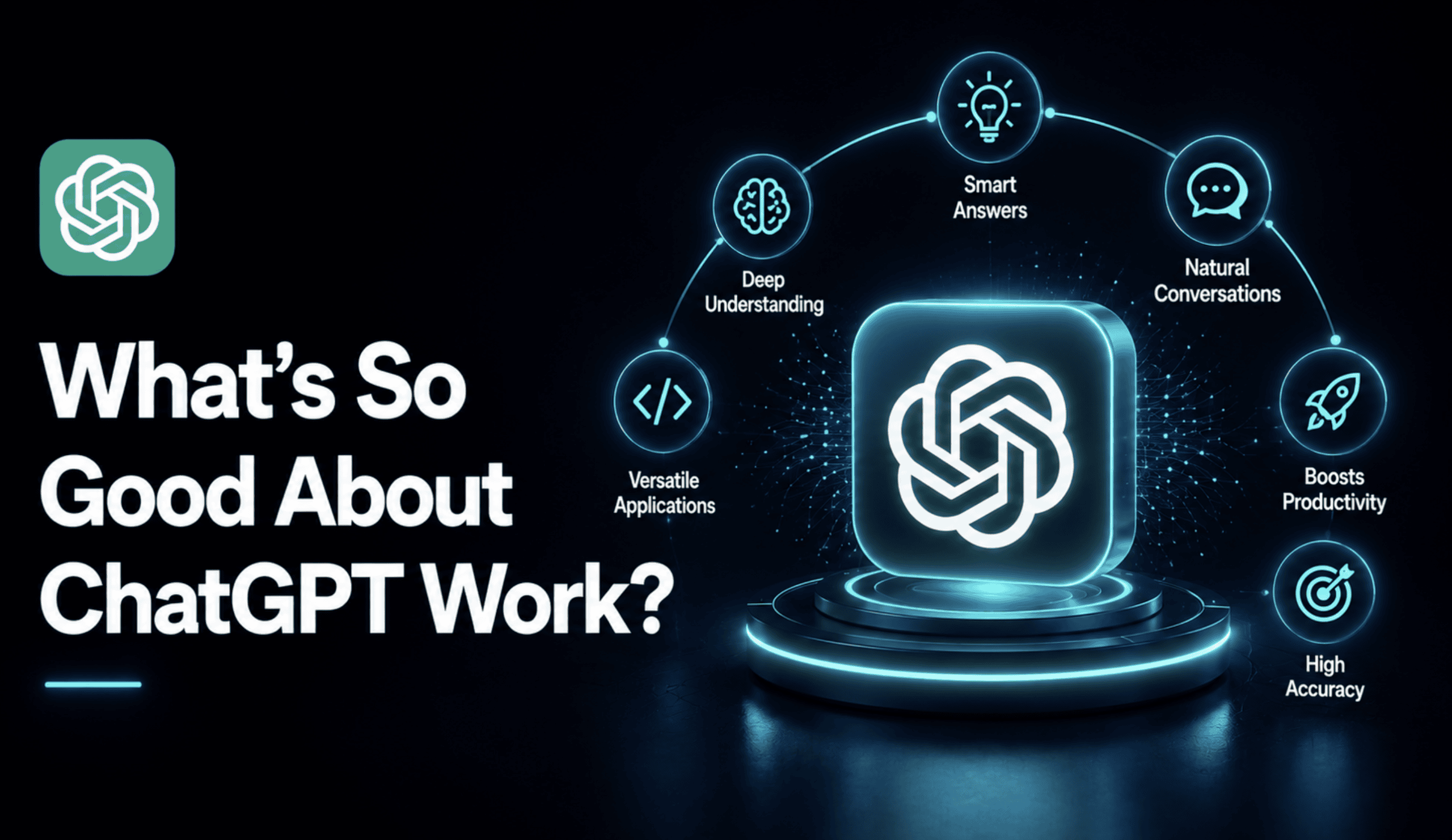
At companies like Zapier, Nvidia, and Shopify, ChatGPT Work is no longer just a chatbot; it is a workflow engine.
- Zapier: A lead-triage process that previously required 45 minutes of manual labor across HubSpot, Gong, and email is now fully automated. The system now surfaces drop-offs and identifies seven-figure pipeline opportunities without human intervention.
- Nvidia: Go-to-Market Managers have reclaimed approximately 40% of their time by automating the manual data-crunching required for GTC events, shifting their focus from spreadsheets to strategy.
- Shopify: The platform serves as a central operating layer for 3,500 non-R&D employees, pulling context from Slack and institutional documentation to guide research and enablement.
Scheduled Tasks: The "Always-On" Employee
A critical feature in this transition is the "Scheduled Tasks" interface. By moving away from purely reactive, user-initiated prompts, ChatGPT Work allows for recurring workflows. Whether it is a daily briefing, a weekly status report, or an automated monitoring task that triggers based on real-time web data, this feature turns AI into an autonomous agent.
While there are defined guardrails—such as the one-hour minimum interval and plan-dependent task limits (up to 15 for Enterprise)—these constraints provide the predictability necessary for production-grade business processes.
Connectivity: The Model Context Protocol (MCP)
Perhaps the most significant development in the 2026 ecosystem is the industry-wide adoption of the Model Context Protocol (MCP). Initially spearheaded by Anthropic and later governed by a vendor-neutral foundation, MCP has become the standard "language" for connecting AI to data sources.
Because OpenAI adopted MCP, a team’s investment in building a connector for their internal databases or tools (such as Salesforce, Box, or Jira) is no longer a "sunk cost" locked into a single vendor. This interoperability has accelerated the adoption of ChatGPT Work, as over 35 enterprise software vendors released native integrations within 60 days of the announcement. The "walled garden" era of AI is effectively ending, replaced by an open, plug-and-play architecture.
Official Responses and Industry Implications
The implications for the workforce are profound. Industry leaders suggest that the "intelligence" of the model is secondary to its "agency."
As noted by the Head of Enterprise Marketing at Zapier, the shift is from "asking an AI" to "assigning a task." This transition necessitates a change in how organizations manage AI procurement. CIOs are increasingly moving away from evaluating models based on "MMLU" or "HumanEval" scores and toward evaluating "integration breadth" and "workflow latency."
The free tier of ChatGPT, which offers a limited number of messages every few hours, serves as a gateway to this ecosystem. However, the true value proposition is found in the Pro and Enterprise tiers, which provide the high-throughput, "unlimited" access required for deep organizational integration.
Conclusion: A New Era of Utility
The "AI Summer" of 2026 will be remembered not for a singular breakthrough model, but for the maturation of AI into a utility. The case for ChatGPT Work is built on a foundation of reality: it offers a sensible trade-off in cost and speed, a standards-based integration path, and a proven track record of reducing operational overhead at scale.
For businesses, the race to find the "smartest" model has become a distraction. The real race is to integrate these tools into the fabric of daily work. ChatGPT Work is currently winning that race by focusing on the only metric that matters: the ability to turn a messy, fragmented work process into a coherent, finished output. As the industry settles into this new normal, the winners will be those who stop asking which model is smarter, and start asking which model allows them to move faster.