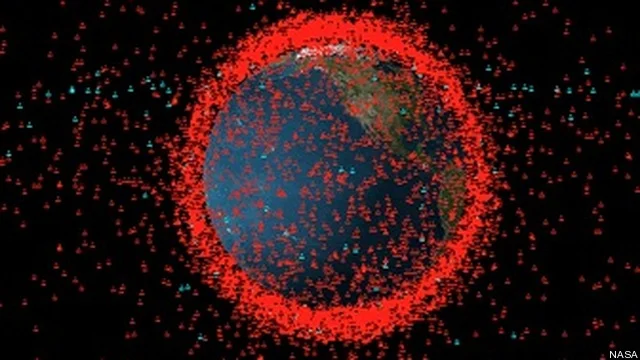
MAUI, Hawaii — In an era where the orbital environment has become increasingly congested, contested, and competitive, the United States Space Force is initiating a fundamental shift in how it monitors the heavens. Recognizing that the traditional, highly centralized methods of tracking space objects are no longer sufficient to counter modern threats, the service is preparing to launch a groundbreaking prototype software environment this fall. This initiative aims to bridge the long-standing gap between military-grade surveillance and the rapidly expanding capabilities of the commercial space tracking sector.
The Strategic Imperative: Why Timeliness Trumps Perfection
For decades, the United States has relied on the Space Surveillance Network (SSN)—a global constellation of high-precision radars and optical telescopes—to maintain a comprehensive catalog of objects in orbit. While this system remains the gold standard for high-accuracy orbital mechanics and collision avoidance, its deliberate, methodical nature is increasingly at odds with the pace of modern space operations.
Col. Barry Croker, the commander of Mission Delta 2, which oversees the Space Force’s Space Domain Awareness (SDA) operations, believes the time has come to recalibrate the service’s analytical priorities. Speaking on the sidelines of the annual Advanced Maui Optical and Space Surveillance (AMOS) conference, Croker articulated a significant doctrinal shift: a "bias towards timeliness" over absolute precision.
"Our number one priority right now is: How do we improve support to space control operations?" Croker explained. In the context of national security, waiting for the highest possible fidelity—which often requires multiple sensor passes and exhaustive data verification—can create a dangerous intelligence lag. If a new debris cloud forms or a fleet of adversary satellites performs an unexpected maneuver, a delay in information can result in a loss of strategic advantage.
By integrating lower-fidelity but highly responsive commercial data, the Space Force aims to gain a "near-real-time" picture of the orbital environment. As Croker noted, "I now have the opportunity to get a more timely state of something, even if it’s not perfect."
A Chronology of the Integration Effort
The movement toward commercial integration has been a multi-year transition, marked by significant structural changes within the Department of Defense.
- Pre-2020: Space Domain Awareness was primarily an internal military function, with commercial entities operating largely on the periphery.
- 2020-2022: The establishment of the Joint Commercial Operations (JCO) cell marked a turning point. The JCO was created to leverage the growing array of commercial sensors, providing a "living" catalog of space objects that augmented the military’s official data.
- 2023-2024: The introduction of the Unified Data Library (UDL) allowed for cloud-based storage of disparate data sets. However, as leadership noted, the UDL remained a "parallel" system, not fully fused with the primary operational software used by the 18th and 19th Space Defense Squadrons.
- Fall 2024 (Upcoming): The Space Force is scheduled to launch its new prototype software environment. This marks the transition from merely viewing commercial data in a separate silo to actively integrating it into the core workflow of space defense operations.
The Technical Challenge: Bridging the "Parallel" Gap
The primary hurdle facing the Space Force is not a lack of data, but the challenge of data fusion. Currently, the military’s official space catalogs and the commercial data housed in the UDL operate on separate tracks. This bifurcation prevents the seamless, automated analysis required for rapid decision-making.
Gen. Stephen Whiting, commander of U.S. Space Command (SPACECOM), has been vocal about the limitations of this current architecture. During the AMOS conference, Gen. Whiting admitted that the current SDA capabilities are "not yet up to snuff" when it comes to the precise, real-time targeting of adversary satellites.
The goal of the upcoming prototype is to move away from these parallel systems. The objective is to create a "minimum viable product" (MVP) that allows for the automated ingestion and processing of commercial data. By automating this, the Space Force can drastically reduce the human-in-the-loop burden, allowing analysts to focus on higher-level interpretation rather than manual data reconciliation.
However, Col. Croker is careful to distinguish between the roles of these different data sources. The intent is not to replace military sensors with commercial ones, but to create a specialized environment where they can coexist without compromising the integrity of critical missions.
"The idea is to start with having the right environments that I can do that type of work and not perturbate the high-accuracy collision avoidance type missions," Croker explained. By segregating the "fast-and-dirty" commercial data from the "slow-and-precise" military tracking data within the software architecture, the Space Force ensures that the integrity of high-stakes operations remains uncompromised.
Supporting Data and Industry Capabilities
The commercial space sector has undergone a massive expansion in the last decade. Companies like LeoLabs, ExoAnalytic Solutions, and others have deployed global sensor networks capable of tracking objects in Low Earth Orbit (LEO) and beyond with remarkable agility.
These firms provide what the military calls "uncued" tracking—the ability to monitor the sky without waiting for an official request or a programmed pass. This is vital for detecting "maneuvering" satellites, which have become a hallmark of modern space warfare. While a military radar might only see a target once every few hours, a commercial constellation can provide continuous, persistent monitoring.
The integration of this data is not merely a technological challenge; it is a budgetary one. As Gen. Whiting emphasized, the most effective path forward involves "consistently funding the acquisition of that data" and driving it directly into the military’s official "programs of record." Currently, much of the commercial data access is provided through contracts that are subject to year-to-year uncertainty. A long-term integration strategy would require a shift toward persistent, multi-year procurement of commercial space surveillance services.
Implications for Future Conflict
The implications of this shift are profound. If the Space Force succeeds in its effort to automate the integration of commercial data, the U.S. military will possess a level of transparency in the orbital domain that was previously impossible.
- Deterrence through Attribution: By being able to rapidly confirm the intent and movement of an adversary’s satellite, the U.S. can better attribute hostile actions. If an adversary performs a "proximity operation" (shadowing a U.S. satellite), the ability to publicly and quickly document that movement serves as a powerful deterrent.
- Increased Resilience: A hybrid architecture—one that relies on both government-owned assets and commercial providers—is inherently more resilient. If a military radar site is jammed or disabled during a conflict, the commercial, distributed network provides a critical backup, ensuring that space domain awareness remains continuous.
- Operational Agility: The ability to pivot from tracking debris to monitoring a potential adversary maneuver in seconds, rather than hours, changes the nature of space command and control. It allows commanders to make tactical decisions based on the current state of the domain, rather than the state of the domain as it existed at the last "official" catalog update.
Looking Ahead: The Path to Integration
As the Space Force prepares to roll out its prototype this fall, the defense community will be watching closely. The success of this initiative will likely dictate the future of military-commercial collaboration in space.
Col. Croker and his team at Mission Delta 2 are operating under a "fail fast, learn faster" philosophy. By focusing on a minimum viable product, they are acknowledging that in the rapidly evolving space domain, a good solution delivered today is far superior to a perfect solution delivered in five years.
The integration of commercial data into the Space Force’s "programs of record" represents more than just a software upgrade; it is an acknowledgment that the space domain has fundamentally changed. As Gen. Whiting noted, the ability to consistently integrate and act upon this data is the "largest step forward" the service can take in the short term. Whether the military can successfully navigate the bureaucratic, technical, and security challenges of this integration will remain a defining test of the Space Force’s mission in the coming decade.