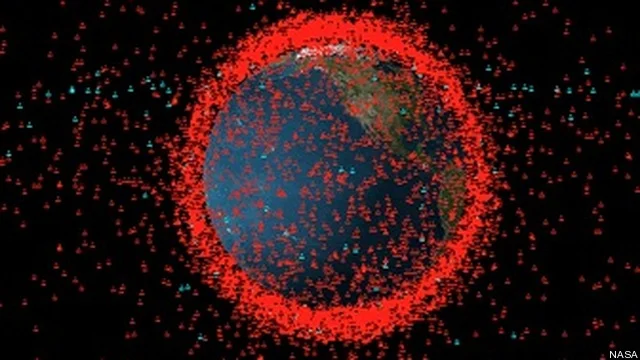

MAUI — Amidst the tranquil backdrop of the Advanced Maui Optical and Space Surveillance (AMOS) conference, a profound shift in the geopolitical architecture of space is unfolding. As the United States grapples with the long-term viability of the Department of Commerce’s Traffic Coordination System for Space (TraCSS), European Union officials and industry leaders are signaling a decisive pivot. With the American initiative mired in administrative and budgetary limbo, the EU is positioning its own Space Surveillance and Tracking (EU SST) partnership as the global gold standard for orbital safety, policy, and licensing.
The State of Play: A Vacuum in Leadership
The TraCSS program was envisioned as the definitive answer to the growing problem of orbital congestion, intended to transition the responsibility of space traffic management from the US military to a civilian agency. However, as questions regarding its sustained funding and operational trajectory mount, international stakeholders are looking elsewhere for stability.
"The uncertainty surrounding the American program has created a vacuum," noted one European industry official present at the conference. "If the US cannot provide a clear, long-term regulatory framework, the global satellite industry will naturally gravitate toward the entity that can: the European Union."
The EU SST, a dual-use initiative that has quietly matured over the last decade, is no longer just a regional effort. It is increasingly viewed as the most robust, legally grounded framework for ensuring the sustainability of the space environment. With draft legislation currently moving through European institutions, the EU is preparing to codify participation in its tracking services as a prerequisite for any satellite operator wishing to do business within the European market.
Chronology: A Decade of Expansion
The rise of the EU SST is not a sudden reaction to US domestic politics but the culmination of a ten-year strategic evolution.
- 2016: The EU SST Partnership is launched, initially consisting of five member states. The objective is to pool national sensor assets to provide basic space situational awareness (SSA).
- 2016–2020: The partnership focuses on foundational infrastructure, integrating a network of national military-owned radars and telescopes.
- 2021: The EU begins integrating the program into its broader 2021–2027 multiannual financial framework, signaling a shift toward long-term strategic investment.
- June 2025: Four new nations—Belgium, Bulgaria, Lithuania, and Luxembourg—join the partnership, bringing the total to 19 member states.
- July 2025: The program marks its 10th anniversary, having evolved from a modest data-sharing group into a continental powerhouse.
- October 2025: The Partnership prepares for a formal anniversary celebration, reflecting on a decade of growth and a transition toward "strategic autonomy."
Supporting Data: The Infrastructure of Safety
The backbone of the EU SST is an impressive, if decentralized, network of over 70 sensors, including advanced radars and optical telescopes. While these assets were historically the property of national militaries, the strategy is shifting. Officials now aim to reach a 50-50 balance between government-owned sensors and commercial data providers.
The economic footprint of this effort is substantial. Industry sources estimate that the total value of commercial contracts supporting the EU SST network in the current year alone is approximately $700 million. This capital is being deployed to foster a burgeoning ecosystem of European space-tracking startups.
The Financial Roadmap
Funding for the EU SST is a mosaic of national contributions, EU budget allocations, and dedicated innovation grants. While a consolidated annual budget remains opaque, the trajectory is clear:
- Horizon Europe: A multi-tiered grant program provides direct funding for space-tracking technology. In the 2026–2027 workplan, three distinct grant categories have been earmarked with a combined budget of approximately €55 million ($63 million).
- The 2028-2034 Horizon: Government and industry analysts expect a significant budgetary "step-function" increase in the upcoming cycle, driven by the intensifying demand for sovereign space capabilities in the face of a more contested orbital environment.
Official Responses: Seeking Autonomy and Cooperation
The mood among EU officials is one of calculated confidence. Pascal Faucher, chair of the EU SST Partnership, encapsulated the sentiment in a statement to Breaking Defense, emphasizing that the program has evolved far beyond a simple monitoring service.
"We can proudly look back on what we have achieved: providing collision avoidance services to over 100 operators from 40 countries, building strong cooperation between 19 EU Member States, and fostering an innovative and competitive SSA industry in Europe," Faucher wrote. "In our collective spirit, we have built a world-class SSA system over the past decade."
Regarding the relationship with the United States, there is a clear desire to avoid conflict. EU SST officials have maintained an active dialogue with the US Commerce and Defense Departments. The AMOS conference serves as a primary venue for this deconfliction, ensuring that TraCSS and EU SST do not become redundant or, worse, contradictory.
However, the "hand-in-hand" approach is under pressure. As Faucher noted, the ultimate goal is "strategic autonomy." This concept—the ability for Europe to act independently in the space domain—is becoming the defining characteristic of EU space policy.
Implications for Global Space Governance
The implications of this shift are profound for the global space economy.
1. Regulatory Hegemony
If the EU mandates that all operators in its market must participate in the EU SST program, it effectively sets a global regulatory floor. Even American companies seeking to serve European customers may find themselves compelled to comply with EU safety standards, effectively granting Brussels "Brussels-effect" authority over global space traffic management.
2. Commercial Opportunities
The EU’s push to rapidly increase the number of European companies capable of providing SSA data is creating a lucrative market. By funding startups through the EU Industry and Start-ups Forum on Space Traffic Management, the EU is essentially "buying" its own industry, ensuring that the technology used to track satellites is domestically sourced. This is a stark contrast to the US model, which has often struggled to balance public-private partnerships with procurement red tape.
3. The End of US Exceptionalism?
For decades, the US military—specifically the Space Command—has been the "source of truth" for orbital data. The rise of the EU SST signals the end of this monopoly. As more countries and commercial operators rely on the European network, the US risks being sidelined in the technical and diplomatic discussions that will shape the "Rules of the Road" for space.
4. The Resilience of Data
The EU SST’s focus on providing collision warnings, re-entry risk analysis, and debris monitoring has turned it into a vital utility. By including 19 member states and 40 countries in its data exchange, the EU has built a network that is inherently more resilient than a single-nation system. If one node goes offline, the network persists—a lesson in institutional design that the US is currently struggling to implement.
Conclusion: A Fork in the Orbital Road
As the space industry watches the progress of the EU SST, the message is clear: the era of space traffic management being a purely American-led endeavor is coming to a close. While the United States remains a dominant player, the administrative friction surrounding TraCSS has provided Europe with the perfect window to establish a leadership role.
As the EU approaches its anniversary in October, the rhetoric is shifting from "cooperation" to "sovereignty." For the commercial satellite industry, this means navigating a future where the center of gravity for space safety standards may very well be shifting across the Atlantic. The question remains whether the United States can resolve its internal policy disputes quickly enough to maintain its seat at the head of the table, or if it will be forced to follow the standards established by its European counterparts.