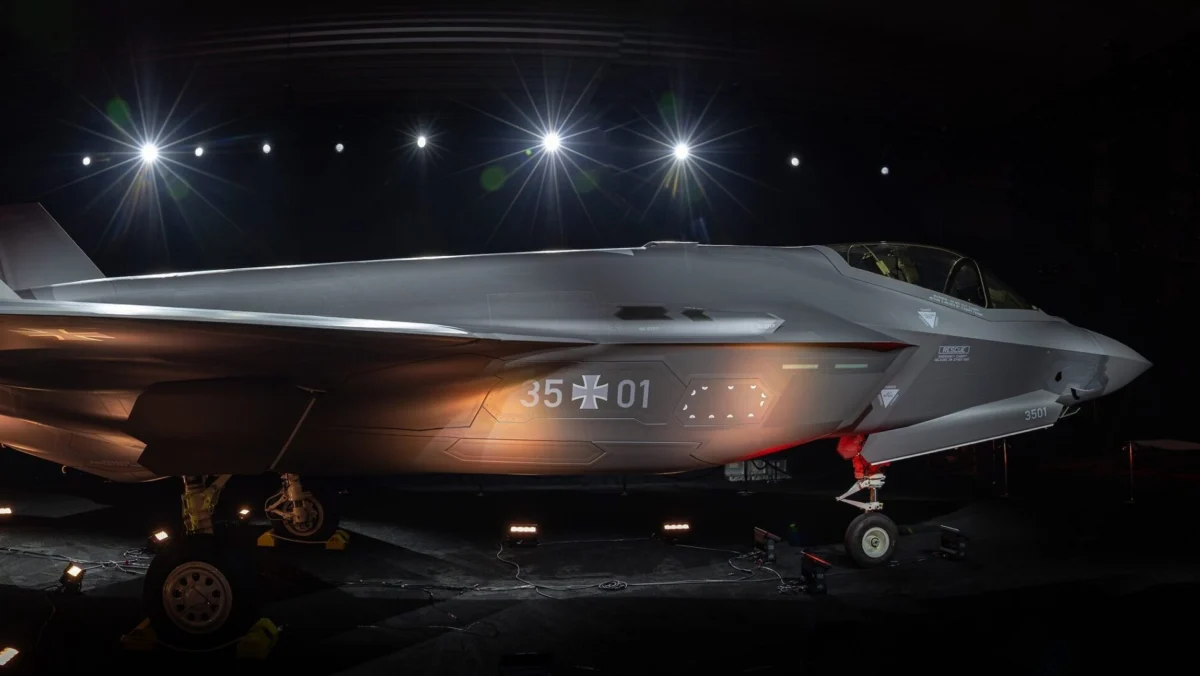
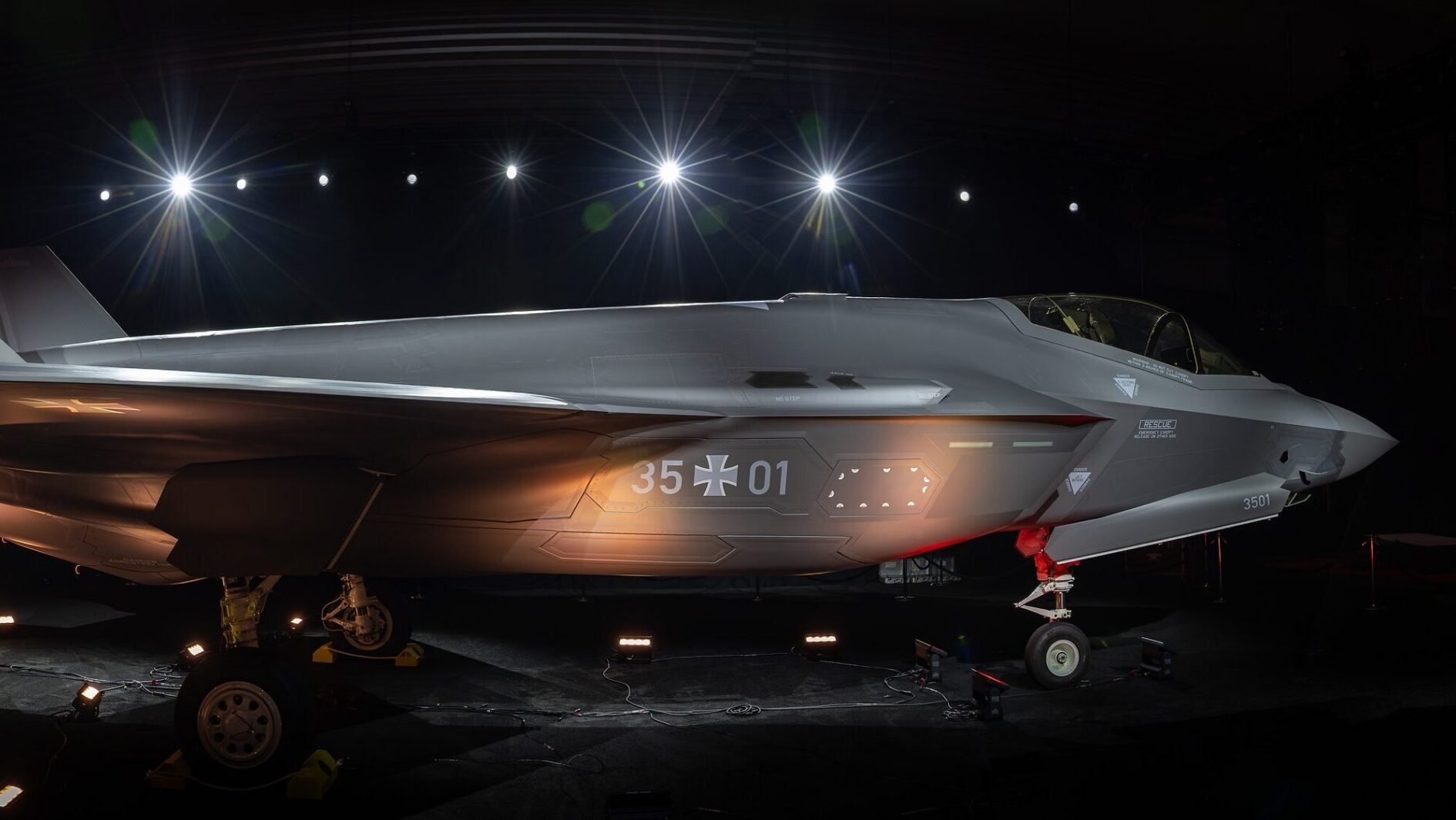
FORT WORTH, Texas — Beneath the vast expanse of a Texas sky, a pivotal chapter in European security was written this week. At Lockheed Martin’s sprawling aeronautics facility, German and American officials gathered to witness the official rollout of the first F-35A Lightning II destined for the Luftwaffe. The ceremony, characterized by both technical precision and high-level diplomatic pageantry, served as a tangible manifestation of a shifting geopolitical reality in Europe—one where fifth-generation stealth capabilities are no longer a luxury, but a requirement for the modern battlefield.
For German Defense Minister Boris Pistorius, the sleek, gray airframe represented far more than a mere procurement milestone. Standing before the aircraft, he characterized the jet as "living proof" of the enduring vitality of the transatlantic alliance. As Germany moves to modernize its military in the shadow of persistent regional instability, the arrival of the F-35 acts as a cornerstone of its commitment to collective deterrence.
The Main Facts: A Landmark Acquisition
The rollout ceremony marks the culmination of an accelerated timeline that has seen Germany transition from a skeptical observer of American stealth technology to one of its most significant European partners. Under an $8.8 billion agreement finalized in 2022, Germany is set to receive 35 F-35A aircraft, along with a comprehensive suite of munitions, training systems, and long-term sustainment support.
The aircraft unveiled in Fort Worth will not immediately head to German soil. Instead, the first eight jets are slated to be stationed at Ebbing Air National Guard Base in Arkansas. This facility will serve as the primary hub for the international F-35 pilot training program, allowing German aviators to integrate seamlessly with their American and allied counterparts. The first operational arrival of these aircraft within German borders is currently projected for late 2027.
A Chronology of Change: From Skepticism to Commitment
To understand the significance of this rollout, one must look at the turbulent history of German fighter procurement over the last decade.
- The Pre-2022 Era: For years, Berlin vacillated between domestic European fighter projects and American platforms. The political appetite for the F-35 was historically low, driven by a preference for European industrial autonomy and a lack of perceived immediate threat.
- The Watershed Moment (February 2022): The Russian invasion of Ukraine fundamentally shattered the German status quo. The subsequent "Zeitenwende" (a historic turning point) announced by Chancellor Olaf Scholz signaled a complete overhaul of German defense policy.
- The Deal (December 2022): Responding to the urgent need for a nuclear-capable, stealth-enabled platform to replace the aging Tornado fleet, Berlin officially inked the deal for 35 F-35As.
- The FCAS Collapse (2026): Earlier this year, the collapse of the Future Combat Air System (FCAS)—the ambitious sixth-generation joint project between France, Germany, and Spain—threw European defense planning into uncertainty. This dissolution has made the F-35 acquisition even more critical for Germany, prompting internal discussions regarding follow-on orders to cover potential capability gaps.
Supporting Data: Why the F-35?
The F-35A is designed to provide the Luftwaffe with unprecedented situational awareness and survivability in high-threat environments. Its primary advantages include:
- Stealth Technology: The airframe’s low-observable design allows it to operate in denied airspace, a capability that legacy platforms like the Eurofighter Typhoon cannot match in deep-strike missions.
- Sensor Fusion: The jet acts as a "flying sensor node," aggregating data from ground, sea, and space assets, and sharing that information across the coalition network.
- Nuclear Sharing: A primary requirement for Germany’s procurement was the ability to carry the B61-12 nuclear gravity bomb, ensuring Berlin’s continued participation in NATO’s nuclear deterrence mission.
- Interoperability: By joining the "F-35 Club," Germany gains access to a vast data pool shared by over a dozen allied nations, standardizing logistics and training across the European theater.
Official Responses: Strengthening the Transatlantic Bond
The rhetoric in Fort Worth was notably warm, reflecting a concerted effort by both Washington and Berlin to emphasize unity despite recent political friction.
Dan Zimmerman, performing the duties of the US Deputy Undersecretary for Acquisition and Sustainment, lauded the German procurement process. "Germany has proven itself a model ally," Zimmerman stated. "Their decision to invest in the F-35 is a testament to our shared vision for defense in the European theater. It ensures that when our pilots fly, they are flying with the same language, the same data, and the same strategic intent."
Lockheed Martin’s leadership echoed these sentiments. OJ Sanchez, President of Lockheed’s Aeronautics division, emphasized the long-term nature of the partnership. "We are proud to build on more than 50 years of partnership. We aren’t just delivering a jet; we are delivering a capability that will secure European skies for the next several decades."
The ceremony followed a high-stakes meeting at the Pentagon between Defense Minister Pistorius and US Secretary of Defense Pete Hegseth. Amidst ongoing discussions regarding European defense spending and industrial capacity, the two leaders signed a "Statement of Intent" aimed at intensifying defense-industrial collaboration. This agreement is viewed as a framework to streamline the supply chain and ensure that Germany’s F-35 fleet remains mission-ready in an era of rapid technological advancement.
Implications: The Future of the Luftwaffe and European Defense
The arrival of the F-35 carries profound implications for the future of European security architecture.
1. Filling the Capability Gap
With the failure of the FCAS program to provide a near-term replacement for aging fleets, Germany now finds itself reliant on American technology to maintain its status as a top-tier European air power. The talk of a "follow-on order" is not merely speculative; it is a tactical necessity. Military analysts suggest that if the FCAS program remains dormant or continues to underperform, Germany may look to increase its F-35 footprint to bridge the gap between today’s fleet and the next generation of combat aviation.
2. A Shift in Industrial Strategy
The intensified collaboration agreement signed at the Pentagon signals a shift in how Berlin approaches its defense industry. For years, the German preference for "sovereign" European solutions often clashed with the reality of procurement timelines and operational requirements. The pivot toward the F-35 suggests a pragmatic acceptance that interoperability with the United States is the fastest, most effective way to ensure national security.
3. Deterrence in a New Era
The F-35 provides Germany with a credible "first-day-of-war" capability. In the event of an escalation in Eastern Europe, the ability of the Luftwaffe to conduct deep-penetration strikes and coordinate with NATO’s Integrated Air and Missile Defense (IAMD) is essential. By integrating into the F-35 ecosystem, Germany is effectively linking its national defense strategy directly to the broader NATO mandate.
4. Domestic Political Challenges
Despite the successful rollout, the procurement is not without its domestic critics in Berlin. Concerns regarding the high cost of maintenance, the dependence on US-based software updates, and the potential impact on Germany’s own aerospace sector remain topics of intense political debate. The government must now balance the operational success of the F-35 program with the necessity of maintaining a healthy domestic defense industrial base.
Conclusion: A New Horizon
As the ceremony concluded and the curtains closed on the first German F-35, the mood among the delegation was one of quiet confidence. The aircraft sitting on the tarmac in Texas is more than a piece of hardware; it is a bridge between the past and the future.
For the Luftwaffe, the journey from the decision-making halls of 2022 to the arrival of the first airframe in 2027 represents a massive organizational undertaking. As Germany prepares for its first group of pilots to begin training in Arkansas, the focus will now shift to operational integration and the long-term sustainment of this fifth-generation fleet.
In the face of an unpredictable and increasingly militarized global landscape, the F-35 rollout stands as a definitive statement: Germany is moving forward, the transatlantic bond is being reinforced, and the defense of the European theater is entering a new, more advanced, and more integrated era. The "Zeitenwende" is no longer just a political concept—it is taking flight.