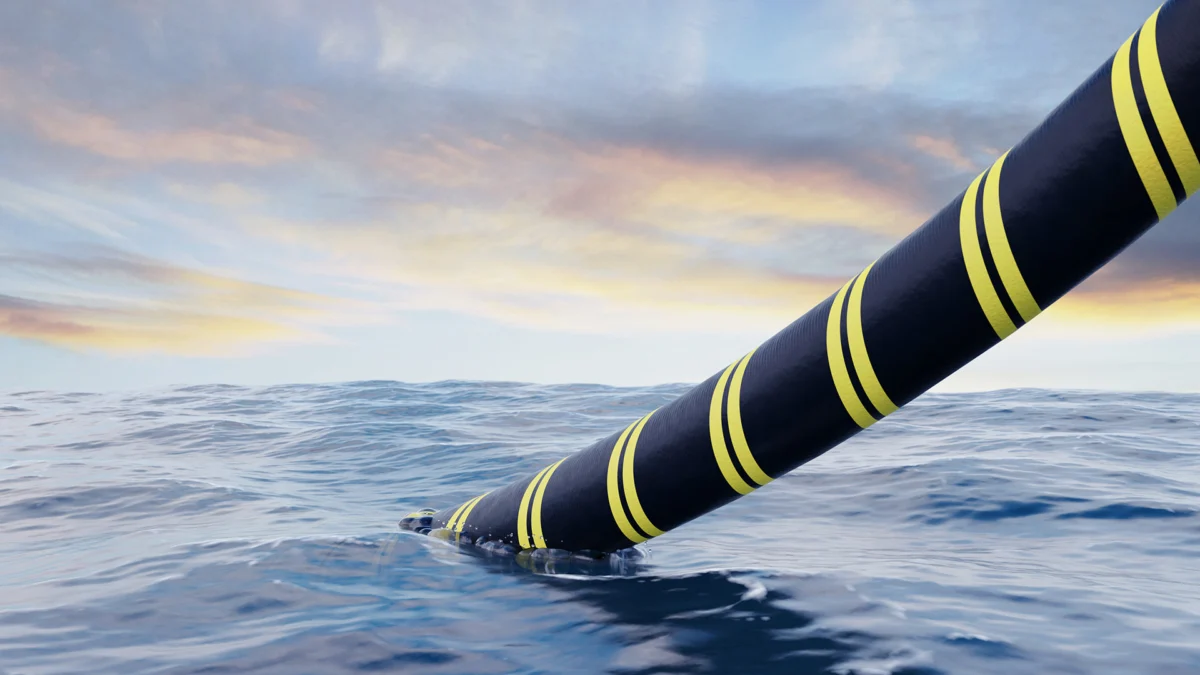
In a move that signals a seismic shift in global subsea infrastructure, FLAG—one of the world’s most prominent privately owned subsea cable operators—has officially announced a massive expansion of its network footprint. By securing stakes in the MIST, I2SEA, and ECHO cable systems, the company is not merely adding capacity; it is architecting a new, highly resilient digital backbone for the Indo-Pacific region. These investments form the bedrock of FLAG’s “Vision 2030” strategy, a long-term initiative designed to address the surging demand for low-latency, high-redundancy connectivity in an era defined by artificial intelligence, cloud computing, and complex geopolitical realities.
The Strategic Core: Vision 2030 and Network Resilience
At the heart of FLAG’s latest announcement lies a recognition of a changing global digital landscape. As enterprise, cloud-native, and AI-driven data traffic continues to grow exponentially, the traditional “single-path” models of connectivity are becoming increasingly obsolete. Organizations today require more than just speed; they require uptime, redundancy, and the ability to route traffic through diverse corridors to ensure business continuity.
FLAG’s Vision 2030 is built on the premise that infrastructure investment must be proactive rather than reactive. By targeting strategically significant markets where regulatory and geographic hurdles often create “bottlenecks,” the company is positioning itself to be the premier partner for global enterprises. The goal is to move beyond legacy corridors—which are often overcrowded and prone to single-point failures—and create a mesh of interconnected routes that offer unparalleled reliability.
Chronology of Expansion: From ECHO to I2SEA
To understand the scale of FLAG’s current trajectory, one must look at the sequence of its recent infrastructural acquisitions. The company’s roadmap is not a series of isolated events, but a calculated progression toward a fully integrated global network.
The ECHO Foundation
The journey began with FLAG’s strategic investment in a fibre pair on the ECHO Trans-Pacific system. This project served as the initial bridge between Asia and the United States, proving the efficacy of collaborative cable builds. By securing this foundational capacity, FLAG gained a foothold in the high-demand Trans-Pacific corridor, providing the necessary bandwidth to support the massive traffic flows originating from data-heavy hubs in Asia.
The MIST Integration (2024–2026)
Following the success of the ECHO deployment, FLAG turned its gaze toward the India-Singapore route. Through a definitive agreement with Orient Lines (OLL), the owner of the MIST (Mumbai-Singapore-Tokyo) cable system, FLAG has secured critical capacity. While the MIST system has been operational since 2024, FLAG’s integrated services are slated to go live in October 2026. This addition is particularly significant as it provides a robust link between India’s commercial capital and the digital heart of Southeast Asia.
The I2SEA Milestone (2029)
Looking further ahead, FLAG has entered into a contract with Lightstorm to participate in the I2SEA cable system. This project is perhaps the most ambitious of the current series, involving a fibre pair that will connect the coastal Indian cities of Machilipatnam and Chennai to Singapore. Crucially, the project also includes a heavy investment in the terrestrial segments connecting Mumbai and Chennai, effectively stitching together India’s East and West coasts into a singular, high-speed network. This system is currently scheduled to enter service in 2029, representing the culmination of the current phase of the Vision 2030 plan.
Supporting Data: Why India and the Indo-Pacific Matter
The choice of geography is far from coincidental. India is currently undergoing a digital transformation of unprecedented scale. With a burgeoning tech sector, an aggressive push toward cloud migration, and a rapidly increasing consumer base for digital services, the demand for reliable connectivity in India is skyrocketing.
The Mumbai-Singapore Axis
Mumbai has emerged as a primary landing point for subsea cables, acting as the gateway for traffic moving between Europe, the Middle East, and Asia. By investing in multiple paths to Mumbai, FLAG is effectively solving the redundancy problem for its clients. The company’s new roadmap will provide four distinct, geographically diverse paths into Mumbai. This diversity is essential; should one subsea route suffer an outage—due to either human interference or natural disaster—traffic can be rerouted seamlessly through the other three, ensuring zero impact on end-users.
Terrestrial Synergy
The I2SEA project is a prime example of FLAG’s shift toward a "holistic" network philosophy. By combining subsea capacity with terrestrial fibre segments, FLAG is ensuring that the connectivity does not end at the beachhead. By strengthening the link between Mumbai and Chennai, FLAG is creating a domestic “backbone” that complements its international reach, allowing the company to offer end-to-end service level agreements (SLAs) that are rarely achievable through multi-vendor networks.
Official Perspectives: CEO Paul Abfalter on the Future
In a recent statement, Paul Abfalter, CEO of FLAG, articulated the strategic intent behind these moves. For Abfalter, the company’s role is shifting from that of a traditional cable operator to a foundational infrastructure provider for the digital age.
“Through our Vision 2030 strategy and future investment plans, we are focused on expanding our network reach and becoming the provider of choice for customers requiring long-haul connectivity in the Indo-Pacific region,” Abfalter noted. He emphasized that these investments are not merely about adding bits and bytes, but about creating reliable, diverse paths that are commercially viable in a complex geopolitical climate.
Abfalter highlighted the success of the existing “India-Singapore India Asia Express” investment as a validation of the company’s current strategy. “The I2SEA investment is a great example of FLAG ramping up our investments in new subsea builds and in unique long-haul terrestrial capability,” he added, leaving the market hungry for more by teasing further investment announcements slated for the next quarter.
Implications for the Industry and the Global Economy
The ripple effects of FLAG’s expansion will be felt far beyond the boardroom. For the global telecommunications ecosystem, these investments have several profound implications:
1. Reduced Reliance on Legacy Infrastructure
The global subsea network is aging, and many of the older corridors are reaching their capacity limits. By building new, state-of-the-art systems, FLAG is helping to modernize the global infrastructure, allowing for faster speeds and lower latency, which are critical for real-time applications like autonomous systems and remote surgery.
2. Enhanced Geopolitical Stability in Data Flows
Connectivity is the lifeblood of the modern economy, yet it remains vulnerable to geopolitical tensions. By diversifying routes and avoiding single-jurisdiction dependence, FLAG is providing a layer of "digital security" for its customers. Businesses that rely on FLAG can operate with the confidence that their data paths are not overly exposed to the instability of any single region.
3. Enabling the AI Revolution
Artificial Intelligence requires massive amounts of data to be transferred between processing centers and edge nodes. As AI models become more distributed, the need for a resilient, high-capacity, low-latency network becomes non-negotiable. FLAG’s investment in these cables is, in many ways, an investment in the underlying hardware of the AI era.
4. Competitive Pressure on Peers
FLAG’s aggressive expansion sets a new benchmark for other subsea operators. By integrating terrestrial and subsea assets so effectively, the company is raising the bar for the level of service and redundancy that customers expect. Competitors will likely be forced to accelerate their own infrastructure spending to keep pace, which will lead to a more robust global network overall.
Conclusion: A Future-Proofed Network
As we move toward 2030, the ability to transmit data reliably across vast distances will be the primary determinant of economic success for nations and corporations alike. FLAG’s latest announcements regarding MIST, I2SEA, and ECHO represent a forward-looking commitment to this reality.
By strategically connecting key markets like Mumbai, Singapore, and the United States, and by bridging the gap between subsea and terrestrial infrastructure, FLAG is building more than just cables. It is building a resilient, adaptable, and high-performance digital environment. For the enterprise customer, this means a future where downtime is a relic of the past and the global flow of data is as reliable as it is fast. With further announcements expected in the coming months, it is clear that FLAG has only just begun to reshape the map of global connectivity.
For further details on the technical specifications of these new routes or to inquire about service availability, stakeholders are encouraged to visit the official company website at www.flagtel.com.