By Financial News Desk
Wednesday, October 21, 2026
In a significant boost for the future of network efficiency, AI networking startup Atombeam has successfully closed an $18.3 million funding round, bringing the company’s total capitalization to $55 million. As global data consumption continues to outpace the physical capacity of existing network infrastructures, Atombeam’s proprietary technology is increasingly viewed as a critical bridge for satellite, defense, and commercial sectors.
This latest injection of capital arrives at a time when the telecommunications industry is struggling to reconcile the explosive growth of AI-driven data traffic with the limitations of existing satellite and terrestrial bandwidth. With this funding, Atombeam aims to transition its primary product, Neurpac, from niche adoption to industry-wide implementation, while simultaneously accelerating the development of its Persistent Cognitive Machine (PCM) technology.
Core Technology: Solving the "Data Crunch"
At the heart of Atombeam’s value proposition is its flagship software, Neurpac. Unlike traditional compression algorithms that often require significant computational overhead, Neurpac focuses on compacting data packets at the source. By optimizing how data is structured before it ever hits a transmission link, Neurpac effectively multiplies usable bandwidth by a factor of four.
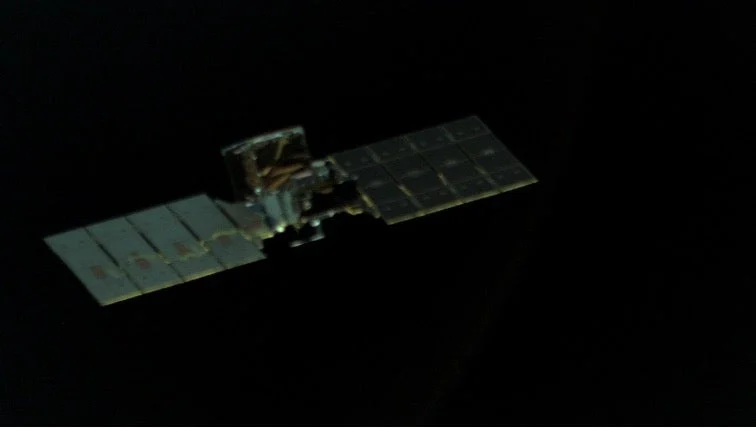
The implications for the satellite industry are profound. Satellite operators, often constrained by the high cost of orbital bandwidth and the inherent latency of space-to-ground links, have been actively seeking solutions that do not require massive hardware overhauls. Atombeam’s software-defined approach allows operators to "stretch" their current capacity, effectively achieving higher throughput without launching additional satellites or upgrading transponders.
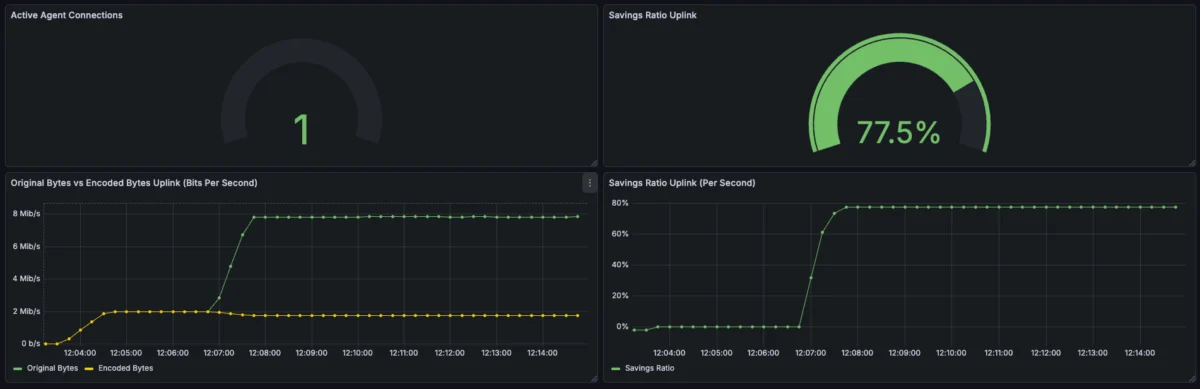
Independent validations have been key to the company’s recent momentum. Atombeam recently reported that tests conducted using a major satellite operator’s own traffic demonstrated a 77.5% uplink savings ratio—a metric that, if replicated across a global constellation, could save operators millions of dollars in recurring transmission costs annually.
Chronology of Growth and Strategic Milestones
Atombeam’s path to this $55 million milestone has been characterized by a strategic pivot toward high-stakes government and defense applications, which served as a proving ground for their core technology.
- Early Development Phase: Atombeam began by identifying the inefficiencies in how machines communicate across networks. The founders recognized that as the "Internet of Things" (IoT) grew, the sheer volume of small, repetitive packets was congesting networks, a problem exacerbated by the rise of Large Language Models (LLMs).
- February 2026: A pivotal moment arrived when the U.S. Space Development Agency (SDA) expanded its contract with Atombeam. The goal was to integrate Neurpac into the military’s Link 16 communications architecture. The resulting demonstrations were transformative; the technology reduced Link 16 data streams over military satellites by 86% to 89%, effectively increasing the available bandwidth by a factor of seven to nine times.
- October 2026: Following the success of the SDA demonstrations and successful commercial trials, Atombeam finalized its $18.3 million Series funding. This capital is earmarked for scaling engineering teams, finalizing independent benchmarking for their PCM technology, and launching full-scale customer pilots across the commercial sector.
The Persistent Cognitive Machine (PCM) Advantage
Beyond data compression, Atombeam is positioning itself as a leader in sustainable AI. The company has introduced its Persistent Cognitive Machine (PCM) technology, an architectural approach designed to address the energy crisis currently facing the AI sector.
As LLMs continue to balloon in size—demanding massive clusters of GPUs and astronomical power consumption—the industry is searching for more efficient alternatives. Atombeam claims its PCM architecture requires exponentially less power and fewer resources than traditional transformer-based models. By focusing on "cognitive" efficiency, the company aims to move AI processing closer to the "edge"—directly on sensors, satellites, and mobile devices—rather than relying solely on massive, centralized data centers.
Official Perspectives: An "Inflection Point"
Charles Yeomans, Co-founder and CEO of Atombeam, views this funding round not merely as a financial milestone, but as a turning point for the company’s commercial viability.
"With Neurpac, we are solving the challenges that Large Language Models exacerbate," Yeomans stated in an interview following the announcement. "Wired, cellular, and satellite networks, as well as data centers, are being pushed to the brink by heavy AI workloads and the barrage of data from connected machines. Our technology provides the necessary relief, ensuring that these systems remain functional and efficient in an increasingly data-heavy world."
The CEO emphasized that the company’s strategy for the next 18 months involves moving from the laboratory into the field. "We are moving beyond the demonstration phase," Yeomans noted. "The goal now is mass adoption. We are working with partners to integrate Neurpac into the standard operating environments of global satellite networks."
Implications for the Future of Connectivity
The success of Atombeam’s technology carries several long-term implications for the telecommunications and defense industries:
1. The Death of Bandwidth Scarcity
If Atombeam’s technology becomes a standard, the "bandwidth scarcity" narrative that has dominated the satellite industry for decades may shift. By increasing effective bandwidth by 4x to 9x, companies can theoretically provide higher-quality services to more users without the prohibitive capital expenditure (CapEx) associated with launching new orbital assets.
2. Defense Resilience
In the context of modern electronic warfare, data throughput is a matter of national security. The SDA’s interest in Atombeam highlights the importance of "data agility." The ability to transmit critical information in a fraction of the time, or to transmit more information through the same pipe, gives military forces a distinct tactical advantage. The success with Link 16 suggests that Atombeam’s software could eventually become a standard component in secure military communications.
3. Sustainability in AI
The "energy-guzzling" nature of current AI models is a major headwind for tech giants. If Atombeam’s PCM technology delivers on its promise of providing equivalent AI functionality with a fraction of the power consumption, it could disrupt the current AI hardware market. This could allow for smarter, autonomous systems that operate in remote environments where power is a limited, finite resource—such as deep-space exploration or long-term environmental monitoring.
Market Challenges and Competitive Landscape
Despite the optimism surrounding this funding, Atombeam operates in a highly competitive space. The field of network optimization is populated by both legacy giants and agile startups. The challenge for Atombeam will be integration. Getting proprietary software embedded into the complex, often proprietary, firmware of satellite modems and ground station hardware is a logistical hurdle that requires long sales cycles and deep engineering cooperation.
However, the company’s strong showing with the Space Development Agency provides a level of validation that is difficult to replicate. By securing a foothold in defense, Atombeam has demonstrated that its tech is robust enough for mission-critical applications—a credential that will be invaluable as they pursue larger commercial contracts in the private sector.
Conclusion: The Road Ahead
As Atombeam moves into its next phase, the focus will be on operational execution. The $18.3 million will facilitate the hiring of additional specialized engineering talent to support the deployment of Neurpac across diverse hardware platforms.
The satellite industry, long known for its conservative approach to new software, is clearly taking notice of the gains promised by AI-based optimization. If Atombeam can continue to hit its performance benchmarks in real-world, high-traffic scenarios, it may well become the "invisible glue" that holds the next generation of global, AI-integrated communication networks together.
For now, the industry will be watching closely as the company transitions from successful government demonstrations to the broader, more demanding commercial landscape. With a total of $55 million in funding, Atombeam is no longer just a startup with a promising idea—it is a player with the resources to reshape the economics of global connectivity.