By Technology Correspondent | September 23, 2026
In a landmark achievement for the future of global telecommunications, Sceye, a pioneer in High-Altitude Platform Station (HAPS) technology, has successfully concluded a mission that redefines the boundaries of stratospheric connectivity. During its inaugural "Service Test" (ST1) mission—which spanned from August 9 to September 5, 2026—the company successfully demonstrated not only its "cell tower in the sky" capabilities but also a world-first laser-ranging demonstration in collaboration with Japan’s SoftBank.
This mission, which saw a Sceye vehicle navigate the stratosphere between New Mexico and Japan, serves as a proof-of-concept for a new architecture of global data transmission. By integrating mobile broadband, edge computing, and free-space optical (FSO) tracking, the partners have laid the groundwork for a secure, high-bandwidth communication network that bridges the gap between ground-based infrastructure and space-based assets.
The Core Achievement: A New Frontier in Optical Communication
While the primary mission of the ST1 flight was to validate the "SceyeCELL" architecture—which provides direct-to-device connectivity—the integration of a laser-ranging system represents a significant leap forward in precision engineering.
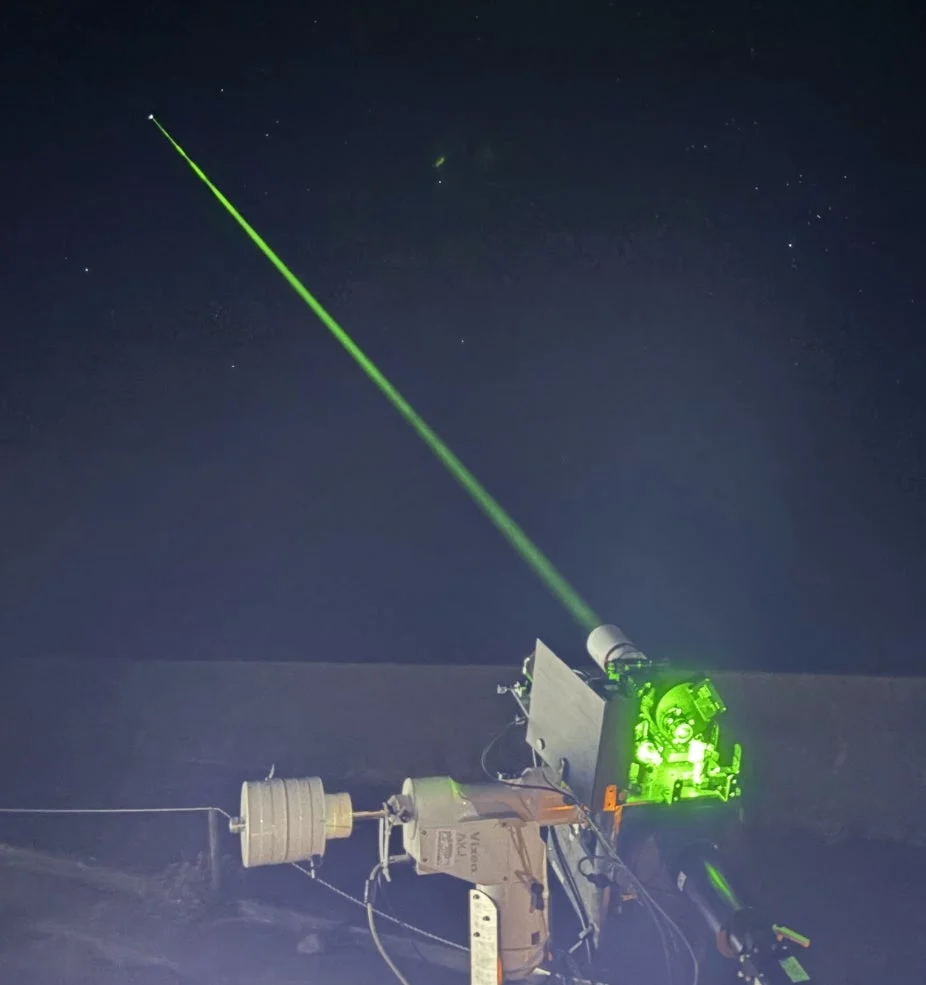
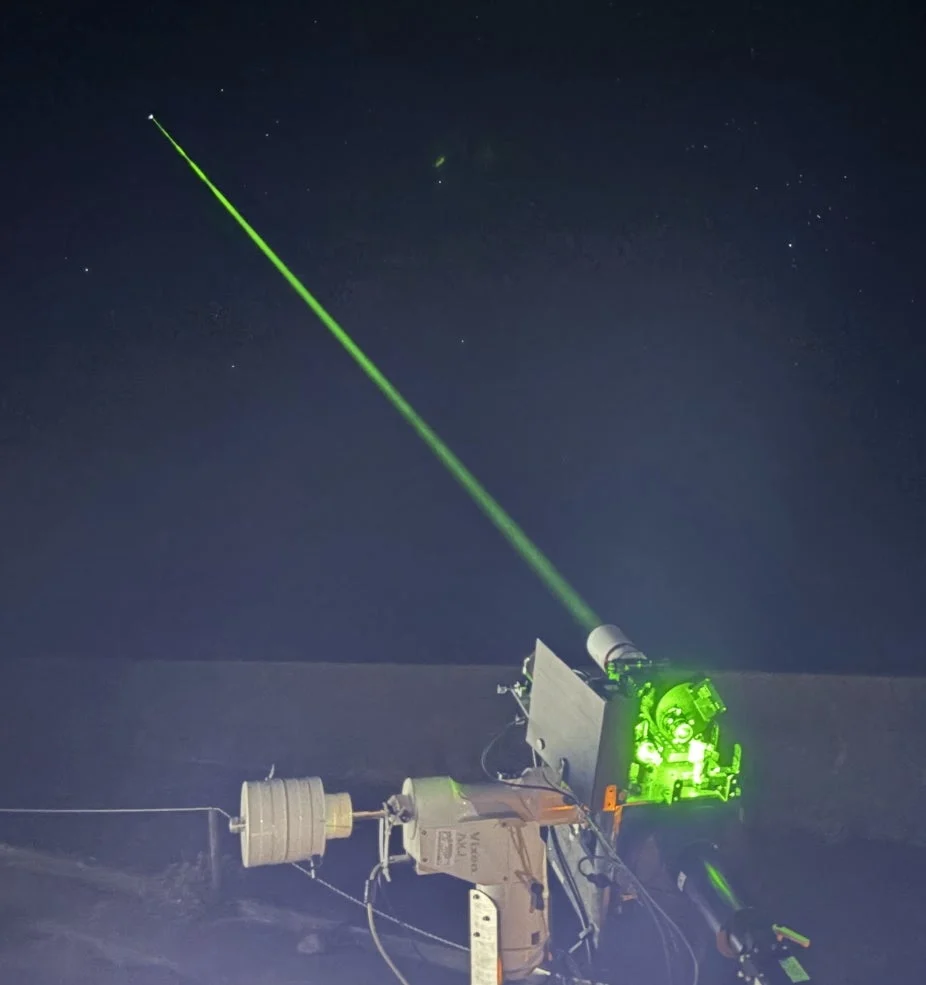
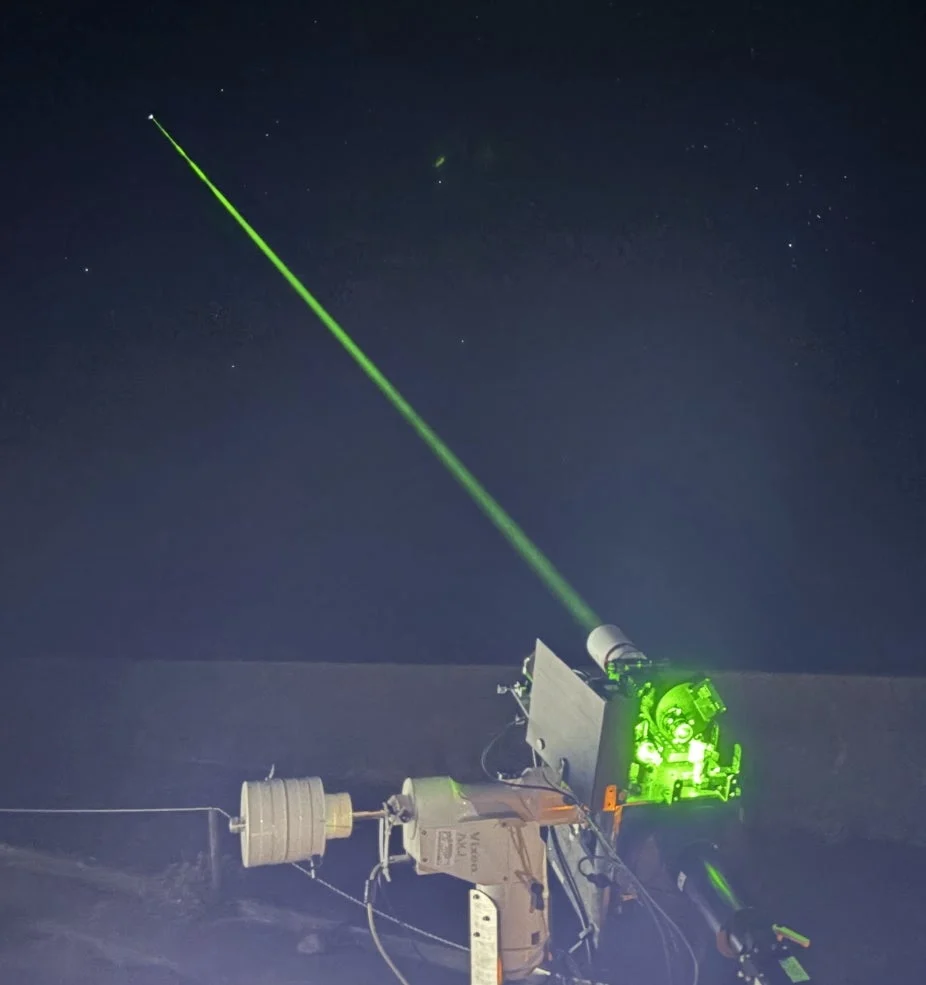
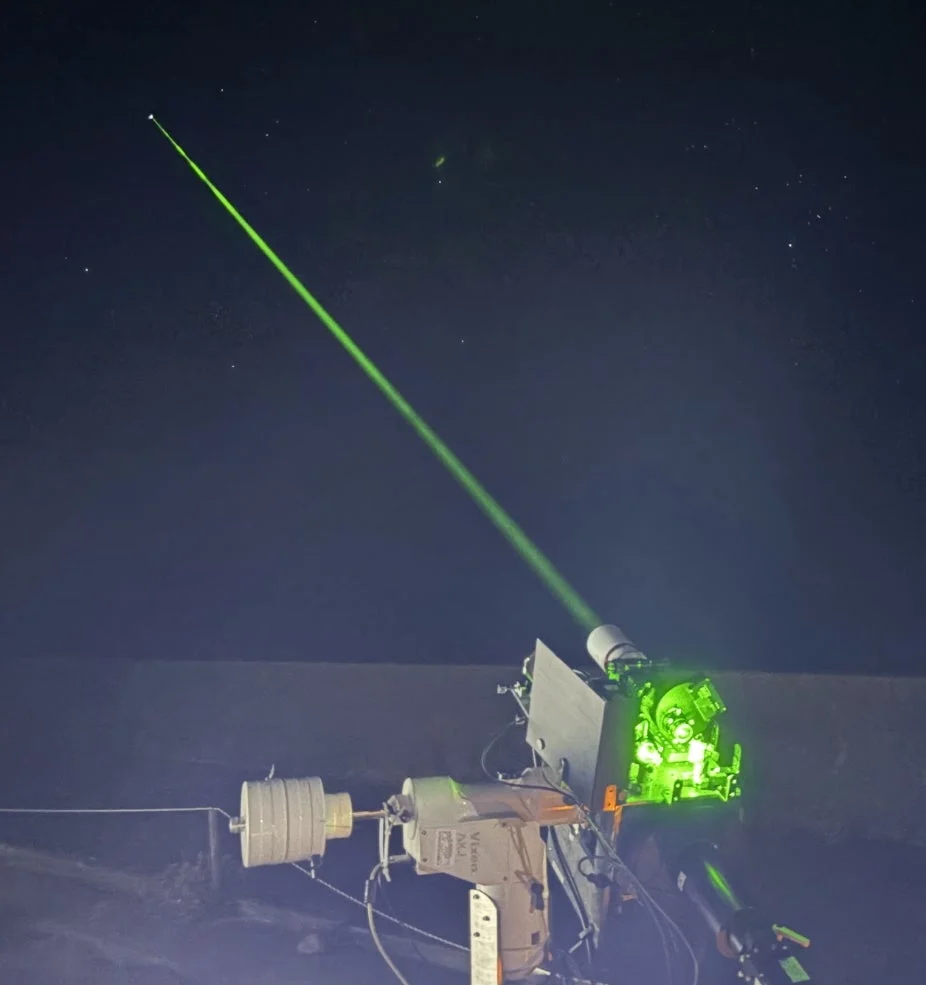
The demonstration utilized a portable laser ranging system based on the "Omni-SLR" (Satellite Laser Ranging) technology, originally designed by Hitotsubashi University. The system was deployed on the ground in Japan, tasked with tracking the Sceye HAPS vehicle as it navigated the upper atmosphere. To facilitate this, the vehicle was equipped with a specialized corner cube reflector (CCR), designed by Japan’s National Institute of Polar Research (NIPR) and integrated into a reflector assembly developed by SoftBank.
The successful acquisition and tracking of a high-altitude platform using a highly directional laser beam is more than a technical feat; it is a critical precursor to optical wireless communications. Unlike traditional radio-frequency (RF) links, which are limited by spectrum availability and interference, optical links offer massive bandwidth potential and are inherently more secure, as they are virtually impossible to intercept without physical line-of-sight interruption.
Chronology of the ST1 Service Test Mission
The ST1 mission was characterized by an ambitious flight path and a rigorous testing schedule that spanned nearly a month.
- August 9, 2026: The Sceye ST1 vehicle commenced its inaugural Service Test mission. The vehicle was deployed from its base in New Mexico, ascending into the stratosphere to begin its trans-Pacific journey.
- Mid-August 2026: Throughout the transit, the platform tested its primary payload: the SceyeCELL. During this phase, the platform successfully delivered text messaging, voice calls, high-speed internet, and live video streaming directly to unmodified, standard mobile devices.
- Late August 2026: As the vehicle operated over the designated Japanese testing zone, the collaborative team initiated the FSO demonstration. Ground teams engaged the Omni-SLR equipment, successfully locking onto the CCR-equipped HAPS vehicle, confirming that a moving stratospheric asset can be tracked with precision via laser.
- September 5, 2026: The ST1 mission concluded successfully. The vehicle completed its flight cycle, having validated both the direct-to-device broadband capabilities and the viability of optical link acquisition.
Technical Foundations and Supporting Data
The ST1 mission utilized a multi-layered approach to ensure data integrity and connectivity.
SceyeCELL: The "Cell Tower in the Sky"
The SceyeCELL payload essentially replicates the function of a terrestrial cell tower but at an altitude of approximately 60,000 to 70,000 feet. By hovering in the stratosphere, the platform provides a wide-area coverage footprint that can reach remote, rural, or disaster-stricken areas where traditional cell towers are either non-existent or have been destroyed.
The Role of Edge Computing
Crucially, this mission demonstrated on-platform data processing. By performing "edge computing" directly on the HAPS, Sceye has reduced latency—a perennial challenge in satellite-based communications. By processing data locally in the stratosphere rather than bouncing every request to a terrestrial data center or a satellite constellation, the system provides a user experience that rivals 5G terrestrial networks.
FSO and Laser Ranging
The collaboration with Hitotsubashi University and NIPR provided the backbone for the FSO test. The "Omni-SLR" technology is designed to detect and track fast-moving targets. By successfully bouncing a laser off the CCR mounted on the Sceye platform, the researchers proved that atmospheric turbulence and vehicle drift could be compensated for, allowing for a stable communication link.
Official Perspectives: A Vision for Global Connectivity
In a press release issued following the disclosure of the FSO demonstration, Sceye’s founder and CEO, Mikkel Vestergaard Frandsen, highlighted the systemic impact of the mission.
"During a single mission, our first Service Test flight supported direct-to-device connectivity, edge computing, communications with drones, and now a world-first laser-ranging demonstration," Frandsen stated. "The ability to connect ground, stratosphere, and space through optical links could fundamentally change how information moves securely around the world."
The partnership with SoftBank, a global leader in telecommunications and technology investment, underscores the commercial viability of the project. For SoftBank, the integration of HAPS into their portfolio represents a strategic pivot toward "non-terrestrial networks" (NTNs). By utilizing the stratosphere, SoftBank aims to provide seamless coverage that is immune to the topographical limitations that plague traditional ground-based mobile network operators.
Implications for the Future of Telecommunications
The success of the ST1 mission carries profound implications for several sectors:
1. Narrowing the Digital Divide
Perhaps the most immediate impact is on rural and underserved regions. HAPS technology offers a rapid deployment model that does not require the massive infrastructure investment of fiber-optic cabling or thousands of ground-based towers.
2. Enhancing Disaster Resilience
During natural disasters, terrestrial communication networks often fail. A fleet of HAPS platforms could be deployed over a disaster zone within hours, providing instantaneous, robust mobile coverage to coordinate emergency response efforts and keep victims connected to aid organizations.
3. The Future of Space-to-Stratosphere Links
The FSO demonstration is the "missing link" for a truly integrated global network. If HAPS can effectively communicate with both the ground and satellites via laser, they can act as high-speed data relays. This creates a "three-tier" network: ground terminals, stratospheric relays, and space-based satellites. Such an architecture would be highly resilient, difficult to jam, and capable of transmitting vast amounts of data at speeds currently impossible via RF-only links.
4. Security and Sovereignty
Because optical communications are highly directional, they offer a level of security that RF signals—which broadcast in wide patterns—cannot match. For government and defense applications, this capability is invaluable. It ensures that communication links between command centers and remote assets remain private and resistant to electronic warfare.
Conclusion: What Lies Ahead?
The Sceye ST1 mission has moved the concept of "HAPS connectivity" from the realm of theoretical research to demonstrated reality. By proving that a platform can act as a mobile cell tower, an edge-computing server, and an optical relay point, Sceye has signaled to the telecommunications industry that the stratosphere is the next frontier of infrastructure.
As Sceye moves forward with its Service Test program, industry analysts expect to see increased focus on the miniaturization of these payloads and the development of a fleet-based deployment model. While regulatory hurdles regarding stratospheric flight and spectrum allocation remain, the technical barriers have been significantly lowered.
With the success of this mission, the global telecommunications landscape looks increasingly vertical. As we move toward 2027 and beyond, the collaboration between Sceye and SoftBank serves as a reminder that the most significant technological breakthroughs are often found not by looking at the ground, but by looking up.