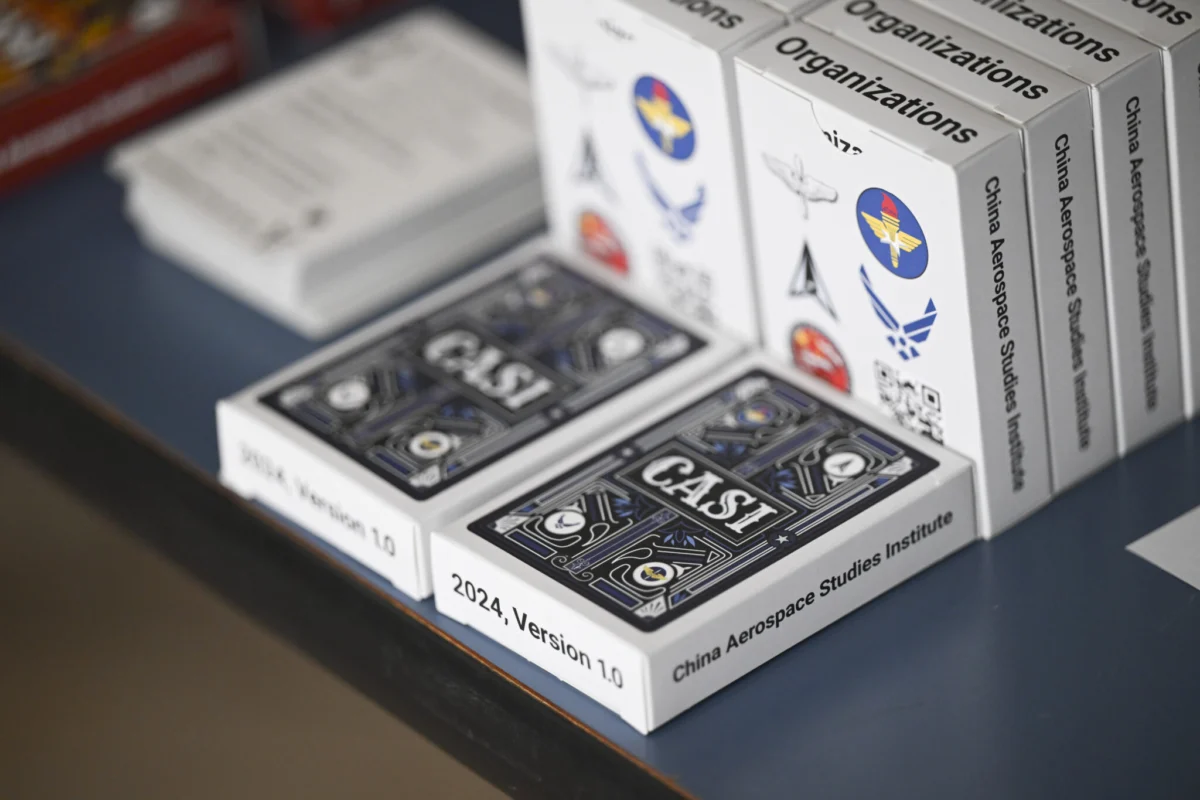
WASHINGTON — In a move that has sent ripples through the defense intelligence and academic communities, the U.S. Air Force has confirmed a significant restructuring of the China Aerospace Studies Institute (CASI). While the service maintains that the organization’s mission remains vital, the decision to eliminate civilian staff roles from the institute marks a departure from the operational model that has made CASI a cornerstone of U.S. efforts to understand Beijing’s rapidly evolving air and space capabilities.
The Air Force spokesperson confirmed that the decision is part of an "ongoing civilian restructure" within the Air Education and Training Command (AETC). Under this new directive, civilian personnel will no longer be assigned to CASI. Instead, the institute’s research objectives will be pursued by "leveraging assigned military service members."
The Core of the CASI Mission
For years, CASI has served as the premier, government-run think tank dedicated to analyzing China’s People’s Liberation Army (PLA) Air Force and its space-related ambitions. By producing granular, expert-level research, the institute provides the U.S. military and broader policy community with the intellectual foundation necessary to navigate the complexities of the Indo-Pacific theater.
The institute’s work is not merely academic; it is mission-critical. Its publications frequently influence defense strategy, procurement priorities, and diplomatic posturing. By dissecting Beijing’s military prowess, CASI helps the U.S. military anticipate threats, identify vulnerabilities in Chinese doctrine, and maintain a competitive edge in an era of renewed great-power competition.
Chronology of the Shift
The uncertainty surrounding the institute began to surface on Monday, when a civilian staffer shared news of their position’s elimination on social media. The post suggested that the Air Force intended to "shutter" the institute entirely, sparking immediate concern among defense analysts who view CASI’s output as indispensable.
This internal announcement coincided with a period of heightened diplomatic sensitivity, as Chinese President Xi Jinping is slated to visit the United States. The timing of the announcement—coming just as the two nations navigate a delicate period of communication—led to widespread speculation that the restructuring might be a symbolic gesture or a bureaucratic casualty of broader fiscal constraints.
By Tuesday, however, the Air Force clarified its position: the institute is not closing. Affected civilian employees are currently being evaluated for reassignment and will remain in their roles until further notice. Despite this, the transition from civilian subject-matter experts—many of whom possess decades of specialized regional and technical knowledge—to a model reliant on rotating military personnel raises questions about the long-term continuity and depth of the institute’s research.
The Latest Intelligence: "From Vision to Vigilance"
The significance of the work being performed at CASI was underscored just this week, with the publication of a new report titled From Vision to Vigilance: How Beijing’s Space-Science Roadmap Builds a Real-Time Kill Web.
The study provides a chilling assessment of how China is weaponizing its civilian space program. The report argues that technologies ostensibly developed for peaceful space exploration are being integrated into a "kill web"—a sophisticated, interconnected network of sensors and weapons capable of tracking and striking targets across the Pacific with near-real-time precision. The paper highlights the danger of Beijing’s dual-use strategy, where scientific advancement serves as a veneer for military expansion.
The loss of specialized civilian analysts to parse such complex developments—which require deep integration of technical, linguistic, and strategic expertise—is what has defense observers most concerned.
Official Responses and Bureaucratic Context
The Air Force’s decision to prune civilian roles at CASI does not appear to be an isolated incident. Rather, it reflects a broader trend across the Department of Defense (DoD).
Following the height of the Department of Government Efficiency (DOGE) initiative last year, the military has been under immense pressure to streamline its workforce. An analysis by Breaking Defense and the American Enterprise Institute (AEI) recently revealed that tens of thousands of civilian positions were axed across the Pentagon to meet efficiency mandates.
The consequences of those cuts are now being felt in real-time. According to Air & Space Forces Magazine, the Department of the Air Force has recently begun a massive hiring push to refill roles that were hollowed out during the previous fiscal austerity drives, suggesting that the "efficiency" gains may have come at the cost of operational capacity.
When asked if other military branches were following a similar trajectory, the response was mixed. The Naval War College explicitly stated to Breaking Defense that "there are no anticipated changes to manning or capacity at the China Maritime Studies Institute." However, the U.S. Army War College remained silent regarding the status of the China Landpower Studies Center, leaving open the question of whether the Air Force’s move is a singular anomaly or part of a wider shift in how the military handles regional studies.
Implications for U.S. National Security
The transition of the CASI model from civilian-led to military-led raises several critical questions regarding the future of military intelligence:
1. The Value of Institutional Memory
Civilian experts at organizations like CASI often remain in their positions for years, if not decades. This continuity is essential for building relationships, developing deep linguistic proficiency, and maintaining a long-term perspective on Chinese military trends. Military personnel, by contrast, typically rotate every two to three years. Critics argue that this rotation policy will inevitably lead to a "knowledge drain" that could impair the depth of analysis CASI is capable of producing.
2. The "Dual-Use" Threat
As the report From Vision to Vigilance illustrates, the nature of modern warfare is shifting toward the integration of civilian and military assets. To combat such a strategy, the U.S. needs experts who can bridge the gap between pure science, commercial technology, and military doctrine. If the Air Force restricts its pool of analysts to military personnel, it may struggle to recruit the civilian scientists and technologists necessary to track Beijing’s dual-use space programs effectively.
3. Strategic Signaling
Beyond the technical implications, the restructuring sends a signal to both allies and adversaries. In the eyes of the Chinese Communist Party, a reduction in the staff of a primary research organ might be interpreted as a deprioritization of the "China threat" or, conversely, as a sign of internal American administrative instability. For U.S. allies in the Indo-Pacific, who rely on CASI’s data to inform their own security postures, any reduction in research quality is a cause for concern.
Conclusion: A Delicate Balance
The Air Force finds itself in a precarious position. It must satisfy the demand for lean, efficient government operations while simultaneously maintaining a robust, intellectual bulwark against a primary strategic competitor.
The promise that CASI’s mission will continue "leveraging assigned military service members" is an optimistic assessment of the current landscape. However, the move away from civilian expertise in a field as complex as Chinese aerospace power risks weakening the very intelligence apparatus that the Air Force depends on for its strategic edge. As the Department of the Air Force continues to navigate these personnel shifts, the defense community will be watching closely to see if the institute’s output maintains the rigorous standard that has become its trademark—or if the cost of "efficiency" is a diminished ability to understand the adversary.