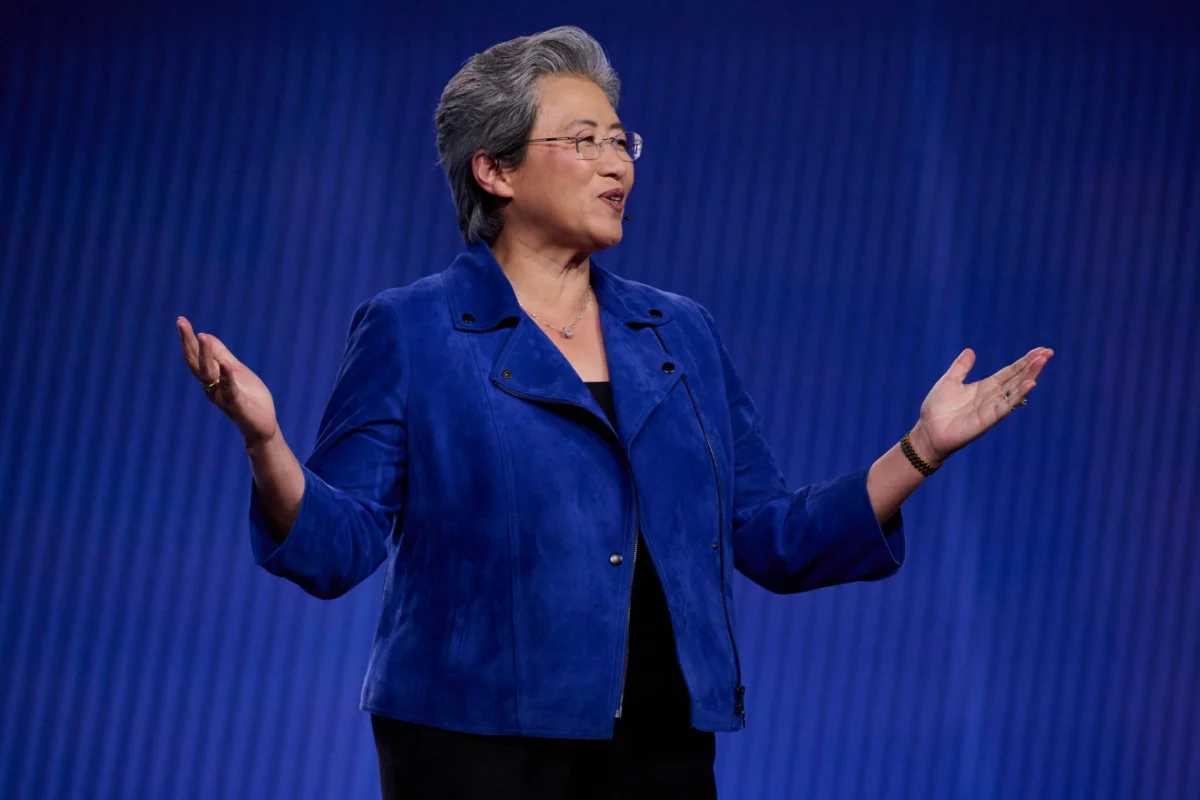
In a definitive move to capture the rapidly expanding market for high-performance artificial intelligence infrastructure, AMD has officially pivoted toward a rack-scale strategy. At the company’s sold-out "Advancing AI" conference in San Francisco, Chair and CEO Dr. Lisa Su unveiled "Helios," a formidable, rack-scale computing system designed to support the massive, energy-intensive workloads required by the world’s leading AI laboratories.
The launch of Helios represents a strategic inflection point for AMD, which has spent years playing catch-up to Nvidia in the data center sector. By delivering a comprehensive, integrated hardware solution, AMD is moving beyond selling individual GPUs to providing the backbone for the next generation of "agentic" AI models.
The Architecture of Power: What is Helios?
At its core, a rack-scale system is more than a mere collection of processors; it is a high-density, high-performance computing unit designed for the grueling demands of modern data centers. In the context of AI, these systems function as the engine room for training, fine-tuning, and deploying large-scale models.
Helios, which was first teased in 2025 and debuted in physical form at CES 2026, is described by Dr. Su as the industry’s "highest-performance AI rack." Weighing roughly the same as two compact cars, the unit is engineered to manage "gigawatt-scale" deployments. This massive throughput is necessary for training "frontier models"—the most complex and computationally demanding neural networks currently in development by firms like OpenAI and Anthropic.
Technical Superiority and the Competitive Landscape
Historically, Nvidia has maintained a vice-like grip on the AI hardware market, largely through its Rubin and Grace Blackwell architectures. However, early benchmarks and industry reporting from The Register suggest that AMD’s Helios may offer a genuine performance advantage. By optimizing interconnects and thermal efficiency, AMD has crafted a system that reportedly outperforms Nvidia’s flagship Rubin hardware in several key metrics. This is a critical development, as tech giants are increasingly seeking alternatives to avoid over-reliance on a single hardware vendor.
A Chronology of AMD’s Ascent
The path to the Helios launch was not instantaneous. It is the culmination of years of R&D investment and strategic positioning:
- 2025: AMD officially announces the development of the Helios rack system, signaling a shift toward full-stack data center integration.
- January 2026: Helios is shown on stage at CES, proving that the hardware is beyond the conceptual phase and ready for integration.
- July 2026: During the "Advancing AI" summit, Dr. Lisa Su confirms the imminent shipping of the system and formalizes partnerships with industry titans.
- July 2026 (Ongoing): Following the event, Microsoft and Anthropic announce major commitments to integrate Helios into their infrastructure, signaling broad market adoption.
- 2027 (Projected): AMD prepares for the launch of its "Venice-X" CPU, a high-performance, 96-core processor designed specifically to complement the AI-heavy workloads handled by Helios.
Supporting Data: The Economics of the AI Boom
The justification for this hardware surge lies in the changing nature of software. Dr. Su noted that we are witnessing a "step change in compute demand" driven by the transition from passive AI to "agentic" AI.
Unlike traditional LLMs that provide a single answer, agentic AI systems are designed to perform multi-step reasoning, access external tools, and iterate on solutions until a problem is solved. This iterative process is computationally expensive, requiring a massive density of GPUs operating in concert.
Market Projections
AMD’s internal data suggests a meteoric rise for the AI accelerator market:
- The $1.4 Trillion Forecast: AMD projects that the market for AI accelerators will reach $1.4 trillion by 2030.
- Parity with Semiconductors: By the end of the decade, the AI-specific hardware market is expected to approach the size of the entire semiconductor market as it exists today.
- GPU Dominance: AMD expects GPUs to remain the dominant hardware component of this market, largely because the underlying algorithms are still evolving. The programmability of GPUs offers the flexibility required to adapt to these shifts in a way that fixed-function silicon cannot.
Industry Responses and Strategic Partnerships
The reception of Helios among "hyperscalers"—the companies that run the world’s largest data centers—has been overwhelmingly positive. The system is not just a theoretical ambition; it is already slated for deployment by some of the most influential players in the AI ecosystem.
The Microsoft-Azure Connection
Microsoft CEO Satya Nadella publicly stated that the company would expand its Azure cloud infrastructure using AMD’s Helios systems. This is a significant blow to Nvidia’s exclusive hold on Microsoft’s high-end hardware budget, suggesting that Azure is moving toward a diversified hardware strategy.
The Anthropic Alliance
Perhaps most significant is the strategic partnership between AMD and Anthropic. The two companies announced plans to deploy up to two gigawatts of AMD Instinct MI450-series GPUs via the Helios platform. This partnership underscores the growing urgency for AI labs to secure large-scale, reliable hardware access to sustain the training of their next-generation models.
Beyond these two, Meta, OpenAI, and Oracle have all signaled their intent to integrate Helios into their respective pipelines, suggesting that AMD has successfully transitioned from a secondary provider to a primary supplier for the "frontier" AI segment.
Implications: The Future of Compute
The launch of Helios and the upcoming Venice-X CPU highlights two major implications for the future of the technology industry.
1. The Decentralization of AI Hardware
For the past three years, the AI gold rush has been synonymous with one company: Nvidia. AMD’s move into rack-scale systems signifies that the "monopoly phase" of AI hardware is likely ending. As companies like Microsoft and Meta look to lower costs and increase supply chain resilience, a high-performance alternative to Nvidia’s ecosystem becomes a strategic necessity rather than a preference.
2. The Era of Agentic Compute
Dr. Su’s emphasis on "agentic AI" is a signal to investors and engineers alike: the hardware of the future must be built for reasoning, not just data retrieval. The "Venice-X" CPU, featuring 1152 MB of 3D V-Cache and 96 cores, is the physical embodiment of this shift. It is designed to handle the heavy lifting that accompanies the decision-making processes of AI agents.
As we approach 2030, the battle for the data center will be defined by how efficiently companies can scale these racks. AMD has positioned itself not just as a chipmaker, but as a system architect capable of meeting the demands of an AI-first global economy. While Nvidia remains a formidable incumbent with deep software moats, the "Helios" era marks the moment AMD became a serious contender for the throne of the AI data center.
Disclaimer: When you purchase through links in our articles, we may earn a small commission. This doesn’t affect our editorial independence.