The landscape of professional communication is undergoing a seismic shift. Once defined by the simple act of recording and transcribing audio, the meeting intelligence sector is rapidly evolving into a hub for end-to-end workflow automation. Otter.ai, a long-standing leader in voice-to-text technology, has officially unveiled its latest strategic evolution: "Work" mode. This new AI interface is designed to transform the meeting assistant from a passive listener into an active, multi-step agent capable of preparing for discussions and executing post-meeting tasks across the modern enterprise software stack.
This development arrives on the heels of a massive $320 million growth investment led by General Catalyst, signaling that the industry—and its backers—see the future of AI not in data storage, but in data actionability.
The Core Functionality: From Passive Notes to Active Agents
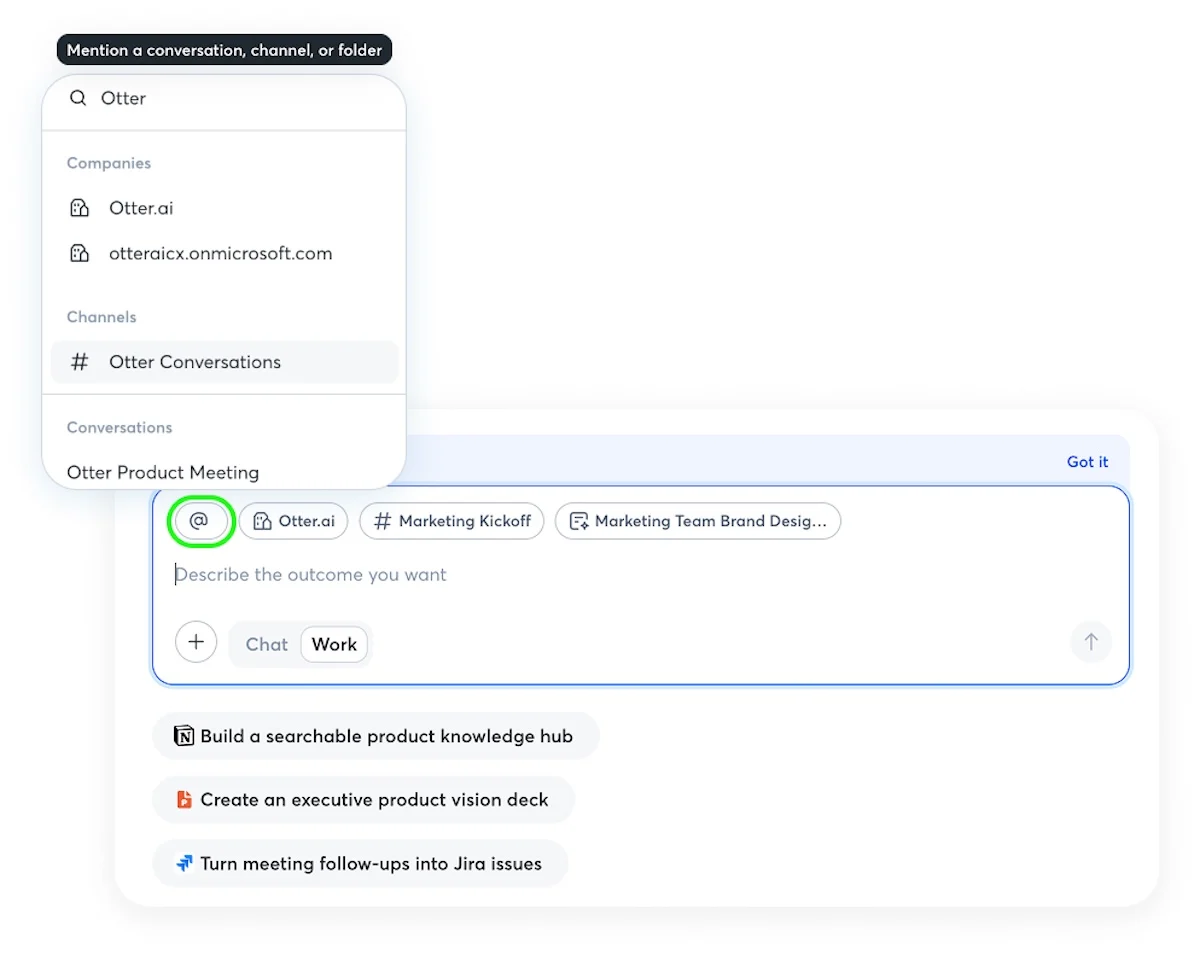
The introduction of "Work" mode represents a departure from the traditional chat-based interactions users have come to expect from AI assistants. While the standard "Chat" functionality remains available for simple inquiries, content generation, and information retrieval, the "Work" interface is built for high-stakes, multi-step execution.
Pre-Meeting Preparation
Before a user even logs into a video conference, Work mode begins synthesizing data. By integrating with a user’s calendar and connected enterprise applications, the AI generates comprehensive briefing documents. These documents aggregate context from previous calls, project management tools, and communication threads, ensuring that participants are fully briefed on the history and status of a project before the first "hello" is exchanged.
Post-Meeting Execution
The true power of the update lies in its post-meeting capabilities. Once a session concludes, the assistant can:
- Draft and Send Communications: Automatically generate follow-up emails based on the context of the meeting.
- Generate Documentation: Create structured files in formats like Word, Notion, PDFs, or interactive web pages.
- Update Ecosystems: Seamlessly push data into platforms such as Salesforce or Jira, reducing the manual "data entry tax" that often follows a productive meeting.
To ensure organizational safety and accuracy, Otter.ai has implemented a "human-in-the-loop" requirement. Every action drafted by the AI requires explicit human approval before it is finalized or sent, mitigating the risks associated with autonomous AI errors.
Chronology: The Evolution of Otter.ai
The rollout of Work mode is the culmination of a multi-year strategy to reposition Otter from a utility tool to a critical productivity platform.
- April 2024: Otter.ai introduced "Live Assist," a real-time coaching agent designed to provide private, on-screen guidance during live calls. This marked the company’s first foray into active participation during meetings, moving beyond the "record and forget" model.
- October 2026: Otter.ai secured a landmark $320 million in funding from General Catalyst. This influx of capital provided the necessary resources to accelerate the development of agentic AI features, moving the company toward the "Work" mode release.
- November 2026: Official launch of "Work" mode. The company streamlined its user interface by consolidating existing "Express" and "Advanced" modes into the new Work-Chat framework, effectively setting a new standard for their platform’s user experience.
- Immediate Future: Otter has committed to rolling out "Live Assist" to all paid enterprise and individual accounts in the coming weeks, ensuring that the entire user base has access to real-time meeting coaching.
Supporting Data: Why the Shift Matters
The pivot to workflow automation is not merely a marketing trend; it is a direct response to a growing demand from the global workforce. According to Metrigy’s Workplace Collaboration & Employee Experience: 2027 report, which surveyed 403 organizations, a staggering 91% of business users expressed a desire for their meeting note-takers to access and act on context derived from outside the meeting environment.
The Contextual Gap
Employees are currently bogged down by "context switching"—the cognitive load required to move between video conferencing, CRM software, project boards, and email. The data suggests that meeting intelligence tools are currently viewed as silos. By integrating Salesforce, Jira, and Gmail, Otter is attempting to bridge these silos.
Usage Dynamics
Otter has taken a bold stance on the accessibility of this feature. Unlike the standard Chat mode, which is subject to query limits based on the user’s specific payment plan, Work mode is available to all paid users without usage caps. This decision suggests that Otter views "Work" as a core pillar of their service rather than an experimental add-on, likely aiming to drive deeper adoption across enterprise teams.
Official Perspectives and Industry Analysis
The industry reaction to Otter’s update has been largely positive, with analysts viewing it as an inevitable step toward the "agentic" era of work.
Irwin Lazar, principal analyst at Metrigy, highlights the transition from data capture to workflow execution as the most critical trend in the collaboration space. "Vendors are delivering solutions that allow meeting notes to be actionable, based on context both from within meetings, as well as from other connected platforms," Lazar stated. He also noted that Otter is entering a competitive landscape where giants like Microsoft (via their Teams facilitator) and Cisco (via their Webex meeting agent) are pushing similar capabilities.
Thomas Randall, a research director at Infotech, pointed out the unique nature of the "Live Assist" tool. While many AI widgets are designed for external-facing roles—such as customer support agents receiving real-time scripts—Otter’s application to internal productivity meetings is distinct. "I see this kind of widget assist a lot in external-facing customer support roles, but for internal productivity meetings, this is quite unique," Randall observed.
Implications: The Future of Meetings
The launch of Work mode carries several profound implications for the future of work.
1. The Rise of the "Meeting Agent"
We are moving toward a future where meetings are no longer isolated events but part of a continuous, AI-driven workflow. The "meeting" is becoming a nexus point where data is ingested, processed, and redistributed. This fundamentally changes the role of the employee; instead of acting as a scribe or a data entry clerk, the employee becomes a "manager" of the AI, overseeing the automated flow of information.
2. The Death of Manual Documentation
With the ability to automatically update Salesforce records or generate Notion project docs, the need for manual post-meeting administrative work is rapidly diminishing. For organizations that rely on high-velocity sales or complex project management, this could represent a significant increase in operational efficiency.
3. The Competitive Moat
By securing deep integration with third-party apps like Jira and Salesforce, Otter is building a "moat." The more integrated a user’s workflow becomes with the Otter ecosystem, the harder it becomes to switch to a competitor. This strategy, bolstered by the $320 million funding round, positions Otter as a major player in the enterprise software ecosystem.
4. Addressing the Trust Barrier
Despite the technological advancements, the human element remains paramount. By requiring human approval for AI-generated actions, Otter is addressing the "hallucination" and "trust" issues that plague many AI implementations. This conservative approach to automation is likely to appeal to enterprise IT departments, which are often wary of fully autonomous agents.
Conclusion
Otter.ai’s transition from a transcription service to an agentic workflow platform is a reflection of the broader maturation of Generative AI. By prioritizing context-aware actions over simple text generation, the company is aligning itself with the primary goal of the modern enterprise: efficiency through integration. As Work mode and Live Assist become standard, the definition of a "meeting" will continue to evolve, moving from a temporary gathering of voices to a permanent, actionable, and intelligent component of the digital workspace.