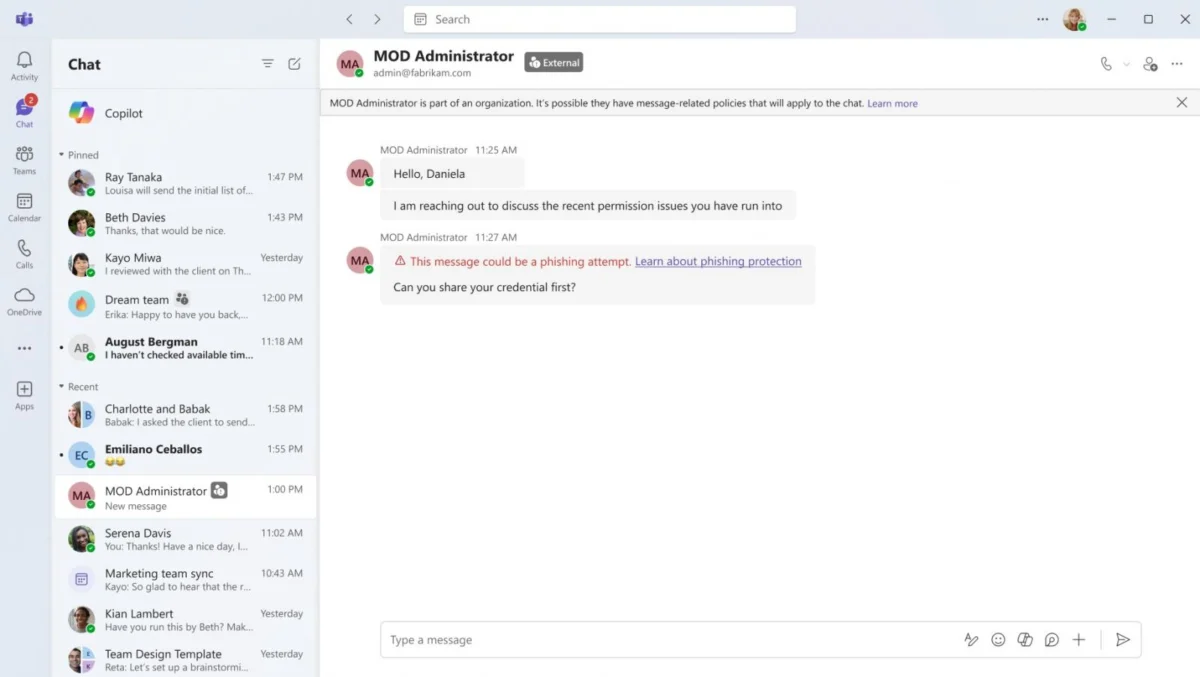
In an era where remote and hybrid work have solidified Microsoft Teams as the digital headquarters for millions of enterprises, the platform has simultaneously become a prime target for sophisticated cybercriminals. Addressing this escalating threat landscape, Microsoft has announced a significant upgrade to its security infrastructure: an AI-powered, context-aware phishing detection engine designed to scrutinize conversations for signs of social engineering, scams, and identity theft.
Scheduled for a staggered rollout beginning in November 2026, this feature represents a paradigm shift in how Microsoft handles communication security. Rather than relying on static blacklists of malicious URLs or file signatures, the new tool leverages behavioral analysis to interpret the intent behind messages, marking a transition toward proactive, rather than reactive, defense.
Main Facts: A New Frontier in Communication Security
The core innovation of this feature lies in its "context-aware" intelligence. Traditional security measures in collaboration platforms typically focus on the "periphery"—scanning attachments for malware or checking links against known malicious domains. While these remain necessary, they are increasingly insufficient against modern attackers who use human psychology to bypass technical hurdles.
Microsoft’s new AI engine is specifically engineered to analyze the content and sentiment of messages in real-time. By evaluating language patterns, urgency, and request types, the system can flag communications that deviate from standard professional conduct. This capability is particularly targeted at identifying "external" threats—conversations initiated by users outside of an organization’s trusted directory. Because new or unknown contacts present the highest risk of impersonation, the AI acts as a digital gatekeeper, assessing the trustworthiness of the sender based on their conversational behavior.
Key Operational Parameters:
- Rollout Schedule: Initial deployment begins in early November 2026, with general availability expected by mid-December 2026.
- Automatic Integration: The feature will be enabled by default across all enterprise tenants. IT administrators will not be required to perform manual configurations to activate the core security logic.
- Privacy-First Architecture: Microsoft has explicitly stated that data processed by this AI will not be stored for long-term analysis, nor will it be utilized to train broader AI models. This measure is intended to assuage concerns regarding corporate privacy and data sovereignty.
Chronology: The Escalation of Teams-Based Attacks
The impetus for this development did not emerge in a vacuum. Over the past twenty-four months, Microsoft Teams has been subjected to an increasing volume of complex intrusion playbooks.
The Rise of the "Help Desk" Impersonator
The catalyst for this defensive upgrade can be traced back to the discovery of sophisticated campaigns where attackers impersonated internal IT help desk personnel. In these instances, adversaries would compromise an external account and leverage the inherent trust users place in their internal support teams. By initiating a Teams chat, the attacker would guide employees through "password resets" or "system updates," ultimately tricking them into granting remote access to their workstations.
The Shift to Behavioral Analysis
Following these incidents, security researchers and Microsoft’s internal threat intelligence teams noted that signature-based detection was failing to catch these social engineering attempts. The attackers were using legitimate, non-malicious links and standard communication channels, rendering traditional firewalls and email gateways effectively blind.
- Q1 2025: Security reports surface regarding the rise of "Living off the Land" techniques within Teams.
- Q3 2025: Microsoft begins internal beta testing of a "Contextual Intent" analysis engine.
- Q2 2026: Initial quality validation begins, with the system running in "silent mode" to minimize false positives.
- November 2026: Official rollout commences to the global user base.
Supporting Data: Why Behavioral AI Matters
In the realm of cybersecurity, the "Human Firewall" is often considered the weakest link. Statistics from recent enterprise security audits suggest that over 80% of successful breaches involve some form of social engineering.
The effectiveness of Microsoft’s new tool is predicated on the vast data telemetry available to the Microsoft 365 ecosystem. By training models on massive datasets of legitimate communication patterns, the AI can establish a "baseline" of what normal corporate discourse looks like. When a message diverges from this baseline—perhaps through an unusual sense of urgency, an atypical request for credentials, or an unexpected call to action from an external user—the system assigns a "risk score" to the interaction.
Furthermore, this tool is designed to work in tandem with existing Microsoft Defender capabilities. When a message is flagged, the system does not simply delete it; it provides the user with contextual warnings. This "just-in-time" training helps educate employees on the signs of phishing, creating a more resilient organizational culture.
Official Responses and Privacy Safeguards
Microsoft has been proactive in addressing the potential concerns of enterprise customers, particularly regarding surveillance and data privacy. In a recent posting in the Microsoft 365 Message Center, the company clarified the functional scope of the tool.
"During initial quality validation, detection may run in the background without showing warnings to users," the notice stated. "After validation, users may see a warning when potential phishing is detected."
Privacy Commitments:
- Zero-Retention Policy: Microsoft has confirmed that the AI analysis happens in transit. Once the analysis is complete and a determination is made, the message content is not stored in a way that would allow for later retrieval or auditing by third parties.
- Strictly Security-Focused: Addressing concerns about "corporate snooping," Microsoft emphasized that the tool’s scope is strictly limited to security and threat prevention. It is not designed to track employee productivity, sentiment, or marketing-related metrics.
- No Model Training: To ensure the highest standards of data integrity, the company has pledged that the conversations analyzed by this feature will not be integrated into the datasets used to train Large Language Models (LLMs) like GPT-4 or Microsoft’s internal AI iterations.
Implications: A New Standard for Enterprise Collaboration
The implementation of AI-driven phishing detection in Teams has profound implications for both the enterprise and the broader cybersecurity market.
For IT Departments
For the average IT administrator, this feature is a welcome relief. The burden of managing external access and monitoring communication logs is often overwhelming. By automating the detection of social engineering, Microsoft is effectively reducing the workload on security operations centers (SOCs) and allowing teams to focus on higher-level strategic threats.
For the Cybersecurity Industry
This move signals a broader industry trend. As platforms like Slack, Zoom, and Teams become the primary vectors for internal communication, they are inevitably becoming the primary vectors for attack. Microsoft’s shift suggests that the future of enterprise security is not in "blocking" the channel, but in "understanding" the conversation.
The User Experience
Crucially, the user experience is designed to be frictionless. By limiting the intervention of the AI to high-risk scenarios, Microsoft aims to avoid "alert fatigue," a phenomenon where users become so accustomed to security warnings that they begin to ignore them. By only interrupting the workflow when a genuine, high-probability threat is detected, the system remains unobtrusive while maintaining a robust security posture.
Conclusion: The Path Ahead
As we move toward the rollout in late 2026, the success of this initiative will be measured by its accuracy. The primary challenge for any AI-driven security tool is the balance between sensitivity and false positives. If the system is too sensitive, it will frustrate users by flagging legitimate business conversations; if it is too lax, it will fail to stop the very attacks it was designed to prevent.
Microsoft’s decision to run the system in the background for months of validation suggests a cautious, calculated approach to this deployment. As the digital workplace continues to evolve, the integration of AI into the fabric of our communication platforms is not merely an enhancement—it is an existential necessity. By turning the tools of collaboration into tools of protection, Microsoft is setting a high bar for what enterprises should expect from their digital infrastructure providers in the years to come.