By Technology Desk
October 13, 2026
In a significant advancement for global defense communications, Viasat has officially placed a multi-unit order for the All.Space Hydra MAX satellite communication terminal. This procurement marks a pivotal shift in how government and military entities manage multi-orbit connectivity, signaling the transition of advanced terminal technology from prototype testing to active operational deployment within Viasat’s global NextGen Ka-band network.
Main Facts: The Hydra MAX Milestone
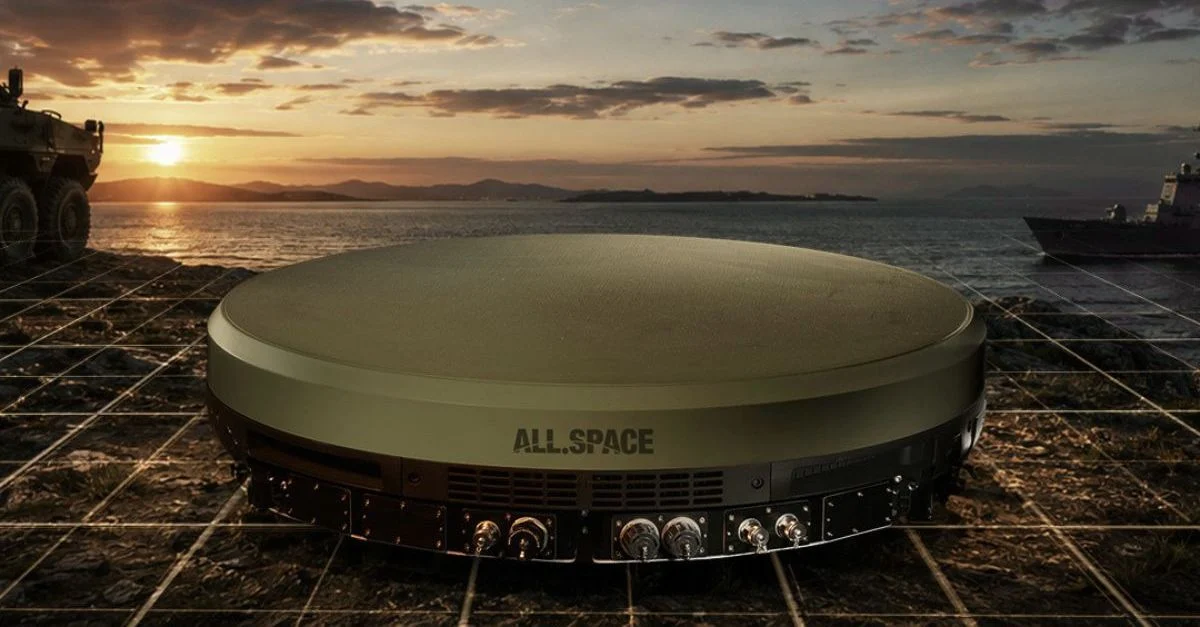
The Hydra MAX terminal represents a leap forward in software-defined, electronically steered antenna (ESA) technology. Unlike traditional terminals that are tethered to a single satellite or a single orbital plane, the Hydra MAX is engineered to transmit and receive across multiple independent satellite links simultaneously.
The core value proposition of this procurement is the terminal’s newly confirmed compatibility with Viasat’s expansive NextGen Ka-band architecture, which includes both commercial and military (Mil-Ka) spectrums. By integrating this hardware, Viasat aims to provide defense users with "resilient, multi-orbit connectivity," ensuring that communication remains uninterrupted even in contested or electronically degraded environments. While the financial specifics and exact unit quantities remain undisclosed, the move signifies a high-level commitment from Viasat to scale the adoption of multi-link hardware.
Chronology: From Partnership to Field Integration
The journey to this deployment has been characterized by rigorous technical validation and strategic alignment. The timeline of this collaboration highlights the rapid maturation of All.Space’s technology:
- Mid-2025 (July): All.Space formally debuts the Hydra terminal family. Industry analysts identify the terminal as a disruptive force due to its ability to manage multiple Ka-band networks concurrently, bridging gaps between disparate constellation architectures.
- Early 2026: Viasat and All.Space announce a strategic partnership. The primary objective was to move beyond laboratory testing and begin the systematic integration and certification of Hydra terminals for the Viasat ecosystem. This phase focused on verifying that the terminal could seamlessly "handshake" with Viasat’s proprietary waveforms and global infrastructure.
- October 2026: Following months of certification testing, the Hydra MAX is officially cleared for operation on the Viasat network. The procurement order is placed, transitioning the relationship from research and development to commercial supply chain fulfillment.
Supporting Data: A Multi-Orbit Powerhouse
To understand why the Hydra MAX is considered a "game changer" for the defense sector, one must examine its technical versatility. The terminal is designed to handle wideband connections on multiple independent satellite networks simultaneously, a capability that was historically restricted to massive, fixed ground stations.
Network Compatibility Matrix:
The Hydra MAX is uniquely positioned to operate across a diverse array of orbital assets, including:
- U.S. Military Infrastructure: Full compatibility with the Wideband Global SATCOM (WGS) system, the backbone of U.S. military communications.
- Commercial High-Throughput Satellites (HTS): Native support for Viasat-3 and Global Xpress (GX) networks.
- Medium Earth Orbit (MEO): Integration with SES’s O3b mPOWER constellation, which provides low-latency, high-capacity throughput.
- Future-Proofing: The architecture is already designed to integrate with upcoming Low Earth Orbit (LEO) constellations, including Amazon’s Project Kuiper and Telesat’s Lightspeed.
By collapsing these disparate networks into a single hardware footprint, the Hydra MAX removes the "vendor lock-in" that has plagued government communications for decades. Military commanders can now prioritize traffic across different orbits based on availability, latency requirements, or jamming resistance, all through a single, compact terminal.
Official Responses: Bridging the Gap to Operations
The collaboration reflects a shared vision between the two companies: transforming technical interoperability into tangible military superiority.
In an official statement, the leadership at All.Space emphasized that this move is a practical demonstration of "translating technical interoperability and network integration into real-world operational capabilities." The company suggests that the terminal’s ability to "see" multiple satellites at once allows for a level of load balancing that was previously impossible in mobile military environments.
Vic Farah, Senior Vice President of Government Services and Solutions for Viasat, underscored the operational necessity of this technology. "Government and defense users need communications solutions that are resilient, flexible, and ready to perform in demanding operating environments," Farah noted. "Hydra MAX operations on Viasat’s global NextGen Ka-band network, combined with its advanced multi-link, multi-orbit capability, provides a powerful solution for mobile users who require assured, high-performance connectivity."
This rhetoric points to a broader industry trend where connectivity is no longer just a utility but a critical component of national security. As battlefield environments become increasingly data-heavy—driven by the proliferation of drones, real-time sensor data, and AI-driven command systems—the need for high-bandwidth, redundant satellite links has become a non-negotiable requirement.
Implications: The Future of Defense Communications
The successful integration of Hydra MAX into the Viasat network carries several long-term implications for the satellite industry and defense procurement:
1. The End of the Single-Network Dependency
Historically, military units deployed with terminals designed for a specific constellation. If that constellation faced interference, the unit was effectively blind. The Hydra MAX introduces a "network-agnostic" approach. By allowing the terminal to switch seamlessly between WGS, MEO, and commercial Ka-band providers, the system offers an unprecedented level of "resilient connectivity."
2. Modernizing the Tactical Edge
The Hydra MAX is designed for mobile platforms—vehicles, aircraft, and maritime vessels. As the military moves toward more agile, decentralized command structures, the ability to maintain a high-speed, multi-orbit link while on the move becomes a critical tactical advantage. It ensures that the "tactical edge" remains as connected as a command center.
3. Accelerating the "Multi-Orbit" Era
Viasat’s decision to endorse and deploy this hardware sends a clear signal to the rest of the satellite industry: the market is ready for multi-orbit, software-defined solutions. We can expect to see increased pressure on other satellite operators to ensure their networks are "Hydra-compatible," or at least compatible with similar open-architecture standards.
4. Economic and Strategic Consolidation
While the financial terms remain private, the volume of the order suggests that Viasat is banking on a long-term shift toward a hybrid-network model. By acting as the primary integrator for these terminals, Viasat is cementing its position as a "solutions provider" rather than just a bandwidth provider. This moves the company further up the value chain, as they are now managing the hardware, the software integration, and the connectivity as a unified service.
Conclusion
The procurement of All.Space Hydra MAX terminals by Viasat is more than a routine hardware order; it is a fundamental step toward a more integrated, resilient, and agile defense communications architecture. By combining the strengths of multiple orbital layers into a single terminal, Viasat and All.Space are providing military and government users with the tools necessary to maintain connectivity in the most challenging conditions. As the deployment proceeds throughout 2026 and into 2027, the success of this integration will likely serve as a benchmark for how the defense industry approaches the next generation of satellite communications.