
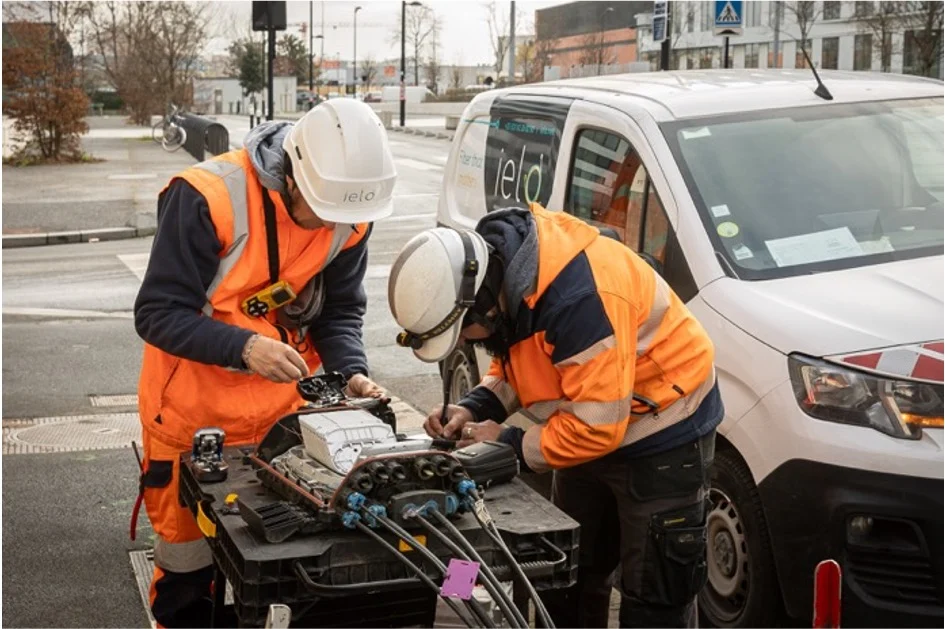
In an era defined by the rapid digitalization of enterprise operations and the insatiable demand for low-latency, high-capacity data transmission, the infrastructure underpinning the internet has never been more critical. A significant development in the European telecommunications landscape has emerged with the announcement of a strategic partnership between French neutral infrastructure operator ielo and global Network-as-a-Service (NaaS) leader Megaport.
This collaboration marks a pivotal convergence of local fiber expertise and global software-defined connectivity, promising to reshape how businesses across France access international cloud and data center environments. By leveraging ielo’s extensive metropolitan and long-haul fiber footprint, Megaport is set to bolster its presence in the French market, while ielo gains a powerful global distribution channel for its high-performance infrastructure.
The Strategic Alliance: Core Facts and Objectives
The partnership is fundamentally built on the exchange of strengths: ielo provides the essential "physical layer" across France, while Megaport provides the "logical layer" that allows customers to provision global connections on demand.
Under the terms of the agreement, ielo will supply optical transport capacity between Megaport’s primary points of presence (PoPs) within France. This arrangement is designed to provide Megaport with a robust, scalable foundation that meets the stringent requirements of modern enterprise connectivity, including route diversity, high capacity, and predictable, reliable deployment timelines.
For ielo, the partnership serves as a validation of its "next-generation" network architecture. Designed for neutrality and high availability, ielo’s infrastructure acts as a seamless extension for organizations requiring large-scale network operations. By integrating with Megaport’s global platform, ielo ensures that its fiber assets are no longer just local gateways but part of a sophisticated, interconnected international ecosystem.
Chronology of Infrastructure Development
To understand the magnitude of this partnership, one must look at the developmental trajectories of both organizations.
The Rise of ielo
Founded in 2016 through the merger of two companies born from the Internet and open-source communities, ielo adopted a "build it yourself" philosophy. Unlike operators that rely heavily on leased lines, ielo focused on designing and maintaining its end-to-end fiber network. A major inflection point occurred in 2020, following a significant funding round that allowed the company to scale its operations aggressively. By 2026, the company had established a formidable presence, spanning 22,000 km of metropolitan fiber and a 12,000 km national backbone, effectively creating a "digital nervous system" across France.
Megaport’s Global Expansion
Megaport, meanwhile, has spent the last decade pioneering the NaaS model. By moving away from the traditional, manual provisioning of network circuits, the company built a software-defined global platform. Their history is one of rapid geographic expansion—entering 180 cities across 31 countries and establishing a presence in over 1,200 data centers. The partnership with ielo represents a strategic deepening of their European footprint, specifically targeting the dense data center market in France.
Supporting Data: The Infrastructure Footprint
The efficacy of this partnership is grounded in the sheer scale of the networks involved.
ielo’s French Infrastructure
- Data Center Connectivity: Nearly 200 data centers connected across France, providing deep access to local peering points.
- Metropolitan Reach: Over 22,000 km of metropolitan fiber networks.
- National Backbone: 12,000 km of long-haul fiber infrastructure.
- Architecture: A consistent, standardized deployment model built to modern industry standards, emphasizing high availability and resiliency.
Megaport’s Global Platform
- Global Scale: Presence in 1,200+ data centers worldwide.
- Geographic Reach: 180 cities across 31 countries.
- Service Model: On-demand, software-defined provisioning, allowing bandwidth to be adjusted in minutes rather than months.
- Connectivity Options: Private paths to cloud providers, IXPs, and enterprise data centers.
Official Perspectives: A Synergy of Expertise
The partnership has been welcomed by leadership on both sides as a natural evolution of the connectivity market.
Arthur Fernandez, CEO of ielo, emphasized the technical rigor behind the deal:
"Megaport’s decision to use our infrastructure is a real recognition of the quality of our network and the work of our teams. This is exactly what we do: build and operate high-performance, highly available and resilient infrastructure that our customers can rely on to support their own networks. The partnership also brings together our expertise in fibre infrastructure in France and Megaport’s international connectivity capabilities, opening up new opportunities for collaboration."
Emmanuel Sevray, Vice President of Sales at Megaport, highlighted the critical role of local infrastructure in a global world:
"Global connectivity starts with strong local infrastructure, and that’s what makes this partnership valuable. ielo gives us a strong infrastructure foundation in France, while Megaport gives their customers a simple way to extend beyond the local market and connect on a global scale."
These statements underline a common theme: the realization that even in a "cloud-first" world, the physical layer—the fiber in the ground—remains the ultimate determinant of performance and reliability.
Implications for the Connectivity Ecosystem
The union of ielo and Megaport carries several profound implications for the telecommunications landscape in Europe.
1. The Democratization of Connectivity
By combining Megaport’s software-defined platform with ielo’s high-capacity transport, enterprises in France gain a unique capability: the ability to scale globally without the overhead of managing multiple, fragmented local vendors. The "clicks-not-cables" approach to networking allows businesses to treat their WAN infrastructure as an agile, elastic resource.
2. Strengthening the French Digital Hub
France has long been a key digital hub for Europe, particularly with the growth of Paris as a data center gateway. By aligning their capabilities, ielo and Megaport are essentially increasing the "connectivity density" of the French market. This makes France a more attractive destination for international enterprises, hyperscalers, and content providers looking for low-latency access to the European market.
3. Resilience and Operational Efficiency
Both companies emphasize a "neutral" and "standardized" approach. In a market often plagued by proprietary lock-ins, this partnership promotes an open ecosystem. ielo’s commitment to consistent, in-house maintenance combined with Megaport’s automated provisioning reduces the risk of "human error" in network management, leading to higher uptimes and more resilient enterprise architectures.
4. A Template for Future Collaborations
This partnership may well serve as a blueprint for other regional infrastructure operators across Europe. As smaller, specialized fiber providers look to compete with Tier-1 global carriers, forming alliances with global NaaS platforms allows them to offer international reach without needing to deploy their own physical assets outside their home territory. It is a mutually beneficial model that prioritizes specialization over vertical integration.
Conclusion: Looking Ahead
The partnership between ielo and Megaport is more than just a commercial agreement between two service providers; it is a manifestation of the modern internet’s requirements. In an age where data must move instantly between an office in Lyon, a data center in Paris, and a cloud region in Virginia, the traditional silos of local and global connectivity are breaking down.
By merging ielo’s massive fiber backbone with Megaport’s global software-defined platform, the two companies have created a robust, agile, and scalable conduit for the future of digital business. As the demand for interconnected, on-demand infrastructure continues to climb, this alliance stands as a testament to the power of complementary expertise in a highly complex, globalized market.
For the end-user—the enterprise IT manager, the cloud architect, or the network engineer—this partnership provides a simplified, higher-performance path to the global digital economy, ensuring that local fiber assets are finally, and effectively, part of the world stage.