Introduction: The Convergence of Ancient Heritage and Modern AI
Xi’an, the historic capital of Shaanxi province, stands as a testament to the endurance of Chinese civilization. As the home of the legendary Terracotta Army and a seat of imperial power for over 1,000 years across 13 dynasties, the city serves as a living museum for the world. Today, however, this ancient hub is spearheading a different kind of evolution: the digital transformation of cultural tourism.
As the global travel industry grapples with the integration of Generative AI, the challenge has remained consistent: how do you provide personalized, conversational experiences without sacrificing historical accuracy? General-purpose Large Language Models (LLMs) often hallucinate or lack the granular, domain-specific knowledge required for professional museology and archaeology. To bridge this gap, Huawei and the Shaanxi Culture Industry Investment Group (SCG) have unveiled BoGuan, the world’s first commercial multimodal LLM specifically engineered for the cultural tourism sector.
The Genesis of BoGuan: A Chronology of Innovation
The development of BoGuan was not a sudden breakthrough, but a meticulous two-year endeavor to digitize and synthesize millennia of history.
- Phase 1: Foundation and Data Curation (2022–2023): Huawei and SCG embarked on a massive data engineering project. Recognizing that AI is only as good as its training data, the team spent 24 months compiling a staggering 1.2 Petabyte dataset. This repository includes 31 million high-resolution images, 4.4 million minutes of historical and cultural video, and 960 million pieces of structured text.
- Phase 2: Platform Architecture: BoGuan was designed as a unified gateway, aggregating 10 distinct open and closed-source models, including Huawei’s own robust PanGu model. This multi-model approach allows the platform to handle everything from architectural rendering to historical narration.
- Phase 3: Pilot Launch (September 2023): The platform went live with integrated consumer-facing applications. The initial rollout focused on the "GO-SHAANXI" app, introducing the AI travel companion "Xiaoqi."
- Phase 4: Scaling and Expansion (2024–Present): Following the successful pilot, the partners began the integration of advanced infrastructure, including 5G-Advanced networks, to support the high-concurrency demands of millions of tourists.
Supporting Data: By the Numbers
The impact of BoGuan is best measured through its operational metrics and the sheer scale of the infrastructure required to support it.
Data Engineering Metrics:
- Total Dataset Size: 1.2 Petabytes.
- Visual Assets: 31 million images and 4.4 million minutes of video content.
- Textual Foundation: 960 million structured data points.
- User Adoption: Since the September 2023 pilot, the platform has supported over four million unique users.
Economic and Infrastructure Impact:
- Revenue Growth: SCG reported a 30–40% increase in revenue between last year and June, attributed directly to AI-driven efficiency.
- Digital Commerce: Sales of digital collectibles and AI-generated creative products have surpassed 2 million Chinese yuan ($300,000 USD).
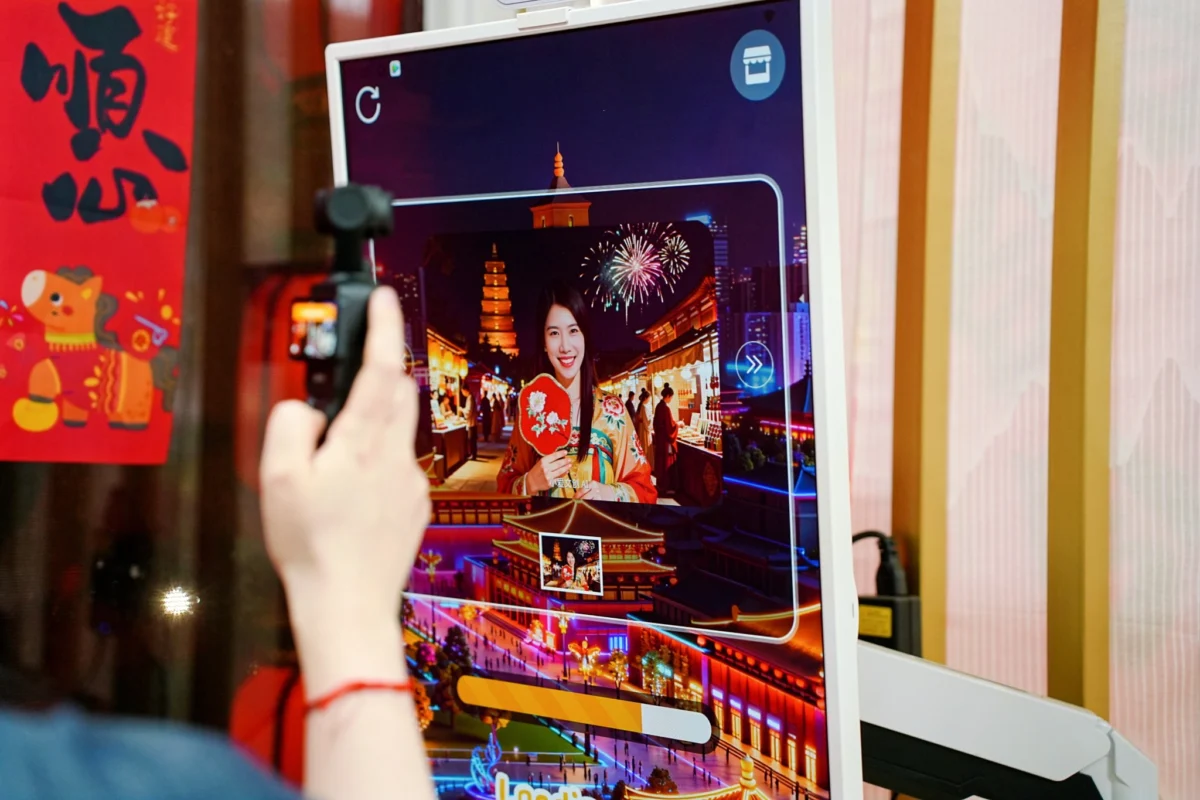
- Network Density: In the Grand Tang Mall area, 46 base stations were deployed to manage high-traffic surges, supporting up to 23,000 concurrent users with 5G-Advanced speeds (3.5 Gbps downlink).
Official Perspectives: The Visionaries Behind the Model
Edric Chu, General Manager of Huawei’s Shaanxi Representative Office, emphasizes that BoGuan represents a paradigm shift in how we handle cultural data. "General large models lack specialized knowledge in museology, archaeology, and history, making it difficult to meet the nuanced demands of niche scenarios," Chu stated. "We have transformed raw data resources into data assets with verifiable ownership, ensuring that the historical context remains unimpeachable."
Jin Yan, Chairman of the Digital and Intelligent Culture Technology Group at SCG, highlights the operational efficiency gained by the team. "With the same team size, thanks to these technologies, we have seen a significant revenue jump. It proves that AI is not just a novelty, but a fiscal driver for the cultural sector."
Wang Hao, Director of Mobile Communications Network Business at China Telecom Shaanxi, notes the technical complexity of the deployment: "The Grand Tang Mall is a textbook example of a high-traffic, high-concurrency scenario. By deploying AI-powered intelligent control boards in our base stations, we allow the network to dynamically allocate resources in real-time, specifically prioritizing AI photo generation or heavy data requests during peak tourist hours."
Implications: The Future of Cultural Tourism
The success of the BoGuan project holds profound implications for the global tourism and technology sectors.
1. The "Video Factory" and Creative Automation
Beyond simple tour guidance, BoGuan powers a B2B "Video Factory" that automates the production of short-form dramas and advertisements. This drastically reduces the overhead costs for tourism marketing, allowing smaller cultural sites to produce high-quality promotional content that was previously accessible only to major film studios.
2. Addressing the Talent Gap
Perhaps the most significant long-term challenge identified by the partners is the "interdisciplinary deficit." As Chu noted, the industry faces a gap of millions of workers who understand both the nuances of cultural heritage and the mechanics of AI. The partnership has launched a talent training base, aiming to certify over 1,000 professionals this year and 3,000 next year, effectively creating a new workforce category: the "AI-Cultural Curator."
3. A Blueprint for Telecom Operators
For telecom companies worldwide, BoGuan provides a roadmap for monetization beyond traditional connectivity. By acting as the backbone for high-compute AI services, operators like China Telecom are moving into managed services and data product development. The integration of 5G-Advanced, edge computing (the 48P SuperPoD architecture), and vertical AI is a repeatable model that can be exported to other provinces—and eventually, other nations.
4. Replicability and National Export
SCG has already initiated discussions with tourism authorities in Xinjiang and Guizhou to replicate the BoGuan framework. The goal is to establish a nationwide digital cultural ecosystem, where historical data is standardized, protected, and accessible to millions of travelers through a unified, AI-enhanced interface.
Conclusion: Redefining the Human-History Connection
As the digital age continues to reshape our world, the risk of losing the "human touch" in tourism is significant. However, the BoGuan LLM suggests the opposite: that technology can actually deepen our connection to the past. By providing real-time, historically accurate, and hyper-personalized insights, BoGuan does not just display history—it makes history conversational.
As Edric Chu aptly concluded, "Artificial intelligence is not simply a stack of technologies. It has become a key enabler that can activate thousands of years of cultural heritage, reshape travel experiences, and inject new momentum into the industry." In the bustling, neon-lit streets of modern-day Xi’an, the past and the future are no longer competing for space—they are working together to define the next era of global discovery.