By Satellite Today Editorial Staff
October 15, 2026
In a move that signals a paradigm shift for the sustainability of Low-Earth Orbit (LEO), the United Kingdom Space Agency (UKSA) has officially tapped orbital services pioneer ClearSpace to lead the nation’s first nationally commissioned Active Debris Removal (ADR) mission. The contract, valued at £61 million ($80.7 million), marks a decisive step toward cleaning up the increasingly congested orbital environment and establishing the U.K. as a global leader in space logistics and sustainability.
The agreement, announced on October 15, 2026, formalizes a partnership that will see ClearSpace acting as the prime contractor for the "UK ADR" mission. The initiative is not merely a cleanup operation; it is a complex technological demonstration designed to master the art of approaching, capturing, and disposing of "unprepared" objects—satellites that were never intended to be serviced or deorbited.
The Core Mandate: Tackling the Orbital Junkyard
For decades, the expansion of the space economy has been shadowed by a growing problem: space debris. With thousands of defunct satellites and spent rocket stages orbiting the Earth at thousands of miles per hour, the risk of "Kessler Syndrome"—a cascading chain reaction of collisions—has become a top priority for spacefaring nations.
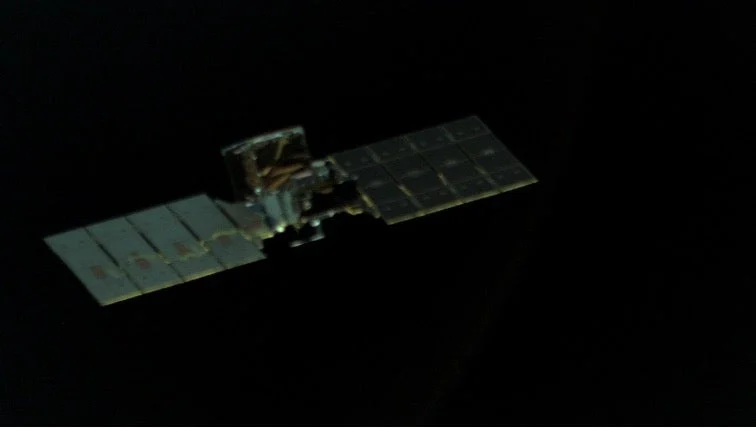
The UK ADR mission is tasked with a specific, high-stakes objective: the removal of two U.K.-registered defunct satellites from LEO. Unlike cooperative docking, where two satellites are designed to link together using standardized interfaces, capturing a dead, tumbling satellite is akin to catching a spinning, metallic wreck in a vacuum.
To achieve this, ClearSpace will leverage advanced autonomous Guidance, Navigation, and Control (GNC) systems. The mission aims to demonstrate that current technology can safely interact with non-cooperative objects, bringing them down into the Earth’s atmosphere to burn up harmlessly upon reentry.
A Chronology of Progress
The road to the UK ADR contract has been marked by years of international cooperation and technical maturation within the European space ecosystem.
- 2020: The European Space Agency (ESA) selects ClearSpace to lead the world’s first mission to remove a piece of debris from orbit (ClearSpace-1). This established the initial framework for the company’s proprietary capture technology.
- 2023–2024: The U.K. government begins formalizing its National Space Strategy, identifying in-orbit servicing and manufacturing (IOSM) as a critical pillar for economic growth and orbital safety.
- 2025: UKSA initiates the competitive procurement process for the ADR mission, seeking a prime contractor capable of orchestrating a multi-partner, domestic supply chain.
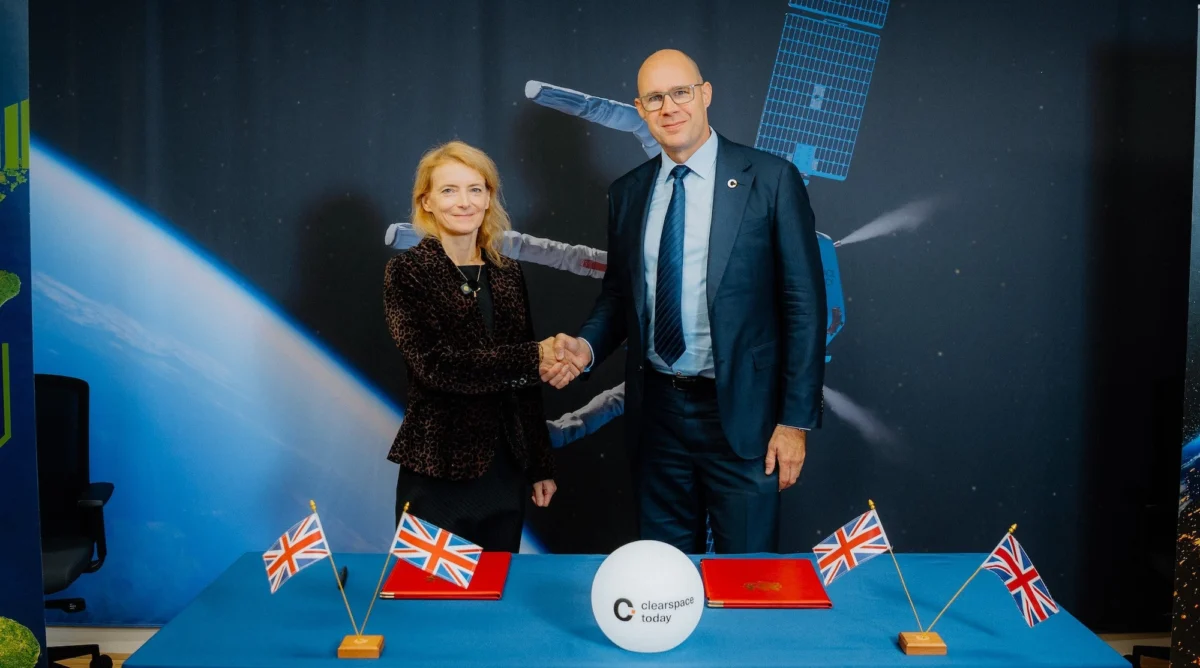
- October 15, 2026: The official signing ceremony takes place in London, where UK Space Minister Liz Lloyd and ClearSpace CEO Luc Piguet finalize the £61 million deal, setting the stage for a 2029 launch.
Technological Pillars: How ClearSpace Plans to Clean Up
The success of the UK ADR mission relies on a triad of core technologies that ClearSpace has been refining since its inception.
1. Advanced Autonomous GNC
In orbit, communication delays make real-time human control impossible for rapid maneuvers. The mission will utilize AI-driven sensors and algorithms to track the target debris. These systems must be robust enough to account for the unpredictable "tumbling" motion of a defunct satellite, calculating a flight path that ensures a safe approach without risking a collision.
2. The Capture Mechanism
The "capture" is the most dangerous phase of the mission. ClearSpace’s approach involves robotic arms or specialized nets—technology that must be precise enough to secure a firm hold on a satellite that may have jagged solar panels, bent antennas, or exposed circuitry. The goal is to stabilize the object and "de-tumble" it before initiating the deorbit maneuver.
3. Deorbiting Systems
Once captured, the combined mass of the service vehicle and the debris must be lowered into a controlled reentry trajectory. This requires precise propulsion management to ensure the debris does not break up over populated areas, but rather completes a clean, atmospheric incineration.
Official Perspectives: A Strategic Milestone
The signing of the contract was met with optimism from both the public and private sectors. For the U.K. government, this mission is about more than just cleaning up space; it is about securing a competitive edge in a nascent multi-billion dollar market.
"Being selected by the UKSA as prime contractor for the UK Active Debris Removal mission is an important milestone for ClearSpace," said Luc Piguet, CEO and co-founder of ClearSpace. "Taking responsibility for delivering complex in-orbit operations for our customers is exactly where we want to be, and UK ADR brings that into operational delivery for a national customer. The mission joins a portfolio spanning inspection, proximity operations, capture, debris removal and life extension. We look forward to working closely with the UKSA to deliver it, and to building the flight heritage a future in-orbit services market will depend on."
Government officials view this as a demonstration of the "Global Britain" strategy, emphasizing that the U.K. is a primary hub for space innovation. By commissioning this mission, the UKSA is effectively creating a "flight heritage" for domestic companies, allowing them to point to a successful, government-backed mission when competing for commercial contracts globally.
Supporting Data: The Scale of the Challenge
The urgency of the UK ADR mission is supported by sobering data from the space community:
- Total Debris: According to the European Space Agency’s Space Debris Office, there are currently more than 36,500 objects larger than 10cm currently tracked in orbit.
- The "Unprepared" Factor: The vast majority of these objects are "unprepared," meaning they have no docking ports, no beacons, and often exhibit uncontrolled rotational energy.
- Economic Impact: The UK’s space sector contributes approximately £17.5 billion annually to the economy. Protecting this infrastructure from the threat of orbital debris is considered a national security and economic imperative.
- Target Window: The 2029 operational window is considered a "critical threshold" by many analysts, as the number of LEO constellations continues to grow, potentially doubling the number of operational satellites in the next five years.
Implications: The Future of In-Orbit Servicing
The implications of the ClearSpace-UKSA partnership extend far beyond the immediate goal of removing two satellites.
Establishing a Global Standard
If the UK ADR mission succeeds, it will provide a blueprint for how nations can take responsibility for their own legacy debris. It sets a precedent that could be adopted by international regulatory bodies as the standard for "Responsible Space Behavior."
Fueling the In-Orbit Economy
Beyond removal, the technologies developed here—autonomous proximity operations, delicate capture, and docking—are the foundational building blocks for the future of in-orbit servicing. This includes refueling satellites, repairing broken instruments, and even recycling orbital components. By funding this mission, the UKSA is essentially subsidizing the R&D that will enable a future economy where satellites are not "disposable" but are serviced and upgraded in-situ.
Sustainability as a Competitive Advantage
As private companies like SpaceX, OneWeb, and Amazon continue to expand their constellations, the ability to offer "insurance" in the form of debris removal and life-extension services will become a high-demand commodity. ClearSpace’s success in this mission will likely lead to lucrative commercial partnerships, allowing the U.K. to lead the world in the "circular space economy."
Conclusion: A New Era for Space Governance
The £61 million contract between the UKSA and ClearSpace is a defining moment for the 2020s. It transitions the discourse around space debris from theoretical concern to tangible, government-backed action.
As we look toward the 2029 launch, the world will be watching. The success of the UK ADR mission will serve as a bellwether for the future of our orbital environment. If the U.K. can prove that we have the technical prowess to clean up the messes of the past, it will open the door to a more sustainable, profitable, and secure future in space. ClearSpace, now positioned at the center of this effort, is tasked with the ultimate mission: ensuring that the final frontier remains open and accessible for generations to come.