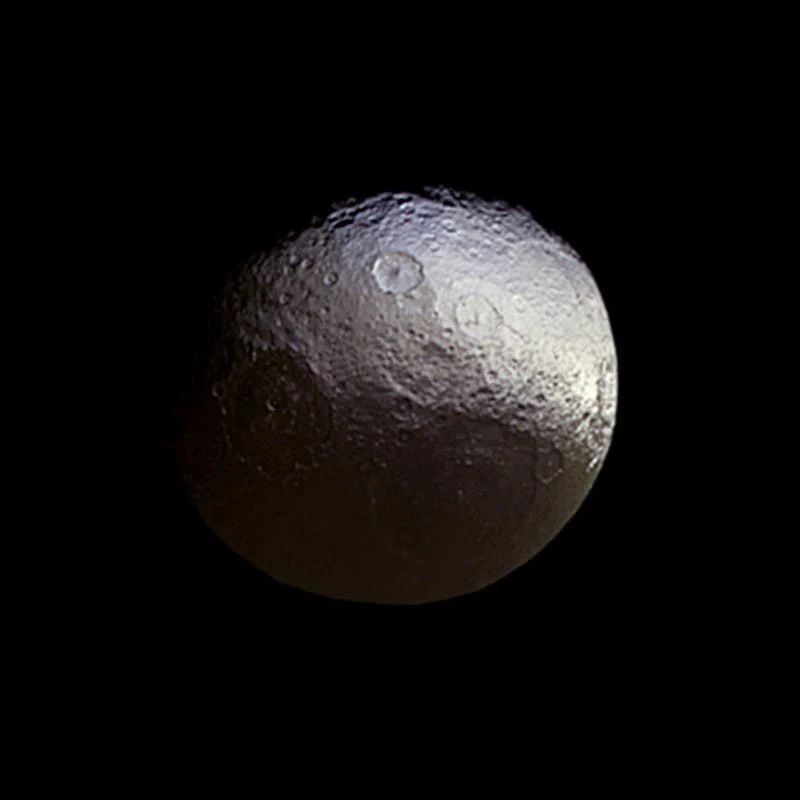
On October 26, 2004, the silence of the Saturnian system was broken not by a sound, but by a flood of data. NASA’s Cassini spacecraft, having traveled for seven years across the vast, frigid expanse of our solar system, swung into position for a historic rendezvous with Titan, Saturn’s largest moon. As the spacecraft glided past the moon at a distance of just 745 miles (1,200 kilometers)—a maneuver 300 times closer than its initial approach earlier that July—it captured a series of high-resolution images that would permanently alter humanity’s perception of the outer solar system.
This flyby was not merely a photographic mission; it was the prologue to one of the most ambitious robotic explorations in history. By peering through Titan’s thick, orange veil of nitrogen-rich smog, Cassini provided the first clear glimpses of a world that appeared, in many ways, to be a frozen, primordial mirror of our own planet.
The Chronology of Discovery
To understand the magnitude of the October 2004 event, one must look at the timeline of the Cassini-Huygens mission, a joint endeavor between NASA, the European Space Agency (ESA), and the Italian Space Agency (ASI).
- October 15, 1997: The Cassini-Huygens spacecraft is launched from Cape Canaveral, carrying the European-built Huygens probe nestled within its frame.
- July 1, 2004: Cassini performs its first close approach to the Saturnian system, entering orbit after a complex journey involving gravity-assist flybys of Venus, Earth, and Jupiter.
- July 3, 2004: The spacecraft completes its first targeted flyby of Titan. While valuable, the distance remains significant, offering only a blurred look at the moon’s complex cloud layers.
- October 26, 2004: The milestone flyby. Cassini passes within 745 miles of the surface, capturing hundreds of images and gathering atmospheric data that provided the foundational science for the upcoming descent of the Huygens probe.
- January 14, 2005: Following the intel gathered in October, the Huygens probe successfully detaches from Cassini, plunging through Titan’s atmosphere to land on the surface—the first landing on a moon in the outer solar system.
- 2004–2017: Cassini continues its tenure, performing 127 total flybys of Titan, mapping its vast hydrocarbon seas, river networks, and dunes until the mission’s dramatic "Grand Finale" in September 2017.
Unveiling Xanadu: A World Revealed
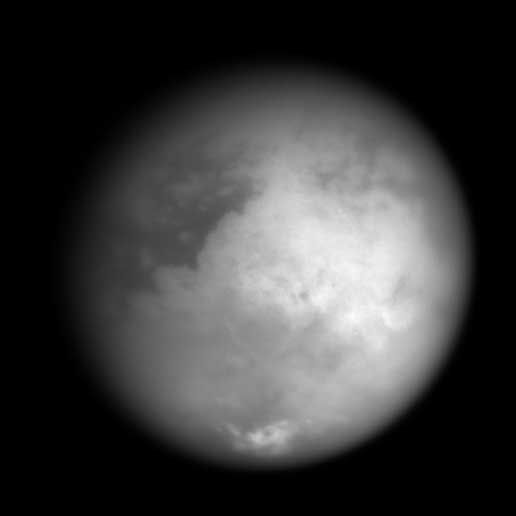
The October 26 flyby was revolutionary primarily because of the detail it provided regarding Titan’s surface composition. Before this mission, Titan was a "black box." Its thick atmosphere, composed largely of nitrogen with a dash of methane, scattered light so effectively that optical telescopes on Earth could only see a fuzzy, featureless orange ball.
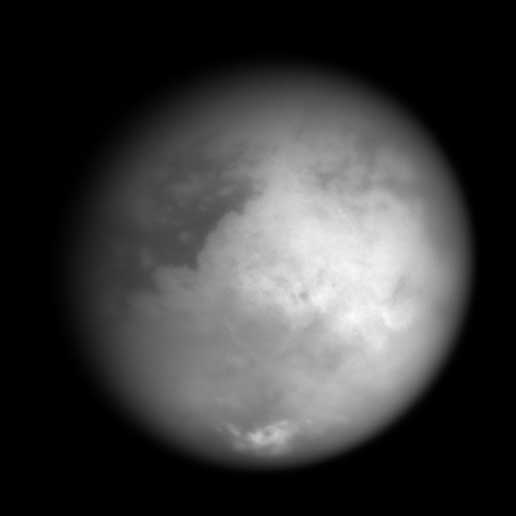
The images returned by Cassini in 2004 introduced the world to "Xanadu." This massive, continent-sized region of bright terrain defied simple categorization. While the rest of the moon was cloaked in dark, organic-rich materials, Xanadu stood out as a high-albedo (reflective) landscape. Early interpretation of these images suggested the presence of ancient, eroded mountain ranges, circular impact basins, and vast plains that appeared to have been shaped by geological processes.
Scientists were initially struck by the lack of clear, liquid-filled craters, which suggested that Titan’s surface was geologically young. The imagery indicated a world in flux, where internal heat and external atmospheric forces were actively sculpting the crust, much like the geological evolution of Earth.
Supporting Data: The Physics of an Alien World
The significance of the 2004 flyby extends beyond the visual. Cassini’s onboard instruments, including the Radar Mapper and the Visible and Infrared Mapping Spectrometer (VIMS), allowed scientists to perform a "deep dive" into the moon’s atmosphere.
Data collected during the flyby revealed that Titan’s atmosphere was significantly denser than Earth’s, with a surface pressure roughly 1.5 times that of our home planet. This discovery was critical for the mission planners at ESA; knowing the precise density and composition of the atmosphere was a matter of life and death for the Huygens probe. Without the 2004 data, engineers could not have accurately modeled the drag or the thermal stresses the lander would face during its high-velocity descent.
Furthermore, the spectroscopic data gathered during the flyby provided the first chemical fingerprints of the moon’s surface. Researchers identified the presence of complex hydrocarbons—the building blocks of life—suggesting that Titan was essentially a planetary-scale chemistry experiment.
Official Perspectives and Scientific Implications
NASA and the scientific community viewed the 2004 flyby as the "coming out party" for planetary science in the 21st century. Dr. Charles Elachi, then-director of NASA’s Jet Propulsion Laboratory, noted at the time that the images were "the first step in revealing a world that has been hidden from us for centuries."
The implication of these findings was profound: Titan was not merely a dead rock, but a dynamic, active moon. The resemblance to a "young Earth" became a central theme in subsequent research. Scientists began to theorize that by studying Titan, we were essentially looking back in time at our own planet’s pre-biotic conditions.
"We are seeing a world that is not only similar to Earth in its atmospheric structure but also in its surface evolution," remarked a lead researcher from the Cassini team shortly after the images were processed. "The presence of mountains, valleys, and potentially liquid-filled basins suggests that Titan has a ‘hydrological’ cycle, albeit one based on methane and ethane rather than water."
Legacy: A Foundation for Future Exploration
The success of the October 2004 flyby set the stage for the rest of the mission’s life. Over the next thirteen years, Cassini would uncover the truth about Titan’s "lakes"—vast reservoirs of liquid methane located near the poles. It would observe the shifting dunes of sand, which are composed of solid organic particles rather than silicate rocks.
The data provided by the 2004 flyby remains the benchmark against which all subsequent Titan research is measured. It proved that despite the extreme distance, human technology could bridge the gap to reveal the hidden complexities of the solar system.
As we look toward the future, the lessons learned from Cassini’s 2004 flyby are already fueling the next generation of exploration. NASA’s upcoming Dragonfly mission, a rotorcraft lander designed to hop across the surface of Titan, is a direct descendant of the questions first raised during that October day. By building upon the baseline data established by Cassini, Dragonfly aims to investigate the chemistry of Titan’s surface in greater detail, searching for the potential precursors to life in an environment that continues to fascinate and confound scientists.
Conclusion
The October 26, 2004, flyby of Titan serves as a poignant reminder of the power of persistence in space exploration. It took seven years of travel, decades of planning, and a singular, nerve-wracking pass through the shadows of Saturn to transform a mystery into a destination.
Titan remains one of the most compelling targets in our search for understanding the conditions necessary for life. It is a world of smog and ice, where the rivers run with methane and the mountains are made of frozen hydrocarbons. Thanks to the groundbreaking images and data captured by Cassini on that autumn day two decades ago, we know that the universe is far more diverse and vibrant than we ever dared to imagine. As we continue to gaze at the hazy orange sphere in our telescopes, we do so with the knowledge that we have been there—and that we will, undoubtedly, return.