Main Facts: Bridging Nanosatellite Agility with High-Performance Optical Imaging
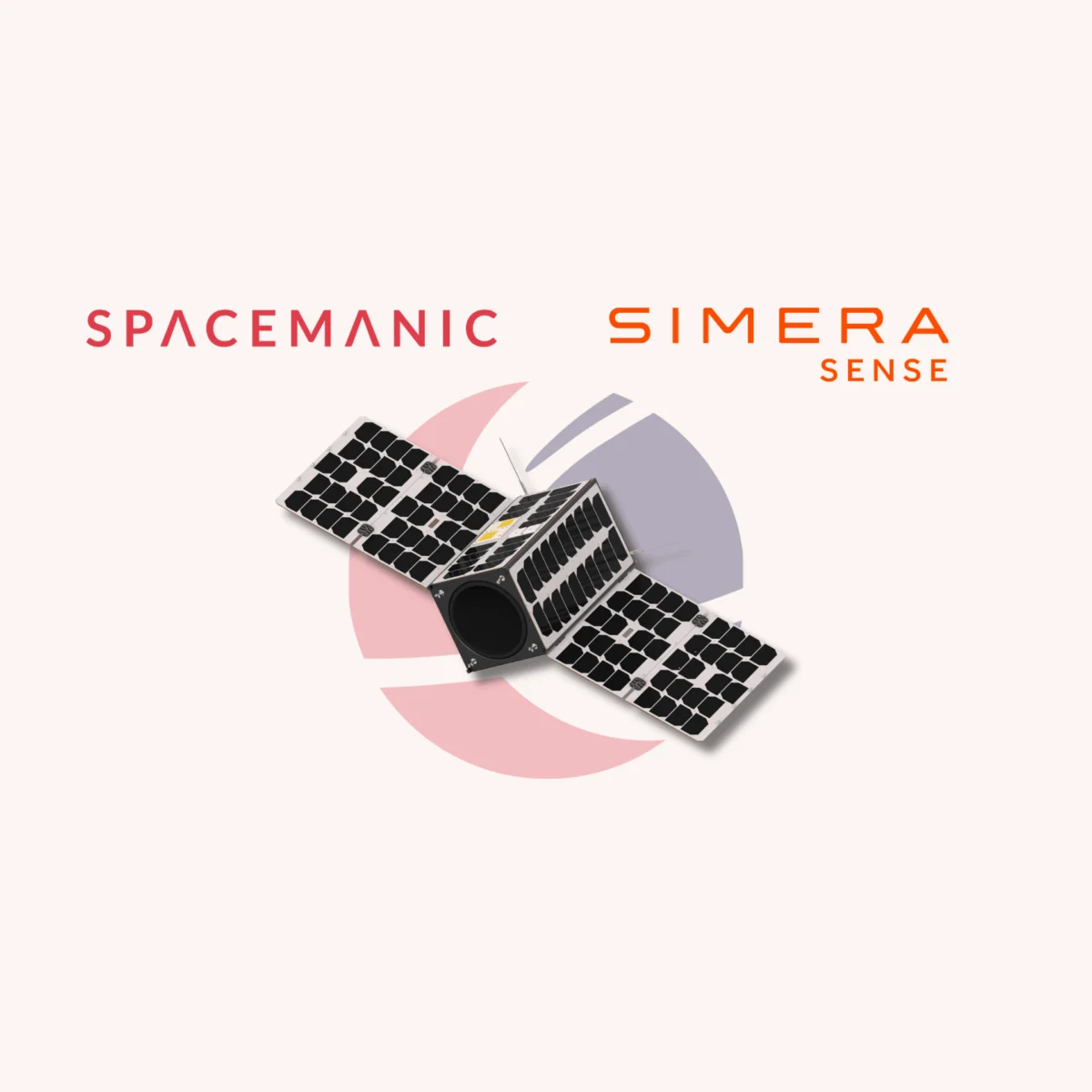
In a move set to disrupt the European small satellite landscape, Czech satellite developer Spacemanic and Belgian optical instrument manufacturer Simera Sense have announced a strategic partnership to launch an integrated, turnkey 16U Earth observation (EO) satellite solution. Designed specifically for dual-use applications—serving both commercial and defense sectors—the combined system integrates Simera Sense’s flagship xScape200 Dual-Use (DU) optical payload into Spacemanic’s customized 16U CubeSat platform.
The newly announced platform directly addresses the growing demand for sub-meter-class and high-resolution spatial imagery delivered via compact, low-cost space assets. Historically, high-resolution Earth observation required heavy microsatellites or dedicated minisatellite platforms weighing several hundred kilograms. By packaging advanced optical capabilities into a standardized 16U form factor, the joint solution delivers high-resolution imagery while dramatically lowering launch costs, shortening integration schedules, and offering scalable deployment options for constellation operators.
A central element of this integration strategy is Spacemanic’s proprietary SPACE CANNON deployer, a heavy-duty deployment system engineered to accommodate expanded CubeSat envelopes, including side-protruding payloads and additional bottom extensions ("tuna cans"). Together, the optical payload, tailored platform, and deployer establish an end-to-end mission architecture designed to accelerate time-to-orbit for defense reconnaissance, environmental tracking, and infrastructure monitoring.
Chronology and Industry Evolution: From Educational Toys to Tactical Assets
The collaboration between Spacemanic and Simera Sense reflects a broader, decade-long transition in the global space sector. The evolution of the CubeSat standard—from its origins as an educational tool to an enterprise and military-grade asset—has reshaped the economics of Earth observation.
CubeSat Platform Evolution Timeline
----------------------------------------------------------------------------------
[2000s]  Early Standard (1U–3U)     --> Primary focus: University research & education
[2010s]  Commercial Rise (3U–6U)    --> Commercial constellations (medium resolution)
[2020s]  Operational Shift (6U–12U) --> Commercial EO & basic government monitoring
[Present] Advanced Dual-Use (16U+)   --> Tactical ISR, sub-meter optics & turnkey deployment
----------------------------------------------------------------------------------- Early 2000s–2010s: The Nanosatellite Proof-of-Concept: Early nanosatellites were largely constrained to 1U (10x10x10 cm) and 3U form factors, heavily restricted by power generation, pointing accuracy (ADCS), and downlink bandwidth. Imaging payloads were limited to low-resolution atmospheric or wide-field commercial sensors.
- Mid-2010s: Commercial Constellations Emerge: As miniaturized reaction wheels, star trackers, and high-efficiency solar cells matured, 6U platforms demonstrated that small satellites could perform reliable Earth observation. However, achieving high-resolution performance remained constrained by diffraction limits, requiring larger apertures than standard nanosatellite structures could host.
- 2020–2023: The Push for Larger Form Factors: The space market rapidly adopted 12U and 16U configurations. Sensor developers focused on shrinking optical trains without sacrificing focal length, giving rise to systems like the Simera Sense xScape series. Concurrently, European space policies increasingly prioritized "dual-use" space assets capable of serving civil remote sensing needs while fulfilling military intelligence, surveillance, and reconnaissance (ISR) requirements.
- 2024–Present: Structural Co-Engineering: Recognizing that fitting high-end optics into off-the-shelf satellite buses created thermal and structural friction points, Spacemanic and Simera Sense initiated a co-design workflow. Instead of forcing an optical sensor into a rigid, pre-built bus, Spacemanic engineered its 16U structural, electrical, and thermal architectures around the specific optical mechanics of the xScape200 DU payload, culminating in this deployment-ready platform.
Supporting Data and Technical Architecture
The technical core of the collaboration relies on optimizing the Size, Weight, and Power (SWaP) envelope. By maintaining a compact baseline, the platform allows operators to maximize sensor performance without paying the mass penalties associated with legacy satellite buses.
System Architecture Overview
+-------------------------------------------------------------------+
|                   Spacemanic 16U Bus Platform                      |
|  +-------------------------------------------------------------+  |
|  |                 Simera Sense xScape200 DU                   |  |
|  |   - 12U optical module volume                              |  |
|  |   - Low SWaP footprint                                      |  |
|  |   - Multi-spectral / High-resolution optical channels       |  |
|  +-------------------------------------------------------------+  |
|  |  Subsystems: In-house EPS, Thermal Control, High-Data Transmit|  |
+-------------------------------------------------------------------+
                                 |
                                 v
+-------------------------------------------------------------------+
|                    SPACE CANNON Deployer                          |
|  - Expanded 16U envelope (supports side protrusions & tuna can)   |
|  - Removable 4-side access panels for late-stage adjustments      |
+-------------------------------------------------------------------+
                                 |
                                 v
+-------------------------------------------------------------------+
|                      Compatible Launchers                         |
|  Falcon 9 | Ariane 6 | Vega-C | Isar Spectrum | RFA ONE | Others  |
+-------------------------------------------------------------------+
Optical Payload Metrics: Simera Sense xScape200 DU
- Form Factor Volume: Fits within a compact 12U payload envelope, leaving 4U for essential satellite bus avionics, power storage, and communications.
- Capability: High-spatial-resolution imagery designed for multi-band spectral recording, optimized for both urban mapping and tactical target detection.
- Design Philosophy: Low-SWaP optimization engineered to operate under constrained power budgets typical of small satellite operational orbits (500–600 km Low Earth Orbit).
Satellite Bus Engineering: Spacemanic 16U Platform
- Co-Designed Envelope: Structure, mechanical fasteners, and internal layout are constructed around the optical axis of the xScape200 DU to maintain optomechanical stability during launch loads and orbital thermal variations.
- Subsystem Integration: In-house manufactured Electrical Power System (EPS), onboard computers, and data buses optimized for fast payload data offloading.
- Thermal Management: Customized passive and active thermal loops built into the bus frames to mitigate mirror distortion caused by orbital solar flux transitions.
Mechanical Deployment Interface: SPACE CANNON Deployer
- Capacity: Built to host up to 16U CubeSat structures with customized dimensions.
- Extended Payload Envelope: Accommodates non-standard mechanical protrusions on all four lateral sides, along with bottom-mounted auxiliary modules ("tuna cans").
- Late-Access Capability: Features fully removable side panels across all four walls. This allows launch site technicians to perform final lens cleaning, optical calibration checks, battery charge toppings, and software flashing immediately prior to integrating the deployer onto the launch vehicle payload fairing.
Multi-Launcher Compatibility Matrix
The combined platform and SPACE CANNON deployer have been designed for launch vehicle agnosticism, supporting integration across established heavy-lift rideshares and emerging European microlaunchers:
| Launch System | Developer / Provider | Mission Profile Type |
|---|---|---|
| Falcon 9 | SpaceX (USA) | Dedicated Transporter Rideshare |
| Ariane 6 | Arianespace (Europe) | Primary & Secondary Payload Slots |
| Vega-C | Arianespace (Europe) | Low Earth Orbit Rideshare |
| Spectrum | Isar Aerospace (Germany) | Dedicated Microlaunch |
| RFA ONE | Rocket Factory Augsburg (Germany) | Dedicated Microlaunch |
| SL1 | HyImpulse (Germany) | Orbital Small Launcher |
| Hanbit | InnoSpace (South Korea) | Commercial Small Launcher |
| Baguette One | HyPrSpace (France) | Micro-Launcher Architecture |
Official Responses and Executive Perspectives
Industry leaders from both organizations highlighted the operational advantages of co-engineering payload and bus architectures:
"Owning the entire platform development chain—from structural manufacturing to deployer integration—changes how we build satellites," stated a senior engineering representative from Spacemanic. "By designing the satellite around the Simera Sense camera rather than attempting to adapt a finished optical sensor into a standard off-the-shelf bus, we eliminate structural friction, optimize mass distribution, and significantly lower non-recurring engineering costs for customers."
Spacemanic representatives emphasized that the integration of the SPACE CANNON deployer solves longstanding operational bottlenecks at the launch pad:

"The ability to access the satellite payload via removable panels right up to the final integration phase gives satellite operators immense confidence. For optics like the xScape200 DU, performing pre-flight optical checks and battery top-offs without breaking deployer integration reduces risk significantly."
From the optical payload perspective, Simera Sense stressed the strategic value of dual-use availability in current commercial markets:
"Commercial customers and defense organizations no longer want to wait three to five years to deploy complex, custom-built space assets," noted a commercial director associated with the project. "The combination of our xScape200 DU camera with Spacemanic’s tailored 16U bus delivers a balance of speed, performance, and financial accessibility. It enables sovereign nations and commercial enterprises alike to deploy high-resolution Earth observation constellations in months rather than years."
Strategic Implications for Commercial and Defense Space Markets
The launch of a turnkey 16U dual-use Earth observation satellite solution carries broad implications for the space economy and defense posture across Europe and allied nations.
1. Democratization of High-Resolution Intelligence, Surveillance, and Reconnaissance (ISR)
Historically, sub-meter tactical imagery was the exclusive domain of major spacefaring nations possessing multi-billion-dollar defense budgets. The miniaturization of high-grade optics onto 16U platforms allows smaller nations, regional defense organizations, and private security providers to deploy dedicated tactical ISR constellations. These platforms enable rapid revisit rates over areas of interest, facilitating responsive border monitoring, battle-damage assessment, and maritime domain awareness.
2. Disruption of Legacy Earth Observation Economics
By deploying 16U satellites via commercial rideshare missions (such as SpaceX Transporter launches or European microlaunchers), operators can field multi-satellite constellations at a fraction of the cost of a single traditional imagery satellite. The unified platform-payload packaging drastically reduces integration lead times, allowing operators to replenish degraded orbital assets rapidly or scale constellation density in response to geopolitical crises.
Cost & Deployment Comparison
+----------------------------------------+----------------------------------------+
|       Legacy Microsatellites           |         Spacemanic / Simera 16U         |
+----------------------------------------+----------------------------------------+
| • Mass: 100 kg – 500 kg                | • Mass: ~20 kg – 30 kg (16U)           |
| • Lead Time: 3 – 5 Years               | • Lead Time: Sub-12 Months             |
| • Launch Cost: High (Dedicated/Medium) | • Launch Cost: Low (Standard Rideshare) |
| • Focus: Capital-Intensive Single Assets| • Focus: Scalable Constellations       |
+----------------------------------------+----------------------------------------+
3. Strengthening European Industrial Sovereignty
The partnership highlights the growing technical capabilities within the European space ecosystem. Combining Czech engineering in satellite bus manufacturing and deployers with Belgian optics leadership aligns with the European Union’s push for technological sovereignty in space assets. By relying entirely on European-designed components and compatibility with European launchers like Ariane 6, Vega-C, Isar Spectrum, and RFA ONE, the solution provides an independent supply chain free from external export restrictions.
4. Hybrid Commercial-Defense Business Models
The "dual-use" designation of the xScape200 DU platform enables constellation operators to maximize return on investment. During peacetime or period of low tactical demand, the satellite can generate revenue by selling environmental monitoring, precision agriculture data, and urban planning imagery to commercial buyers. In times of crisis, satellite priority can seamlessly pivot to defense ISR tasks, giving both public and private entities flexibility in satellite asset utilization.
As Spacemanic and Simera Sense begin offering this platform to international buyers, the solution establishes a new baseline for what nanosatellites can achieve, accelerating the shift toward low-cost, high-capability Earth observation constellations.