By Industry Correspondent
November 3, 2026
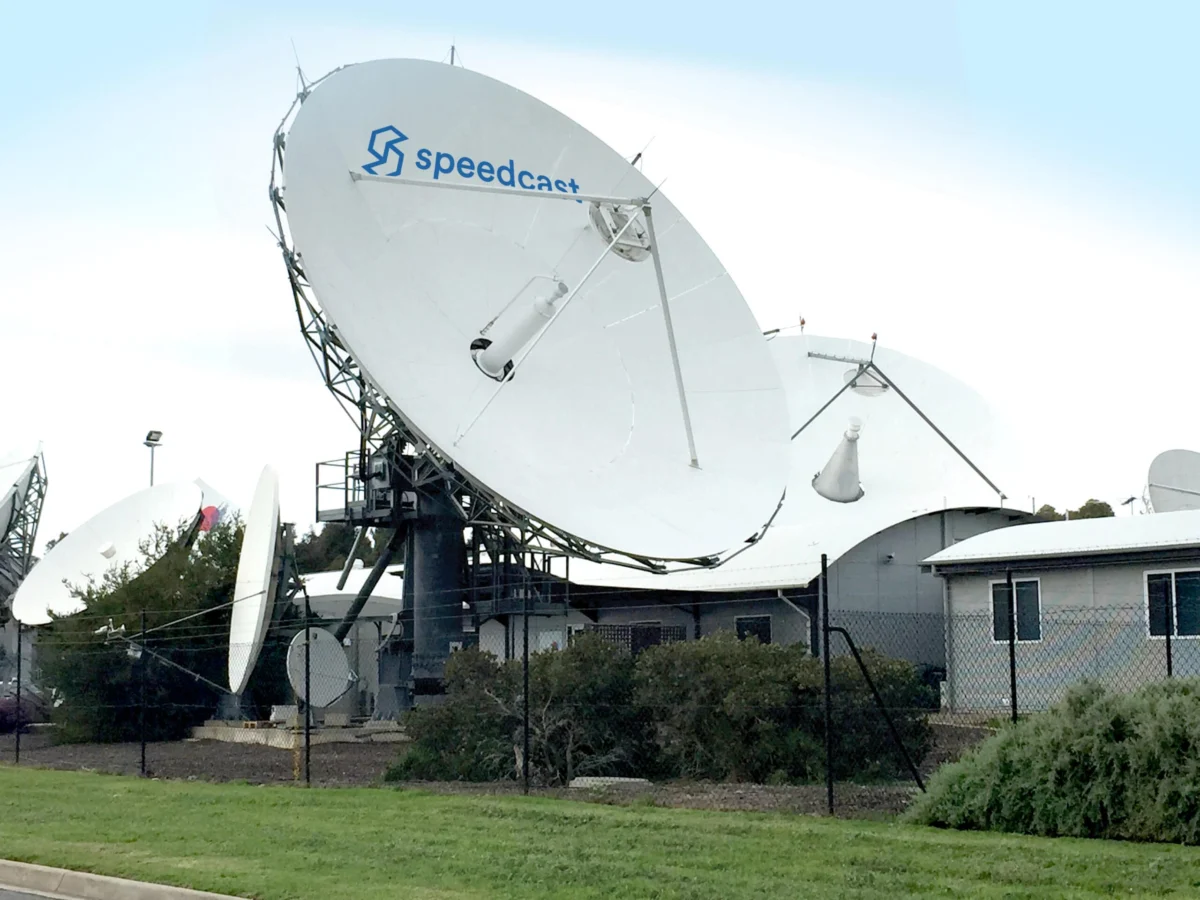
In a major consolidation move that signals a paradigm shift for the satellite ground segment, SatPort Infrastructure—a portfolio company backed by the private equity giant EQT Infrastructure—has officially completed the acquisition of Speedcast’s global teleport business. The transaction, finalized on November 3, 2026, marks a pivotal moment in the evolution of satellite ground infrastructure, transforming SatPort from a burgeoning startup into a fully operational, carrier-neutral global platform.
The deal encompasses 12 state-of-the-art teleports spanning 11 countries and five continents. Beyond the physical hardware, the acquisition includes the integration of more than 100 specialized employees into the SatPort organization. While the financial details of the agreement remain undisclosed, the deal is bolstered by a long-term infrastructure services contract, ensuring that Speedcast remains a primary client of the facilities it once owned.
The Core Facts: A Strategic Realignment
The acquisition is more than a mere transfer of assets; it represents a fundamental change in how satellite operators manage their ground segment. Speedcast, a leader in remote communications and IT services, is utilizing this divestiture to pivot toward an “asset-light” business model. By offloading its heavy infrastructure, Speedcast is doubling down on its SIGMA intelligent edge network management platform, focusing its future resources on software-defined networking and managed services rather than the capital-intensive maintenance of physical teleports.
For SatPort, the acquisition provides the immediate scale necessary to challenge traditional incumbent infrastructure providers. The 12 acquired teleports serve as the backbone of a “carrier-neutral” vision, where the infrastructure is no longer tied to a single operator’s proprietary needs but is instead opened up to multiple satellite constellations and service providers. This model mirrors the trajectory of the data center and fiber-optic tower industries, where third-party, specialized infrastructure providers have become the standard for connectivity at scale.
Chronology: The Path to SatPort’s Rise
The birth and rapid expansion of SatPort Infrastructure is a case study in private equity’s growing interest in the space sector.
- 2021: Following a successful emergence from Chapter 11 bankruptcy, Speedcast, under the leadership of newly appointed CEO Joe Spytek, begins a long-term strategic transformation, shedding legacy weight and focusing on digital transformation and managed services.
- 2024–2025: EQT Infrastructure identifies a gap in the satellite ground segment market. Seeing an opportunity to replicate the success of independent tower companies, they conceptualize SatPort.
- Late 2025: EQT enters negotiations to carve out ground network infrastructure from Eutelsat. The high-profile deal fails to materialize, but the vision for SatPort remains intact.
- September 2026: SatPort establishes its market credibility by signing a major partnership with Telesat. The agreement tasks SatPort with building landing stations globally for the Telesat Lightspeed constellation, setting the technical standard for its future operations.
- November 3, 2026: The acquisition of Speedcast’s teleport business is finalized, providing SatPort with the operational footprint required to execute its global vision.
Supporting Data: Why Ground Infrastructure is the New "Gold Mine"
The shift toward an asset-neutral model is driven by the explosive growth of Low Earth Orbit (LEO) and Medium Earth Orbit (MEO) constellations. As satellite operators prioritize the deployment of satellites, the burden of building and maintaining thousands of ground stations becomes a significant capital drain.
The Scaling Potential
- Global Reach: The acquisition grants SatPort a footprint across five continents, providing essential “gateway” access for LEO constellations that require rapid handoffs between satellites and terrestrial fiber networks.
- Carrier-Neutral Advantage: By removing the competitive barrier, SatPort can serve multiple customers simultaneously within the same facility. This leads to higher utilization rates for the teleports, effectively reducing the cost per unit of bandwidth for end-users.
- The Telesat Connection: The ongoing work with Telesat Lightspeed is critical. By building landing stations to the exacting design specifications of a major LEO operator, SatPort is proving its capability to handle the high-speed, low-latency requirements of next-generation satellite systems.
Official Responses and Strategic Rationale
The leadership on both sides of the transaction has framed the deal as a “win-win” that optimizes the industry’s value chain.
Carl Sjölund, a partner at EQT Infrastructure, emphasized that the satellite industry is undergoing a structural change comparable to the maturation of the telecommunications tower market. “Just as we have seen in towers, fiber, and data centers, we believe the next phase of growth will be supported by independent, specialized infrastructure platforms that can serve multiple customers at scale,” Sjölund stated. “With SatPort, we are building a global leader in this emerging infrastructure category. The acquisition of Speedcast’s teleport business is an important milestone in that journey.”
For Joe Spytek, the current CEO of SatPort and former head of Speedcast, the move is a homecoming of sorts. Having steered Speedcast through its post-bankruptcy recovery, Spytek understands the pain points of managing physical infrastructure while trying to innovate at the edge. By moving the assets into a dedicated infrastructure company, Spytek is effectively separating the "pipes" (the teleports) from the "content/service" (Speedcast’s SIGMA platform).
Speedcast’s leadership noted that this transition allows them to focus purely on the customer experience and software-defined network agility, leaving the heavy lifting of RF (radio frequency) maintenance and site management to the experts at SatPort.
Implications for the Satellite Industry
The implications of this transaction extend far beyond the two companies involved.
1. The Rise of "Infrastructure-as-a-Service"
We are witnessing the professionalization of the ground segment. Historically, satellite operators were vertically integrated, owning everything from the rocket launch to the ground station. Today, that model is being dismantled. Operators are increasingly outsourcing the "ground segment" to providers like SatPort, allowing them to focus capital on satellite manufacturing and constellation management.
2. Consolidation of the Ground Segment
The acquisition of 12 teleports is likely just the beginning. As SatPort seeks to achieve true global coverage, it may look to acquire further independent teleports or regional players. This could lead to a wave of consolidation, where smaller teleport operators are absorbed into larger, more efficient, and better-capitalized platforms.
3. Increased Interoperability
A carrier-neutral provider like SatPort acts as a bridge. By hosting infrastructure for multiple operators at a single location, these sites could become "neutral exchange points" for space-based data. This could facilitate easier roaming between different satellite networks, a key requirement for the future of mobile and maritime connectivity.
4. Pressure on Legacy Operators
Traditional satellite operators who still maintain extensive proprietary ground networks may feel pressure to reconsider their strategy. If they cannot match the cost-efficiency and technical agility of an independent provider like SatPort, they may find themselves at a competitive disadvantage. The "asset-light" model is no longer a niche choice; it is becoming a competitive necessity.
Conclusion: A New Horizon
The acquisition of Speedcast’s teleport business by SatPort Infrastructure represents a maturation of the satellite industry. It is a clear signal that the space sector is finally aligning with the broader digital infrastructure market, where scale, neutrality, and operational excellence are the primary drivers of value.
As SatPort begins the integration process, the industry will be watching closely to see if this model can truly deliver the promised cost savings and service efficiencies. With the backing of EQT, the technical mandate from the Telesat partnership, and a seasoned leadership team under Joe Spytek, SatPort appears well-positioned to become the "Cell Tower Company" of the satellite era.
While the financial details remain behind closed doors, the long-term impact of this move is clear: the ground has become the new frontier of efficiency in space. As the sky becomes increasingly crowded with LEO constellations, the companies that control the Earth-bound gateways will play an increasingly vital role in connecting the world.