Despite record-breaking global launch cadences, satellite operators across the commercial, civil, and defense sectors are confronting a growing operational crisis: a severe deficit of available launch diversity.
While total orbital capacity has surged—driven primarily by heavy-lift megaconstellation deployments and high-frequency reusable rockets—the variety of available vehicles, launch schedules, and orbital destinations has narrowed significantly. The result is a paradoxical market where thousands of tons of payload are sent into space annually, yet individual satellite companies routinely wait months or even years to secure a launch slot tailored to their specific orbital requirements.
The core of the problem lies in the distinction between mass capacity and destination availability. The modern space transportation ecosystem relies heavily on a limited range of highly active rockets flying fixed, popular trajectories—such as high-inclination Sun-Synchronous Orbits (SSO) or standard Low Earth Orbit (LEO) shells. For operators requiring mid-inclination orbits, custom altitudes, or immediate tactical deployment, standard rideshare options are often unviable.
1. Main Facts: The Choice Crisis in Modern Space Transport
The global space logistics sector is experiencing an unprecedented demand curve that far outpaces the operational flexibility of the current launch fleet.
+-------------------------------------------------------------------+
|                     THE LAUNCH MARKET PARADOX                     |
+-------------------------------------------------------------------+
|  SURGING CAPACITY                 NARROWING CHOICE                |
|  • Record launch numbers globally  • High concentration of volume |
|  • Massive hardware output         • Few operational vehicles     |
|  • Expanding launch manifest       • Rigid orbital destinations   |
+-------------------------------------------------------------------+
Satellite operators require three core variables when procuring space transportation:
- Timing: Alignment with payload manufacturing schedules.
- Destination: Precise orbital altitude, inclination, and Local Time of Ascending Node (LTAN).
- Vehicle Diversity: Options across light-, medium-, and heavy-lift architectures to mitigate single-point launch failure risks.
Currently, the market provides high volume but limited optionality. Much of today’s launch capacity is concentrated within a small subset of providers operating rigid schedules. Consequently, small-to-medium satellite developers are often forced to choose between waiting for a dedicated small-launch vehicle at a premium price or accommodating their mission to the fixed schedule and destination of a heavy-lift rideshare mission.
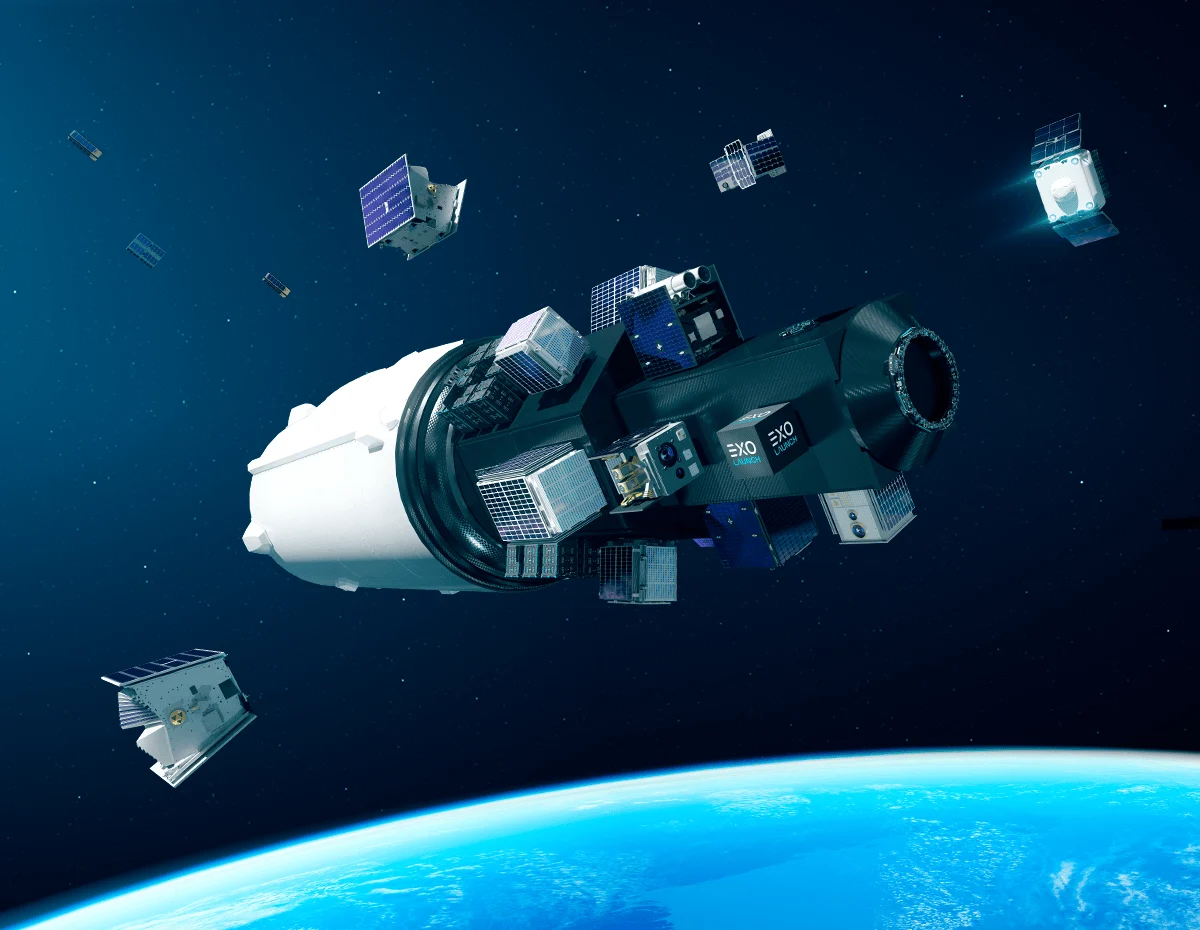
"Demand is crazy," explained Robert Sproles, Chief Executive of Exolaunch, a Berlin-based launch services broker that has managed the integration and deployment of 912 satellites across 51 launch missions. "The demand curve is so much steeper than the supply curve."
Sproles emphasized that raw launch counts fail to capture the operational reality for spacecraft manufacturers. "A rocket going to the wrong orbit at the wrong time isn’t necessarily useful to a satellite operator," Sproles noted. "Yes, we need to meet demand. But we also need to make sure we’re putting that demand in the right places. We need to recognize what types of launches are best for what types of missions, and we need to make sure those types of launches are available when the launch customer needs them."
This lack of orbital optionality creates downstream economic friction. When satellites sit in cleanrooms waiting for compatible launch slots, satellite operators lose expected revenue, delay service delivery to end-users, and expend capital maintaining ground hardware and regulatory licenses that carry strict deployment deadlines.
2. Chronology: The Evolution of the Orbital Shortage
The current market concentration is the result of a decade-long shift in global launch infrastructure, geopolitics, and industrial economics.
+-----------------------------------------------------------------------+
|                       LAUNCH DIVERSITY TIMELINE                       |
+-----------------------------------------------------------------------+
| 2016           | High vehicle diversity across global providers       |
| 2020–2021      | COVID-19 supply chain shocks; smallsat boom begins   |
| 2022           | Loss of Russian launchers; legacy rocket retirements  |
| 2023–2025      | Transition phase for Western next-gen heavy rockets   |
| 2026 (Present) | Record launch totals, but severe choice bottleneck    |
+-----------------------------------------------------------------------+
Pre-2016: The Era of Vehicle Diversity
A decade ago, the global commercial launch market featured a broader array of operational launch vehicles across multiple geographic regions. Satellite operators could choose between Western heavy- and medium-lift vehicles (such as the Atlas V, Delta IV, and Ariane 5), international options (including Russia’s Soyuz and Proton platforms), and emerging small-sat launchers. While total annual launch numbers were lower than today, the diversity of international spaceports, vehicle classes, and orbital trajectories offered operators flexibility in mission planning.
2016–2021: Disruption and Reusable Economics
The rapid commercialization of reusable launch architecture dramatically altered market economics. Lower price-per-kilogram rates on heavy-lift platforms introduced large-scale commercial rideshare programs. Concurrently, dozens of small-satellite launch startups emerged, promising dedicated access to orbit for CubeSats and microsatellites.

However, during this period, supply chain disruptions associated with the COVID-19 pandemic began delaying hardware delivery and test programs across the entire space sector, slowing the operational readiness of new launch vehicles.
2022–2024: Geopolitical Shocks and Fleet Transitions
The structural deficit in launch choice accelerated following major geopolitical events and planned hardware retirements:
- Removal of Russian Vehicles: Following international sanctions in 2022, Western satellite operators lost access to the Soyuz launcher, which had long served as a workhorse for medium-lift commercial payloads and European missions.
- Retirement of Legacy Systems: European and American launch rosters entered a multi-year transition period. Legacy platforms like Ariane 5 and Delta IV were retired before their successors—Ariane 6, Vulcan Centauri, and New Glenn—reached high-cadence commercial operation.
- Small-Launcher Consolidation: Numerous small-launch startups failed to reach profitability or sustained launch cadences, leaving the dedicated small-sat launch market largely concentrated in a handful of operational providers like Rocket Lab’s Electron.
2025–2026: The Modern Capacity Mismatch
By fiscal year 2026, global launch numbers reached historic highs, driven by megaconstellation build-outs and frequent commercial rideshare missions. Yet, satellite operators face a marketplace dominated by a duopoly of operational profiles: massive, schedule-bound rideshare flights on heavy vehicles, or dedicated launches on light rockets that carry a significantly higher cost per kilogram.
3. Supporting Data: Market Valuations, Cadence Stats, and Orbital Mechanics
Data from market research firms and regulatory agencies underscores both the rapid financial expansion of the space economy and the structural concentration of launch activities.
Global Market Valuation
According to market research firm Novaspace, the global space economy reached a total valuation of $626 billion in 2025. Citing consolidation, vertical integration, and increased government investment in space domain security and resilience, Novaspace projects a compound annual growth rate (CAGR) of 5.5% through 2034, bringing the industry’s total value to over $1 trillion.
    GLOBAL SPACE ECONOMY GROWTH PROJECTION (NOVASPACE DATA)

    $1.0T +-----------------------------------------------------+ [>$1.0 Trillion]
          |                                                   .*
    $0.8T |                                                ..*
          |                                             ..*
    $0.6T |------------------------------------------.* [$626 Billion]
          |                                      ..*
    $0.4T |                                  ..*
          +----------------------------------+------------------+
                        2025                        2034
Regulatory and Launch Licensing Data
Federal regulatory filings reflect unprecedented operational volume in the United States:
- FY 2026 FAA Licensing: The Federal Aviation Administration (FAA) licensed 187 commercial launches and reentries in fiscal year 2026. This marks a substantial increase from less than 100 annual licensed operations recorded a decade earlier.
- Long-Term Policy Mandates: Executive initiatives target U.S. spaceports supporting more than 1,000 launches and reentries annually by 2030, requiring a massive expansion of range infrastructure, licensing turnaround times, and space traffic management services.
The Dynamics of Space Transportation
To illustrate the difference between current operational vehicles, industry analysts highlight the contrasting profiles of the two most prolific providers:
| Metric / Capability | Heavy-Lift Commercial Rideshare (e.g., SpaceX Falcon 9) | Dedicated Light-Lift Rocket (e.g., Rocket Lab Electron) |
|---|---|---|
| Primary Mission Target | Megaconstellations, heavy payloads, bulk rideshare | Dedicated small-satellites, custom CubeSats |
| Schedule Control | Fixed window dictated by primary payload/manifest | Variable; tailored to customer requirements |
| Orbital Destination | Standard orbital planes (e.g., SSO, standard LEO) | Custom inclinations, bespoke altitudes |
| Cost Profile | Low cost per kg; high minimum payload commitment | Higher cost per kg; low total mission cost |
The Mechanics of the Rideshare Gridlock
Rideshare programs operate on a predictable mathematical model: a single heavy-lift vehicle carries tens or hundreds of payloads to a unified orbital drop-off point.
However, altering a satellite’s orbit after deployment requires onboard propulsion and chemical or electric propellant. A plane change of just a few degrees in Low Earth Orbit requires substantial velocity change ($Delta v$), consuming significant fuel mass. For small imaging, defense, or communications satellites, carrying the extra fuel to adjust orbital parameters from a standard rideshare drop-off point often negates the cost savings of the shared flight.
   TYPICAL RIDESHARE vs. DEDICATED ORBITAL TRAJECTORY

   Rideshare Route:
   [Rocket Launch] ---> [Single Drop-off Point (SSO)] ---> Satellite must spend
                                                           fuel for plane changes

   Dedicated Route:
   [Rocket Launch] ---> [Custom Altitude & Inclination] -> Satellite deploys
                                                           directly on-station
4. Official Responses and Industry Perspectives
Broader industry stakeholders—including brokers, government bodies, and satellite developers—are actively evaluating strategies to address the launch availability gap.
The Broker and Integrator Stance
Services firms operating at the intersection of satellite developers and launch providers emphasize that closing the supply-demand gap requires launcher diversification rather than simple volume expansion.
Exolaunch reports that its first eight missions of 2026 were distributed across four distinct vehicle types operating from three continents. Sproles noted that maintaining relationships across multiple launch operators and geographic spaceports allows brokers to provide clients with redundancy.

"Rideshare is appropriate when your schedule is flexible enough to align with when a planned rideshare is launching, and when you have enough orbital wiggle room to go where the masses want to go," Sproles said. "Basically, it makes sense when you have less rigid mission constraints."
For more complex missions, Sproles advocates for a multi-tiered launch model that includes:
- Standard Heavy Rideshare: For payloads with flexible destination requirements.
- Shared Launch Missions: Co-manifested flights designed from inception for a group of non-competing customers seeking identical, non-standard orbits.
- Dedicated Small Launch: Fully customized flights for payloads with strict timing or orbital geometry needs.
Regulatory and Spaceport Authorities
Government agencies responsible for space infrastructure acknowledge that launch diversity depends on expanding physical and administrative capacity:
- Range Infrastructure: The FAA and U.S. Space Force are upgrading range tracking systems, automated flight safety systems (AFSS), and pad availability to support higher operational launch rates across diverse azimuths.
- Licensing Modernization: Space regulators are working to streamline Part 450 commercial launch licensing processes to reduce the administrative lead time required to approve new vehicle variants and novel launch sites.
Launch Vehicle Developers
Emerging launch providers argue that the market’s current concentration is a temporary phenomenon. Operators developing medium-lift and specialized light-lift vehicles assert that as next-generation rockets achieve operational maturity, competitive pressures will broaden orbital selection and lower scheduling lead times for commercial customers.
5. Implications: The Path Toward an Intermodal Space Logistics Network
The shortage of launch options carries far-reaching consequences for the growing space economy, influencing hardware design, venture capital deployment, and national space security strategies.
+-----------------------------------------------------------------------+
|                    FUTURE SPACE LOGISTICS SPECTRUM                    |
+-----------------------------------------------------------------------+
| CURRENT STATE                       TARGET FUTURE STATE               |
| • Fixed-destination rideshares      | • On-demand launch services     |
| • High scheduling lead times        | • Multi-orbit deployment        |
| • Concentrated launch platforms     | • Standardized space logistics  |
| • Fuel-intensive orbital transfers  | • Last-mile orbital tug systems |
+-----------------------------------------------------------------------+
Strategic and Economic Impacts
- Capital Inefficiency: Satellite constellations rely on timely deployment to generate revenue and fulfill service-level agreements. Launch delays extend the time required for satellite ventures to reach operational profitability.
- Design Compromises: Spacecraft manufacturers are increasingly forced to build larger propulsion modules onto small satellites simply to perform post-separation maneuvers, adding dry mass and production complexity to compensate for suboptimal launch drop-offs.
- Resilience and Security Vulnerabilities: Relying on a small number of launch platforms creates a single-point failure vector for national security and commercial space architecture. A grounded vehicle fleet due to an anomaly could stall critical space asset replenishments.
The Emergence of Orbital Logistics Infrastructure
To bridge the gap between standard rideshares and custom destinations, the industry is seeing accelerated investment in last-mile space logistics, specifically Orbital Transfer Vehicles (OTVs) or space tugs. These space-based mobility platforms allow satellite operators to take advantage of low-cost heavy rideshares, using the OTV to ferry the payload from the drop-off orbit to its precise final destination.
The Ultimate Objective: Space Transportation as a Utility
The long-term vision of space logistics providers mirrors traditional terrestrial freight networks, where manufacturers ship cargo without concern for vehicle availability or specialized routing.
"The ideal situation is that customers don’t have to think about what the vehicle is or when it’s going because there’s always an option to get to the desired orbit at the time when their satellite is manufactured," Sproles said.
Achieving that equilibrium will require space transportation platforms to move beyond demonstration flights into high-cadence commercial operations across diverse launch sites worldwide.
"We have multiple launch providers who have shown they can launch rockets," Sproles concluded. "Now, we need those launchers to launch. We need them operating reliably at cadence, and we need them going to multiple orbits. They can do it. We just need them to execute."