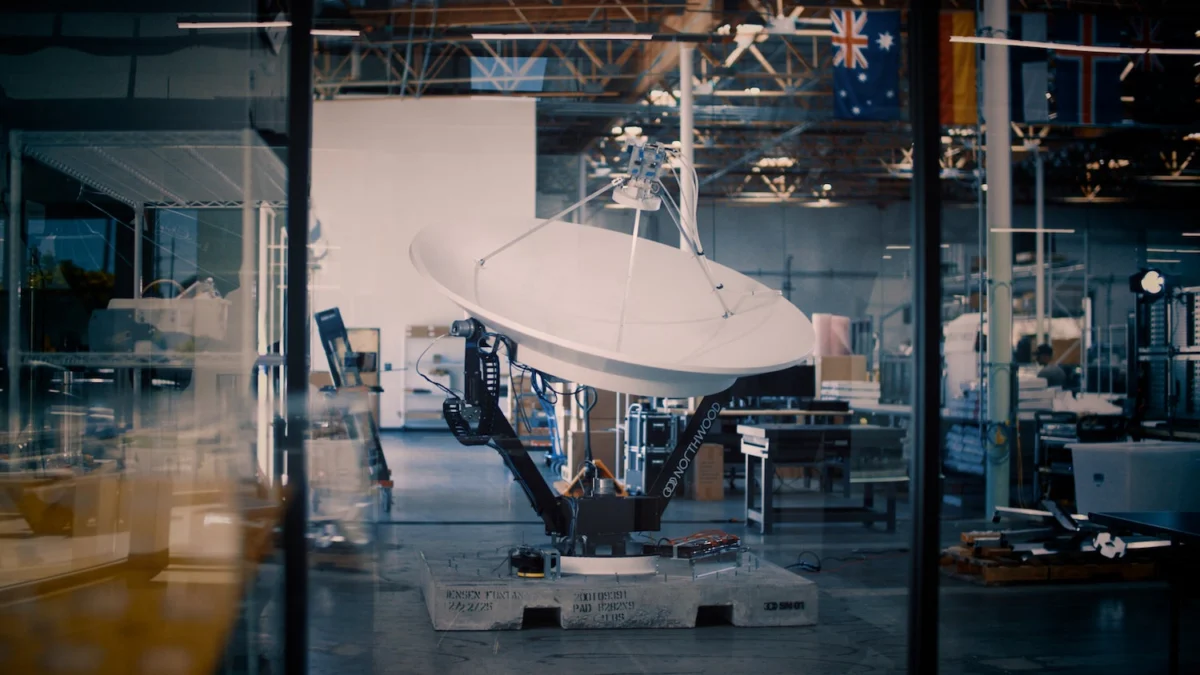
In a move that signals a tectonic shift in the aerospace and telecommunications landscape, Northwood Space, the ambitious ground infrastructure startup, has successfully closed a $375 million Series C funding round. This milestone, announced Monday, elevates the company’s valuation to an impressive $2 billion, cementing its status as a critical player in the burgeoning space economy.
The infusion of capital arrives less than a year after the company’s $100 million Series B round, underscoring the aggressive growth trajectory steered by CEO and co-founder Bridgit Mendler. With this latest financing, Northwood Space aims to move beyond pilot programs and prototype demonstrations, shifting its focus toward mass-scale production and a radical expansion of its global ground network.
Main Facts: Scaling the "Cloud" of Space
Northwood Space is effectively attempting to do for satellite ground stations what Amazon Web Services (AWS) did for traditional data centers. By moving away from bespoke, site-specific hardware deployments and toward a standardized, scalable "infrastructure-as-a-service" model, Northwood is positioning its ground network as a shared utility.
The core of the company’s value proposition lies in its two primary hardware offerings:
- The Portal: A phased-array antenna system meticulously engineered for command and control (C2) operations. It is capable of simultaneous communication with up to six satellites, providing the high-frequency agility required for complex orbital maneuvering.
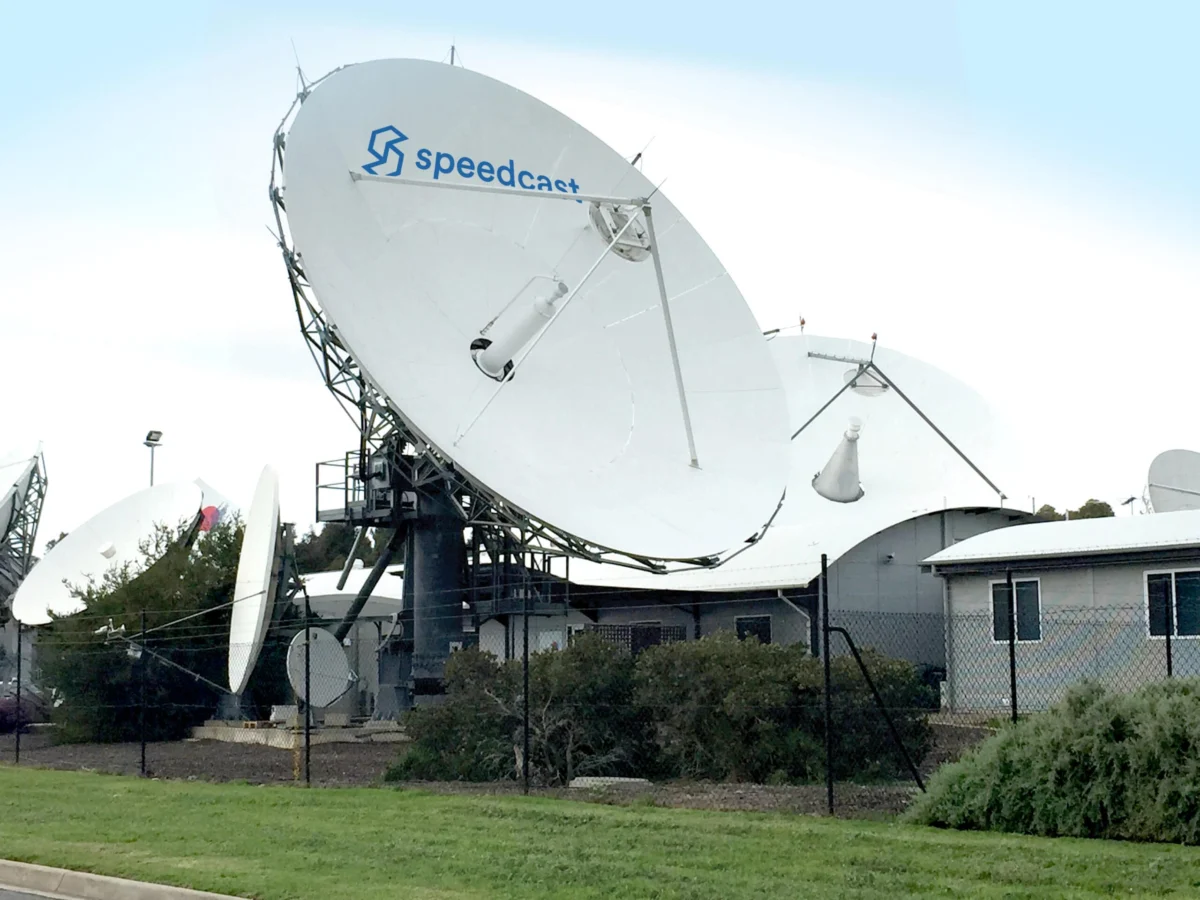
- The Prism: A high-throughput, high-data-rate parabolic antenna. While it communicates with one satellite at a time, its efficiency and throughput capacity make it the workhorse for bulk data downlink missions.
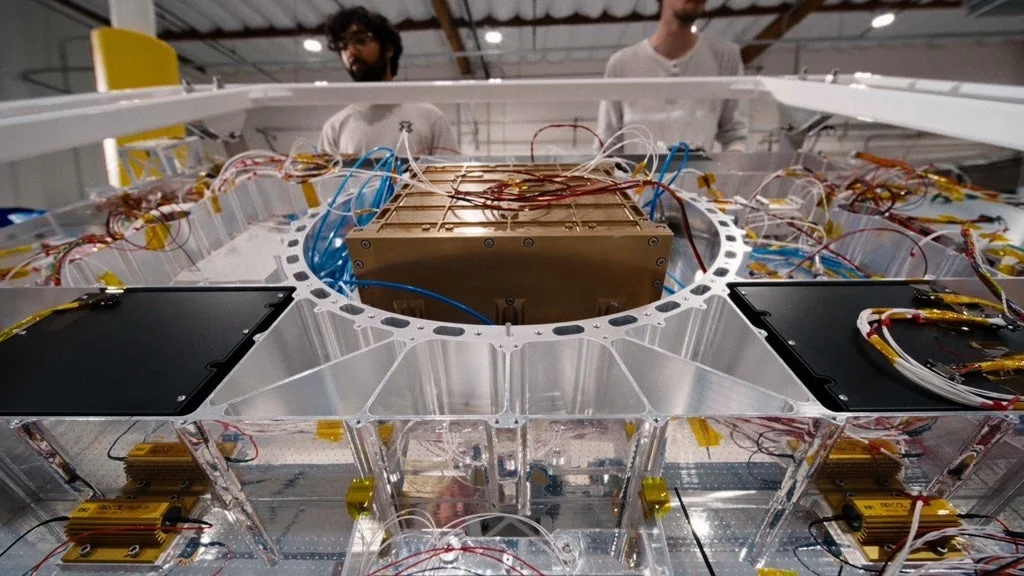
The company’s growth metrics are striking. Over the past 12 months, Northwood has manufactured 29 units. With the newly secured $375 million, the company plans to scale production to hundreds of units annually. To support this, they have inaugurated a massive 185,000-square-foot production facility in Torrance, California, which serves as the nerve center for their assembly and testing operations.
Chronology: A Rapid Ascent
The rise of Northwood Space has been nothing short of meteoric, characterized by rapid technical validation and strong financial backing.
- January 2026: The company raised $100 million in a Series B round. This period also saw the signing of a pivotal $49.8 million contract with the U.S. Space Force to support the Satellite Control Network (SCN), a critical piece of national security infrastructure responsible for the telemetry, tracking, and command (TT&C) of Department of Defense satellites.
- Mid-2026: The company finalized the fit-out of its Torrance production hub, transitioning from R&D-heavy prototyping to industrial-scale manufacturing.
- June 2026 (Present): The announcement of the $375 million Series C round. Co-led by Andreessen Horowitz (a16z) and DFJ Growth, the round saw significant participation from industry heavyweights including Alpine Space Ventures, Washington Harbour Partners, Stepstone Activate, and the CIA-backed In-Q-Tel (IQT).
In addition to equity funding, the company secured a multi-year credit facility from HSBC Innovation Banking, providing the necessary liquidity to manage working capital and logistics as they expand their footprint globally.
Supporting Data: The Economics of Speed
In the aerospace sector, "lead time" is the industry’s greatest enemy. Traditionally, procuring, installing, and commissioning a high-capacity parabolic antenna has been a process measured in months or even years. Northwood Space is disrupting this cycle through vertical integration and modular design.
During a recent media roundtable, CEO Bridgit Mendler offered a revealing benchmark: "In the time it typically takes for an antenna vendor to provide a quote to a customer, we produced a half-dozen dishes."
This capability is not merely a manufacturing flex; it is a strategic asset for resiliency. Northwood recently demonstrated the ability to field a 7.3-meter antenna in a matter of days. In the context of satellite defense and commercial constellation maintenance, this speed creates a "replaceability" factor that competitors cannot currently match. If a site is damaged or a mission profile changes, Northwood’s ability to "plug and play" new units provides a logistical advantage that is fundamentally altering how constellation operators plan their network architecture.
The company currently employs 140 people but has outlined a roadmap to hire 400 additional staff members over the next three years. These roles will be split between their California headquarters and Washington, D.C., focusing heavily on radio frequency (RF) engineering, software-defined networking, and global site operations.
Official Perspectives: The "No-Competition" Zone
Bridgit Mendler’s vision for the company is rooted in the belief that the current market for ground networks is inefficiently fragmented.
"We are targeting customers that are thinking of scaled constellations that need to be able to count on and rely upon that service, whether it be for a commercial mission or for a government mission," Mendler stated. When asked about the competitive landscape, she noted that while general-purpose ground stations are common, Northwood’s specific focus on rapid-fielding and high-throughput resilience creates a "blue ocean" scenario. "We’ve found that when you get very specific on those customer engagements, there typically is not really competition."
This sentiment is echoed by the investment community. The participation of In-Q-Tel, the strategic venture capital arm of the U.S. intelligence community, suggests that Northwood’s "Portal" and "Prism" systems are viewed as vital to the future of U.S. space superiority. While specific details of their work with the Space Force remain classified, the sheer scale of the investment suggests that the government views Northwood as a primary partner in the modernization of the SCN.
Implications: The Future of the Space Ground Segment
The $2 billion valuation of Northwood Space serves as a litmus test for the "Space 2.0" era. As the number of satellites in low-Earth orbit (LEO) continues to explode, the bottleneck is no longer just the ability to launch; it is the ability to communicate with and control these assets.
1. The Democratization of Ground Access
By commoditizing the ground station, Northwood is effectively lowering the barrier to entry for smaller satellite operators. Companies that once had to spend millions on proprietary, bespoke infrastructure can now tap into a "Cloud of Ground Stations," paying for the data throughput they use rather than the hardware they own.
2. Resilience and National Security
Modern conflicts are increasingly reliant on space-based assets. The ability to replace damaged ground infrastructure rapidly is no longer just a business advantage—it is a matter of national security. Northwood’s success in securing military contracts indicates that the Department of Defense is shifting its procurement philosophy from massive, long-term contracts to agile, modular, and replaceable systems.
3. The Software-Defined Future
While the hardware—the dishes and arrays—is the visible face of the company, the true long-term value lies in the software layer that manages these assets. If Northwood can successfully automate the orchestration of hundreds of antennas as a single, cohesive network, they will become the "backbone" of the space internet.
As Northwood Space scales to meet its goal of hundreds of units, the industry will be watching closely to see if they can maintain their manufacturing velocity. If they succeed, they will have not only built a network of antennas; they will have built the fundamental infrastructure required to sustain the next century of human activity in orbit. The $2 billion price tag, while significant, may eventually be seen as an early entry fee for the company that controls the connection between Earth and the stars.