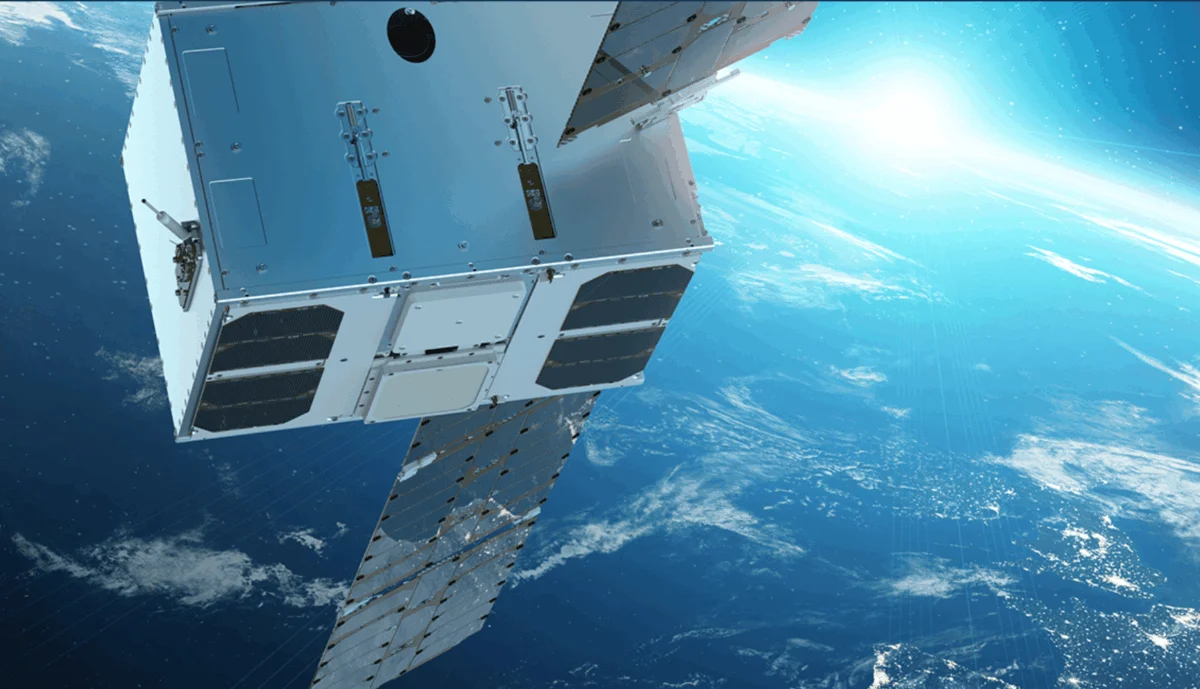
CENTENNIAL, Colo. — ESI Motion Inc., a long-standing American developer of ultra-rugged motion control systems, has been selected by defense prime Lockheed Martin to supply its advanced Solar Array Drive Electronics (SADE) for satellites destined for the U.S. Space Development Agency’s (SDA) Proliferated Warfighter Space Architecture (PWSA).
Under the strategic agreement, ESI Motion will deliver high-reliability, space-rated drive electronics—specifically powered by its proprietary SuperNova and Pulsar motor controllers—to manage the precise deployment and tracking of solar arrays aboard Lockheed Martin’s PWSA satellite buses. The hardware ensures that next-generation defense satellites maintain maximum power harvesting capabilities while navigating low Earth orbit (LEO).
The contract underscores a broader industrial trend across the national security space sector: military acquisition agencies and defense primes are increasingly relying on high-performance commercial suppliers to build resilient, mass-produced satellite constellations capable of detecting modern hypersonic threats and delivering real-time tactical communications to frontline troops.
Main Facts: Powering Next-Generation Military Space Systems
The agreement between ESI Motion and Lockheed Martin centers on providing high-efficiency motion control systems tailored for the challenging environment of LEO. At the core of the deliverable is ESI Motion’s Solar Array Drive Electronics (SADE) solution, built around the company’s combat-proven, space-rated SuperNova and Pulsar digital motor controllers.
       +--------------------------------------------------------+
       |               SDA PWSA Constellation                   |
       +--------------------------------------------------------+
                                   |
                                   v
       +--------------------------------------------------------+
       |              Lockheed Martin Prime Bus                 |
       +--------------------------------------------------------+
                                   |
                                   v
       +--------------------------------------------------------+
       |             ESI Motion SADE Controller                 |
       |  - SuperNova & Pulsar Motor Controllers                |
       |  - Precision Stepping & Closed-Loop Vector Control     |
       |  - Radiation-Tolerant & Thermal Vacuum Qualified       |
       +--------------------------------------------------------+
                                   |
                                   v
       +--------------------------------------------------------+
       |          Solar Array Drive Assembly (SADA)             |
       |  - Continuous Sun-Tracking Efficiency                  |
       |  - Uninterrupted Bus Power for Sensors & Lasers        |
       +--------------------------------------------------------+
Key Technical and Programmatic Highlights
- Core Deliverable: Solar Array Drive Electronics (SADE) designed to drive the Solar Array Drive Assemblies (SADA) on Lockheed Martin PWSA space vehicles.
- Underlying Technology: ESI Motion’s space-flight heritage SuperNova and Pulsar motor controllers, featuring compact footprints, low electromagnetic interference (EMI), high thermal stability, and radiation-tolerant designs.
- Customer & End-User: Integrated by Lockheed Martin Space on behalf of the Space Development Agency (SDA), an operational branch of the U.S. Space Force.
- Primary Mission Role: Ensuring continuous, optimized power generation for satellites conducting optical data mesh relay, hypersonic tracking, and tactical battlefield data distribution.
In modern proliferated low Earth orbit architectures, individual satellites undergo extreme thermal cycling—experiencing rapid transitions between sunlight and eclipse every 90 minutes. Maintaining constant, precise alignment between solar panels and the sun is vital. The continuous operation of active electronically scanned arrays (AESA), high-bandwidth optical inter-satellite links (OISLs), and overhead persistent infrared (OPIR) missile tracking sensors demands high, uninterrupted bus power. ESI Motion’s SADE modules supply the precision micro-stepping and closed-loop motor management required to keep solar arrays pointed toward the sun without introducing mechanical jitter that could disrupt sensitive onboard payloads.
Chronology: The Rise of Proliferated LEO and Modular Components
The contract reflects years of evolutionary shifts in U.S. national security space acquisition, moving away from legacy, multi-billion-dollar single satellites toward rapid, iterative production cycles.
+-----------------------------------------------------------------------------------+
| CHRONOLOGY OF PWSA & MOTION CONTROL EVOLUTION                                     |
+-----------------------------------------------------------------------------------+
| 2019       | Space Development Agency (SDA) established to reform space delivery. |
| 2020       | SDA awards initial Tranche 0 contracts to establish testbed.          |
| 2021       | Lockheed Martin wins key Transport & Tracking Layer awards.          |
| 2022-2023  | SDA transitions under U.S. Space Force; Tranche 1 procurement begins. |
| 2024-2025  | Tranche 2 development scales up mass-production supply chains.        |
| Oct 2026   | ESI Motion announces formal SADE delivery contract for Lockheed PWSA. |
+-----------------------------------------------------------------------------------+
2019: Founding of the Space Development Agency
In March 2019, the Department of Defense established the Space Development Agency to disrupt traditional, decades-long space procurement models. The agency introduced the concept of the National Defense Space Architecture (later renamed the Proliferated Warfighter Space Architecture), driven by a "spiral development" model that field new capability tranches every two years.
2020–2021: Tranche 0 Demonstrations and Prime Selection
SDA awarded initial contracts for Tranche 0—the "Warfighter Capability Demonstration" batch—to validate high-speed optical links and basic missile-tracking sensors. Lockheed Martin secured significant contract wins during this phase, proving its ability to integrate standardized commercial technologies into military-grade satellite buses.
2022–2023: Tranche 1 Operations and Scale
As SDA officially transitioned under the operational umbrella of the U.S. Space Force, Tranche 1 procurement ramped up to establish persistent regional coverage. Lockheed Martin was selected to construct dozens of Transport Layer satellites, requiring scalable, high-yield manufacturing processes and dependable tier-1/tier-2 suppliers.
2024–2026: Tranche 2 and Deep Supply Chain Integration
With Tranche 2 extending global coverage and incorporating advanced missile defense tracking, prime contractors scaled up their supply chains. In October 2026, ESI Motion announced its selection to supply the specialized SADE hardware for Lockheed Martin’s satellite platforms, marking another step in integrating specialized commercial motion control technologies into defense programs.
Supporting Data: Technical Deep Dive and Constellation Mechanics
Building electronics for space-based motion control requires balancing power efficiency, thermal management, structural durability, and radiation tolerance. The Space Development Agency’s operational envelope in LEO (typically orbiting at altitudes between 900 km and 1,200 km) exposes hardware to energetic particles, severe thermal shifts, and atomic oxygen degradation.
Technical Performance Parameters: ESI Motion SADE Platform
| Feature / Parameter | Specifications & Capabilities | Operational Benefit in PWSA |
|---|---|---|
| Drive Architecture | Digital, dual-axis/single-axis closed-loop servo system | Prevents dynamic step loss; minimizes mechanical jitter |
| Core Controllers | Integrated SuperNova & Pulsar modules | High-density SWaP (Size, Weight, Power) optimization |
| Radiation Tolerance | Total Ionizing Dose (TID) hard & SEE immune design | Prevents soft-bit flips and latch-ups in high-radiation LEO |
| Motor Compatibility | Brushless DC (BLDC), Permanent Magnet Synchronous (PMSM), Stepper | Flexibility across multi-vendor solar drive actuators |
| Thermal Range | -40°C to +85°C (Extended operational envelope) | Withstands intense vacuum thermal cycling |
| Interface Options | High-reliability digital interfaces (CAN bus, RS-422, SpaceWire) | Seamless integration into prime satellite command & data handling |
                       SDA ARCHITECTURE LAYERS

           +---------------------------------------------+
           |               TRACKING LAYER                |
           |   Overhead Persistent Infrared (OPIR)       |
           |   Hypersonic & Cruise Missile Warning       |
           +---------------------------------------------+
                                  ^
                                  | Optical Mesh Links
                                  v
           +---------------------------------------------+
           |               TRANSPORT LAYER               |
           |   High-Speed Optical Data Backbone          |
           |   Direct Tactical Link 16 Integration       |
           +---------------------------------------------+
                                  |
                                  v Direct Downlink
                   [ Tactical Warfighter / C2 ]
The PWSA Multi-Layered Enterprise
The Proliferated Warfighter Space Architecture relies on multiple functional layers to achieve resilient command and control:
- Transport Layer: Serves as a space-based mesh communications network. Equipped with optical inter-satellite links (lasers), these satellites pass tactical data around the globe in seconds without relying on vulnerable ground relay stations. They broadcast directly to tactical warfighters via Link 16 and other encrypted formats.
- Tracking Layer: Houses advanced wide- and medium-field-of-view Overhead Persistent Infrared (OPIR) sensors designed to spot and track dim, highly maneuverable hypersonic glide vehicles (HGVs) and advanced cruise missiles during boost and glide phases.
- Custody, Navigation, and Battle Management Layers: Supplementary layers providing automated threat target tracking, alternative precision navigation and timing (PNT), and onboard autonomous battle management computing.
Because both Transport and Tracking Layer satellites carry heavy power-consuming payloads—such as cryogenic coolers for infrared sensors and multi-watt optical communication terminals—the power distribution network must remain stable. ESI Motion’s SADE units ensure solar drives constantly track the sun with sub-degree accuracy, guaranteeing max-power point tracking (MPPT) performance across thousands of orbits over multi-year mission lifetimes.

Official Responses and Strategic Perspectives
Executive leadership and defense industry representatives emphasize that partnership across tier-1 primes and sub-tier motion control specialists is essential for meeting the Space Development Agency’s ambitious deployment schedules.
ESI Motion Leadership Perspective
Speaking on the company’s continuous contributions to high-reliability space programs, ESI Motion representatives highlighted the growing importance of securing critical space assets through resilient hardware components.
"Defending our nation in space is more important than ever," said Mitchell Haerterich, Senior Marketing & Sales Specialist at ESI Motion Inc. "The Space Development Agency’s PWSA programs provide the military with a network of satellites with secure communication, missile tracking, and space-based support to make sure our troops have the latest and greatest technology. Our SuperNova and Pulsar motor controllers deliver the flight heritage, reliability, and precision necessary to ensure all mission parameters are fulfilled."
Industry Consensus on Commercial Integration
Industry analysts note that prime contractors like Lockheed Martin rely heavily on specialized component suppliers who can deliver qualified flight hardware on tight schedules.
"The Space Development Agency’s model demands that hardware move from design to orbit in a matter of months rather than years," observed defense space technology analysts following the award. "Suppliers like ESI Motion, which offer pre-qualified, radiation-tolerant motor controllers with established heritage, allow prime contractors to de-risk their satellite buses while maintaining high production rates."
ESI Motion, headquartered in the United States, brings over two decades of motion control experience across aerospace, naval defense, heavy industrial, and satellite systems. By leveraging off-the-shelf control architectures customized for space conditions, ESI Motion enables primes to avoid expensive ground-up sub-system re-engineering.
Implications: Industrial Base and National Security Strategy
The contract award highlights key developments in national defense strategy, space system manufacturing, and the military industrial base.
+-----------------------------------------------------------------------------------+
| STRATEGIC IMPACTS OF PROLIFERATED LEO PARTNERSHIPS                                |
+-----------------------------------------------------------------------------------+
| Resilient Space Doctrine  | Replaces easy-to-target GEO assets with resilient     |
|                           | hundreds-strong LEO constellations.                   |
+---------------------------+-------------------------------------------------------+
| Industrial Scalability    | Leverages agile sub-tier suppliers (ESI Motion) for   |
|                           | rapid, repeatable component manufacturing.            |
+---------------------------+-------------------------------------------------------+
| Hypersonic Defense        | Ensures constant power for OPIR sensors tracking      |
|                           | maneuverable low-altitude missile threats.            |
+---------------------------+-------------------------------------------------------+
| Supply Chain Security     | Maintains domestic U.S. manufacturing for critical    |
|                           | micro-electronics and motor control sub-systems.      |
+-----------------------------------------------------------------------------------+
1. Shift from Exquisite Platforms to Mass Proliferation
For decades, the U.S. military depended on small numbers of high-cost, highly exquisite satellites placed in Geostationary Earth Orbit (GEO) 36,000 kilometers above the Earth. While powerful, these platforms created single-point vulnerabilities against anti-satellite (ASAT) missiles, co-orbital interceptors, and high-powered ground lasers.
The PWSA strategy changes this equation. By placing hundreds of cheaper, interconnected satellites in LEO, the U.S. military ensures that destroying or disabling a handful of space vehicles will not degrade the broader communications or tracking network. This architectural shift requires suppliers to produce components like SADE in much higher quantities than was historically common in defense space programs.
2. Micro-Jitter Suppression in Sensitive Space Systems
As optical communications and infrared sensors become standard equipment on defense satellites, sub-system stability has grown increasingly critical. Solar array motors can induce unwanted mechanical vibrations (micro-jitter) into the satellite structure as they rotate. If unmitigated, these vibrations can cause laser communications links to drop or degrade tracking accuracy for infrared cameras. ESI Motion’s closed-loop control algorithms in the SuperNova and Pulsar drives help damp these mechanical disturbances, preserving pointing accuracy across the platform.
3. Fortifying the Tier-2 Defense Supply Chain
The health of the defense space sector depends on robust domestic tier-2 and tier-3 sub-tier suppliers. Companies like ESI Motion, which maintain specialized design and cleanroom manufacturing facilities in North America, provide a secure supply chain for essential high-reliability components. This helps protect military projects against foreign supply chain disruptions and ensures compliance with strict defense procurement regulations.
4. Continuous Upgrades to Counter Evolving Threats
Because the Space Development Agency fields new satellite constellations every two years, each iteration can incorporate upgraded sub-systems. The adoption of modular drive electronics like ESI Motion’s SADE allows future PWSA generations to integrate higher-capacity solar panels and more demanding payloads without needing a complete redesign of the core bus control system.
As Lockheed Martin continues assembling its designated Transport and Tracking layer constellations, high-reliability motion control systems will remain a key operational enabler—ensuring the U.S. Space Force maintains persistent coverage, uninterrupted power, and continuous tactical connectivity across global operational theaters.