On October 29, 1991, humanity crossed a threshold in space exploration. As the Galileo spacecraft, a sophisticated robotic emissary sent by NASA to unlock the secrets of the Jovian system, hurtled through the silent void of the inner asteroid belt, it executed a maneuver never before attempted in the history of flight: a close-range encounter with a minor planet. The target was Gaspra, an irregularly shaped, crater-pocked asteroid orbiting between Mars and Jupiter. By the time the dust settled on the mission’s telemetry data, the landscape of planetary science had been permanently altered.
The Historic Flyby: Main Facts
The Galileo mission, launched in October 1989, was primarily tasked with studying Jupiter and its complex system of moons. However, the trajectory required to reach the gas giant involved a series of gravity-assist maneuvers, taking the craft on a winding path through the inner solar system. This path serendipitously placed the probe in the vicinity of the asteroid belt, providing a unique opportunity for scientific reconnaissance.
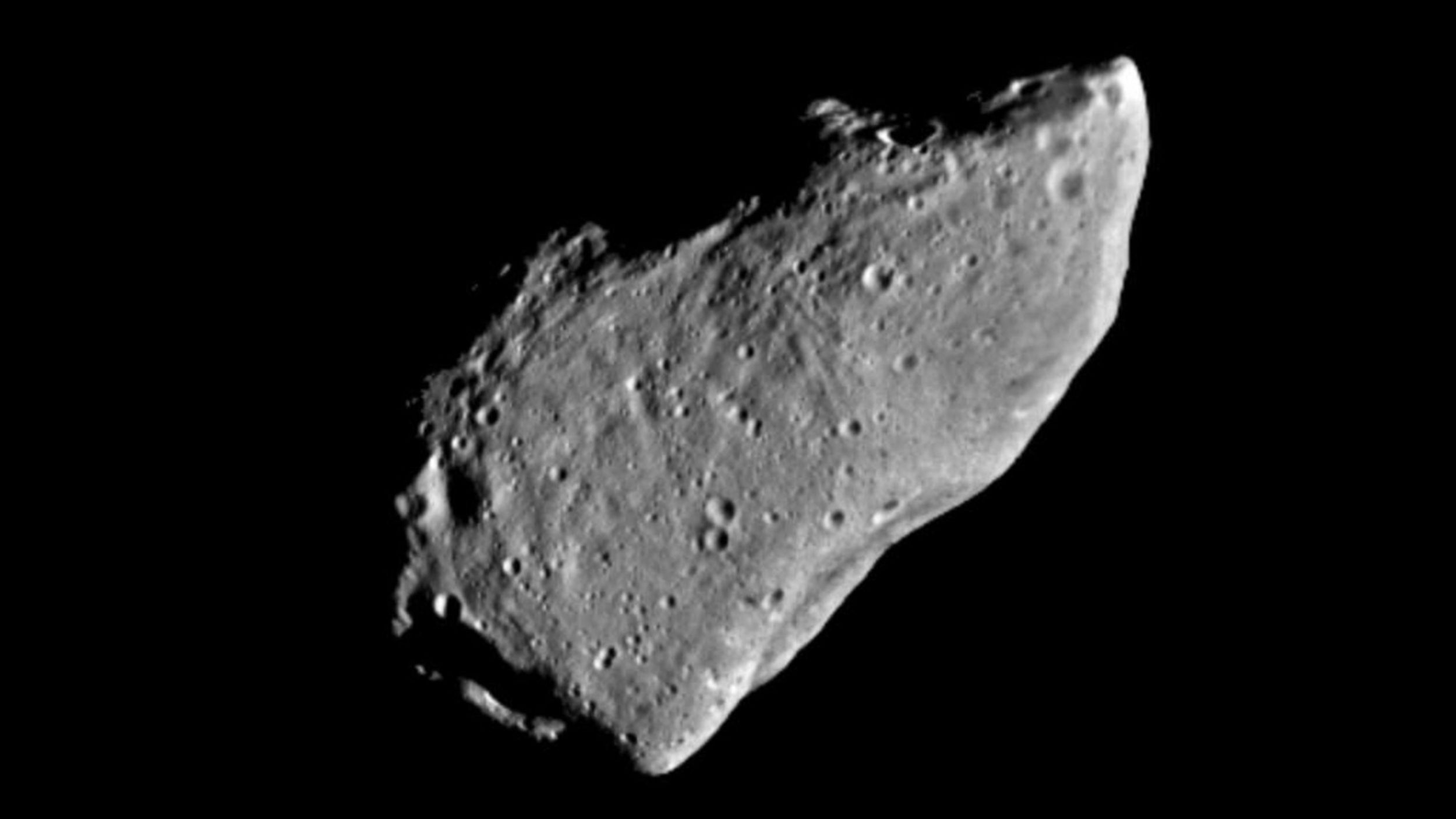
As Galileo approached Gaspra, it was traveling at a staggering relative velocity of approximately 5 miles per second (8 km/s or 18,000 mph). At its closest point, the spacecraft zoomed past the asteroid at a distance of roughly 990 miles (1,593 kilometers). This flyby was not merely a passive observation; it was a high-speed technological ballet. The spacecraft’s suite of onboard sensors, including the Near-Infrared Mapping Spectrometer, began collecting critical data on the asteroid’s surface composition, mineralogy, and physical characteristics.
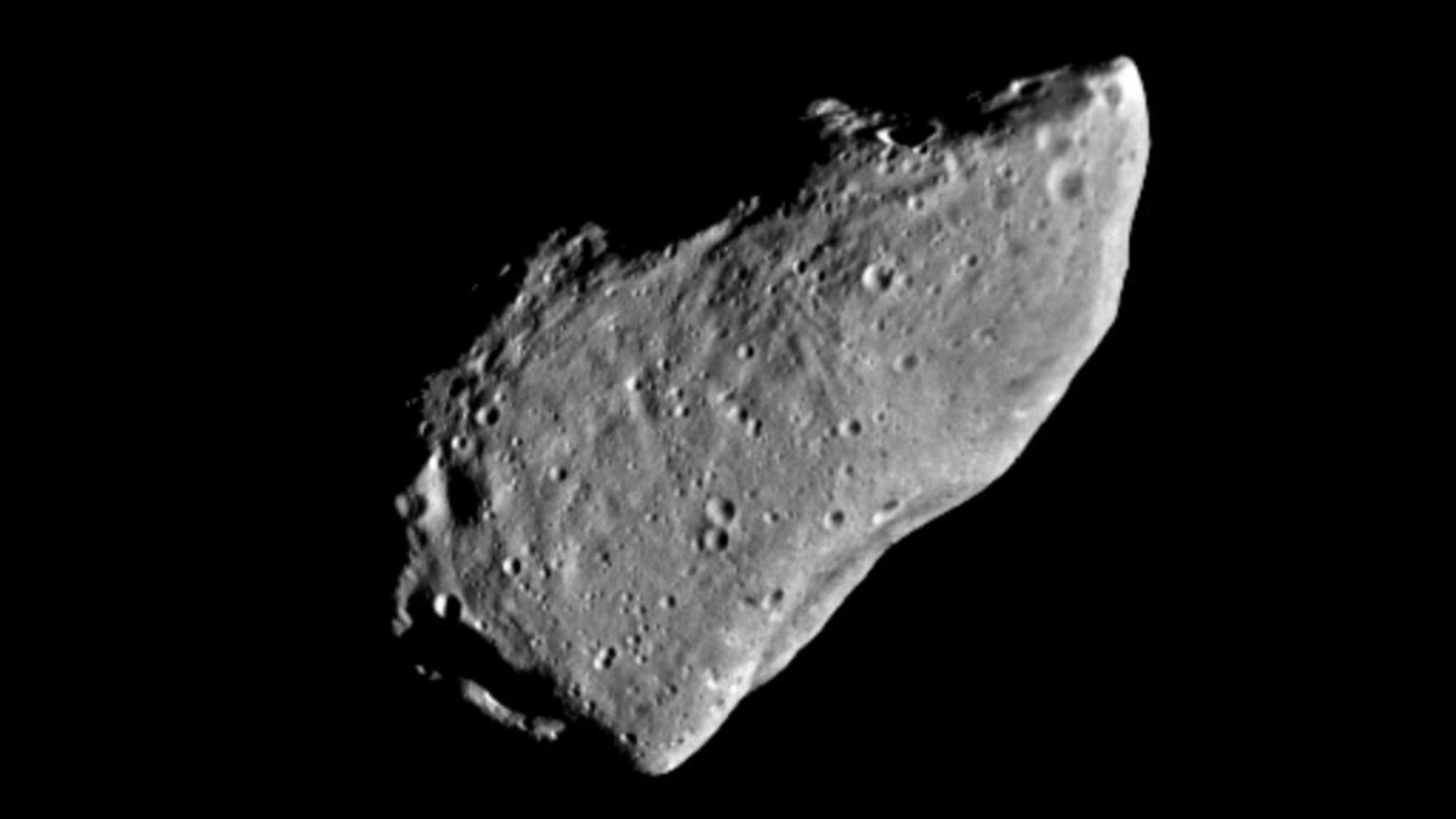
The resulting images provided the first-ever close-up glimpse of an asteroid, stripping away the mystery of these "space rocks" that had previously appeared only as point-sources of light in even the most powerful Earth-based telescopes. Scientists discovered a world that was elongated and jagged, measuring roughly 12 miles (20 kilometers) in length and 7 miles (11 kilometers) in width, with a surface densely scarred by the impacts of cosmic debris.
A Chronology of Exploration
The journey to Gaspra was the culmination of two years of precise orbital mechanics. After its 1989 launch, Galileo performed a series of gravity assists at Venus and Earth to gain the momentum required to reach the outer solar system. By the summer of 1991, the probe had entered the asteroid belt, a region teeming with remnants from the solar system’s chaotic formation.
Following the October 1991 encounter with Gaspra, the mission continued its relentless march toward the outer planets. The trajectory proved to be a goldmine for secondary science. In 1992, the spacecraft executed a second flyby of Earth, refining its path, and in 1993, it conducted a historic pass of the asteroid Ida, where it made the astonishing discovery of a small moon, Dactyl—the first confirmed natural satellite of an asteroid.
The mission’s climax arrived in 1995 when it finally reached Jupiter, but the intermediate years were marked by unprecedented observations, including the 1994 disintegration of Comet Shoemaker-Levy 9, which provided a rare front-row seat to a catastrophic planetary impact. The timeline of the Galileo mission serves as a masterclass in opportunistic science, proving that a primary mission objective does not have to come at the expense of secondary discovery.
Analyzing the "Survivor": Supporting Data and Findings
When the data from the Gaspra flyby reached the Deep Space Network, it prompted a paradigm shift in how astronomers perceived the history of the solar system. The imagery revealed a body that was not a solid, monolithic rock, but rather a "rubble pile" or a heavily fractured remnant of a larger parent body.
The presence of numerous craters indicated that Gaspra had a long, violent history of collisions. Scientific analysis suggested that the asteroid was likely a fragment of a much larger body that had been shattered in a cataclysmic impact event millions of years ago. The surface dust, or regolith, suggested that these collisions were frequent enough to grind down the surface material into fine powder, yet the irregular shape confirmed that the body lacked the gravity to pull itself into a sphere.
Because the spacecraft remained at a distance of nearly 1,000 miles, it was unable to be captured by Gaspra’s weak gravitational pull. While this ensured the safety of the probe, it left one major question unanswered: the asteroid’s mass. Without a close-range gravitational measurement, scientists had to infer density based on the inferred composition from the spectrometer data. These initial estimates laid the groundwork for modern asteroid density studies, which are now vital for understanding the internal structures of near-Earth objects.
Official Perspectives: The Scientific Consensus
At the time of the announcement, the findings sent shockwaves through the astronomical community. Joseph Veverka, a key member of the Galileo imaging team, captured the sentiment of the era when he stated, "The picture we get of Gaspra is one of something that has suffered a lot during its history. We suspect that this is the survivor of a series of catastrophic collisions in the past."
NASA’s mission overview at the time emphasized that the flyby was a "proof of concept." Before Gaspra, our knowledge of asteroids was largely theoretical, based on light curves and spectral analysis. The Galileo images transformed these abstract objects into tangible, geological entities. The agency noted that the flyby validated the instrumentation design, proving that a probe could survive the intense radiation environment of the asteroid belt while simultaneously conducting high-speed imaging—a capability that would become the standard for future interplanetary missions.
Implications for Planetary Defense
The legacy of the Galileo-Gaspra encounter cannot be overstated. It was the "first step" in a decades-long progression that has moved from passive observation to active intervention.
Following the success of Galileo, the scientific community realized that if we are to protect Earth from potential impactors, we must first understand the "geology" of the enemy. This realization directly paved the way for subsequent missions like the Near Earth Asteroid Rendezvous (NEAR) Shoemaker, which landed on Eros in 2001, and the sample-return missions, OSIRIS-REx (NASA) and Hayabusa (JAXA). These missions were made possible only because the groundwork was laid by the technical lessons learned during the Galileo flyby.
Furthermore, the modern era of planetary defense—epitomized by the Double Asteroid Redirection Test (DART)—finds its roots in the fundamental questions asked in 1991. By studying Gaspra’s shape, composition, and response to impacts, scientists began to model how a kinetic impactor might deflect an asteroid on a collision course with Earth. We have transitioned from simply observing the scars of past collisions on asteroids like Gaspra to intentionally creating our own.

Conclusion: A Legacy Carried Forward
The October 29, 1991, flyby of Gaspra was more than a technical triumph; it was a conceptual bridge. It turned the "asteroid belt" from a vague region of the map into a laboratory of solar system evolution. Every time a modern probe approaches a Near-Earth Object, it does so standing on the shoulders of the Galileo team, who, with little more than a 1980s-era computer and a dream of exploring the outer planets, decided to take a detour and peek at a jagged rock in the dark.
As we continue to scan the skies for potential threats and search for the origins of life in the chemical signatures of primitive asteroids, the memory of that first, grainy image of Gaspra remains a reminder of the power of curiosity. The universe is full of survivors of past catastrophes, and thanks to the pioneering work of the Galileo mission, we now have the tools—and the resolve—to ensure that Earth does not become one of them.