Date: October 29, 2026
Industry: Satellite Communications / Defense Technology
In an era where operational agility is defined by the speed and reliability of data, the defense sector faces a growing dilemma: how to maintain persistent, high-speed connectivity without being tethered to a single, potentially vulnerable infrastructure. Lite Coms, a leader in satellite terminal innovation, has officially addressed this challenge with the launch of the GT3 flat panel antenna. Designed to provide simultaneous, multi-constellation Low Earth Orbit (LEO) access, the GT3 promises to redefine how government and military end-users approach tactical communication in contested environments.
The Core Innovation: Breaking the "Single-Network" Lock-In
For years, the defense industry has struggled with "analysis paralysis." As a proliferation of LEO constellations—such as Starlink and OneWeb—come online, military planners are often forced to choose a specific provider, effectively locking their mission-critical assets into a single ecosystem.
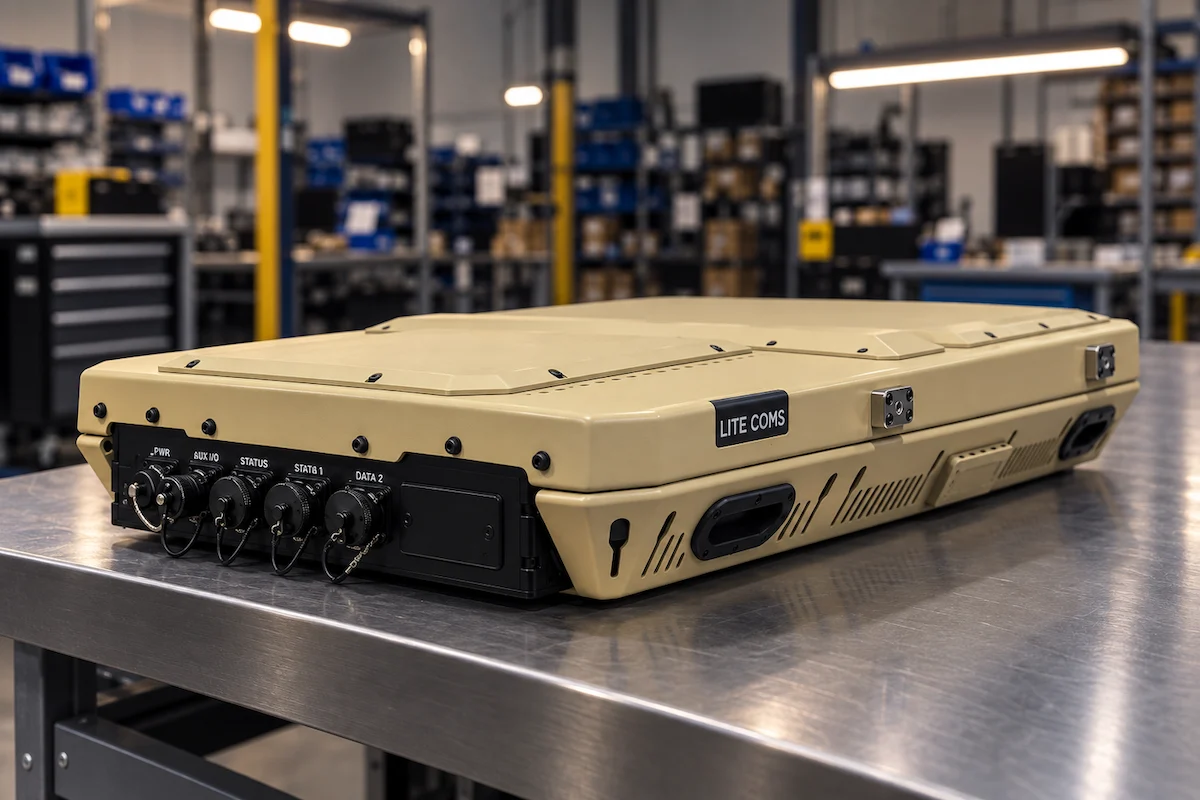
The GT3 terminal fundamentally alters this calculus. By integrating commercial off-the-shelf (COTS) equipment into a ruggedized, mission-ready chassis, Lite Coms has created a platform that bridges the gap between commercial efficiency and military-grade durability.
According to Andrew Colaruotolo, Chief Strategy Officer at Lite Coms, the GT3 is not just an antenna; it is an agile transport node. "The biggest thing that the GT3 brings to the market is that you have high throughput, low latency access to networks that can operate either independently or simultaneously," Colaruotolo stated. "You’re not locked into a single network—you can choose which is best for your mission for the day."
Technical Specifications and Operational Versatility
The GT3 is engineered for maximum interoperability. It does not limit its users to a single satellite provider; instead, it is built to operate across Starlink, OneWeb, and terrestrial 5G/LTE networks. This multi-path capability ensures that even if one network is compromised, degraded, or obscured, the GT3 can maintain a "resilient" link by seamlessly switching or aggregating bandwidth from alternative providers.
Key Capabilities:
- Multi-Constellation Support: Simultaneous integration with major LEO providers ensures high availability in geographically challenging regions.
- Hybrid Transport: Seamless handoff between satellite and cellular (5G/LTE) backhaul.
- Ruggedized Form Factor: Unlike delicate, experimental tech, the GT3 is designed for the rigors of the field. It is suitable for mounting on tactical utility task vehicles (UTVs), SUVs, and mobile command centers.
- COTS-Based Architecture: By leveraging proven, commercially available hardware, Lite Coms significantly reduces the cost of production and maintenance, passing those savings to government agencies that operate on strict budget cycles.
A Chronology of Lite Coms’ Strategic Evolution
The launch of the GT3 is the culmination of years of iterative development at Lite Coms’ manufacturing facilities in New York. The company’s trajectory has been defined by a philosophy of technological neutrality.
- Foundation Phase: Lite Coms entered the market with a commitment to avoid proprietary "walled gardens." Their objective was to act as an integrator of high-performance satellite technology rather than a partisan of a single network.
- Operational Maturity: By scaling production of their single-network antennas to a rate of 30 terminals per week, the company established a robust supply chain capable of meeting the surge demands of modern defense contracts.
- The Pivot to Multi-Orbit: Recognizing the shift in military doctrine toward "Multi-Domain Operations," Lite Coms shifted its R&D focus toward the GT3. The goal was to solve the logistical burden of field teams having to carry different terminals for different constellations.
- October 2026 Launch: The official unveiling of the GT3 marks the company’s transition from a niche component provider to a primary integrator of multi-network, resilient tactical communications.
Official Perspective: The "Ruggedization" Mandate
The success of the GT3 lies in its adherence to customer feedback. In the defense sector, "commercial-grade" is often viewed with skepticism due to concerns regarding vibration, extreme temperatures, and electromagnetic interference.
"A lot of the feedback that we’ve had from our customers is to take what’s commercially available and make it rugged for the military," Colaruotolo explained. By taking existing high-throughput technologies and housing them in a platform tested against the harsh conditions of a tactical UTV deployment, Lite Coms has effectively lowered the barrier to entry for advanced LEO connectivity.
This strategy differentiates the GT3 from competitors who often focus on developing expensive, proprietary hardware that is difficult to upgrade. Lite Coms, conversely, leans into the rapid innovation cycle of the commercial market. As new satellite constellations are launched, the company plans to integrate them into the GT3 ecosystem, ensuring that the terminal remains "future-proofed" against rapid industry changes.
Implications for Modern Warfare and Tactical Command
The introduction of a terminal capable of simultaneous multi-network operations has profound implications for tactical communications.
1. Resiliency in Contested Environments
Electronic warfare (EW) is increasingly targeting the electromagnetic spectrum. A single-network terminal is a single point of failure; a device that can jump between multiple LEO orbits and terrestrial 5G networks is exponentially harder to jam or disable. This "path diversity" is the cornerstone of modern communications security.
2. Democratizing High-Speed Connectivity
Previously, only elite units had access to multi-network, high-throughput terminals due to prohibitive costs. By utilizing COTS equipment, Lite Coms is lowering the price point, potentially allowing for the widespread deployment of these terminals across standard infantry units, command-and-control vehicles, and reconnaissance assets.
3. The End of "Network Tribalism"
By adopting a technology-agnostic stance, Lite Coms is forcing a shift in how the industry views satellite procurement. The "GT3 approach" suggests that the hardware is the constant, while the satellite network is the variable. This gives military commanders the flexibility to prioritize a network based on the specific mission profile—such as latency requirements, data throughput, or geographic coverage—without having to swap out hardware.
Looking Ahead: The Future of Lite Coms
As the LEO market expands, the demand for "agnostic" terminals will likely skyrocket. Lite Coms is already positioning itself to be at the center of this expansion.
"We have plans to grow with the emerging technology," Colaruotolo said, addressing the company’s roadmap. "When we started Lite Coms, it was never to choose a technology and get behind it. We take multiple technologies and bring them into our users’ hands."
For government end-users, the GT3 represents a transition toward a more flexible, reliable, and cost-effective future. By prioritizing the user’s need for constant connectivity over the desire for proprietary lock-in, Lite Coms has provided a roadmap for how the next generation of tactical communications will be built.
In the coming months, as the GT3 moves from the production line to the field, the defense community will be watching closely. If the terminal performs as expected, it could set the new industry standard for what constitutes a truly "mission-ready" communication platform in an increasingly complex and interconnected global environment.
With its combination of high throughput, low latency, and ruggedized versatility, the GT3 is more than a new piece of hardware—it is a strategic asset for the modern commander, ensuring that no matter the location or the threat, the connection remains unbroken.