Main Facts: A Strategic Agreement for Orbital Power Demonstration
UIWANG-SI, SOUTH KOREA — Flexell Space, a South Korean space energy technology enterprise spun off from Hanwha Systems, has formally entered into a collaborative agreement with Singapore-based CubeSat and mission-integration provider Satoro. The agreement governs the execution of two dedicated In-Orbit Demonstration and In-Orbit Validation (IOD/IOV) missions designed to evaluate Flexell Space’s next-generation space solar cells under actual orbital flight conditions.
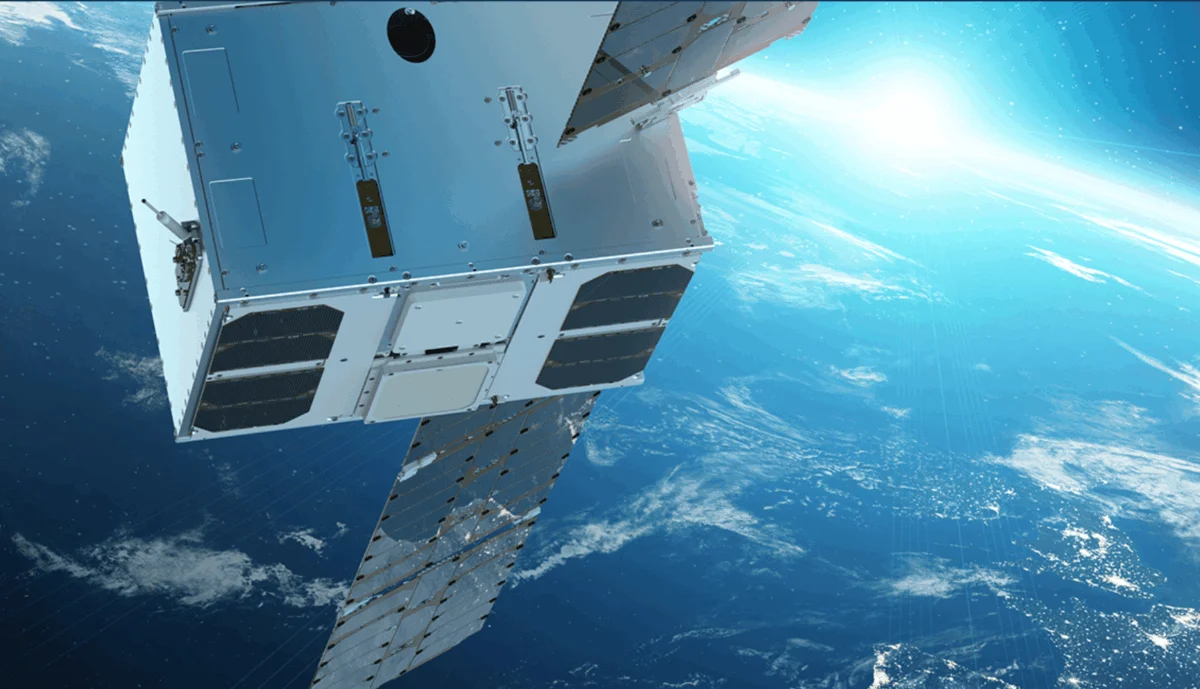
Under the terms of the contract, the flight validation program will encompass two distinct orbital missions, scheduled for launch in 2027 and 2028. Both demonstration payloads will be placed into orbit using SpaceX’s Falcon 9 launch vehicles via commercial rideshare missions.
The primary objective of these missions is to rigorously measure, verify, and characterize the operational stability, radiation degradation, and energy conversion efficiency of Flexell’s thin-film photovoltaic technology in the Low Earth Orbit (LEO) environment. Satoro will act as the end-to-end satellite platform provider, delivering its proprietary "Satellite-as-a-Service" (SaaS) solution. This includes full bus manufacturing, system integration, launch management, and ongoing ground-station telemetry support. Flexell Space will design, manufacture, and deliver the customized solar cells and experimental test modules integrated into the spacecraft structure.
Chronology: Path to Orbital Qualification
The agreement with Satoro represents the third and fourth orbital flight opportunities secured by Flexell Space as it moves its advanced solar technologies from laboratory development to commercial operational readiness.
November 2025: Flexell Space executed its inaugural space demonstration mission aboard South Korea’s indigenous launch vehicle, the KSLV-II (Nuri). This mission established foundational operational telemetry for the company’s thin-film photovoltaic architectures.
October 2026: A secondary validation payload was deployed on a subsequent KSLV-II flight, allowing engineers to gather comparative multi-season performance data and assess early-stage resilience against atomic oxygen and vacuum degradation.
International Commercial Demonstration Phase (2027–2028)
2027 (Planned): Launch of the third demonstration satellite aboard a SpaceX Falcon 9. This mission will focus on real-time solar cell output curve analysis under continuous eclipse-to-sunlight transitions.
2028 (Planned): Launch of the fourth demonstration satellite, also on a SpaceX Falcon 9 platform. This mission will focus on multi-year endurance testing, gathering degradation data necessary to meet strict commercial procurement requirements for global satellite prime contractors.
Technical Data and Architectural Integration
The deployment of space-grade photovoltaics requires overcoming severe engineering trade-offs between energy conversion efficiency, mass density, manufacturing cost, and structural resistance to orbital hazards.
Photovoltaic Cell Chemistry: CIGS vs. Perovskite Tandem Architectures
Traditional satellite power systems rely on multi-junction Gallium Arsenide (GaAs) solar cells. While GaAs cells achieve high power conversion efficiencies exceeding 30%, they are rigid, heavy, expensive to manufacture, and brittle under dynamic mechanical loads. Flexell Space is pursuing a dual-track development strategy based on thin-film Copper Indium Gallium Selenide (CIGS) and emerging Perovskite compound chemistries.
+------------------------+-----------------------+--------------------------------+
| METRIC                 | TRADITIONAL GaAs      | FLEXELL NEXT-GEN (CIGS/PEROVS) |
+------------------------+-----------------------+--------------------------------+
| Substrate Flexibility  | Rigid                 | Highly Flexible / Rollable     |
| Mass-Specific Power    | ~100–300 W/kg         | > 1,000 W/kg (Target)          |
| Manufacturing Cost      | Extremely High        | Low to Medium (Roll-to-Roll)   |
| Thermal Shock Resistance| Moderate              | High                           |
| Deployment Geometry    | Panel arrays only     | Curved / Surface-Integrated    |
+------------------------+-----------------------+--------------------------------+
CIGS (Copper Indium Gallium Selenide): Flexible thin-film cell technology offering exceptional radiation tolerance against high-energy proton and electron bombardment in LEO. Its inherent flexibility allows rollable array configurations, drastically reducing the volumetric footprint inside launch vehicle fairings.
Perovskite Tandem Cells: Synthetic materials engineered to absorb high-energy blue photon wavelengths that conventional silicon or low-bandgap materials miss. When stacked in a tandem configuration with CIGS or silicon, perovskites dramatically boost overall efficiency while maintaining low mass density.
Satellite-as-a-Service Architecture
Satoro’s operational model leverages a standardized CubeSat bus designed to streamline payload integration and lower mission risk. Satoro’s flight hardware ecosystem handles power conditioning, data handling, thermal regulation, and high-rate telemetry downlink, isolating the experimental solar modules from auxiliary platform noise.
Satoro’s operational record includes 11 satellites successfully deployed across 8 orbital launches since 2021, maintaining a 100% mission deployment success rate. This track record ensures that Flexell Space receives precise, uncorrupted telemetry concerning power output ($Pmax$), open-circuit voltage ($Voc$), short-circuit current ($I_sc$), and fill factor ($FF$) variations across thousands of thermal cycles.
Official Executive Responses
Executive leadership from both organizations emphasized the operational and strategic significance of securing predictable flight heritage for novel space technologies.
Flexell Space Executive Outlook
Taehun Ahn, Chief Executive Officer of Flexell Space, highlighted that ground qualification is no longer sufficient for space commercialization:
"Commercializing space solar cells requires both ground-based performance validation and data collected in orbit. With two demonstration opportunities secured for 2027 and 2028, we will systematically verify the performance and reliability of our next-generation solar cells and build the technical evidence required by global customers."
Ahn further emphasized the role of international operational partnerships in accelerating commercial readiness:
"Our collaboration with Satoro establishes a clear path from development to in-orbit demonstration and will accelerate our preparations for future commercial supply."
Satoro Leadership Statement
Mark Lu, Chief Executive Officer of Satoro, discussed the deployment flexibility of their CubeSat platform and its role in accelerating new space power tech:
"We are pleased to work with Flexell Space on the demonstration of its next-generation space solar cells. Drawing on Satoro’s CubeSat platforms and mission integration capabilities, we will work closely with Flexell Space to help secure the in-orbit data needed to validate its technology."
Lu also noted the broader industry impact:
"We look forward to these two demonstration missions advancing the commercial potential of new space power technologies and laying the groundwork for continued technical collaboration between our companies."
Strategic Implications for the Space Energy Sector
The strategic alliance between Flexell Space and Satoro comes at a pivotal moment for the commercial satellite market. Driven by the rapid proliferation of mega-constellations for low-latency communications, earth observation, and orbital logistics, the demand for affordable, reliable orbital power is accelerating.
GLOBAL SPACE POWER SUPPLY CHAIN TRANSLATION
===========================================

  [Traditional Space Power]                [Next-Gen Flexible Power]
   High-cost GaAs Arrays                   Roll-to-Roll Thin-Films
   Rigid Structural Panels                 Conformal / Integrated Skins
   Supply Chain Bottlenecks                High-Volume Manufacturing
   $1,000+ per Watt                        < $100 per Watt (Target)
Replacing Legacy Triple-Junction Silicon and GaAs
The space power sector has faced persistent supply chain bottlenecks due to the complex, manual, and expensive manufacturing processes required for triple-junction GaAs solar panels. As constellators deploy thousands of spacecraft into LEO, traditional solar arrays account for a significant fraction of total satellite bill-of-materials (BOM) costs.
Flexell Space’s CIGS and perovskite cells aim to disrupt this market by enabling roll-to-roll continuous manufacturing processes. If flight-proven aboard the 2027 and 2028 SpaceX missions, these flexible, surface-mountable panels could lower mass density, reduce structural complexity, and cut power system hardware costs by orders of magnitude.
The partnership highlights a growing trend toward regional cross-border cooperation within the Asia-Pacific NewSpace economy. By combining South Korea’s advanced industrial manufacturing and materials research capabilities (spurred by spin-offs from major defense conglomerates like Hanwha Systems) with Singapore’s commercial satellite integration, testing, and operational hubs, both companies are streamlining the lifecycle from concept to flight-proven heritage.
If the 2027 and 2028 orbital validation flights succeed, Flexell Space will be well-positioned to transition from flight demonstration to full-scale commercial manufacturing, serving satellite builders across North America, Europe, and Asia.