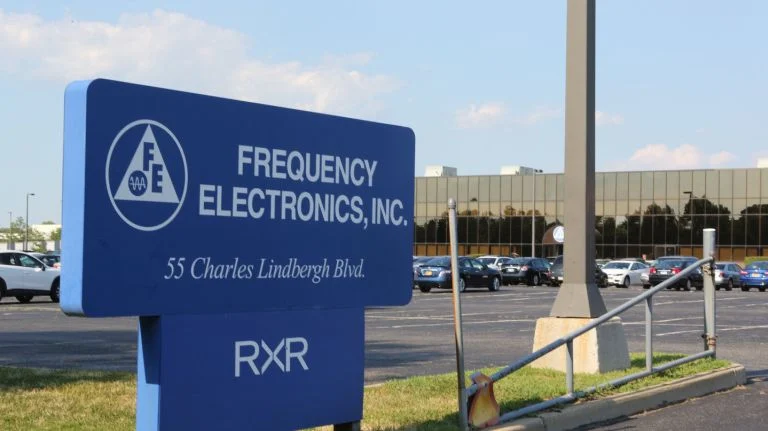
In a significant development for the aerospace and defense technology sector, Frequency Electronics, Inc. (FEI) has announced a robust infusion of new business, totaling $18 million in recent contract wins. The awards, which span both high-stakes space initiatives and critical government programs, signal a pivotal expansion for the firm as it positions itself as a cornerstone provider for the next generation of satellite constellations.
The most notable component of this announcement is an $11 million contract awarded by an undisclosed major aerospace prime contractor. This deal marks a critical entry point for Frequency Electronics, serving as its maiden engagement with this specific prime contractor. The contract tasks FEI with the provision of on-board precision frequency-generation systems—a foundational technology required for the synchronization and operation of proliferated satellite programs.
Main Facts: The Anatomy of the $18 Million Win
The $18 million in total contract value is split across two primary operational streams, both of which underscore FEI’s evolving market strategy.
1. The Proliferated Satellite Program Award ($11 Million)
This flagship contract represents the company’s second "significant" win in the proliferated satellite sector within the current calendar year. By providing precision frequency-generation systems, FEI is essentially providing the "heartbeat" of these satellites. In the context of modern satellite constellations—which often involve hundreds or thousands of small, interconnected satellites—the ability to maintain precise timing and frequency across the network is paramount for data integrity, signal processing, and orbital positioning.
2. Follow-on Production Contracts ($7 Million)
Beyond the headline-grabbing space program win, FEI has solidified its revenue stream through $7 million in follow-on production awards. These encompass:
- Space Oscillators: Critical components for maintaining precise timing in space-based environments.
- Non-Space U.S. Government Programs: Ensuring that FEI remains a diversified supplier for domestic security and infrastructure needs.
These follow-on contracts are particularly vital for the company’s financial health. Because these projects leverage existing engineering and development investments, they carry higher-than-average gross margins, directly contributing to bottom-line profitability.
Chronology: A Trajectory of Growth
To understand the weight of these recent wins, one must look at the timeline of Frequency Electronics’ strategic pivot over the past eighteen months.
Fiscal Year 2023: The Investment Phase
Throughout the previous fiscal year, FEI leadership adopted a "build now, reap later" philosophy. Recognizing the impending surge in demand for satellite-based communications and surveillance, the company initiated a deliberate, aggressive hiring strategy. By bringing on high-level engineering talent before the contracts were fully solidified, FEI aimed to ensure it would have the operational bandwidth to meet a large-scale production ramp-up without suffering from the supply chain bottlenecks that have plagued the aerospace industry post-pandemic.
Early 2024: The First Significant Win
Earlier this year, FEI signaled its intent to become a major player in the proliferated satellite market by securing its first significant contract in the space. This acted as a proof-of-concept for the company, demonstrating to the broader aerospace industry that their technology was scalable and reliable enough for mass-produced satellite architectures.
Q3/Q4 2024: The Current Expansion
The announcement of the $11 million and $7 million contracts serves as the culmination of these earlier efforts. By securing a new prime contractor partnership, FEI has expanded its reach, effectively de-risking its client base and signaling that the "proliferated satellite" market is no longer a niche pursuit, but a core pillar of their revenue model.
Supporting Data: A Record-Breaking Backlog
The financial health of Frequency Electronics is perhaps best reflected in its record-funded backlog, which currently stands at $111 million. This figure represents a nearly 60% increase year-over-year, providing a rare level of visibility into the company’s future revenue.
Key Financial Indicators
- Total Backlog: $111 million (Record high).
- Year-Over-Year Growth: ~60%.
- Contract Mix: A healthy balance between new, high-growth space programs and high-margin, follow-on government production contracts.
- Operational Readiness: The company’s recent investments in headcount have effectively transitioned FEI from a research-and-development-heavy firm to an production-ready industrial entity.
The backlog is not merely a number; it is a manifestation of market trust. In the aerospace sector, prime contractors rarely entrust mission-critical systems to unproven vendors. The fact that FEI has seen such significant growth in its backlog suggests that they have successfully transitioned from an experimental vendor to a "tier-one" supplier for the aerospace industry.
Official Responses: CEO Tom McClelland’s Outlook
In a recent communication to investors, President and CEO Tom McClelland emphasized that these contract wins are merely the beginning of a broader trend.
"We expect significantly more wins in this area going forward," McClelland stated, referring specifically to the proliferated satellite sector. His optimism is rooted in the current geopolitical and technological climate, where governments and private companies are racing to deploy massive satellite networks for global internet coverage, real-time intelligence, and military communications.
McClelland also highlighted the strategic importance of the follow-on contracts: "The follow-on awards we won are also very attractive for FEI, as they tend to come at higher than average corporate gross margins, as we leverage previous engineering and development costs."
This commentary reveals a sophisticated management strategy: use the high-profile, high-growth space contracts to gain market entry and establish relationships, and use the follow-on, high-margin contracts to drive long-term financial stability and profitability.
Implications: The Shift Toward Proliferated LEO/MEO Constellations
The implications of Frequency Electronics’ recent successes are far-reaching, both for the company and for the satellite industry at large.
1. The Normalization of "Proliferated" Space
The rise of proliferated satellite programs—often involving Low Earth Orbit (LEO) or Medium Earth Orbit (MEO) constellations—marks a departure from the "big satellite" model of the 20th century. In the past, companies focused on building one or two massive, multi-billion-dollar satellites. Today, the trend is toward constellations of hundreds of smaller units. FEI’s ability to secure contracts in this space indicates that their frequency-generation systems are well-suited for mass production, a key requirement for any company looking to survive in the "new space" economy.
2. Deepening Ties with Prime Contractors
By securing an agreement with a new major aerospace prime contractor, FEI has successfully diversified its "customer concentration risk." Historically, aerospace suppliers have struggled when they rely on a single prime contractor. By expanding its client base, FEI is becoming an indispensable node in the broader defense-industrial complex.
3. Talent Acquisition as a Competitive Advantage
Many aerospace firms are currently struggling to scale due to a shortage of specialized engineering talent. Because FEI invested in hiring throughout the previous fiscal year, they are now uniquely positioned to outmaneuver competitors who are only just now trying to scale their teams. This head start allows FEI to promise, and deliver, faster turnaround times on production—a critical metric for prime contractors who are under pressure to deploy constellations rapidly.
4. Future Outlook: Sustained Growth
Looking ahead, the combination of a $111 million backlog and the expected increase in satellite deployments suggests that Frequency Electronics is entering a period of sustained growth. If the company continues to leverage its existing intellectual property for high-margin follow-on production while simultaneously capturing new, high-growth space awards, it will likely see a significant expansion in its valuation and market influence over the next 24 to 36 months.
Conclusion
Frequency Electronics has reached a significant inflection point. By successfully navigating the transition from a niche engineering firm to a high-volume supplier for the next generation of space infrastructure, the company has secured its position in an increasingly crowded and competitive market.
The $18 million in recent contract wins serves as validation of their long-term strategy—a strategy that prioritized early investment in human capital and a focus on the high-margin, follow-on production market. With a record backlog of $111 million and a clear mandate to continue capturing market share in the proliferated satellite space, Frequency Electronics is demonstrating that it has the technological rigor and the operational discipline to thrive in the modern aerospace landscape. As the "new space" era continues to evolve, FEI stands as a vital, and now increasingly profitable, partner to the defense and aerospace giants shaping the future of global communications.