WASHINGTON — In a move that signals a profound shift in the geometry of modern aerial warfare, the U.S. Department of the Navy has officially unveiled "Malice," the AIM-424 Long Range Air-to-Air Missile (LRAAM). Designed to extend the reach of naval and marine aviators far beyond current engagement envelopes, the AIM-424 represents a generational leap in air-to-air lethality, intended to secure the "first look, first shot, first kill" advantage that has become the gold standard of Western air superiority.
The revelation of the program, confirmed during the recent Tailhook Symposium, marks the transition of the LRAAM from a classified developmental effort into the public eye. With a claimed operational range exceeding 250 nautical miles (approximately 287.7 miles), the Malice missile is positioned to become the premier weapon for fleet defense against the increasingly sophisticated long-range sensors and anti-access/area-denial (A2/AD) capabilities of near-peer adversaries.
Main Facts: Defining the AIM-424 LRAAM
The AIM-424 Malice is not merely an iterative upgrade to existing hardware; it is a fundamental redesign of how the Navy engages aerial threats at extreme distances. According to official documentation released by the Navy, the missile is 13.5 feet in length with a diameter of 13.5 inches. These dimensions suggest a significant internal volume for advanced propulsion systems, likely incorporating a high-impulse solid-fuel motor or advanced ramjet technology required to sustain the velocities necessary to traverse such vast distances while maintaining kinetic energy for terminal maneuvering.
The program’s primary objectives are threefold:
- Extended Reach: Enabling naval platforms to engage hostile aircraft and cruise missile threats well before those threats can launch their own weapons.
- Platform Versatility: Compatibility with the existing 4th and 5th generation fleet (F/A-18E Super Hornet and F-35C Lightning II), as well as the future 6th-generation Next Generation Air Dominance (NGAD) platforms.
- Integrated Deterrence: Serving as a strategic deterrent by complicating the defensive calculus of potential adversaries.
By extending the engagement range to over 250 nautical miles, the Navy is effectively pushing the "keep-out" zone for enemy strike packages significantly further away from the carrier strike group, thereby enhancing the survivability of the fleet’s most precious assets.
Chronology: From Secret Development to Public Testing
While the public acknowledgment of the Malice program occurred only recently at the Tailhook Symposium, the project has been maturing behind a shroud of operational security for several years.
- Initial Conceptualization: The Navy recognized the need for a "super-range" air-to-air interceptor to counter the proliferation of long-range standoff munitions deployed by strategic competitors.
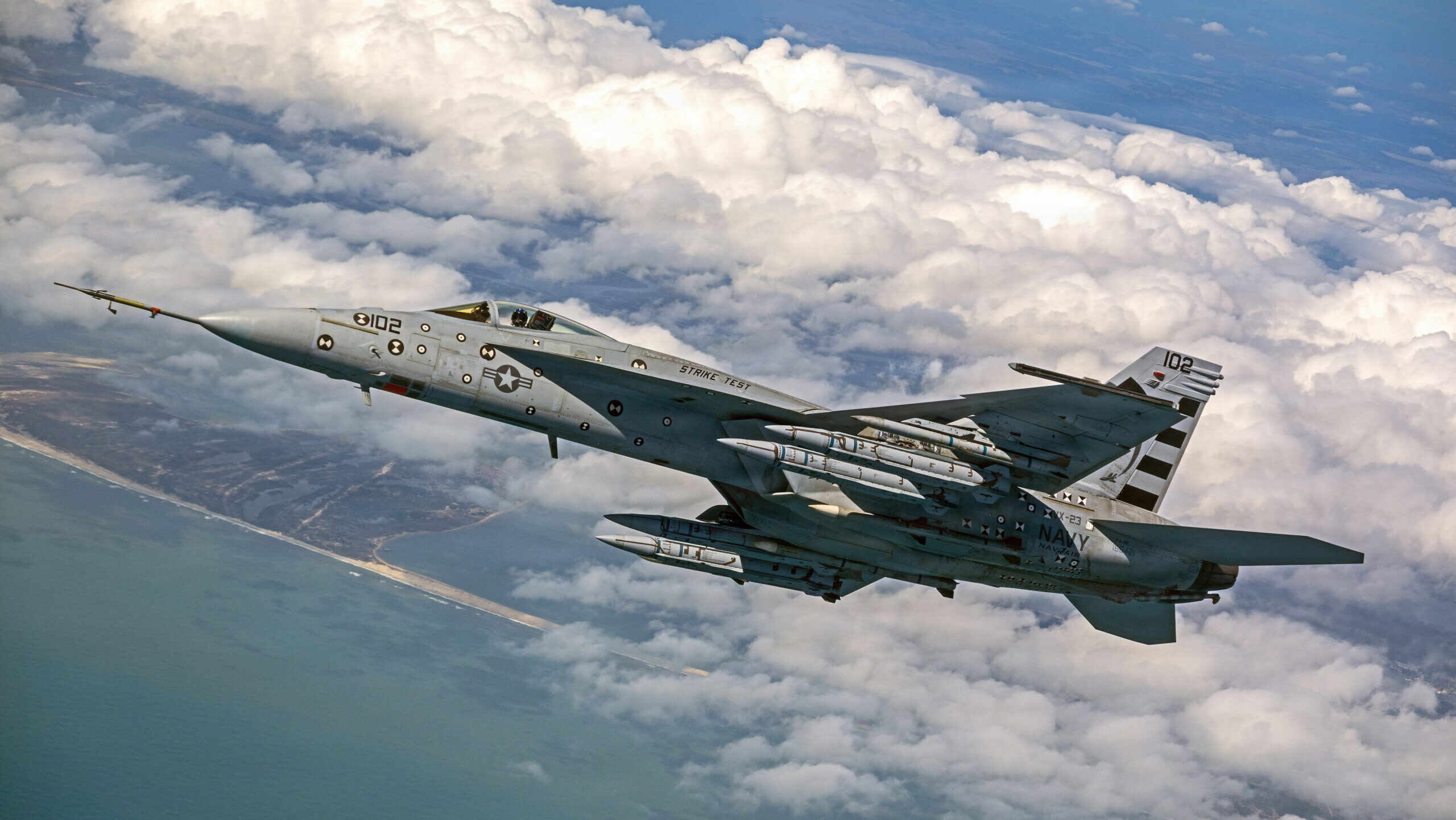
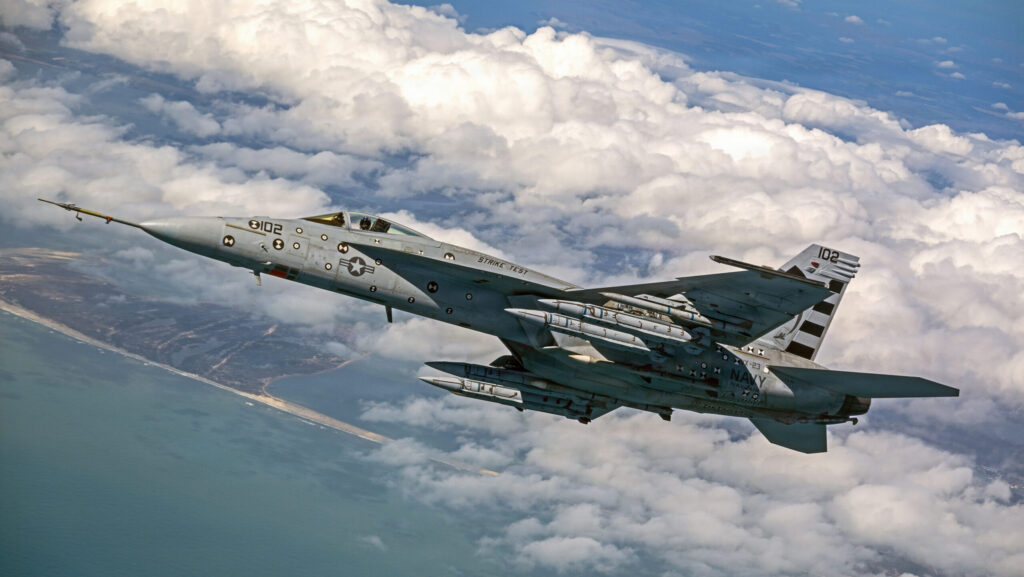
- April 2026: The first clear, albeit cryptic, public glimpse of the capability appeared when the Navy released photography of four AIM-424 missiles loaded onto an F/A-18E Super Hornet during a "test event." At the time, the hardware was identified only generically, keeping the "Malice" moniker out of the public domain.
- August 2026: A secondary release provided further clarity, showing an AIM-424 secured within the internal weapons bay of an F-35C. The imagery highlighted the missile’s integration with stealth platforms, showing the weapon alongside an AIM-120 AMRAAM, underscoring the Navy’s focus on internal carriage for low-observable mission profiles.
- Late August 2026 (Tailhook Symposium): The Navy officially confirmed the "Malice" program, acknowledging that the missile had successfully undergone a series of flight tests. This disclosure effectively ended the "stealth phase" of the program’s development lifecycle.
Supporting Data: Engineering for Overmatch
The engineering requirements for a missile capable of hitting targets at 250+ nautical miles are immense. Traditional air-to-air missiles, such as the AIM-120 AMRAAM, rely on a boost-coast profile. For a weapon like the Malice to remain lethal at extreme ranges, it must overcome significant aerodynamic drag and potential energy loss during mid-course flight.
Physical and Tactical Specifications
- Length: 13.5 feet.
- Diameter: 13.5 inches.
- Targeting Logic: While specific guidance systems remain classified, the missile is expected to leverage a combination of multi-mode seekers—potentially including advanced active electronically scanned array (AESA) radar and possibly infrared homing—to ensure terminal accuracy against jamming and stealthy targets.
- Platform Integration: The ability to fit the missile within the internal weapons bay of an F-35C suggests that the weapon was designed with strict dimensional constraints in mind, a testament to advancements in miniaturized electronics and high-density rocket motor propellants.
Raytheon, the primary development partner, has positioned the AIM-424 as a "generational leap." Phil Jasper, President of Raytheon, emphasized that the missile is designed specifically to address "rapidly emerging air-to-air threats." The emphasis on "Advanced Technology" teams suggests that the AIM-424 incorporates modular software and hardware architectures that will allow for rapid updates, ensuring the weapon can evolve faster than the electronic warfare capabilities of its targets.
Official Responses and Strategic Collaboration
The Navy’s messaging has been consistent: the Malice is a vital component of integrated deterrence. The Department of the Navy noted that the missile is intended to "strengthen fleet defense and maintain a decisive air-domain overmatch."
The Air Force Perspective
While the AIM-424 is a Navy-led initiative, the U.S. Air Force is monitoring the program with keen interest. The two services have a long history of collaborative missile development, most notably the Joint Advanced Tactical Missile (JATM) program, or the AIM-260. An Air Force spokesperson confirmed to Breaking Defense that the service is "closely following the progress" of the Navy’s work on the AIM-424. This suggests a potential for future cross-service procurement or at least a shared technological roadmap to ensure that both the Air Force’s F-22 and F-35 fleets, as well as the Navy’s carrier air wings, operate with common, high-end munitions.
Industrial Stance
Raytheon’s public comments reflect a focus on the necessity of this technology. By asserting that the AIM-424 can "out-range any threat," the defense contractor is framing the project as a critical answer to the A2/AD challenges posed by global competitors who have invested heavily in long-range missile technology over the last decade.
Implications: The Future of the Aerial Battleground
The introduction of the AIM-424 Malice fundamentally alters the "kill chain" in naval aviation. Historically, the reach of a carrier air wing was limited by the range of its longest-reaching interceptor. By expanding this to over 250 nautical miles, the Navy is effectively changing the tactical geometry of the Pacific and other contested theaters.
Strategic Implications
- Increased Buffer Zones: The ability to engage threats at 250+ nautical miles provides a critical buffer for the carrier strike group, allowing ships and aircraft to maintain a defensive posture while still exerting offensive pressure on enemy assets.
- Stealth-Enabled Engagement: Because the missile can be carried internally by the F-35C, the Navy can conduct "stealthy long-range strikes," allowing an aircraft to engage a target without opening its weapons bay doors early, which would otherwise compromise the aircraft’s radar cross-section.
- The "First Look, First Shot" Paradigm: The LRAAM is designed to maximize the "first shot" advantage. In high-intensity conflict, the side that can neutralize the opponent’s sensors and shooters at the greatest range often dictates the flow of the battle. Malice is the tool intended to ensure that the U.S. Navy retains that capability.
Operational Challenges
Despite the optimism surrounding the program, several challenges remain. Integration testing is notoriously difficult, and the transition from prototype testing to full-rate production will be the next major hurdle for the Navy and Raytheon. Furthermore, as with any advanced munition, the cost per unit will likely be significant, forcing the Navy to carefully balance its inventory requirements against budget constraints.
As the program progresses, the world will be watching to see how the Malice evolves. With flight tests confirmed and the development trajectory accelerating, the AIM-424 is poised to become the definitive weapon of the 2030s, ensuring that the U.S. Navy remains the preeminent force in the global air-to-air fight.