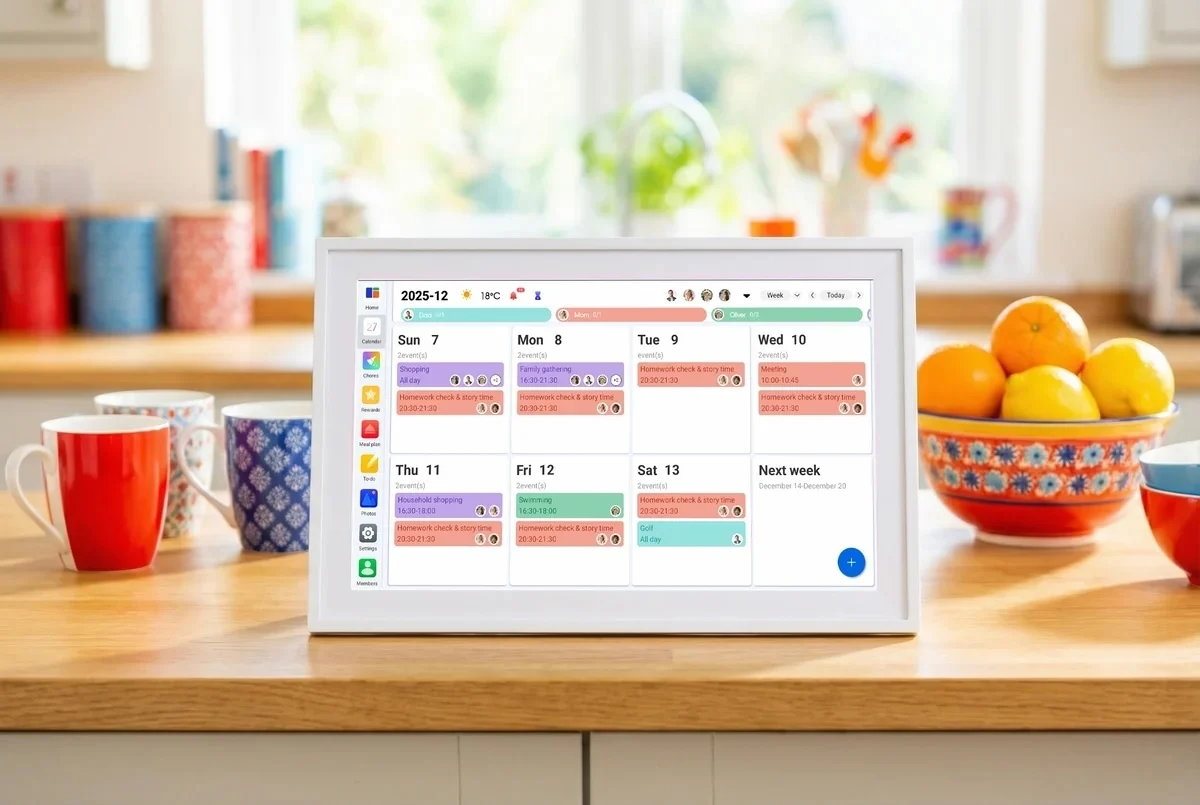
As the back-to-school season descends upon families, the transition from the relaxed, unstructured days of summer to the high-octane routine of autumn often brings a familiar sense of dread: the scheduling scramble. For modern households juggling professional careers, academic obligations, extracurricular activities, medical appointments, and the mundane reality of household chores, the traditional paper wall calendar has largely become an antiquated artifact. In its place, a new breed of smart home technology is emerging, and leading the charge is Linkdaze—a dedicated touchscreen hub designed to unify the fragmented digital lives of every family member.
The Evolution of Household Management
The modern family is, in many ways, a small, complex corporation. Between managing school runs, tracking project deadlines, and ensuring that shared responsibilities like grocery shopping or meal preparation are met, the cognitive load on parents and housemates is at an all-time high. Historically, this data has been scattered across a dozen different applications: Google Calendar for work, iCloud for personal appointments, Cozi for family logistics, and perhaps a series of sticky notes on the refrigerator.
Linkdaze addresses this "fragmentation fatigue" by acting as a centralized command center. By consolidating these disparate services into a single, wall-mounted interface, the device removes the friction of switching between apps or devices to verify who needs to be where and when. It is a solution built not for the individual user—who likely has a smartphone—but for the household collective.
Chronology: A Rapid Rise in the Smart Display Market
Launched in December 2025, Linkdaze entered a competitive and mature smart display market. At the time of its debut, industry leaders like Skylight had already established a foothold by convincing consumers that a wall-mounted tablet was a necessary home appliance rather than a luxury gadget.
Over the past year, Linkdaze has pivoted from a niche startup to a serious contender by focusing on interoperability. While many smart home devices are designed to keep users trapped within a specific ecosystem (such as Amazon’s Echo or Google’s Nest), Linkdaze leaned into a "platform-agnostic" philosophy. By allowing users to sync their existing Google, iCloud, Outlook, and Yahoo calendars without forcing them to adopt a proprietary scheduling app, the company recognized that consumer behavior is difficult to change. Instead of fighting user habits, Linkdaze sought to harmonize them.
Core Features and Technical Capabilities
The Linkdaze system is available in two form factors: a 15.6-inch model for larger kitchen walls or family hubs, and a 10.1-inch model for tighter spaces. Both units feature high-resolution touchscreens that prioritize readability and ease of use for all ages, from school-aged children to elderly relatives.
Beyond the Calendar: A Multi-Functional Hub
While the calendar is the centerpiece, the device functions as a comprehensive household management tool. Key features include:
- Chore and Reward Tracking: Gamifying household responsibilities helps keep children engaged with their tasks.
- Meal Planning and Shopping Lists: By centralizing what is for dinner, the device reduces the mental labor associated with daily meal prep.
- Digital Photo Frame: When not actively being used to coordinate a schedule, the device transitions into a high-quality digital frame, displaying family photos and keeping the device aesthetically integrated into the home environment.
The Innovation: AI-Driven "Snap-to-Sync"
Perhaps the most significant differentiator for Linkdaze is its "Snap-to-Sync" technology. Using the device’s integrated camera, users can capture a physical photograph of a paper recipe, a handwritten school lunch menu, or a flyer from a community event. The onboard AI processes this visual data, transcribing the text into the digital calendar or meal planner and automatically generating the necessary shopping list items. This feature effectively bridges the gap between the analog world—where many school and community notifications still exist—and the digital ecosystem of the household.
Economic Strategy: The Subscription-Free Gamble
One of the most defining aspects of the Linkdaze business model is its refusal to implement a recurring subscription fee for its core functionality. In an era where "Software as a Service" (SaaS) has become the gold standard for hardware manufacturers—often leading to "subscription fatigue" among consumers—Linkdaze’s choice is bold.
Competitors like Skylight have opted for a more traditional revenue stream, offering advanced features locked behind a $79-per-year paywall. By contrast, Linkdaze has positioned itself as a one-time purchase. At a price point of $119.99 for the 10.1-inch model, the company is undercutting the initial cost of its primary rivals while simultaneously eliminating the long-term cost of ownership.

Industry analysts are divided on the sustainability of this model. On one hand, it provides a compelling value proposition that could allow Linkdaze to capture significant market share rapidly. On the other hand, the lack of recurring revenue places a immense burden on the company to continuously sell new hardware to remain profitable. Whether this represents a genuine commitment to the consumer or a short-term strategy to gain traction remains to be seen.
Supporting Data and User Demographics
The demand for these devices is being driven by a specific demographic shift. As remote and hybrid work models become permanent fixtures for many professionals, the home has become the primary site for both labor and life.
Market research indicates that households with at least two working adults and school-aged children are the primary adopters of wall-mounted smart displays. These users prioritize "at-a-glance" information. The color-coding feature of the Linkdaze interface—which allows users to instantly distinguish between family members’ schedules via a glance at the screen—has been cited in user feedback as the most valued UI element.
Furthermore, the secondary market for these devices is expanding. Beyond traditional nuclear families, college students living in shared apartments are increasingly utilizing these displays to manage study schedules, room-cleaning rotations, and shared grocery budgets.
Official Perspectives and Industry Implications
Linkdaze’s entry into the market signals a broader shift in how we think about the "Internet of Things" (IoT). Early IoT devices were often criticized for being overly technical or solving problems that didn’t exist. Linkdaze, however, targets a universal, non-technical pain point: the chaotic nature of shared human time.
While the company has not yet released official internal sales figures, the rapid expansion of their product line suggests a positive reception. By focusing on hardware-first utility rather than cloud-based data monetization, Linkdaze is aligning itself with a growing segment of consumers who are increasingly privacy-conscious and wary of "smart" devices that require constant monthly payments to function.
Future Outlook: A New Standard for the Connected Home
As the technology matures, we can expect Linkdaze and its competitors to integrate deeper into the smart home ecosystem. Future updates may include voice-activated scheduling via integration with Alexa or Siri, or more robust security features that allow for encrypted, private family messaging.
However, the core value proposition will remain the same: reducing the stress of coordination. In a world where digital noise is constant, a device that effectively silences the confusion of "who is doing what" provides a tangible improvement to quality of life. For the busy parent, the overwhelmed student, or the professional juggling a dozen deadlines, the Linkdaze calendar is not just a screen on the wall; it is a tool for reclaiming time.
As we look toward the remainder of 2026, it is clear that the battle for the kitchen wall is just beginning. With Linkdaze providing a high-quality, subscription-free alternative to the established giants, the real winners are the families who finally have a way to keep their chaotic schedules in sync. Whether this model forces the rest of the industry to drop their subscription fees remains the most pressing question in the smart display space, but for now, the path forward for household organization is increasingly digital, color-coded, and, for the first time, refreshingly simple.