For global manufacturing giants, the quest to accurately measure Scope 3 emissions—the greenhouse gases generated across a complex, multi-tiered supply chain—has long been the "holy grail" of corporate sustainability. Historically, this process has been defined by manual drudgery: spreadsheets flying back and forth via email, disjointed communication, and a perpetual struggle to get suppliers to prioritize environmental disclosures.
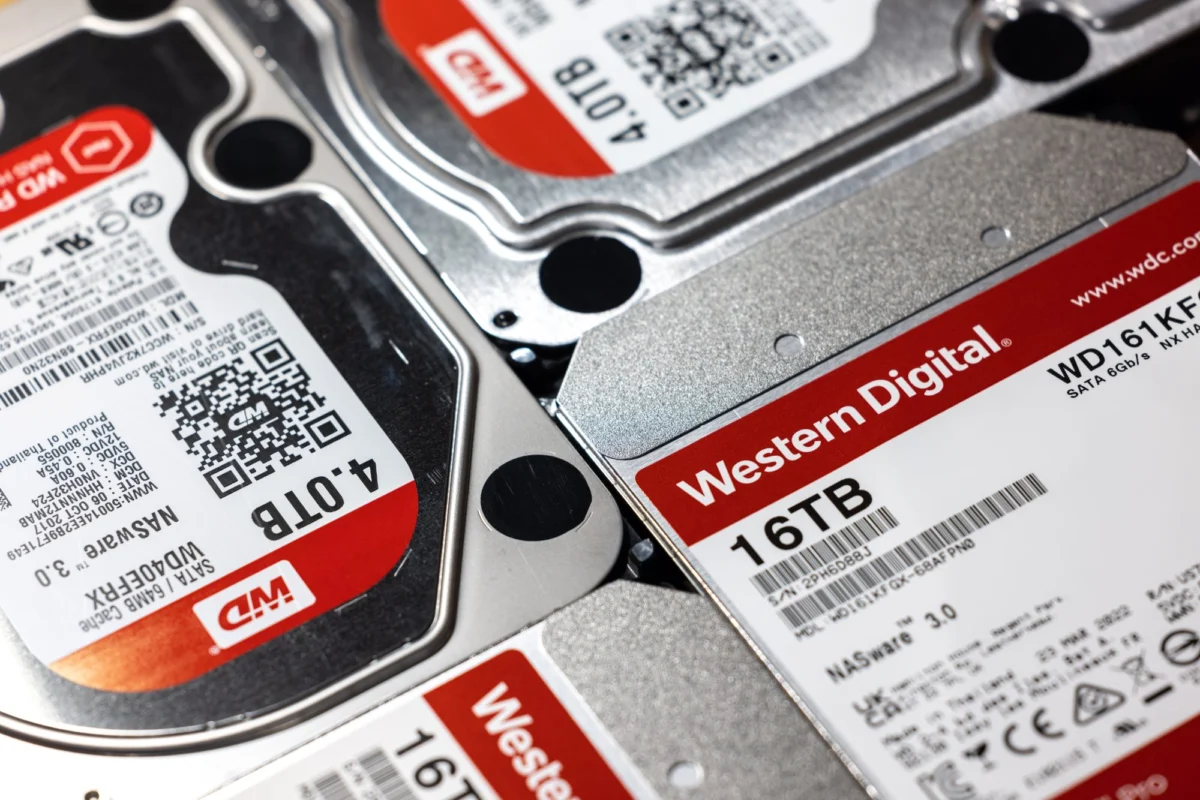
Western Digital, a leader in data storage technology, has recently shattered this paradigm. By integrating an AI-powered email workflow, the company has not only accelerated its data collection timelines by a factor of six but has also significantly increased the depth and accuracy of its environmental transparency. This shift, unveiled at the recent Trellis Impact 26 event in San Francisco, marks a pivotal moment in how technology can bridge the gap between ambitious net-zero commitments and the messy reality of global logistics.
The Bottleneck: The Sustainability Data "Chasing" Problem
For years, the sustainability team at Western Digital faced a familiar obstacle. Collecting carbon footprint data from suppliers was a labor-intensive, often analog process. Sustainability managers were forced to spend the vast majority of their time "chasing"—sending follow-up emails, troubleshooting login issues for complex supplier portals, and manually cleaning data sets that arrived in incompatible formats.
"Like many buyers, we found that collecting data via email was time-consuming for both our sustainability team and our suppliers," explained Mrinalini Iyer, Western Digital’s program manager for sustainability operations, during the AI x Sustainability Showcase.
The friction was twofold: for the sustainability team, it was an administrative burden that stifled strategic analysis; for the suppliers—often smaller firms with limited dedicated environmental staff—the requests were seen as an additional, burdensome tax on their operations. This misalignment frequently resulted in low response rates, leaving companies like Western Digital to rely on industry averages rather than primary data, which undermines the credibility of any sustainability claim.
A Technological Intervention: The Sluicebox Partnership
To break this cycle, Western Digital turned to Sluicebox, a specialized startup focused on automating carbon data collection for the electronics industry. The goal was to replace the tedious manual email back-and-forth with an AI agent capable of managing the entire communication lifecycle.
The pilot program, which launched late last year, focused on key hardware components, including device housings, baseplates, and motors. The AI agent, designed by Sluicebox, does not merely send out requests; it interacts with suppliers as a virtual assistant. It handles the initial outreach, answers clarifying questions regarding methodology, and monitors progress. Once the raw data is submitted, the AI synthesizes it into a product carbon footprint that complies with the rigorous standards set by the International Organization for Standardization (ISO).
The transition from a human-to-human email queue to an AI-augmented process was seamless enough that it bypassed the common hurdle of supplier resistance. By removing the need for partners to navigate complex, proprietary software platforms or clunky web forms, Western Digital lowered the barrier to entry for its supply chain partners.
Chronology of the Transformation
- Pre-2023: Western Digital relies on traditional email-based outreach. Data collection cycles last between five and six months, and primary data capture remains low, hovering around 30 percent for top-tier suppliers.
- Late 2023: The company enters a strategic pilot with Sluicebox. The scope is limited to primary hardware components such as motors and device housing.
- Early 2024: The AI agent is deployed to manage communication, data validation, and follow-ups. The system begins to learn from supplier interactions, refining its ability to answer questions about emissions reporting.
- Mid-2024: Data collection times drop to a four-week window. Primary carbon data coverage for major suppliers surges from 30 percent to 90 percent.
- Late 2024/2025: Western Digital begins scaling the system to include more suppliers and integrates advanced features like anomaly detection and gap estimation.
Supporting Data: The Impact of Automation
The metrics reported by Western Digital at the Trellis Impact 26 event are striking. By moving to an automated workflow, the company managed to collapse a 20-to-24-week collection process into a mere four-week sprint.
More importantly, the quality of the data improved alongside the speed. With 90 percent of its biggest suppliers now providing primary data—up from just 30 percent previously—Western Digital has moved from an era of "estimated guesswork" to an era of "evidence-based reporting." This is a critical distinction for stakeholders, auditors, and regulators, who increasingly demand verifiable data rather than modeled projections.
Official Responses: Navigating the Human Element
The integration of AI into corporate operations often triggers anxiety regarding workforce displacement. When asked if the shift toward AI would result in smaller sustainability teams, Iyer was quick to frame the technology as a force multiplier for human capital rather than a replacement.
"Keeping people at the center is an important part of Western Digital’s AI approach," Iyer stated. She emphasized that the "human in the loop" is not a decorative feature, but a functional necessity. "The goal is not only speed—it is usable, traceable, and defensible data."
According to Iyer, the technology has fundamentally changed the value proposition of the sustainability professional. Instead of acting as "data janitors" who spend their days chasing emails and cleaning spreadsheets, team members are now empowered to act as analysts and strategists. Their work has shifted toward high-level tasks: validating methodologies, fostering deeper supplier engagement, and conducting complex quality reviews. By offloading the "data wrangling" to the AI, the sustainability team can focus on the critical thinking required to actually reduce emissions.
Implications for the Broader Electronics Industry
The success of the Western Digital/Sluicebox collaboration carries significant implications for the broader tech sector. As Scope 3 reporting requirements become more stringent under frameworks like the EU’s CSRD (Corporate Sustainability Reporting Directive) and the SEC’s climate disclosure rules, the manual approach to data collection is becoming unsustainable.
1. From Collection to Engagement
Western Digital’s roadmap indicates that the system is moving beyond mere collection. The company is now using the system to estimate gaps for non-responders based on bills of materials and cross-referencing disclosures against industry baselines. This "exception management" approach allows the sustainability team to focus their limited time only on those cases where data appears erroneous or suspicious.
2. Standardizing the Supply Chain
By using an AI that understands ISO rules, Western Digital is effectively enforcing a standard of data quality across its entire supply chain. This creates a "network effect" where smaller suppliers, by interacting with the system, become more adept at measuring their own carbon footprints—a skill that will make them more competitive as other major buyers begin to demand similar transparency.
3. The Future of AI in ESG
This project demonstrates that the most effective use of AI in ESG (Environmental, Social, and Governance) is not in generating creative content or predictive modeling, but in administrative orchestration. By managing the logistics of information exchange, AI can solve the "last mile" problem of sustainability reporting: getting high-quality data from the source to the corporate headquarters.
Conclusion: A New Baseline for Sustainability
The journey Western Digital has undertaken is a blueprint for how large enterprises can tackle the complexity of Scope 3 emissions. By viewing AI as a tool for administrative efficiency, the company has managed to achieve in weeks what previously took months, all while upskilling its staff to focus on high-impact decision-making.
As the industry looks toward a future defined by radical transparency, the ability to collect, validate, and act upon primary supply chain data will separate the leaders from the laggards. Western Digital has proven that the path to net-zero is not just about reducing carbon—it is about mastering the data that tells the story of that reduction. In the hands of a skilled, human-led team, AI has proven to be the key that finally unlocks that data.