For decades, the halls of the Pentagon and the committees of Congress have engaged in a repetitive, exhausting cycle of debate: Is the U.S. Army too heavy? Is it too light? Should it be optimized for the sprawling plains of Eastern Europe, the maritime archipelagos of the Indo-Pacific, or the defense of the American homeland?
These questions, while intellectually rigorous, suffer from a fundamental, historically disproven assumption: the belief that the U.S. Army will be granted the luxury of knowing exactly what it needs to become before it is called to act. History, however, rarely provides such foresight.
The Myth of Strategic Foresight
The trajectory of the 21st century has been defined by the "surprise factor." From the intelligence shock of September 11th to the rapid, asymmetric emergence of inexpensive, off-the-shelf drones as strategic assets in Ukraine and the Middle East, crises arrive unannounced. Presidents do not choose the threats they inherit; they merely inherit them.
The current structural debate misses the most critical reality: the Army has historically succeeded not because its initial designs were correct, but because it possessed a brilliant, if desperate, capacity for improvisation. When the wars in Iraq and Afghanistan demanded a force structure that bore little resemblance to the one designed for the Fulda Gap, the Army scrambled. It converted field artillery units into infantry and armor crews into urban patrollers. While these ad hoc shifts were ultimately successful, they were executed under fire, at a significant cost in time, resources, and human lives.
A Chronology of Reactive Transformation
To understand the necessity of a structural shift, one must look at how the Army has historically "evolved" under pressure:
- The Cold War (1947–1991): The Army optimized for mass, standing ready for a singular, cataclysmic confrontation in Europe. Strategy was static and predicated on predictable Soviet behavior.
- The Post-Cold War Era (1991–2001): The focus shifted toward efficiency and "peace dividends." The force was downsized, assuming a period of relative stability.
- The Global War on Terror (2001–2021): The Army was forced into a period of extreme improvisation. It reconfigured its "Modular Force" structure mid-stream, converting technical and support units into combat-ready infantry to meet the demands of counterinsurgency.
- The Era of Complexity (2021–Present): The rise of autonomous systems, ubiquitous surveillance, and AI has collapsed the timeline between the identification of a threat and the need for a force-wide response.
The Erosion of Strategic Geography
The traditional defense doctrine of the United States relied heavily on the "moat" of the Atlantic and Pacific oceans. This geography once provided the time needed to mobilize and reorganize. Today, that buffer has effectively evaporated.
Modern warfare has moved into the digital and orbital domains. Cyberattacks can penetrate the U.S. power grid or financial systems from anywhere on the globe; commercial satellite constellations provide real-time surveillance that was once the sole province of superpowers; and AI-driven decision cycles move faster than human commanders can react.
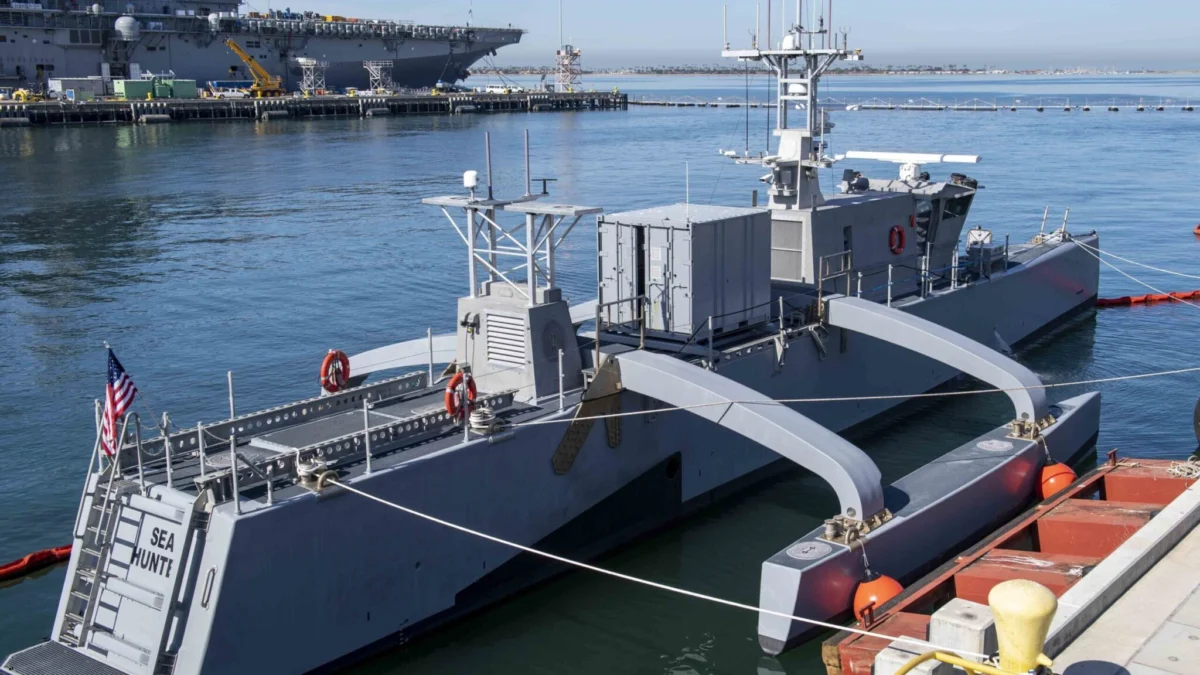
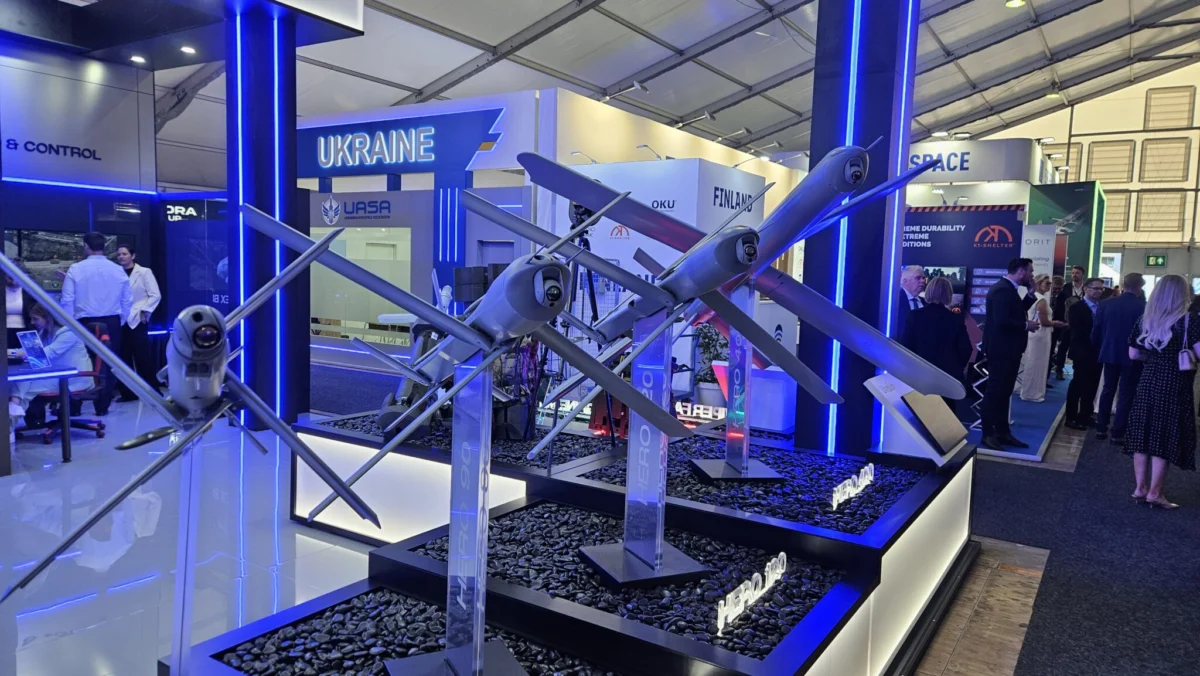
Small, inexpensive drones—once considered tactical annoyances—are now being used to strike critical infrastructure thousands of miles from the front lines. The homeland is no longer a sanctuary; it is a potential battlefield. Consequently, the Army will, in the near future, be tasked with defending domestic soil at a scale previously unimagined, requiring capabilities that current force structures are not explicitly designed to provide.
Technology: The Death of the "Perfect" Design
The pace of technological change now fundamentally outstrips the pace of military acquisition. The U.S. defense apparatus still measures "success" in terms of decades-long procurement cycles for major platforms. However, software-defined warfare, autonomous robotics, and electronic warfare evolve in cycles of months.
By the time a force structure is "perfectly optimized" for the current threat environment, the underlying assumptions of that environment have often shifted. The Army is trapped in a cycle of constant, inefficient redesign. It must transition from a model of optimizing for prediction—guessing where the next war will be and what it will look like—to optimizing for uncertainty. The fundamental metric of the future Army should not be its size or its current configuration, but the speed at which it can change when the Commander-in-Chief’s problem set changes.
Structural Implications: The "Transformer" Model
To move away from costly, mid-conflict improvisation, the Army must move toward a "Transformer" model.
The Modular Imperative
Rather than relying on a "Swiss Army knife" approach—carrying a fixed set of tools and hoping one fits—the Army must become a system of modular, swappable capabilities. Headquarters units should remain stable, providing the consistent command and control backbone, while operational assets—cyber teams, long-range fires, autonomous sensor networks, and electronic warfare units—are treated as plug-and-play modules.
Task Organization as a Routine
"Task organization" is a term currently used to describe the assembly of units for a specific mission. To survive the next decade, the Army must make this a standard, daily practice rather than a wartime emergency measure. This requires:
- Standardized Interfaces: Creating common data standards and mission-command systems so that any unit can plug into any headquarters.
- Interoperability Certification: Streamlining training so that units can absorb new assets and learn to fight with them in days, not months.
- Continuous Modernization: Moving away from the "swap-out" model of equipment, where old hardware is replaced by new, toward a system of continuous software and hardware integration that does not degrade combat readiness.
Official and Institutional Responses
Critics of this approach often raise the "jack of all trades, master of none" argument. They suggest that by prioritizing adaptability, the Army risks diluting its core competencies. However, this argument ignores the historical reality that the Army has never had the luxury of specialization.
From the Civil War to the present, the Army has consistently been the nation’s "fix-it" force. Designing for adaptability is not an invitation to dilettantism; it is a safeguard against the chronic, dangerous cycle of rebuilding the force from scratch every time a faulty assumption about the future is proven wrong.
Senior leadership in the Pentagon has begun to acknowledge these pressures. Emerging doctrines such as "Multi-Domain Operations" (MDO) reflect a growing awareness that the battlefield is no longer segmented. Yet, doctrine alone is insufficient. Without a structural, organizational shift that prioritizes the speed of reconfiguration, these doctrines will remain academic exercises.
Conclusion: Preparing for the Unknowable
The ultimate test of the U.S. Army in the coming decades will be its ability to provide the President with credible, actionable options without having had the benefit of a decade of preparation. If the Army can rearrange its capabilities as quickly as the threat environment shifts, it will remain the decisive instrument of American power.
If it remains wedded to the rigid structures of the past, no amount of investment in individual platforms will save it from irrelevance in a high-speed, unpredictable security environment. The era of the "static force" is over. The era of the "agile, reconfigurable, and perpetually adaptable" Army must begin now. The nation cannot afford for its military to wait to be told what it must become; it must already be organized to become whatever the future demands.