
The landscape of professional productivity is currently undergoing a radical transformation, fueled by the rapid integration of artificial intelligence into the daily workflow. At the epicenter of this shift is the humble meeting—a time-intensive necessity that has historically required participants to balance active engagement with the tedious labor of documentation.
Wispr, the innovative startup behind the dictation tool Wispr Flow, has officially entered this high-stakes arena with the launch of "Notetaker." By positioning its new tool as a direct alternative to industry stalwarts like Fireflies, Granola, and Otter, Wispr is not merely offering a transcription service; it is attempting to redefine the cognitive load of modern collaboration.
The Core Offering: Intelligence Without the "Bot" Burden
The primary innovation of Wispr Notetaker lies in its departure from the standard industry model. Most AI note-takers operate by joining a video conference as a passive, silent participant—a digital "bot" that can sometimes distract or unsettle meeting attendees. Wispr, by contrast, operates as a local application that captures audio directly from the user’s device.
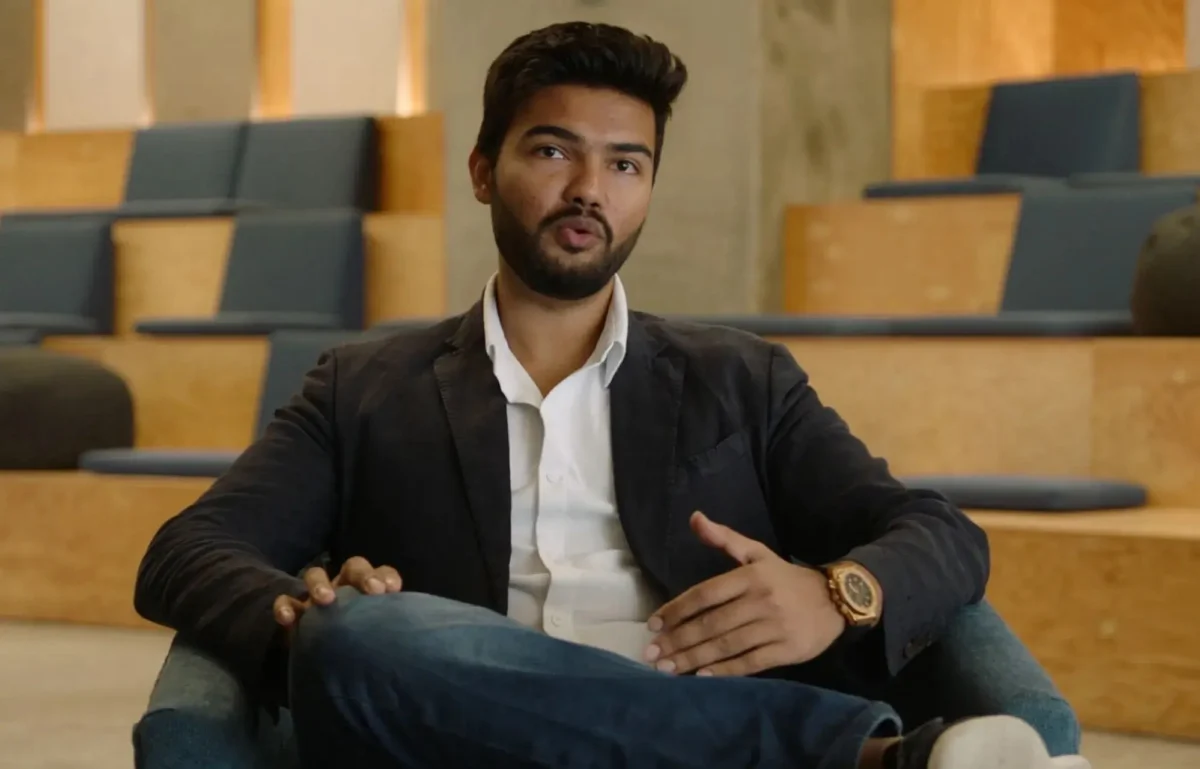
"Wispr Flow Notetaker captures your meetings so you can stop splitting your attention between listening and writing things down," explains Sahaj Garja, CTO and co-founder of Wispr. This "bot-less" approach allows for greater flexibility, enabling the tool to be used not only in virtual settings but also during sensitive or informal in-person discussions where the presence of a third-party digital attendee would be inappropriate.
A Three-Tiered Workflow
The software functions as an end-to-end meeting assistant, operating across three distinct temporal phases:
- Pre-Meeting Briefing: Before the call commences, Notetaker aggregates relevant context, including meeting objectives, participant backgrounds, and agenda items, providing the user with a "cheat sheet" to ensure they are fully prepared.
- Live Transcription and Engagement: Once the meeting is live, the tool provides a real-time transcript. A standout feature is the "what did I miss?" button, which allows users to instantly query the AI for a summary of the conversation’s trajectory over the previous few minutes.
- Post-Meeting Synthesis: Upon conclusion, the app generates a highly structured summary organized by topic. This output highlights critical data points such as deadlines, actionable decisions, and follow-up tasks. Crucially, the app acts as a searchable repository, turning a disorganized pile of meeting history into an intuitive, queryable database.
Chronology: From Dictation to Intelligent Workflow
Wispr’s journey toward the Notetaker is rooted in a broader mission to alter human-computer interaction. Founded in 2021, the company has secured $81 million in funding, signaling significant investor confidence in its vision.
"We didn’t set out to build a dictation app," Garja notes. "The mission has always been to reshape how people interact with their devices, and dictation was the fastest way in."
- 2021: Wispr is founded with a focus on hardware and software integration to move beyond the constraints of the traditional QWERTY keyboard.
- The Launch of Wispr Flow: The company’s initial foray into the market proved that users were hungry for more natural input methods. Dictation served as the "proof of concept" for eliminating the keyboard from writing.
- Present Day: The launch of Notetaker represents the second major milestone in the company’s roadmap. By removing the need for manual typing during meetings, Wispr is systematically dismantling the friction points of office communication.
Supporting Data and Competitive Differentiation
The AI note-taking market is saturated, yet Wispr claims a distinct competitive advantage through "context-aware transcription." According to the company, Notetaker produces higher accuracy than its competitors by leveraging a personal dictionary—already familiar to Wispr Flow users—which accounts for specialized industry jargon, unique product names, and preferred corporate spellings.
Furthermore, the integration with AI heavyweights like Anthropic’s Claude and OpenAI’s ChatGPT, via the Model Context Protocol, allows the tool to plug directly into the user’s existing tech stack. This avoids the "silo effect," where notes live in one application while work is executed in another.
"We want to connect outputs into how you already work, instead of forcing you to sit in a separate app," Garja explains. This ecosystem approach is designed to ensure that the AI remains a utility, not a barrier.
The Looming Shadow: Privacy and Regulatory Scrutiny
The rapid ascent of AI note-takers has not been without controversy. As these tools become ubiquitous in corporate boardrooms and remote calls, they have drawn the ire of privacy advocates and the attention of legal systems. High-profile lawsuits involving Otter and Granola in California have highlighted growing concerns regarding "all-party consent" laws.
In many jurisdictions, recording a conversation without the explicit knowledge of all participants is illegal. Because Wispr’s tool does not join a call as a visible participant, the responsibility for transparency falls entirely on the user.
Official Response on Consent and Compliance
Wispr is acutely aware of the reputational and legal risks associated with "stealth" recording. Garja acknowledges the urgency of the issue, stating, "Users should always let the other person know before you start recording or transcribing a conversation, whether it’s a video call, an in-person meeting, or a phone call."
To mitigate these risks, the company has announced plans to roll out automated consent messaging features in the coming weeks. Furthermore, the company has taken steps to reassure enterprise users regarding data security:
- Local Processing: Audio is captured locally and encrypted.
- No Biometric Profiling: The company explicitly denies creating "voiceprints" or biometric profiles of meeting participants.
- Data Usage: Wispr asserts that it does not train its AI models on customer data without express consent, and even then, it offers an opt-out mechanism for standard-tier users.
Implications: The Future of the "Human-in-the-Loop"
The launch of Wispr Notetaker raises a fundamental question about the future of professional communication. As technology becomes more adept at documenting, summarizing, and synthesizing human interaction, the nature of the "meeting" itself may change.
The Death of the Administrative Meeting
If a machine can reliably capture every decision and action item, the role of the "scribe" is effectively eradicated. This could lead to shorter, more efficient meetings where the focus shifts from information transfer to creative problem-solving.
The "Questionable" Archive
The most significant long-term implication of Wispr’s technology is the transition of meeting history from a static archive into a dynamic, queryable asset. If employees can ask their database, "What did the legal team decide about the Q3 budget in our meeting three weeks ago?" the institutional knowledge of a company becomes significantly more accessible.
The Regulatory Horizon
However, the path forward is fraught with regulatory peril. As Wispr and its competitors push the boundaries of what is possible, they are forcing a societal conversation about the "right to be forgotten" in a world of perpetual recording. The legal battles currently facing the industry will likely set a precedent for how AI startups handle user consent, data storage, and model training for years to come.
Conclusion: A Balancing Act
Wispr’s entry into the note-taking market is a testament to the company’s technical ambition and its desire to move beyond simple dictation. By focusing on deep integration, context-awareness, and a user-centric, bot-free experience, Wispr has crafted a compelling value proposition.
Yet, as with any technology that mediates human interaction, the success of Notetaker will depend not just on the quality of its summaries, but on its ability to navigate the complex landscape of professional ethics. As it expands from the macOS ecosystem to Windows, Wispr will need to prove that it can maintain its high standard of accuracy and utility while serving as a responsible steward of the sensitive conversations it records.
For now, the tool remains a powerful instrument for the modern professional—provided they remember the golden rule of the digital age: in a world where everything can be recorded, transparency is the ultimate currency.