In a dramatic pivot that has reshaped the landscape of autonomous AI, the startup Manus has officially unveiled "Manus 2.0"—a comprehensive architectural overhaul that positions the company as a direct, high-stakes competitor to its former suitor, Meta.
This release is far more than a routine software update. By introducing a suite of sophisticated tools—including the "Cascade" agent harness, persistent cloud execution environments, and the consumer-facing "Cue" application—Manus is signaling that it intends to capture the burgeoning enterprise market for agentic AI. The move comes just months after a high-profile, $1 billion-plus acquisition deal by Meta collapsed due to regulatory intervention, leaving the two entities to battle for dominance in an increasingly crowded ecosystem.
The Chronology: A Relationship Interrupted
The rivalry between Manus and Meta is rooted in a failed marriage of convenience. In December 2025, Meta announced its intent to acquire Manus, a move widely interpreted as an attempt to bolster Meta’s internal agentic capabilities. The synergy seemed clear: Meta’s massive distribution and capital combined with Manus’s specialized, high-performance agent architecture.
However, the path to integration was blocked by geopolitical and regulatory headwinds. In April 2026, China’s National Development and Reform Commission (NDRC) intervened, effectively stalling the acquisition. After months of legal and administrative maneuvering, the parties threw in the towel. By August 2026, Manus confirmed it would resume operations as a fully independent entity.
Since the dissolution of the deal, both companies have pivoted toward near-identical strategic goals. Meta has moved forward with its "Muse" personal AI assistant and the recent launch of its Meta Enterprise Platform. Manus, meanwhile, has been quietly re-engineering its entire foundation, culminating in the 2.0 release, which serves as a defiant rebuttal to the idea that the startup could not survive—or thrive—outside of Meta’s ecosystem.
Main Facts: The Anatomy of Manus 2.0
Manus 2.0 is designed to move beyond simple chatbots, focusing instead on "agentic workflows" that can perform complex, multi-step operations. Key features include:
- Cascade (Agent Harness): An orchestration layer that manages how agents are invoked. By only calling specialized capabilities when necessary, the system reportedly reduces token consumption by 23.2% and cuts execution time by over 28% compared to the previous version.
- Cue: A standalone, cross-platform app for personal agents. Unlike standard AI assistants, Cue agents are granted a degree of "sovereign" digital identity, complete with individual email addresses, digital wallets, and dedicated computing resources, allowing them to transact and communicate independently.
- Cloud Computer: A persistent, dedicated execution environment. Unlike ephemeral serverless functions, these environments serve as a "permanent home" for long-running automations that need to remain active regardless of whether a human user is logged in.
- Event-Driven Automations: The platform now shifts from scheduled tasks to reactive ones. An agent can be triggered by external signals—such as a specific Slack message, a shift in ad campaign performance, or a calendar invite—enabling a truly "always-on" workflow.
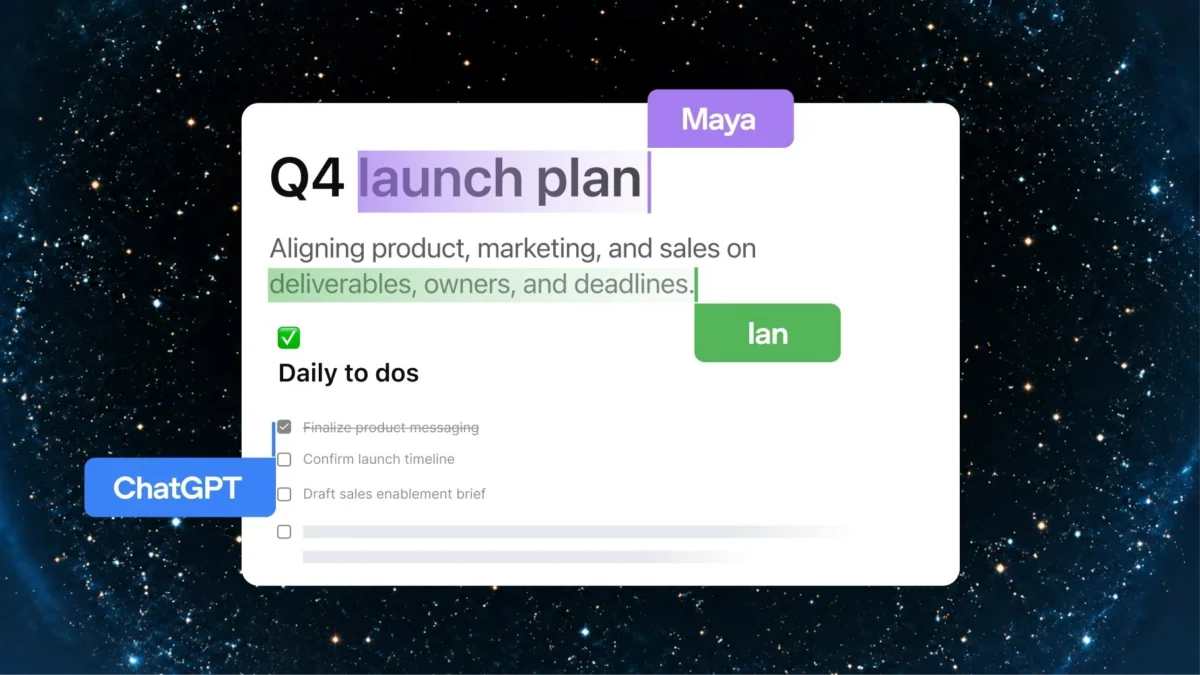
- Manus Studio: A redesigned, collaborative workspace that integrates documents, code modules, and media editing tools into a single interface, blurring the lines between human and machine productivity.
Supporting Data and Efficiency Metrics
The enterprise appeal of Manus 2.0 rests largely on its promise of cost-efficiency. In an era where AI token costs are a significant line item for corporate budgets, the "Cascade" harness is the company’s primary value proposition.
Manus claims that in internal testing, the new architecture reduced operational costs by 32% compared to their legacy system. While Manus has not yet published the specific test cases or data sets used to verify these figures, the industry consensus is that orchestration is the next great frontier for AI cost control.
Gartner Senior Director Analyst Anushree Verma highlights that the "orchestration layer" is the new differentiator. "The strongest systems will combine a capable model with an efficient runtime that uses that model selectively rather than indiscriminately," Verma noted. By acting as a sophisticated traffic controller, Manus 2.0 ensures that expensive, high-parameter models aren’t being "wasted" on simple logic tasks that could be handled by lighter, more cost-effective subsystems.
Official Responses and Strategic Positioning
Manus describes its 2.0 release not as a patch, but as a "new architecture." The company’s blog post emphasizes that the platform is intended for "people and AI" to share a workspace, specifically targeting the limitations of current generative AI, which often struggles with long-term context and multi-step execution.
Meta, meanwhile, has largely focused on integrating its agentic AI into its existing massive user base via the Muse app and the Meta Enterprise Platform. The divergence in their approaches is stark: Meta is scaling horizontally across its social and advertising platforms, while Manus is scaling vertically by offering deep, granular control over agent identity and execution.
Implications: Governance and the "Agentic" Frontier
The rise of "agentic" systems—AI that can use your browser, manage your email, and execute transactions—brings with it a massive, unresolved question: Governance.
The Security Challenge
As Manus 2.0 introduces "remote control" capabilities, allowing agents to interact with a user’s local browser and files, the risk profile shifts. An agent with the ability to "test applications" or "retrieve files" while a user is offline is a powerful tool, but it is also a potential security vulnerability.
Sakshi Grover, research director for Asia/Pacific Cybersecurity Services at IDC, warns that the current state of technology is outpacing the necessary safeguards. "The capability is becoming enterprise-relevant, but the autonomy is ahead of the governance," Grover stated.
Best Practices for Enterprise Adoption
For organizations considering the deployment of platforms like Manus 2.0, analysts recommend a "zero-trust" approach to AI agents:
- Isolation: Treat agents as "semi-trusted" automation. They should exist in isolated sandboxes with restricted network access.
- Approval Gates: Consequential actions—such as moving money, publishing code, or emailing external stakeholders—must be gated by human-in-the-loop verification.
- Credential Scoping: Use short-lived, narrow-scope credentials for agents. If an agent is compromised, the blast radius should be limited to that specific, temporary task.
- State Portability: Organizations must audit where an agent’s "memory" and "state" are stored. If a company cannot export its agent’s logic and history and re-instantiate it elsewhere, it risks being locked into a proprietary vendor ecosystem, creating a new form of technical debt.
The Road Ahead
The competition between Manus and Meta serves as a microcosm of the broader AI industry. It is a battle between incumbent giants seeking to bake AI into their existing products and agile, specialized startups attempting to build the "operating system" for autonomous agents.
For Manus, the challenge is clear: it must prove that its "Cloud Computer" and "Cascade" architecture can provide the stability and security that massive corporations demand. If they succeed, they could become the hidden plumbing for the next generation of business automation. If they fail, they risk being squeezed out by the sheer scale and reach of companies like Meta, OpenAI, and Anthropic.
One thing is certain: the era of the passive, chat-based AI is fading. The next phase of the AI revolution will be defined by agents that don’t just talk, but act—and the battle to control those actions is only just beginning.