By Brad Randall, Broadband Communities
The telecommunications industry is currently undergoing a structural transformation that mirrors the consolidation waves of the late 1990s. As the U.S. broadband market moves past the initial excitement of massive federal funding and post-pandemic demand, the focus has shifted toward efficiency, scale, and long-term viability. According to recent industry analysis by Mike Dano, a lead analyst at Ookla, the stage is set for a significant wave of mergers and acquisitions (M&A) that will reshape the competitive landscape for years to come.
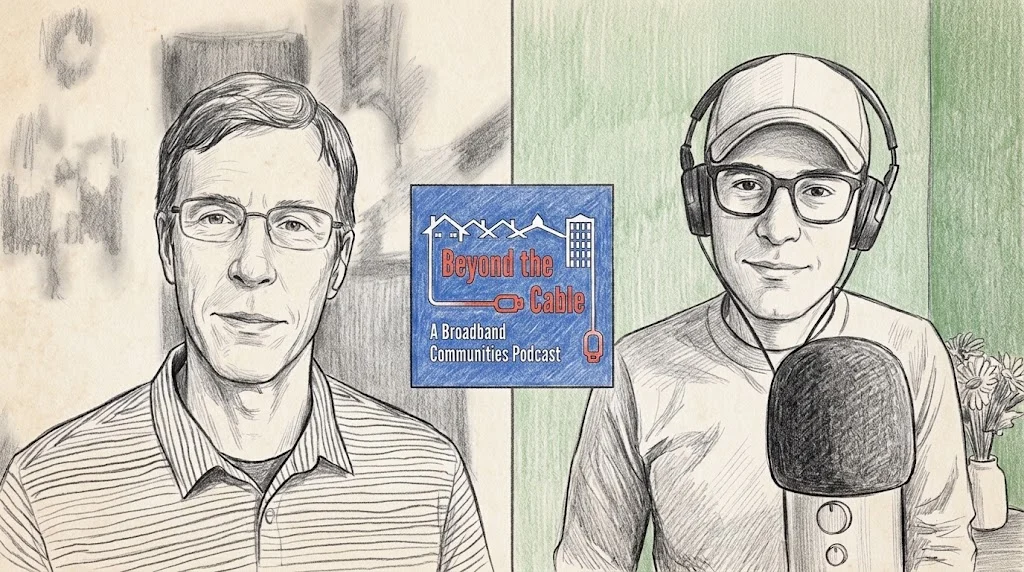
In a recent appearance on the Beyond the Cable podcast, Dano identified a specific cohort of independent fiber ISPs—Allo Fiber, Gateway Fiber, LiveOak Fiber, Wire 3, Ripple Fiber, Intrepid Fiber, and Ezee Fiber—as the most likely targets for acquisition. This report dives deep into the forces driving this “land grab,” the broader implications for consumers, and the shifting technological tapestry that is forcing these companies to the negotiating table.
Main Facts: The New Landscape of Consolidation
The current M&A environment is not merely a result of market saturation; it is a strategic response to a changing economic climate. With interest rates fluctuating and the initial frenzy of private equity investment in fiber-to-the-premises (FTTP) reaching a maturation point, the companies mentioned by Dano represent high-value assets with modern network architectures.
These providers have spent the last several years aggressively carving out footprints in underserved or high-growth markets. However, as these networks move from the “build-out” phase to the “subscriber acquisition” phase, the capital expenditure requirements remain high. For many of these independent providers, the path to sustained profitability in an increasingly competitive environment—where they must contend with both established cable incumbents and the rise of fixed wireless access (FWA)—is becoming harder to traverse alone.
Dano notes that the “land grab” is a rational response to the need for scale. When a larger entity acquires a regional fiber player, they aren’t just buying the lines in the ground; they are buying a customer base that has already been “cleansed” of the friction of legacy copper infrastructure.
Chronology: The Evolution of the 2026 Fiber Market
To understand why 2026 has become the year of potential consolidation, one must look at the trajectory of the industry over the last five years:
- 2021–2023: The Build-Out Boom. Spurred by the COVID-19 pandemic and the promise of the Broadband Equity, Access, and Deployment (BEAD) program, private equity firms poured billions into the “Alt-Net” sector. The goal was simple: get fiber in the ground as quickly as possible.
- 2024: The Reality Check. As the initial surge of subscribers plateaued and interest rates made debt financing more expensive, the focus shifted from pure expansion to operational efficiency.
- 2025: The Rise of Fixed Wireless and Satellite. Technologies like Starlink and 5G FWA began to erode the “fiber-only” value proposition, forcing fiber providers to differentiate themselves through superior service reliability and speed.
- 2026: The Consolidation Wave. With many fiber startups reaching a point where they need a massive influx of capital to reach their next growth stage, large-scale M&A activity has become the primary exit strategy for investors. Political shifts regarding federal broadband subsidies have also accelerated the urgency for these providers to secure their market positions through larger, more resilient entities.
Supporting Data: Why These Providers?
The companies identified in Dano’s analysis—Allo Fiber, Gateway Fiber, LiveOak Fiber, Wire 3, Ripple Fiber, Intrepid Fiber, and Ezee Fiber—share common characteristics that make them attractive to potential buyers:
- Modern Architecture: Unlike incumbents who are struggling to upgrade legacy HFC (Hybrid Fiber-Coaxial) plants, these providers are operating 100% fiber networks. This reduces long-term maintenance costs and allows for easier upgrades to XGS-PON or 25G-PON technologies.
- Market Focus: These providers have targeted specific, often overlooked, suburban and exurban markets that offer high take-rates once fiber is deployed.
- Customer Satisfaction: Data from Ookla’s performance testing shows that these smaller, nimble fiber providers often outperform the legacy incumbents in latency and consistency—metrics that are increasingly important to modern, remote-work-heavy households.
Dano’s analysis, published in his September 28 report, "Assessing the ‘Land Grab’ in the U.S. Fiber Market: Who’s Next?", highlights that these companies have essentially done the "heavy lifting" of network deployment. A larger buyer—such as a national telco or a private equity firm with a longer-term horizon—can immediately integrate these networks, providing the necessary scale to offer bundled services like mobile, voice, and cloud security.
Official Responses and Expert Perspectives
In his interview with Beyond the Cable, Dano emphasized that the fiber rollout is only one piece of a much larger, more complex puzzle. "We’ve got satellite players that are making an increasing impact in the industry, we have fixed wireless that is obviously gobbling up a lot of net broadband customers in recent years," Dano stated.
The expert perspective is that the industry is moving away from a siloed approach. In the past, a company could be just a “fiber provider.” In 2026, the market is demanding convergence. The most successful players are those who can offer a seamless experience across home broadband and mobile connectivity.
When asked about the future of the companies on his list, Dano posed a pointed question to the industry: "Once you roll up these fiber networks, then what?" This indicates that the M&A activity is not the end goal, but rather the beginning of a new phase of competition focused on service layering and ecosystem dominance.
Implications: What This Means for the Future
The implications of this consolidation wave are far-reaching for both the industry and the end-user.
For the Consumer
In the short term, consumers may see little change, as the infrastructure remains in place. However, the long-term impact of M&A usually leads to a more standardized service offering. While this might lead to more reliable bundling (e.g., getting mobile phone plans discounted when you sign up for fiber), it could also lead to a reduction in the “local touch” that made these independent fiber providers popular in the first place.
For the Competitive Landscape
The consolidation of these seven providers will likely force the remaining independent players to either double down on niche local markets or look for their own exit strategies. The “middle ground” is disappearing. As fiber networks become larger and more interconnected, the barrier to entry for new, small-scale ISPs will become significantly higher.
The Role of Technology
The convergence of AI, BEAD, and fiber is the final piece of the puzzle. AI is being used by these providers to optimize network traffic and predict maintenance needs before outages occur. Large-scale operators are eager to acquire these AI-ready networks because it allows them to lower their operational costs significantly. Furthermore, the final distribution of BEAD funding will likely favor companies that have the financial backing and operational scale to manage complex, multi-state deployments—further incentivizing the M&A activity we are witnessing today.
Conclusion: The Road Ahead
As the telecommunications sector continues to evolve, the distinction between a “fiber company,” a “mobile carrier,” and a “tech service provider” will continue to blur. Mike Dano’s analysis provides a clear roadmap for what to expect in the coming months: a tightening of the market, a reduction in the number of independent fiber players, and the rise of a few, highly integrated broadband giants.
For those watching the industry, the key is not just to track who is buying whom, but to watch how these new, larger entities leverage their expanded footprints to change how Americans connect. The “land grab” is well underway, and as 2026 draws to a close, the landscape of U.S. connectivity will look fundamentally different than it did just a few years ago.
To hear the full conversation with Mike Dano, listen to the episode of Beyond the Cable on Apple Podcasts or via Spotify.
Broadband Communities Summit, co-located with Connected America, brings together the people responsible for planning, developing, building, managing, and future-proofing the nation’s digital infrastructure. It is the premier gathering for the connectivity and telecommunications sector, bringing the entire broadband supply chain together under one roof. Learn more about our 2027 event or book your tickets today.