The enterprise artificial intelligence landscape is undergoing a profound transformation. While the initial "gold rush" for generative AI was defined by massive, cloud-based Large Language Models (LLMs) accessed via API, a new report commissioned by Apple and authored by Omdia, titled Rethinking Critical AI Infrastructure, suggests that the tide is turning. As corporations grapple with data privacy, escalating operational costs, and the need for localized control, many are finding that the most efficient way to handle AI workloads is not in the cloud, but on the desk.
Main Facts: The Case for On-Device AI
The Omdia report, based on insights from 1,500 enterprise tech leaders and practitioners, highlights a growing dissatisfaction with the "cloud-only" paradigm. According to the data, current enterprise AI strategies often falter when evaluated against three critical metrics: data security, operational costs, and latency.
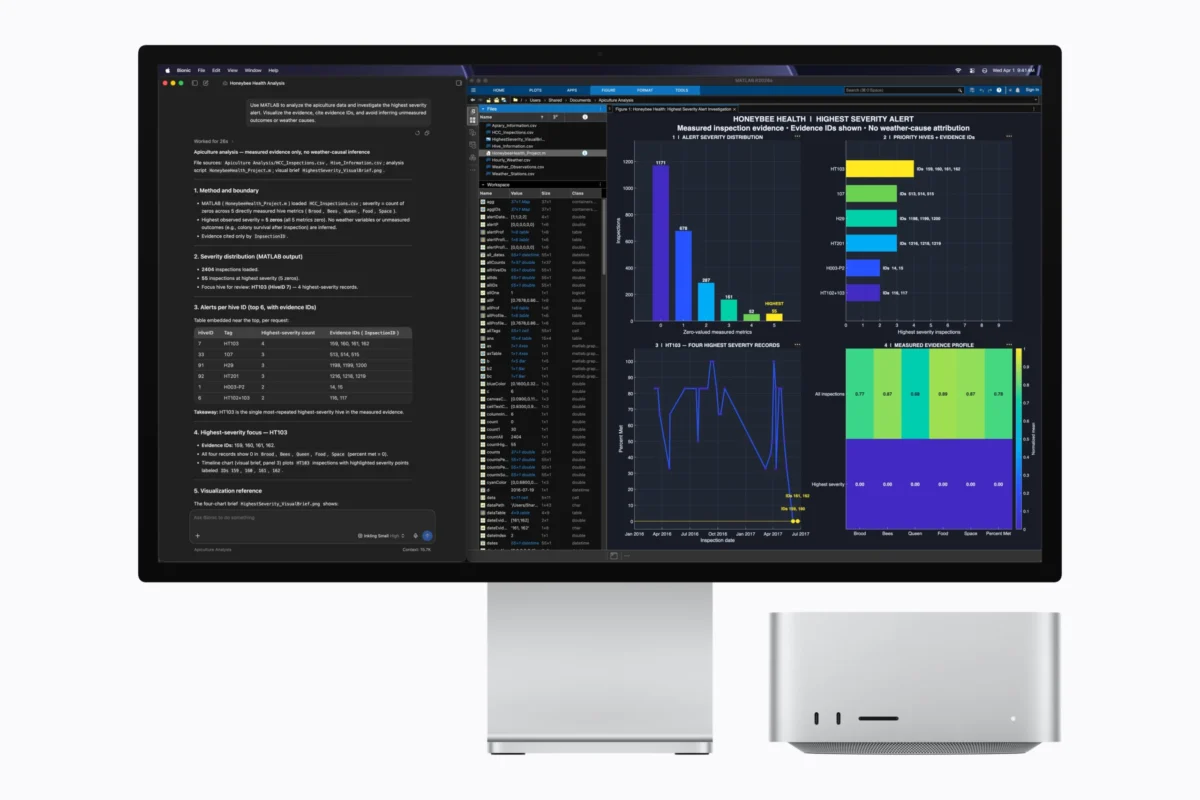
The fundamental argument presented is that on-premises infrastructure—specifically hardware powered by Apple Silicon—offers a secure, high-performance alternative to relying solely on external servers. By moving AI processing from the cloud to the device, organizations can keep sensitive data within their own firewalls, eliminate the recurring "per-token" costs associated with cloud APIs, and significantly reduce latency for mission-critical applications.
The report notes that once the initial investment in hardware is made, the marginal cost of running AI tasks drops to near zero. This enables a culture of "unlimited experimentation," where developers and data scientists can iterate on models without fearing a spike in their cloud consumption bill.
Chronology of the Shift
The transition to on-premises AI has not happened overnight, but it follows a logical technological progression:
- Pre-2020: The Cloud Era: Enterprises largely relied on centralized cloud compute for all advanced machine learning tasks due to the sheer size of early models.
- 2020–2022: The Rise of Apple Silicon: Apple transitioned its Mac lineup to its own M-series chips, featuring a Unified Memory Architecture (UMA) and a high-performance Neural Engine. This hardware shift quietly laid the groundwork for running sophisticated AI models locally.
- 2023: The Generative AI Boom: As companies rushed to integrate LLMs, they discovered the high costs and privacy risks of cloud-based inference, prompting a search for more sustainable alternatives.
- 2024: The "Edge" Realization: The Omdia report crystallizes the current trend: enterprise leaders are now intentionally procuring Macs and iPads not just as productivity tools, but as robust AI-processing nodes capable of handling specialized, local workloads.
Supporting Data: Scaling the Power of Silicon
The technical capabilities of Apple’s current hardware ecosystem are perhaps the most compelling part of this shift. Omdia’s research highlights that a vast majority—57%—of AI models currently used by enterprises have fewer than 10 billion parameters. This is a critical threshold because it places these models well within the operational reach of Apple’s current hardware lineup.
The Scaling Potential
- The iPad: Capable of running models with up to 14 billion parameters, making it a portable, high-performance tool for field-based AI deployment.
- The Mac Studio: A powerhouse that can handle models up to 480 billion parameters, suitable for intensive local development and inference.
- The Cluster Solution: For organizations requiring even greater scale, a cluster of four Mac Studios, connected via off-the-shelf networking, can manage models with up to 1.6 trillion parameters.
This scalability explains why developers at "frontier" AI companies—the very firms building the models that run on the cloud—are increasingly choosing Macs as their primary workstations. The report reveals that organizations building proprietary AI solutions in-house are adopting Macs at nearly double the rate of those merely purchasing commercial, pre-packaged solutions.
Official Responses and Strategic Implications
Apple’s silence on its enterprise AI strategy has been a point of confusion for market analysts for some time. By commissioning this report, the company is finally signaling its intent to be viewed as a foundational player in the enterprise AI stack.
The strategy is clear: Apple does not necessarily intend to replace the cloud entirely. Instead, it is positioning itself as a vital "pillar" of a hybrid AI strategy. In this model, mundane, high-frequency, or sensitive AI tasks are relegated to local Apple hardware, while massive, cloud-based models are reserved only for the most complex, high-end requirements.
The Economic Impact
For companies heavily invested in the "AI-as-a-service" revenue model, this trend represents a significant threat. If enterprises successfully migrate 70–80% of their AI inference to local hardware, the total addressable market for cloud-based token usage may shrink or stagnate. As the report points out, even the most advanced LLMs are becoming increasingly efficient, meaning they will eventually run comfortably on standard hardware, further eroding the reliance on cloud APIs.
The Security Dividend
For C-suite executives, the primary driver remains security. In an era where data breaches are costly and proprietary data is the ultimate competitive advantage, the "on-premises" approach is an insurance policy. Running models locally means data never leaves the corporate network, reducing the attack surface and ensuring compliance with stringent data residency regulations.
Challenges and Future Outlook
While the hardware argument is compelling, the enterprise ecosystem is still in its infancy regarding the management of these local AI fleets. For this shift to reach full maturity, the industry needs more than just powerful chips; it needs a software layer for management, deployment, and governance.
Currently, if an organization decides to deploy 500 Mac Studios for local AI inference, they lack the unified "dashboard" that cloud providers offer to monitor, update, and audit those models. Apple will likely need to develop, or partner to create, enterprise-grade tools that allow IT departments to treat their local fleet of Macs as a cohesive, manageable AI cloud-within-the-office.
The Evolving Landscape
As AI models continue to become "slimmer and more refined"—a process known as model distillation and quantization—the power required to run them effectively is decreasing. This favors platforms like Apple’s, where the hardware and software are tightly integrated to maximize efficiency.
The future of enterprise AI will not be a binary choice between the cloud and the desktop. It will be a hybrid ecosystem. Companies will continue to utilize cloud services for massive, training-heavy tasks, but the daily, heavy-lifting of enterprise AI—summarization, data analysis, local RAG (Retrieval-Augmented Generation) pipelines, and code assistance—will increasingly happen on the hardware already sitting on employees’ desks.
Conclusion
Apple’s pivot toward the enterprise AI market is not a sudden attempt to capture market share in a crowded field; it is a long-term play based on the inherent architecture of its silicon. By providing the performance to run sophisticated models locally, Apple is offering businesses a way to break free from the "cloud tax" while simultaneously hardening their security postures.
As we look toward the next three to five years, the "on-device" advantage will likely become a benchmark for corporate efficiency. Companies that recognize the potential of their existing hardware ecosystem will be the ones best positioned to scale their AI ambitions without being held hostage by the constraints—and the costs—of the cloud. The hardware is ready; now, the enterprise must adapt its infrastructure to match.