As the global demand for artificial intelligence continues its exponential ascent, the underlying infrastructure powering these models faces a looming reckoning: the energy crisis. With AI data centers consuming massive amounts of electricity and water, the industry is under intense pressure to decouple growth from carbon emissions. Advanced Micro Devices (AMD) has stepped into this fray, announcing an ambitious technical roadmap aimed at a 20-fold increase in energy efficiency for its AI infrastructure by 2030.
The Core Mandate: Decoupling AI Growth from Energy Demand
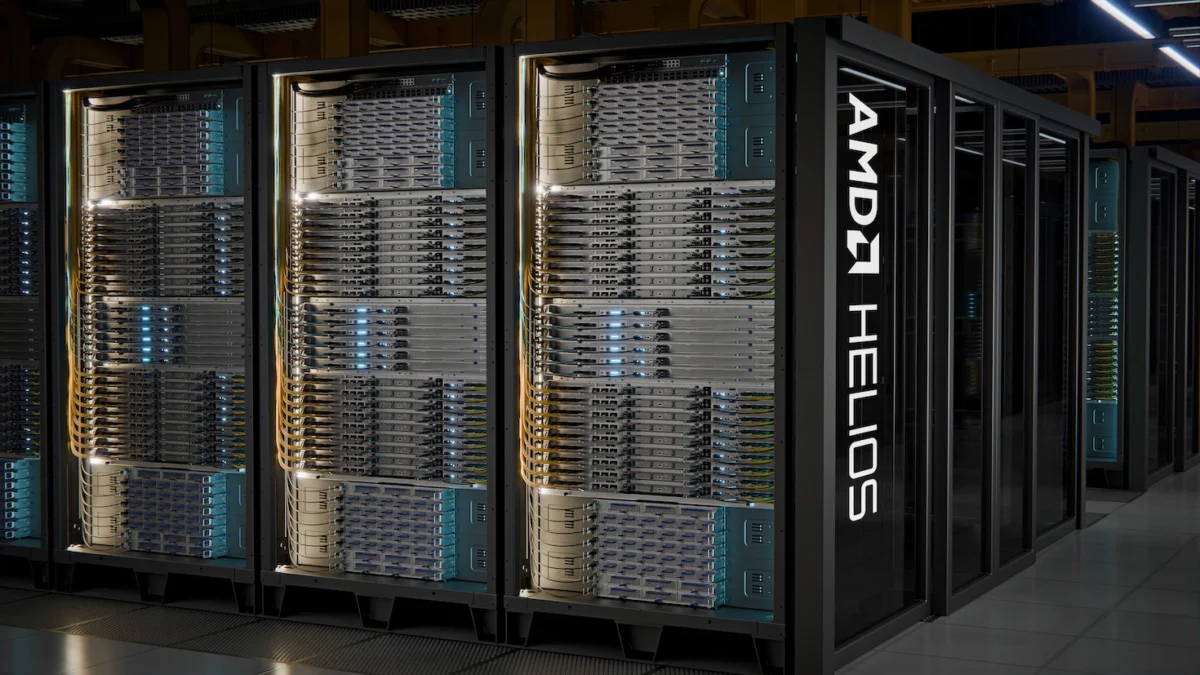
The fundamental challenge for the semiconductor industry is that as AI models grow more complex—requiring billions of parameters for training and rapid-fire inference—the hardware required to run them typically demands more power. AMD’s strategy, detailed in a recent corporate blog post, flips this script. By 2030, the company predicts that a task requiring 570 server racks in 2024 will be achievable using just two AMD-configured racks.
This 20-fold improvement in efficiency is not merely a theoretical target; it is a pragmatic response to the skyrocketing electricity needs of tech giants like Meta, Microsoft, and OpenAI. According to AMD’s calculations, this transition would render its infrastructure 20 times more electricity-efficient and 28 times less carbon-intensive. This trajectory is three times faster than historical industry efficiency gains, positioning AMD as a frontrunner in the "green AI" arms race.
A Chronology of Strategic Efficiency
AMD’s commitment to energy efficiency is a multi-year effort that has been carefully mapped out by its engineering teams. To understand how the company plans to achieve such radical improvements, one must look at its recent progress:
- 2024 Base Year: AMD established its baseline for energy efficiency, recognizing that 85% of its total greenhouse gas (GHG) emissions stem from the "use phase" of its products—the power consumed by data centers running AMD chips.
- 2024–2026 Progress: By prioritizing "co-optimization"—a design philosophy that integrates compute silicon, memory, interconnects, and software—AMD has already achieved a fourfold increase in energy efficiency in just two years.
- 2025 Milestone: The company published its inaugural climate transition plan, a move largely spurred by pressure from shareholder advocacy groups like Green Century. This plan formalized the company’s focus on Scope 3 emissions, particularly those generated by the supply chain.
- 2030 Vision: The ultimate goal is to achieve the 20-fold efficiency increase, effectively scaling down the physical footprint and power draw of massive AI clusters while maintaining or exceeding current performance levels.
The Architecture of Efficiency: Systems-Level Thinking
The secret to AMD’s projected gains lies in its move away from individual component optimization toward a "rack-scale" design approach. Sam Naffziger, senior vice president and corporate fellow at AMD, emphasizes that the era of simply building faster chips is over.
"The next wave of AI efficiency will depend on tighter co-optimization across compute silicon, memory, interconnects, software, and rack-scale system design," Naffziger explained. By designing the server rack as a single, cohesive entity rather than a collection of disparate parts, engineers can reduce "energy tax"—the power lost during communication between components or through heat dissipation.
This holistic approach includes rack-level cooling technologies, which manage heat more effectively than traditional air-cooling methods. While critics point out that these calculations do not account for the total water and energy required for facility-wide cooling, experts like Jonathan Koomey, a researcher in data center energy use, find the transparency refreshing. "AMD is being very transparent about what it will take, and it is known for being rigorous," Koomey noted. "The systems-level view is very appropriate."
The Competitive Landscape: AMD vs. NVIDIA
The AI infrastructure market is effectively a duopoly, with AMD and NVIDIA locked in a high-stakes competition. For both companies, energy efficiency is no longer just a "nice-to-have" feature; it is a core selling point for enterprise clients who have committed to strict ESG (Environmental, Social, and Governance) targets.
NVIDIA, the dominant player in the AI hardware space, has pledged to reduce the emissions intensity of its products by 75% per PetaFLOP by 2030. In its 2026 sustainability report, NVIDIA touted a 10-fold improvement in efficiency for its latest "Vera Rubin" architecture compared to its predecessor, "Blackwell."
However, the reporting methodologies differ significantly. While AMD has set specific, transparent goals for rack-scale efficiency, NVIDIA’s disclosures have faced scrutiny from shareholders. Green Century, an investment firm focused on sustainable portfolios, has specifically called out NVIDIA for omitting "product use" emissions—the largest slice of the pie—from its broader Scope 3 disclosures. This has led to shareholder resolutions demanding greater clarity from the chip giant, highlighting a growing investor appetite for standardized, comprehensive climate accounting in the tech sector.
The Broader Implications: Beyond the Chip
The drive for energy efficiency has profound implications for the global energy grid. As data centers consume an increasing percentage of regional power supplies, the ability to do more with less electricity is the only path to sustainable AI expansion.
The Challenge of "Jevons Paradox"
A central concern raised by analysts is the "Jevons Paradox"—the economic theory that as technology becomes more efficient at using a resource, the total consumption of that resource may actually increase because its use becomes cheaper and more widespread.
Giovanna Eichner, a shareholder advocate at Green Century, warns that efficiency gains are only part of the solution. "Energy efficiency doesn’t always translate to emissions reduction if you’re continuing to crank out products at a higher rate," she notes. Even if a chip is 20 times more efficient, if the total number of chips manufactured and deployed grows by 100-fold, the absolute environmental impact will still rise.
Scope 3 and the Supply Chain
Because both AMD and NVIDIA are "fabless" companies—meaning they outsource the physical manufacturing of their chips—their primary carbon footprint is hidden in their supply chains. AMD has begun to address this by mandating that all suppliers set their own GHG reduction targets. So far, the company has seen an 8% reduction in the carbon intensity of its supply chain, a modest start on the road to a 25% reduction by 2030.
Corporate Governance and Incentives
AMD’s commitment to sustainability is now baked into its internal incentive structures. Chief Sustainability Officer Justin Murrill has confirmed that every AMD engineering team has specific efficiency-per-watt targets. Crucially, these targets are tied to companywide bonuses. By aligning the financial interests of its engineers with the company’s climate goals, AMD is ensuring that sustainability is treated as a technical requirement rather than a public relations afterthought.
Conclusion: A Barometer for the Industry
The race to build the most efficient AI infrastructure is not just a battle for market share; it is a race to ensure that the AI revolution does not become an environmental catastrophe. AMD’s transparent, rack-level approach provides a blueprint for how hardware manufacturers can balance performance with planetary boundaries.
As we look toward 2030, the success of these companies will be measured not just by the speed of their processors, but by their ability to provide the "compute density" required by a modern, AI-driven world without overwhelming the electrical grid. While the industry still faces significant hurdles—particularly regarding Scope 3 supply chain emissions and the potential for explosive demand growth to outpace efficiency gains—the shift toward rigorous, systems-level sustainability reporting represents a critical step forward.
Ultimately, the data center of the future will be defined by how little it consumes, not how much it processes. In this new era, AMD’s aggressive roadmap positions it as a significant influence on how the digital backbone of the global economy will be constructed in the coming decade.