WASHINGTON — In a move that signals a paradigm shift in how the U.S. military intends to fuel its global and extra-atmospheric operations, the Defense Innovation Unit (DIU) has officially launched a solicitation seeking commercial partners to develop and deploy a prototype Space Power Beaming (SPB) satellite. The initiative, which aims to transition from theoretical research to an operational orbital capability by 2030, represents one of the most ambitious energy-infrastructure projects in the history of the Department of Defense (DoD).
By leveraging the agility of the commercial space sector, the DIU hopes to bypass the traditional, multi-decade acquisition cycles that have historically hampered space-based energy projects. The objective is clear: to establish an on-demand, wireless electrical grid that spans from Low Earth Orbit (LEO) to the farthest reaches of the battlefield.
Main Facts: The Vision for a Wireless Future
The core of the DIU proposal is to create a reliable, scalable system that can beam electrical power from space directly to receivers located on the ground, in the air, or on other spacecraft. This "power-on-demand" capability is designed to support the Joint Force in areas where traditional fuel logistics are dangerous, inefficient, or physically impossible.
The solicitation outlines a phased development approach:
- Lab Demonstration: Within 12 months of the contract award, vendors must successfully demonstrate core power-beaming technology in a controlled environment.
- Orbital Prototype: If the lab results meet Pentagon requirements, the program will advance to an on-orbit demonstration within 24 months.
- Operational Goal: The program aims to establish an "on-demand" operational SPB capability by fiscal year 2030.
Crucially, the DIU has remained intentionally vague regarding the power source—whether it be nuclear reactors or high-efficiency solar arrays—and the transmission method—whether lasers or microwave beams. By keeping the requirements broad, the Pentagon is inviting the private sector to bring its most mature, off-the-shelf technologies to the table, accelerating the path to deployment.
Chronology: A History of Beaming Energy
The concept of wireless power transfer is not new, but its application as a military necessity has accelerated significantly in the 2020s.
- 2021: The Naval Research Laboratory (NRL) conducts a landmark demonstration of X-band microwave power beaming, successfully converting radio waves into usable electricity at a ground-based rectifying antenna.
- 2023–2024: Multiple commercial firms begin testing high-efficiency laser power beaming for small satellite recharging, proving the technical viability of maintaining "power links" in space.
- December 2025: President Donald Trump signs an executive order prioritizing American space superiority, specifically calling for the development and launch of space-based nuclear power systems by 2030. This provided the necessary political and budgetary tailwinds to move SPB from a research project to a defense priority.
- April 2026: The White House reaffirms the push for nuclear-powered space systems, providing a potential "power source" solution for future SPB satellites that cannot rely on sunlight.
- July 2026: The DIU releases its formal solicitation for commercial proposals, setting a July 22 deadline for industry responses and an August 3 date for phase-two pitches.
Supporting Data: The Logistics of "Power-on-Demand"
The primary driver behind the DoD’s interest in SPB is the "logistics burden." Current military operations rely heavily on the transport of liquid fuels and the reliance on heavy, chemical-based batteries. These power sources have a finite lifespan and impose significant weight penalties on unmanned systems and mobile forward operating bases.
The Physics of Transmission
There are two primary candidates for the "transmission" segment of the SPB architecture:
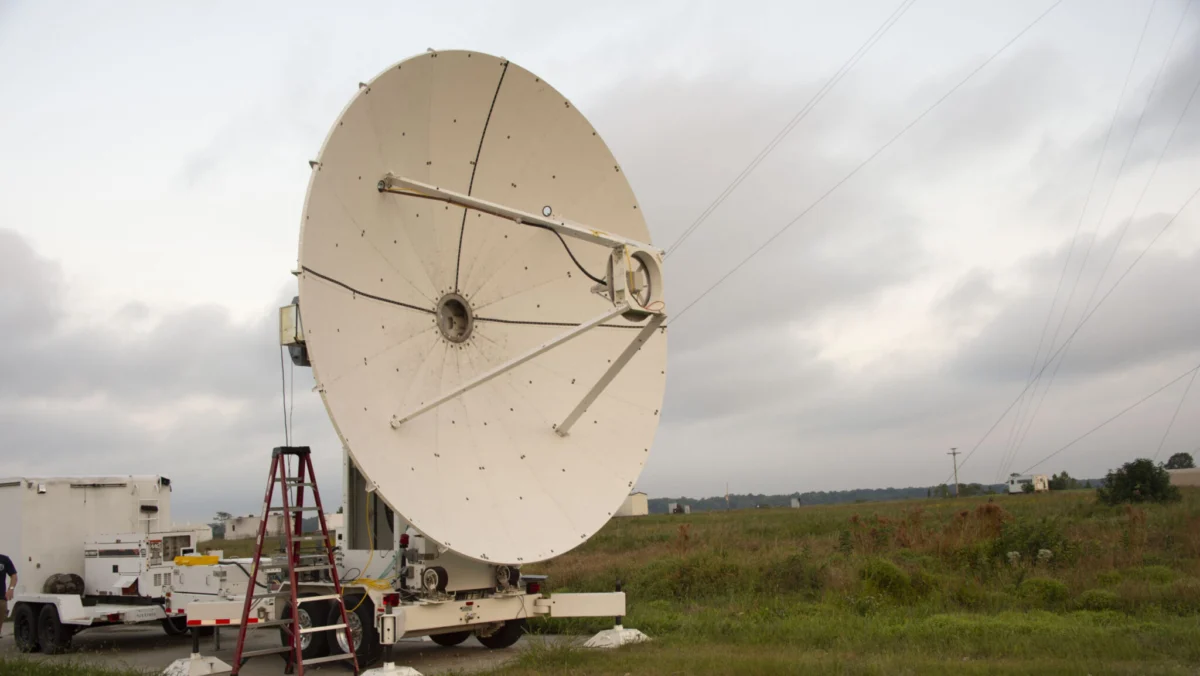
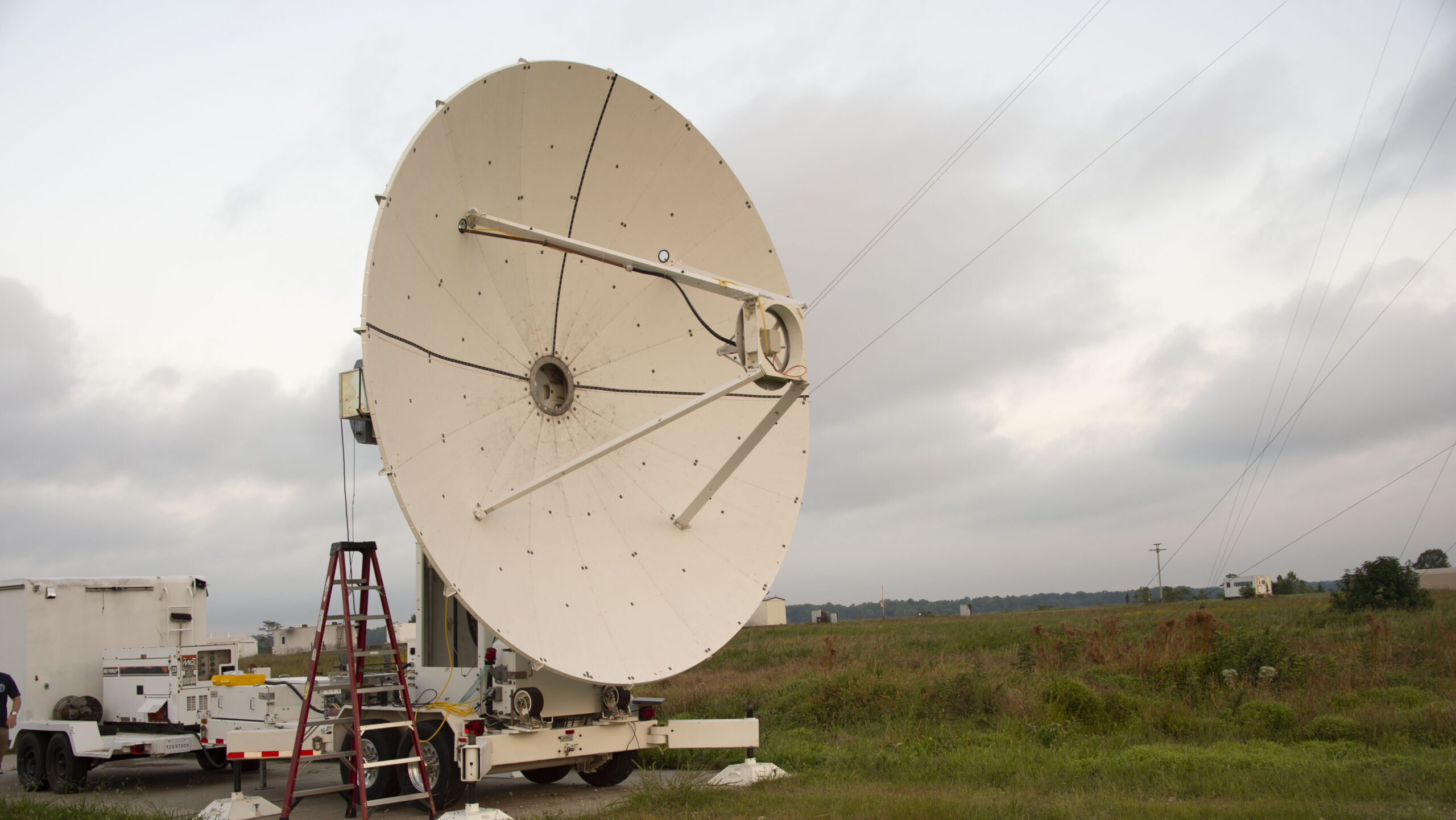
- Microwave Beaming: This method is highly resilient to atmospheric interference (such as clouds or fog). The NRL’s 2021 demonstration utilized X-band waves, which are well-suited for long-range, all-weather transmission to ground receivers.
- Laser Beaming: Near-infrared lasers offer much higher power density and require smaller apertures (lenses) than microwave systems. However, lasers can be obstructed by dense weather patterns and require high-precision pointing and tracking capabilities to maintain a lock on a moving target.
The Power Source Problem
The DoD is currently evaluating two pathways for the "supply" side of the satellite:
- Solar-Harvesting: Satellites equipped with advanced, high-efficiency photovoltaic cells. The limitation here is the "dark side" of the orbit, where the satellite is eclipsed by the Earth.
- Space-Based Nuclear: Small modular reactors (SMRs) designed for space. These offer continuous, high-wattage power regardless of the satellite’s position relative to the sun, making them the "gold standard" for a permanent, reliable power grid in orbit.
Official Responses and Strategic Intent
A spokesperson for the DIU clarified that the decision to leave the technology choice open-ended was a deliberate strategy. "We are not in the business of dictating the physics to our commercial partners," the spokesperson noted. "We are in the business of identifying commercial innovations that can solve the Joint Force’s most pressing power challenges. By allowing vendors to propose their own combinations of power generation and beaming, we are casting the widest net possible to find a solution that works now, rather than in twenty years."
The Pentagon views this project as a hedge against energy insecurity. As the Joint Force becomes increasingly dependent on edge computing, AI-driven sensors, and autonomous drone swarms, the demand for high-density, persistent electricity will skyrocket. The SPB program is intended to provide a "plug-and-play" infrastructure that allows commanders to "tap into" the orbit when they need power for a surge of activity.
Implications: The New Geopolitics of Energy
The implications of a successful SPB system are profound, reaching far beyond simple logistics.
1. Resilient Forward Basing
If a forward operating base (FOB) can receive its power wirelessly from an overhead satellite, the need for dangerous fuel convoys—a major point of vulnerability in every recent conflict—is drastically reduced. This "de-risks" the logistics chain and allows for smaller, more agile footprints in contested environments.
2. Deep Space Expansion
As the U.S. looks toward the Moon and eventually Mars, the ability to beam power to surface assets will be a cornerstone of permanent colonization. A satellite in lunar orbit could beam power to a base on the surface, supporting life-support systems and mining operations without the need for massive, heavy batteries brought from Earth.
3. The New Space Arms Race
The development of SPB capability is not happening in a vacuum. Adversaries are undoubtedly monitoring the DIU’s solicitation with extreme interest. The technology required to beam power from orbit is conceptually similar to the technology required for directed-energy weapons. As the U.S. builds out its power-beaming infrastructure, it will also be establishing the infrastructure for high-precision, space-based energy projection, leading to new debates about space-militarization treaties and international norms of behavior in orbit.
4. Commercial Synergy
By leveraging the private sector, the DoD hopes to catalyze a commercial market for space-based power. If the technology proves successful for the military, it could eventually be scaled to provide power for civilian telecommunications, disaster relief, and remote-area electrification. This would lower the cost-per-kilowatt for the DoD by spreading the development costs across a larger, dual-use ecosystem.
Conclusion
The road to 2030 is steep. Developing an orbital power-beaming system requires solving some of the most difficult engineering challenges of the century, from thermal management in a vacuum to high-precision beam steering at orbital velocities. Yet, the DIU’s rapid-fire approach—moving from solicitation to lab demo in 12 months—suggests that the Pentagon is done waiting. As the July 22 deadline approaches, the defense industry stands at a crossroads: the era of the "space-based energy grid" is no longer a science-fiction trope, but a tangible, funded, and urgent military mission.