As we approach the latter half of 2026, the landscape of software engineering and artificial intelligence development is undergoing a profound shift. The focus has transitioned from mere model experimentation to the rigorous optimization of production environments and the sophisticated orchestration of autonomous agents. This week’s industry insights highlight a critical pivot toward maintainable code, cost-effective inference, and structured development methodologies.
Main Facts: The Shift Toward Engineering Discipline
The current data science and development climate is defined by three pillars: architectural robustness, cost-optimized inference, and agentic integration. Developers are moving away from "quick-and-dirty" scripting toward industrial-grade patterns.
A central theme emerging across recent technical discussions is the abandonment of brittle procedural code—specifically long if-else chains—in favor of dynamic design patterns like the Registry Pattern. Furthermore, as organizations scale their LLM operations, the focus has shifted from the novelty of AI to the harsh reality of latency and compute costs. The industry is no longer satisfied with brute-forcing results; it demands surgical precision in how models are called, cached, and constrained.
Chronology of Innovation (July 13–17, 2026)
The past week has seen a flurry of activity focused on bridging the gap between theoretical AI models and reliable production systems:
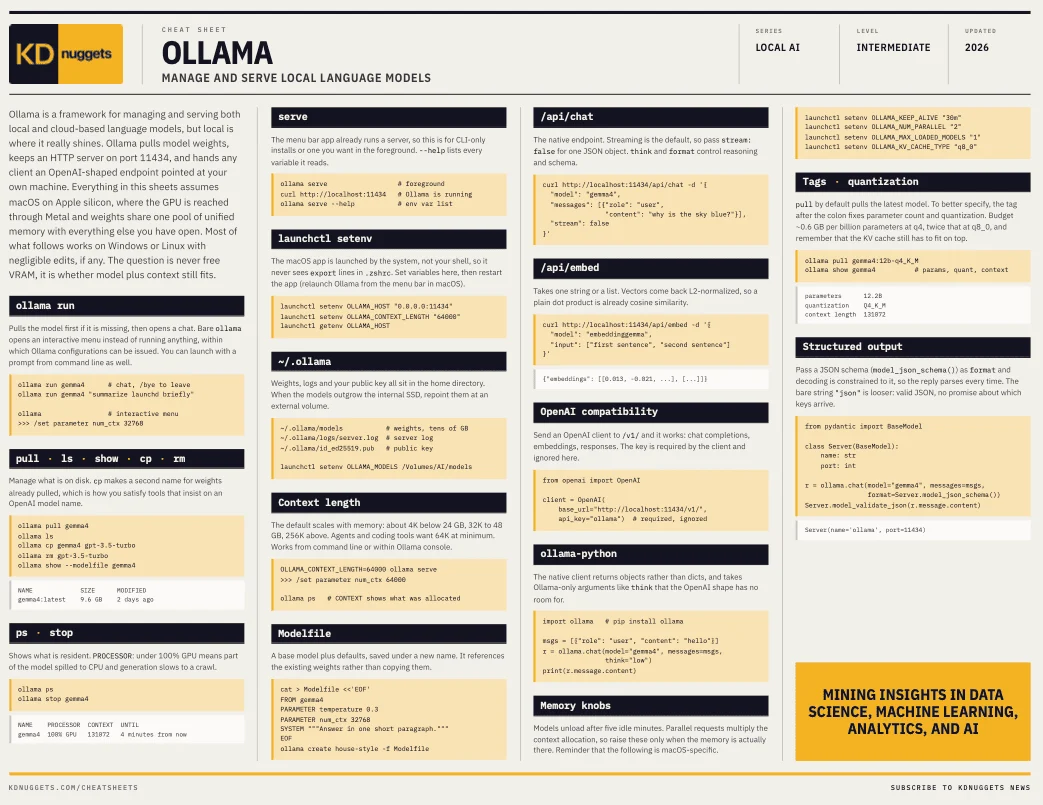
- July 13: The week began with a focus on foundational skills, as Abid Ali Awan highlighted the necessity of real-world SQL projects for portfolio building. Simultaneously, Iván Palomares Carrascosa addressed the "hallucination" problem by detailing how the Outlines library forces LLMs into structured JSON outputs, moving AI from creative generation to deterministic data processing.
- July 14: The discussion turned toward infrastructure and efficiency. Insights on reducing LLM latency in production were shared, alongside the introduction of Conductor, a tool designed to maintain context for Gemini CLI-based AI coding agents.
- July 15: Kanwal Mehreen published a definitive guide on replacing complex conditional logic with the Registry Pattern. Shittu Olumide followed this with a comprehensive breakdown of seven Python frameworks designed to orchestrate local AI agents, signaling a move toward decentralized, local compute.
- July 16: The discourse expanded to include learning resources and minimalist architectural philosophies, with Vinod Chugani curating top YouTube channels for AI development, while Olumide explored the "Pi Coding Agents" approach to reducing overhead.
- July 17: The week culminated in advanced development workflows, specifically the use of Git Worktrees to manage multi-agent environments, and a collection of free resources aimed at mastering agentic AI.
Supporting Data and Technical Implementation
Moving Beyond Procedural Logic
The traditional approach to Python logic—chaining if-elif-else statements—has become a bottleneck for modern, extensible systems. According to Kanwal Mehreen, this violates the Open/Closed Principle (a core tenet of SOLID design). By adopting the Registry Pattern, developers create a central lookup table. This allows new features to be "registered" without modifying the existing codebase, turning static logic into a dynamic, configuration-driven pipeline.
The Economics of Production LLMs
Production latency and inference costs are the two primary metrics determining the survival of AI-powered applications. Industry experts now advocate for a multi-layered optimization strategy:
- Token Minimization: Stripping unnecessary context and employing aggressive system-prompt engineering.
- Model Routing: Directing queries to smaller, specialized models rather than always invoking massive general-purpose LLMs.
- Caching: Utilizing multi-tiered caching to store previously computed responses, drastically reducing repetitive inference costs.
Deterministic Generation
One of the greatest hurdles to integrating LLMs into software pipelines is the unpredictability of output formats. The integration of libraries like Outlines allows developers to mask "illegal" tokens at the sampling layer. By enforcing constraints, the LLM is forced to adhere to strict schemas (e.g., JSON), effectively transforming the LLM into a reliable interface between natural language and database logic.
Official Perspectives and Expert Consensus
Industry experts are largely in agreement that the "era of the demo" is over. The consensus, derived from the latest technical articles, suggests that we are entering a phase of Agentic Consolidation.
"The challenge is no longer about whether an agent can perform a task, but how it maintains context over time," notes Shittu Olumide. His work on Conductor and Git Worktrees underscores a vital industry need: the ability to manage state in an asynchronous, parallel development environment. When multiple AI agents work on the same repository, collisions and context loss are inevitable without the proper infrastructure layer. Git Worktrees provide this by allowing agents to operate in isolated, yet synced, workspaces.
Furthermore, the "minimalist" movement in AI agents—exemplified by Pi Coding Agents—advocates for a "less is more" philosophy. By explicitly documenting what an agent doesn’t do, developers can reduce the "noise" in the model’s context window, leading to higher accuracy and lower token consumption.
Implications for the Industry
The shift toward these methodologies has profound implications for developers and businesses alike:
1. The Professionalization of AI Engineering
The barrier to entry for high-level AI development is rising. It is no longer enough to know how to call an API. Practitioners must now understand system design, state management, and architectural patterns. The shift toward portfolios that demonstrate SQL competency and system-level thinking (as highlighted by Abid Ali Awan) proves that "Data-First" remains the foundation of "AI-Next."
2. Sustainability and Cost Management
As AI applications move from the lab to the enterprise, the cost of compute is becoming a strategic risk. Companies that fail to implement routing, caching, and structured generation will find their margins eroded by unnecessary inference costs. The move toward local AI orchestration, facilitated by Python frameworks, suggests a future where compute costs are managed by shifting workloads to local infrastructure wherever possible.
3. The Multi-Agent Reality
The focus on Git Worktrees and agentic orchestration indicates that the industry is preparing for a world where software is written by swarms of agents. Managing these agents requires the same rigor we apply to human engineering teams: conflict resolution, defined workspaces, and clear architectural boundaries.
4. A New Educational Standard
With the proliferation of AI content, the role of curated learning—such as the ten YouTube channels identified by Vinod Chugani—is becoming essential. As the technical stack matures, practitioners need to filter out the noise and focus on "agentic" frameworks, evaluation techniques, and the theoretical underpinnings of multi-agent systems.
Conclusion: The Path Forward
The landscape of July 2026 confirms that we are moving toward a more mature, predictable, and cost-effective AI ecosystem. The integration of design patterns like the Registry, the use of deterministic output libraries, and the adoption of professional workflows (like Git Worktrees and Context-Driven Development) are not just "best practices"—they are the survival kit for the modern software engineer.
As the industry continues to iterate, the divide will widen between those who treat AI as a "black box" and those who treat it as a component in a larger, engineered system. The developers who thrive will be those who prioritize maintainability, cost-efficiency, and rigorous architectural design, ensuring that their AI implementations are not just functional, but scalable and resilient for years to come.