
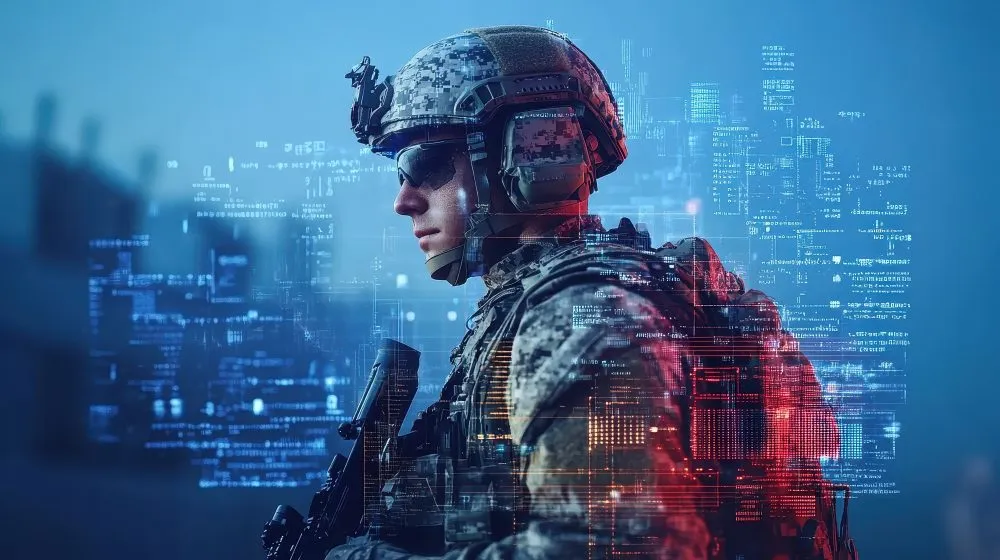
The rapid evolution of artificial intelligence and autonomous agents has fundamentally altered the paradigm of modern military operations. Once the domain of science fiction, AI-driven systems are now core strategic assets for global powers. From the U.S. and China to Russia, nations are funneling billions into the development of autonomous weapons, predictive logistics, and AI-enhanced intelligence, surveillance, and reconnaissance (ISR) platforms. However, this transition toward "algorithmic warfare" introduces a host of operational risks and cybersecurity vulnerabilities that threaten to redefine the nature of global conflict.
Main Facts: The New Arms Race
AI technology is no longer an auxiliary tool; it is becoming a central nervous system for modern militaries. A recent report from the Brennan Center for Justice underscores the scale of this investment, estimating that U.S. AI-driven military programs could soon exceed $75 billion, a figure that does not account for the vast, opaque landscape of classified "black-budget" projects.
The current battlefield utility of AI spans several domains:
- Geospatial Intelligence: Utilizing satellite imagery and sensor fusion to identify threats with precision.
- Logistics: Optimizing supply chains to ensure ammunition, food, and fuel reach the front lines in real-time.
- Autonomous Weapons: Systems capable of identifying and engaging targets with varying degrees of human oversight.
- Targeting Assistance: As seen in recent U.S. operations involving Iran, AI is being used to synthesize data from social media, drones, and satellites to prioritize targets based on strategic importance and legal compliance.
Despite these advancements, the human element remains a point of contention. The "human-in-the-loop" requirement is increasingly being tested by the sheer speed of AI decision-making, leading to concerns about whether human operators can truly exercise meaningful control over lethal autonomous systems.

Chronology: The Emergence of AI Conflict
The integration of AI into live combat is a recent but rapid development. The conflict in Ukraine served as the first true crucible for AI in an international, high-intensity war. Both sides employed AI for drone swarms, automated targeting, and intelligence analysis, effectively turning the region into a testing ground for next-generation warfare.
Following this, the U.S. expanded its use of AI-driven targeting in the Middle East. By leveraging massive datasets—ranging from commercially available satellite imagery to social media scraping—the military has attempted to streamline the "sensor-to-shooter" cycle. This evolution signals a shift from traditional manual surveillance to an automated, persistent monitoring state, where decisions on lethal force are increasingly informed by machine-learning models that process data at speeds far beyond human cognitive capacity.
Supporting Data: The Vulnerability of the Black Box
While the military utility of AI is clear, its reliability remains a significant concern. Mahmoud Javadi, a Ph.D. researcher at the Centre for Security, Diplomacy, and Strategy at Vrije Universiteit Brussel, emphasizes that the complexity of war—characterized by fog, friction, and intentional deception—is a poor match for the current limitations of AI.
"AI agents can help with logistics, intelligence, surveillance, and battlefield decisions," Javadi explained to EE Times. "But the problem is that war is messy, and data is incomplete. Enemies are trying to deceive their counterparts, and AI systems can still make very strange mistakes."

The "black box" nature of these models—where the reasoning behind a specific decision is opaque even to its developers—creates a accountability gap. If a drone misidentifies a civilian convoy as a hostile unit, the lack of explainability makes it difficult to ascertain whether the error was due to faulty training data, an adversarial exploit, or a sensor malfunction.
Official Responses and Strategic Initiatives
Recognizing the peril of relying on fallible systems, the U.S. Department of Defense has initiated projects aimed at hardening its technological backbone. In 2025, the Defense Advanced Research Projects Agency (DARPA) launched the Securing Artificial Intelligence for Battlefield Effective Robustness (SABER) project.
SABER is a multi-year effort designed to protect AI-enabled autonomous systems—both ground and air—against both physical interference and cyberattacks. This initiative marks a pivot from purely offensive AI development to a defensive posture, acknowledging that as military AI grows, so too does the "attack surface" available to adversaries.
Implications: The Cybersecurity Threat Landscape
The vulnerability of AI to cyber manipulation is perhaps the most dangerous aspect of modern military technology. Unlike traditional, air-gapped weapons systems, AI agents are often part of a vast, cloud-connected digital ecosystem. This provides hackers with multiple entry points to exploit.

Types of Cyberthreats to Military AI
- Integrity Attacks (Evasion and Poisoning): These are the most common threats. Evasion attacks involve subtle modifications to data—such as "adversarial patches" on a target or manipulated pixels in a drone’s camera feed—that cause the AI to misidentify objects. Data poisoning, a more long-term threat, involves compromising the training sets themselves. By injecting malicious data into the models during the learning phase, an adversary can ensure the AI exhibits specific blind spots or errors in the field.
- Availability Attacks: These include ransomware or distributed denial-of-service (DDoS) attacks aimed at disabling the logistics and supply chains that rely on AI. In a theater of war, the loss of an AI-driven logistics network can be as debilitating as the loss of kinetic firepower.
- The Private-Sector Dependency: A critical issue is the reliance on private tech companies. Governments are no longer the primary innovators of AI; they are end-users. The use of commercial platforms, such as Palantir, means militaries are reliant on the security standards of private corporations. If an adversary discovers a vulnerability in a commercial platform used by a nation-state, they can exploit it across multiple theaters simultaneously.
The Risk of Over-Trust
Perhaps the greatest danger, according to experts like Javadi, is "over-trust." There is a real-world risk that commanders, under the extreme pressure of combat, will defer to AI recommendations without sufficient scrutiny.
"My concern is less about some Hollywood-style machine taking over," Javadi said. "My concern is more practical. A commander may rely too much on a system, the system may wrongly identify something, or it may push one option as the best option; and under pressure, humans may follow it without questioning it enough."
Conclusion: The Path Toward Robustness
The proliferation of AI in the military is an irreversible trend. As nations seek to gain a technological edge, the pressure to deploy these systems will only increase. However, the current lack of standardization, the reliance on third-party commercial vendors, and the inherent brittleness of machine learning models present a significant risk.
The future of military AI must be built on a foundation of "robustness by design." This includes the development of explainable AI (XAI) that allows commanders to understand the why behind a machine’s recommendation, as well as rigorous testing protocols that account for adversarial machine learning. Without these safeguards, the very tools designed to grant military superiority may become the greatest source of tactical failure, leading to unintended escalation and the tragic loss of life through systemic error.

As we move toward a future where algorithms dictate the tempo of war, the global community faces a stark reality: the most effective weapon in the next conflict may not be the one that hits the hardest, but the one that remains the most secure, the most reliable, and the most transparent in the face of an evolving digital adversary.