In a move that underscores the intensifying arms race for specialized AI hardware, AMD has officially announced the acquisition of Taalas, an innovative AI inference chip startup founded by industry veteran and former Tenstorrent CEO Ljubisa Bajic. While the financial terms of the transaction remain undisclosed, the strategic intent is clear: AMD is aggressively moving to diversify its AI portfolio beyond general-purpose GPUs, seeking to dominate the high-speed "decode" phase of AI inference.
The deal brings a team of specialized engineers, led by the former AMD executive Bajic, into the fold of AMD’s growing AI organization under the leadership of Vamsi Boppana. This acquisition is the latest chapter in a broader consolidation trend within the semiconductor industry, as tech giants scramble to secure specialized intellectual property that can optimize the energy-intensive and latency-sensitive processes required for modern large language models (LLMs).
The Genesis of Taalas: Rethinking Inference from the Silicon Up
Founded in 2023 in Toronto, Canada, Taalas emerged from stealth mode in early 2024 with a radical proposition: to abandon the traditional, flexible architecture of modern processors in favor of extreme specialization.

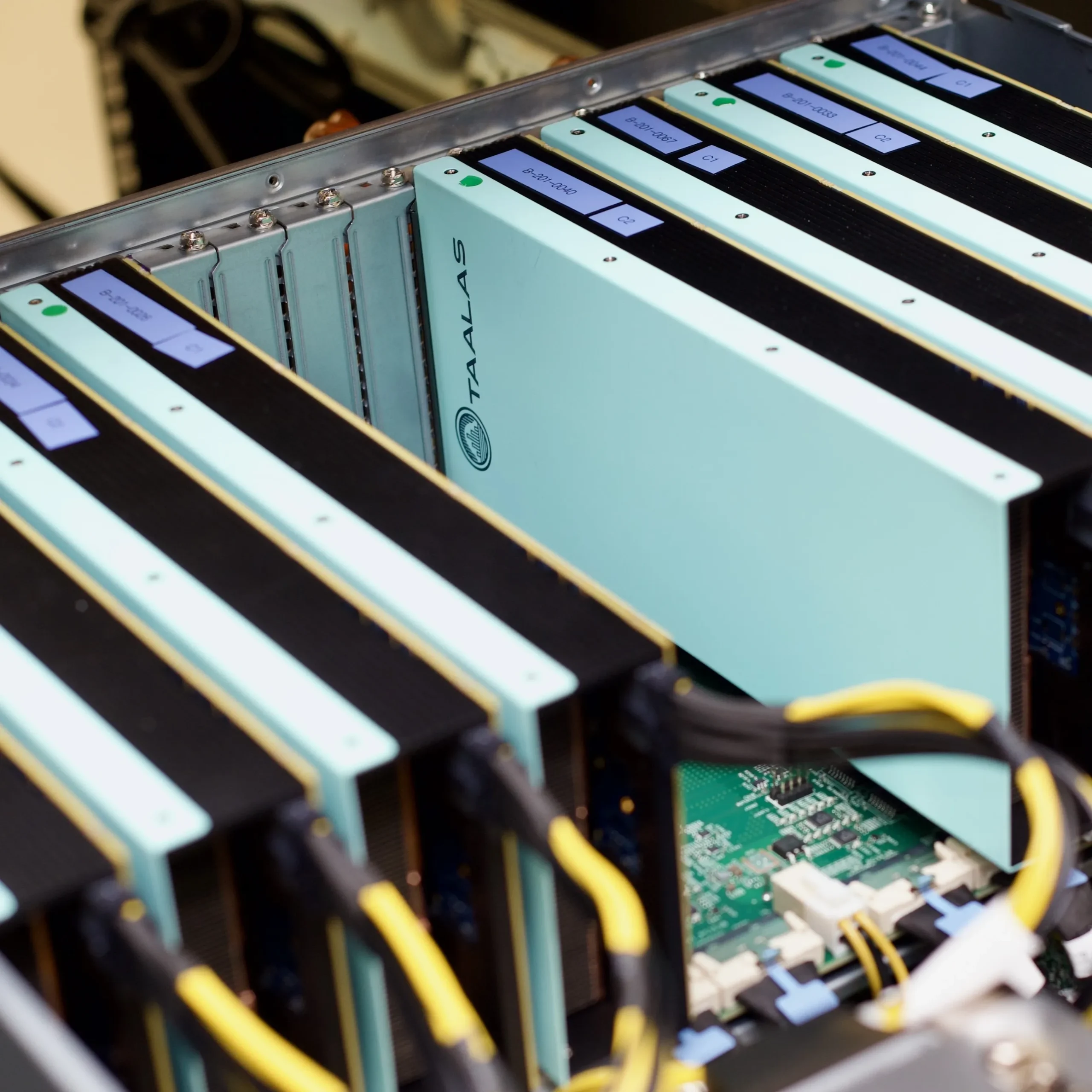
Taalas’s design philosophy is rooted in the concept of "hardware-model co-design." Unlike traditional GPUs, which are built to handle a wide range of computational tasks through programmable cores, Taalas’s chips are essentially structured ASICs (Application-Specific Integrated Circuits) that hardwire the dataflow of a specific AI model directly into the silicon. By "burning" the weights of a model into the chip’s architecture, Taalas eliminates the overhead associated with instruction fetching and decoding, resulting in staggering performance gains.
In its initial public demonstrations, the company’s debut chip, the HC1, achieved over 16,000 tokens per second per user on the Llama 3.1-8B model. This performance figure represents a significant multiple of the speeds attainable by current-generation general-purpose GPUs, positioning Taalas as a potential disruptor in the critical "decode" stage of inference, where latency is the primary barrier to human-like conversational AI.
Chronology of the Deal and Strategic Integration
The journey of Taalas from a Toronto-based startup to an AMD subsidiary has been rapid.

- 2023: Taalas is founded in Toronto, with a mission to solve the "inference bottleneck" by optimizing hardware specifically for model architectures.
- February 2024: The company exits stealth mode, showcasing the HC1 chip. The industry takes note of its unprecedented token generation speed, despite the limitation of being model-specific.
- August 2025/2026 (Current Period): Following months of strategic alignment, AMD confirms the acquisition. The Taalas team is formally integrated into AMD’s AI organization, led by Vamsi Boppana.
- Future Outlook: AMD plans to integrate Taalas’s unique SRAM-based architecture into its existing data center ecosystem, likely positioning it as a specialized companion to the Instinct GPU line.
The integration into AMD’s organizational structure is designed to leverage the chipmaker’s massive global reach and supply chain capabilities. By providing the "scale and engineering resources" that a startup inherently lacks, AMD intends to move Taalas’s technology from a niche, single-model proof of concept into a viable, enterprise-grade product line.
The Trade-Off: Efficiency vs. Programmability
The primary "catch" in the Taalas approach—and a point of debate among semiconductor architects—is the trade-off between performance and versatility.
Because the HC1 chip is hardwired for a specific model, it lacks the general-purpose programmability that makes GPUs so valuable to data centers. Switching to a new AI model currently necessitates the design and fabrication of a new chip. Bajic has previously explained that this process involves modifying two masks—the model weights and the dataflow—to align with the target architecture.

To mitigate the time-to-market risk, Taalas developed a proprietary tool flow that enables the rapid design of these model-specific masks, with a target tape-out cycle of approximately two months. However, the limitation remains: larger models, such as DeepSeek-671B, would require a cluster of roughly 30 separate, specialized chips to operate, as the architecture relies heavily on local, high-speed SRAM.
This is a stark departure from the traditional approach, where developers prioritize software-defined flexibility. Yet, in the high-stakes world of AI inference, the trend is shifting toward "disaggregated inference." Companies are increasingly willing to sacrifice general-purpose utility for "bare metal" speed, provided the chip delivers consistent, low-latency token generation.
Implications: The Rise of Disaggregated Inference
The acquisition of Taalas signals that AMD is doubling down on the "disaggregated" model of AI computing. In this paradigm, a single massive processor is no longer expected to do everything. Instead, different components handle specific stages of the workload.

The Nvidia-Groq Precedent
The industry landscape was shifted significantly when reports emerged that Nvidia was moving to acquire or deeply partner with Groq, another high-speed inference startup. Groq’s chips, like those of Taalas, excel at the decode phase of inference but struggle to manage the entire model lifecycle independently. By using Groq chips for the rapid generation of tokens and relying on GPUs for the "prefill" or memory-heavy phases, companies can achieve a "best of both worlds" scenario.
AMD’s Strategic Roadmap
AMD has already demonstrated its commitment to this strategy through its recent collaboration with Cerebras. In that setup, AMD GPUs handle the heavy lifting of the prefill portion of an AI workload, while the Cerebras wafer-scale engine accelerates the decode portion. The addition of Taalas provides AMD with an internal, proprietary alternative to the Cerebras/Groq approach. A Taalas SRAM-based chip could effectively replace third-party silicon, allowing AMD to offer a vertically integrated solution where the entire inference system is managed, optimized, and supplied by a single vendor.
Market Positioning and Future Applications
Beyond the high-performance data center market, the Taalas acquisition may have significant implications for the burgeoning Edge AI sector.

Edge AI and Industrial Automation
Edge applications—such as robotics, physical AI, and industrial automation—are notoriously sensitive to power consumption and cost. Because these systems often run smaller, static models that do not require frequent updates, the "hardwired" nature of the Taalas architecture becomes a feature rather than a bug. If the model is fixed, the need for programmability decreases, and the benefits of extreme power efficiency and speed become the primary competitive advantage.
Competitive Landscape
The competitive environment remains crowded. Intel, for example, has been building its own expertise in structured ASIC technology since its 2018 acquisition of eASIC, specifically targeting network infrastructure and defense applications. AMD, by acquiring Taalas, is effectively closing the gap in its portfolio, ensuring that it has an answer for every segment of the AI hardware market, from massive, multi-model cloud training clusters to lean, high-speed inference at the edge.
Official Perspectives and Looking Ahead
In his statement following the acquisition, Ljubisa Bajic emphasized the necessity of a paradigm shift. "We founded Taalas to rethink AI inference from the ground up by building the hardware around the model," Bajic said. "Joining AMD will give us the scale, engineering resources, and global reach to accelerate our innovation."

For AMD, the acquisition is more than just an addition of intellectual property; it is an acquisition of a specific culture of innovation—one that is willing to challenge the "general-purpose" dogma that has dominated the industry for decades.
As the deal awaits final regulatory approval and the satisfaction of closing conditions, the industry will be watching to see how AMD integrates these "workload-specific" chips into the broader Instinct ecosystem. If successful, this move could define the next phase of AI computing, where the boundary between software and hardware continues to blur, and the most successful chips are those that are designed to do one thing—and do it at lightning speed.
The integration of Taalas, alongside AMD’s existing FPGA and SoC assets, positions the company as a formidable challenger in the AI infrastructure space, capable of deploying bespoke hardware solutions that were previously the domain of experimental startups. As the industry moves toward 2026 and beyond, the ability to deliver these specialized, high-performance inference systems may well be the deciding factor in the race for AI dominance.