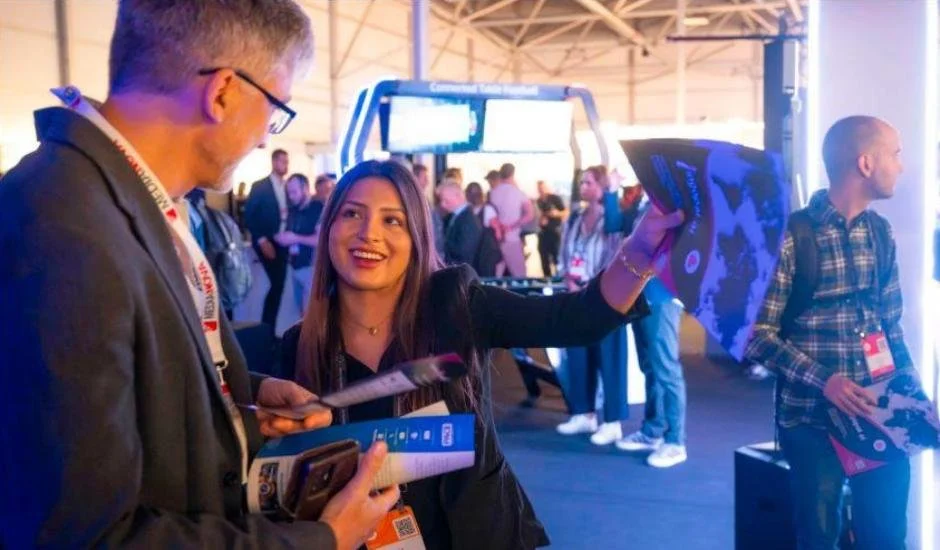
Amsterdam, Netherlands – September 11-14, 2026 – The global media technology landscape is poised for a seismic shift, with IBC 2026 set to illuminate the path forward. This premier industry event, taking place at RAI Amsterdam, will place artificial intelligence, cloud-native production, ultra-low-latency streaming, software-defined broadcasting, and energy-efficient transmission at the forefront of its agenda. With an anticipated 44,000 attendees from over 170 countries and more than 1,200 exhibitors spread across 14 halls, IBC 2026 promises to be a pivotal launchpad for innovation, showcasing the industry’s rapid evolution from hardware-centric models to intelligent, IP-based, and software-defined operations.
The Accelerating Transformation of Broadcast
The broadcast market is experiencing a profound metamorphosis, moving away from reliance on traditional, hardware-dependent infrastructure towards more agile, AI-assisted, IP-based, and software-defined workflows. This fundamental shift is underscored by a wave of recent announcements from key industry players, including Mediaproxy, MainStreaming, Gracenote, LTN, Zixi, Rohde & Schwarz, Sky, Norsk, WorldCast Systems, and Zero Density. These companies are spearheading advancements that are reshaping content creation, distribution, and consumption.
IBC 2026 is not merely a trade show; it is a barometer of the industry’s trajectory. The sheer scale of the event, a four-day immersion into the cutting edge of media technology, provides an unparalleled platform for broadcast equipment manufacturers, streaming technology pioneers, and cloud workflow providers to unveil their latest innovations and forge strategic partnerships. The convergence of these technologies is creating a more dynamic, efficient, and engaging media ecosystem for both creators and consumers.
Innovations on Display: A Glimpse into the Future
The innovations being showcased at IBC 2026 paint a vivid picture of the future of broadcasting and media. From AI-powered monitoring to sub-second video delivery and the seamless integration of graphics and editing, the event is set to highlight the transformative power of new technologies.
AI-Powered Monitoring and Content Intelligence
Mediaproxy is set to redefine broadcast monitoring with its next-generation AI-powered tools for LogServer, its renowned compliance logging and broadcast analysis platform. Moving beyond traditional signal alarms, these AI capabilities will identify content-specific issues and deliver real-time operational insights. Applications span advertisement and brand tracking, content recognition, regulatory compliance, and accelerated analysis of recorded broadcasts.
Furthermore, Mediaproxy is launching Monwall Web, a browser-based version of its Monwall multiviewer. This innovative product supports Media over QUIC (MoQ) and Low-Latency HLS, enabling remote monitoring of live feeds without the need for dedicated applications. Users will also gain the ability to rewind complete live multiview layouts, offering unprecedented forensic capabilities for incident investigation. Mediaproxy’s commitment to cutting-edge technology is further solidified by its participation in the Media eXchange Layer initiative, which champions ultra-low-latency, in-memory media transport for software-defined production.
In parallel, Gracenote, Nielsen’s content intelligence powerhouse, is partnering with Tubi Media Group to enhance content discovery and programmatic advertising across Tubi and Fox One properties. This collaboration integrates Gracenote’s rich identifier data, human-verified metadata, imagery, and standardized content classifications. These assets are designed to power natural-language search, personalized recommendations, and more accurate discovery within vast streaming catalogs. Gracenote IDs will also be trialed within programmatic advertising bid streams, offering advertisers the potential to align campaigns with pertinent programs and viewing contexts. The exponential growth of the Free Ad-Supported Streaming Television (FAST) market, with over 2,172 channels and more than 225,000 titles globally, underscores the critical importance of robust metadata.
The Dawn of Ultra-Low-Latency Streaming
The pursuit of near-instantaneous video delivery is a central theme at IBC 2026, with companies like MainStreaming and LTN at the forefront.
MainStreaming is joining the OpenMOQ Software Consortium, dedicating engineering resources to open-source implementations of MoQ across ingest, relay, and playback. MoQ, built upon QUIC and WebTransport, is engineered to support a spectrum of latency requirements, from interactive real-time applications and sub-second live streaming to conventional video-on-demand. It combines a publish-and-subscribe architecture with sophisticated prioritization, caching, time-shifting, and adaptive delivery mechanisms. Unlike traditional HTTP streaming, MoQ aims to achieve ultra-low latency while delivering to millions of viewing sessions, leveraging QUIC’s inherent TLS 1.3 encryption (standardized as RFC 9000). MainStreaming’s involvement is poised to accelerate the transition of MoQ from specification and trials to broadcast-scale commercial deployment.
LTN is scaling its Live Event Master Control platform, a testament to its robust capabilities which have already supported over 20,000 live sporting events and broadcasts globally. This integrated platform amalgamates low-latency IP transport, cloud-native playout, scheduling, automation, monitoring, graphics, and optional operator-assisted services. LTN’s network, which supports over 80 million hours of live content annually and reaches over 98% of pay-TV households in the US and Canada, operates with latency below 250 milliseconds and boasts an SLA-backed availability of 99.9999%. The company’s success in supporting nearly 8,000 full-time channels and facilitating approximately 2,000 satellite-to-IP migrations highlights its pivotal role in the evolving broadcast infrastructure.
Further illustrating the growing global reach of IP-based streaming, Zixi has achieved its first direct deployment in Mauritius through MTC Jockey Club. This deployment enables the international distribution of live horse-racing coverage from the historic Mauritius Turf Club, founded in 1812. Zixi’s platform offers centralized monitoring, multi-protocol delivery, and comprehensive troubleshooting across the video transport chain, incorporating encryption, blackout controls, and hitless failover for up to 99.999% reliability. MTC Jockey Club plans to expand its international reach and delivery protocols as its overseas audience grows.
Software-Defined Broadcasting Takes Center Stage
The industry’s embrace of software-defined workflows is a recurring theme, enabling greater flexibility, scalability, and cost-efficiency.
Norsk is introducing three groundbreaking products at IBC 2026, all built upon its Norsk Studio live-video infrastructure platform: Playout, Remote Commentary, and Probe. Norsk Playout offers scalable channel management, blending live feeds and file-based content for diverse platforms including linear TV, FAST, and SVOD services. Its advanced features include schedule alerts, ad-break detection, content-aware switching, and zero-copy media transfer. Norsk Remote Commentary empowers presenters to contribute audio and video via a browser, eliminating the need for specialized hardware and ISDN connections, and supporting multi-track audio, multi-language output, and picture-in-picture layouts. Norsk Probe provides software-based signal monitoring and real-time alerts across the media workflow, even post-DRM packaging. These launches signify Norsk Studio’s evolution from custom workflow construction to packaged broadcast applications.
Energy Efficiency and Sustainable Broadcasting
As the industry grapples with rising energy costs and environmental concerns, a focus on energy-efficient transmission is paramount.
Rohde & Schwarz is showcasing terrestrial television, radio, and satellite technologies designed to significantly reduce energy consumption while safeguarding long-term infrastructure investments. Their transmitter portfolio supports next-generation standards like 5G Broadcast and ATSC 3.0, enabling advanced applications such as datacasting, multimedia emergency warnings, and Positioning, Navigation, and Timing (PNT) services. Rohde & Schwarz has previously reported transmitter energy efficiency gains of up to 50%, promising substantial reductions in electricity consumption and lifecycle costs for high-power transmission networks. The company is also demonstrating the R&S PKU100 Ku-band uplink amplifier, a solid-state replacement for aging tube-based amplifiers that requires no redesign of surrounding installations and offers enhanced reliability and reduced maintenance through self-protection and self-monitoring functions.
WorldCast Systems is debuting two high-power Ecreso FM transmitters: the Ecreso FM AiO Series 5kW and a new 3kW model. These modular transmitters feature hot-swappable components for swift field repairs and reduced service interruptions. Integrated functionalities include a five-band audio processor, UECP RDS encoder, Icecast web streaming, and APT IP Decoder, with planned support for µMPX, APTmpX, and linear MPX transport. WorldCast’s high-power platform can achieve up to 76% energy efficiency, further augmented by its SmartFM technology, which can reduce energy consumption by an additional 40% under certain operating conditions. The 5kW transmitter comes with a 10-year warranty, with initial deliveries scheduled for late 2026.
Enhanced Viewer Experience and Integrated Workflows
The ultimate impact of these technological advancements is a more engaging and seamless experience for viewers.
Sky has launched "Your Multiview," a revolutionary feature allowing subscribers to watch up to four live Sky Sports events simultaneously on a single television screen. Available on Sky Glass, Sky Stream, and Sky Q, this feature, introduced for the 2026-27 Premier League season, allows viewers to select highlighted events, choose audio feeds, and expand any of the four feeds to full screen. The service covers a wide array of sports, including football, Formula 1, cricket, tennis, golf, NFL, and rugby. Sky has also introduced Sports Hub, which integrates live scores, statistics, league tables, schedules, and clips alongside the main broadcast. To further enhance the viewing experience, lower-latency Real Time streams are available on Sky Glass and Sky Stream, minimizing the delay between live action and viewer perception, thereby reducing the likelihood of viewers receiving goal notifications before witnessing the event.
Zero Density is demonstrating an integrated ecosystem that bridges newsroom operations, real-time graphics, virtual production, and non-linear editing. Connected NRCS workflows will enable newsroom running orders to directly control graphics for news, sports, weather, elections, and financial programming. Journalist Preview will empower editorial teams to review graphics before transmission. The new NLE Live Link integrates Zero Density’s Reality graphics into Adobe Premiere Pro and Apple Final Cut Pro, streamlining post-production by reducing the need for rendering, exporting, and reinserting graphics. Zero Density is also showcasing AI-assisted HTML5 Generative Graphics Templates compatible with the EBU’s OGraf specification. Their Reality platform, built on Unreal Engine 5, is the engine behind virtual studios, augmented reality, extended reality, LED stages, and on-air graphics, utilized by major broadcasters such as ABC, CBS, Fox, Univision, and The Weather Channel.
Implications for the Media Industry
The collective announcements and technological focus areas of IBC 2026 signal a profound transformation within the broadcast and media industry.
The AI Revolution in Content and Operations
Artificial intelligence is no longer a futuristic concept but a practical tool being integrated into core broadcast functions. From Mediaproxy’s AI monitoring for enhanced compliance and operational insights to Gracenote’s AI-driven content discovery and advertising optimization, AI is proving its value in streamlining workflows and improving audience engagement. Zero Density’s exploration of AI-assisted generative graphics further highlights its potential to democratize and accelerate creative processes.
The Cloud-Native and Software-Defined Imperative
The shift towards cloud-native production and software-defined broadcasting is accelerating, with platforms like LTN’s Live Event Master Control and Norsk’s Studio suite offering scalable, flexible, and cost-effective alternatives to traditional hardware-centric infrastructure. This transition empowers broadcasters to adapt more rapidly to changing market demands and to innovate at a faster pace. The ability to deploy and manage broadcast operations from the cloud offers unprecedented agility and global reach.
Bridging the Latency Gap
The advancements in ultra-low-latency streaming technologies, exemplified by MoQ and LL-HLS, are critical in closing the gap between traditional broadcasting and internet-delivered video. This is particularly significant for live events, where real-time engagement and interactivity are paramount. MainStreaming’s commitment to advancing MoQ standards underscores the industry’s dedication to delivering truly immersive live experiences.
Sustainability as a Strategic Driver
The emphasis on energy-efficient transmission by companies like Rohde & Schwarz and WorldCast Systems reflects a growing awareness of the industry’s environmental responsibility and the economic benefits of sustainable practices. As energy costs continue to rise, these innovations will become increasingly crucial for long-term operational viability.
The Viewer at the Center
Ultimately, these technological shifts are geared towards enhancing the viewer experience. Sky’s "Your Multiview" is a tangible example of how infrastructure investments translate into more personalized, interactive, and engaging content consumption. The ability to tailor viewing experiences, whether through multi-event viewing or richer on-screen information, signifies a move towards a more viewer-centric media landscape.
IBC 2026 is set to be a landmark event, not just for showcasing new products, but for illustrating the industry’s comprehensive transition towards intelligent, scalable, agile, and energy-efficient media operations. The confluence of AI, cloud, and ultra-low latency is ushering in a new era of broadcasting, promising a more dynamic and engaging future for content creation and consumption.
This article was compiled by Fasna Shabeer.