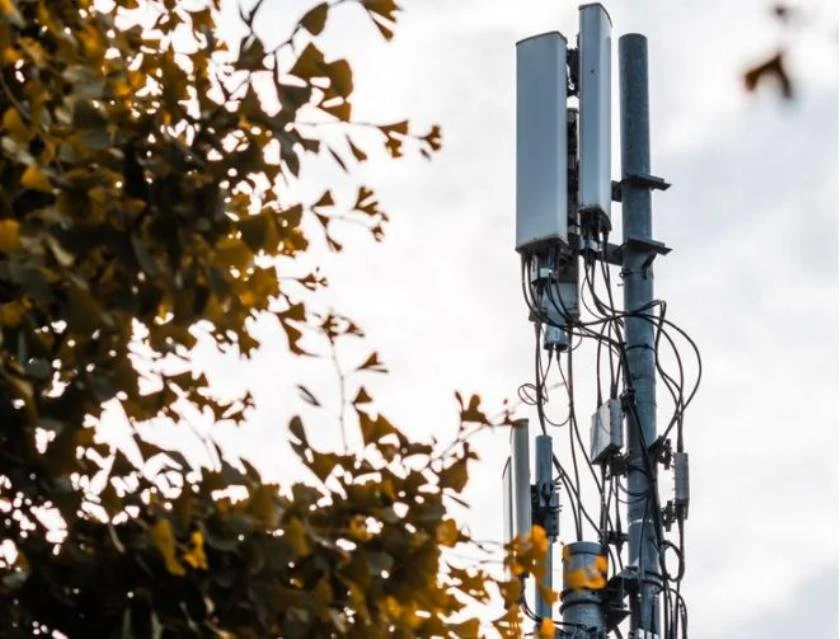
Rome, Italy – In a strategic move to bolster its digital infrastructure and accelerate the deployment of next-generation communication services, Italy has officially launched a significant spectrum auction for the lower 26 GHz frequency band. This initiative is poised to catalyze substantial investments in 5G, fixed wireless access (FWA), private networks, and ultra-high-capacity broadband services across the nation. The auction, announced via the Official Gazette on August 26, 2026, marks a pivotal step in Italy’s ongoing digital transformation, prioritizing spectrum utilization and network development over maximizing immediate state revenue, a departure from previous high-stakes auctions.
Laying the Foundation: Key Facts of the 26 GHz Spectrum Auction
The newly opened spectrum encompasses the 24.25 GHz to 26.5 GHz range, a segment of the radio frequency spectrum renowned for its ability to deliver exceptional bandwidth and capacity. The auction structure features a total of five national frequency lots and 42 regional and provincial lots, offering a geographically diverse and comprehensive allocation. The combined minimum reserve value for this auction is set at approximately €180.08 million. This valuation is notably lower than the substantial €6.55 billion generated by Italy’s landmark 5G spectrum auction in 2018, a reflection of the differing economic characteristics and deployment considerations of millimetre-wave (mmWave) spectrum.
While lower frequency bands like 700 MHz are ideal for broad coverage, the 26 GHz spectrum excels in providing immense capacity over shorter distances. This makes it exceptionally well-suited for deployment in densely populated urban areas, industrial zones, critical transport hubs, expansive enterprise campuses, and for delivering high-speed fixed wireless broadband services. The Ministry of Enterprises and Made in Italy (MIMIT) has meticulously outlined the auction rules, dividing the available frequencies into 200 MHz Time Division Duplex (TDD) blocks. This structured approach aims to ensure efficient allocation and utilization of this valuable resource.
A Phased Approach: Chronology of the Auction Process
The MIMIT has established a clear timeline for interested parties to engage with the auction process. The application window for eligible companies will open on September 23, 2026, and will close at 11:59 PM on September 25, 2026. All applications must be submitted electronically in Italian, adhering to the nation’s certified email system requirements.
Following the application period, approved participants will have the opportunity to submit their initial spectrum bids. This phase is scheduled to commence at 9:00 AM on November 2, 2026, and conclude at 11:59 PM on November 4, 2026. Should multiple companies express interest in the same category of spectrum, the government will implement a simultaneous multiple-round bidding process. During these rounds, new bids can escalate by as much as 50 percent above the highest winning offer from the preceding round, encouraging competitive engagement while maintaining a structured progression.
The spectrum rights granted through this auction are slated to become usable on January 1, 2029, with an initial validity period of 15 years. This long-term licensing framework is deliberately designed to provide operators with ample time to recoup their significant investments in essential infrastructure, including radios, small cells, fiber backhaul, antennas, edge computing platforms, and enterprise connectivity solutions. Furthermore, the licenses may be eligible for a five-year extension, with a potential subsequent renewal for up to another 10 years, subject to EU regulations, Italian law, and any future band refarming requirements.
Delving into the Details: Supporting Data and Allocation Structure
The 26 GHz spectrum band is structured into nominal blocks of 200 MHz. Specifically, the 24.25 GHz to 26.5 GHz band includes a 50 MHz guard band between 24.25 GHz and 24.3 GHz, followed by eleven nominal 200 MHz blocks. Of these, seven blocks—designated B1, B2, B3, B4, B7, B8, and B9—are included in the assignment process.
National Allocation:
Italy will offer five national lots, identified as L3 through L7. Each national license will encompass 200 MHz of spectrum, with a minimum reserve price set at €25.726 million per lot. Consequently, the combined reserve value for these five national lots amounts to approximately €128.63 million.
Regional and Provincial Allocation:
Complementing the national licenses, an additional 42 lots will be allocated across 21 distinct geographical areas. This includes two 200 MHz lots for each of Italy’s 19 regions, as well as two lots each for the autonomous provinces of Bolzano and Trento. The combined minimum value for these regional lots is approximately €51.45 million. When combined with the national licenses, the total starting bid for the entire auction is around €180.08 million.
Regional Pricing Dynamics:
The reserve prices for the regional lots are primarily determined by the population density and the commercial significance of each specific geographical market. Lombardia emerges with the highest minimum price for a 200 MHz lot, set at €4.398 million. Lazio follows closely with a reserve price of €2.492 million, ahead of Campania (€2.429 million), Veneto (€2.121 million), and Sicilia (€2.082 million). Other regions with significant reserve prices include Emilia-Romagna (€1.956 million), Piemonte (€1.858 million), Puglia (€1.685 million), and Toscana (€1.597 million).
Conversely, smaller markets carry considerably lower starting prices. Each lot in Valle d’Aosta has a reserve price of just €53,465, while Molise starts at €124,552. The autonomous provinces of Bolzano and Trento have minimum prices of €236,962 and €239,647 respectively. Other regions with lower starting bids include Basilicata (€228,692), Umbria (€371,123), Friuli-Venezia Giulia (€520,941), Abruzzo (€552,754), Marche (€645,794), Liguria (€660,170), Sardegna (€677,341), and Calabria (€796,737).
Payment and Fees:
Successful bidders will be permitted to pay their spectrum charges in three annual installments. In addition to the spectrum costs, licensees are required to pay a fee equivalent to 2.5 percent of the final bid value (excluding VAT) to the Ugo Bordoni Foundation, recognizing its integral role in supporting the auction and the technical administration of the band.
Ensuring Fair Competition: Spectrum Caps and Priority Operators
To prevent the undue concentration of 26 GHz spectrum, Italy has implemented stringent caps on acquisition. A single participant is permitted to acquire a maximum of 400 MHz (equivalent to two 200 MHz lots) at the national level. Critically, no more than one of these national lots can originate from the specifically reserved national category.
Furthermore, an operator’s combined spectrum holdings across both the lower and upper 26 GHz bands cannot exceed 600 MHz nationally. Companies that secure national lower-band spectrum, or already possess national rights in the upper 26.5-27.5 GHz band, are explicitly barred from acquiring regional lots.
At the regional level, a participant is restricted from obtaining licenses covering more than six regions or areas representing over 30 percent of Italy’s total population. Within any single region, holdings are capped at 400 MHz.
To foster market entry and ensure broader service availability, two national lots (L3 and L4) are designated for specific priority operators. Similarly, one of the two available lots in each of the 21 regional areas is reserved for regional priority operators. The remaining licenses are open to priority operators, other eligible companies, and crucially, new entrants, signaling a commitment to promoting a competitive and dynamic market landscape.
Deployment Obligations and Spectrum Sharing
A core tenet of this auction is the mandate for active network deployment. Successful bidders are required to install networks and commence the utilization of their assigned spectrum within 36 months of the frequencies becoming available. National license holders must demonstrate service presence in every Italian province, while regional winners are obligated to activate services in all provinces falling within their licensed geographical area.
The spectrum can be utilized for various qualifying deployments, including base stations, central stations, point-to-point connections, point-to-multipoint links, and small cells. The spectrum must support a fully operational end-to-end network and a commercially available service. Commercial use cases encompass direct consumer or enterprise services, as well as wholesale capacity, roaming, Multi-Operator Radio Access Network (MORAN) arrangements, Multi-Operator Core Network (MOCN) services, and network slicing.
Annual reporting to the Ministry and the communications regulator, AGCOM, is a mandatory requirement. These reports must detail the number and geographical distribution of deployed sites, network architecture, technologies in use, and wholesale access requests fulfilled, ensuring transparency and accountability.
A significant innovation introduced by this auction is the provision for spectrum sharing. While the 26 GHz licenses are individual, they are non-exclusive. This allows operators to dynamically utilize unused frequencies assigned to other license holders within the same geographical area, potentially accessing up to 1 GHz of spectrum. This sharing arrangement must adhere to reasonable, non-discriminatory commercial terms and robust interference management protocols. Licensees are also mandated to negotiate wholesale access with eligible providers seeking to offer 5G services, covering aspects like capacity, spectrum use, roaming, network sharing, or dedicated network slices. AGCOM has explicitly stated its objective to establish a stable, long-term regulatory framework for 26 GHz investment, with a particular focus on accelerating 5G fixed wireless access networks. This flexible approach is anticipated to attract interest not only from established mobile operators like TIM, Fastweb, Wind Tre, and Iliad, but also from regional broadband providers, neutral-host companies, infrastructure investors, and specialized enterprise network providers.
A New Direction: Implications and Future Outlook
Italy’s approach to the 26 GHz spectrum auction represents a significant departure from the economic objectives of the 2018 5G auction. The earlier auction, which allocated 700 MHz, 3.6-3.8 GHz, and upper 26.5-27.5 GHz frequencies, generated over €6.55 billion due to intense competition, far exceeding the government’s initial target. While this provided substantial revenue, it also placed considerable financial strain on operators during a period of declining telecom revenues in Italy.
The current lower 26 GHz auction prioritizes spectrum utilization and network investment, recognizing the unique challenges and opportunities presented by millimetre-wave frequencies. The slower-than-anticipated adoption of mmWave 5G across Europe highlights the need for dense networks, extensive fiber connectivity, and clear business cases. Italy’s strategic regional allocation, spectrum sharing provisions, and comparatively modest reserve prices are designed to facilitate the development of economically viable services.
The success of this auction will ultimately be measured not solely by the revenue generated, but more importantly, by its ability to foster the creation of commercially successful networks leveraging the 26 GHz spectrum once it becomes available in 2029. This forward-looking strategy positions Italy to harness the full potential of ultra-high capacity communication technologies, driving innovation across various sectors and enhancing the nation’s digital competitiveness on the global stage. The focus on private networks, industrial connectivity, smart factories, and high-capacity FWA applications underscores Italy’s commitment to building a robust and future-proof digital ecosystem.