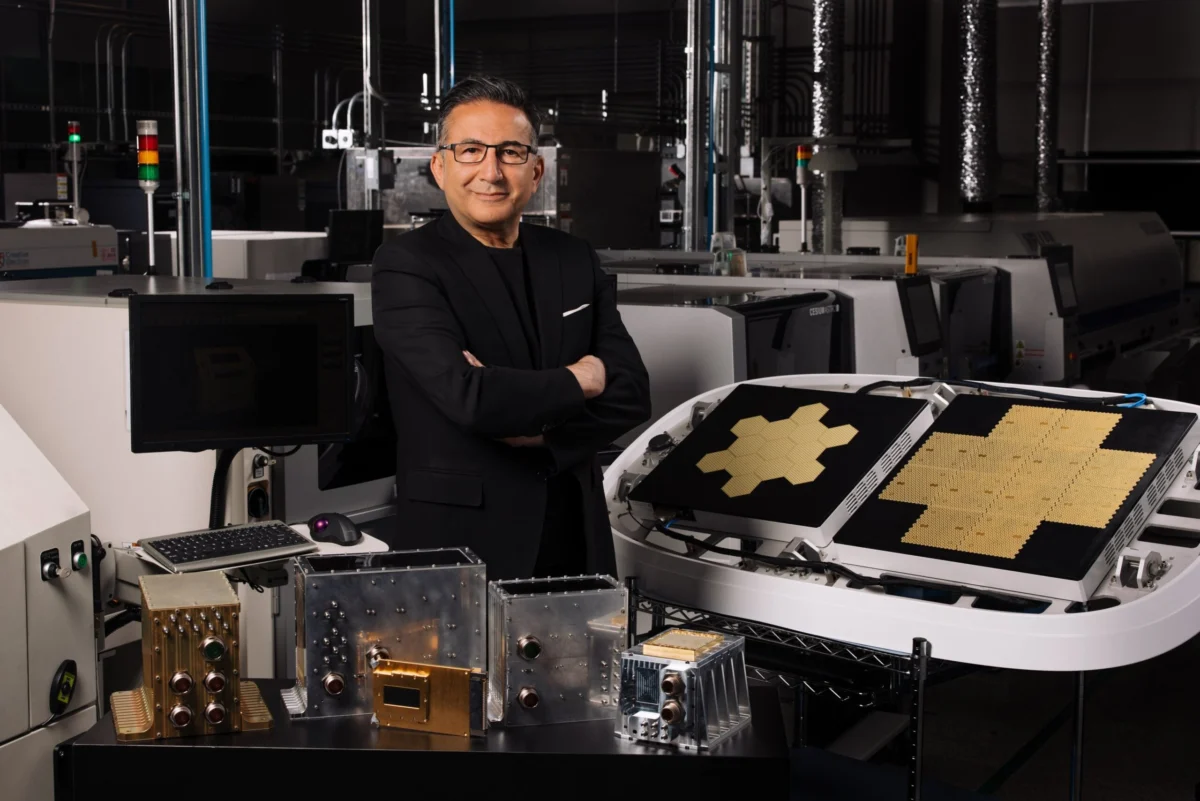
In a significant leap forward for defense-grade communications, ALL.SPACE and Aalyria announced a strategic partnership on August 10 that promises to redefine how the U.S. Government manages complex, multi-domain data transport. By integrating ALL.SPACE’s flagship Hydra MAX terminals with Aalyria’s cutting-edge Spacetime orchestration software, the two companies are creating a resilient, hardware-agnostic communications ecosystem capable of maintaining seamless connectivity across land, air, sea, and space.
This collaboration is not merely a hardware procurement; it represents a fundamental shift in how the defense sector views network management. By combining the physical capabilities of a high-bandwidth, multi-beam terminal with an AI-driven, temporospatial orchestration platform, the partners are aiming to solve one of the most persistent challenges in modern warfare: creating a unified, self-healing network that remains robust even as the tactical environment shifts in real time.
The Core Partnership: Merging Hardware and Intelligence
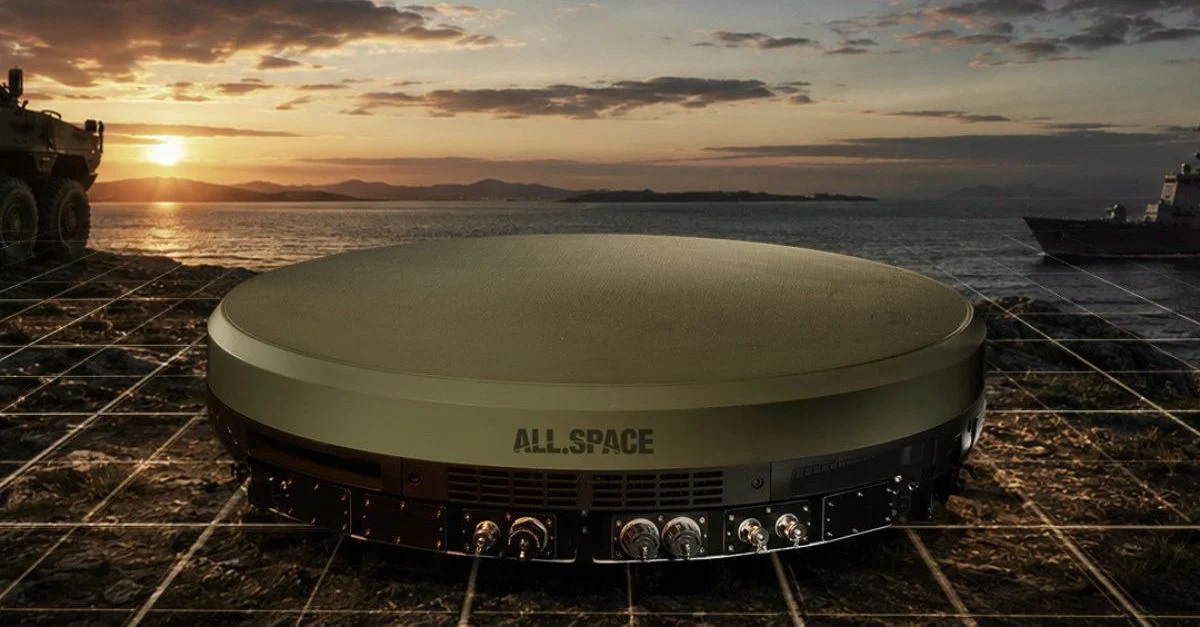
At the heart of this agreement is the deployment of the Hydra MAX terminal, ALL.SPACE’s next-generation SATCOM platform. Engineered for communications-on-the-move (COTM), the Hydra MAX is a dual-beam, full-duplex, 500 MHz-per-beam Ka-band terminal. It provides a massive 1 GHz of aggregate instantaneous bandwidth, allowing it to interface simultaneously with multiple satellite networks and emerging multi-orbit architectures.
However, a terminal is only as intelligent as the network it serves. This is where Aalyria’s Spacetime platform enters the fold. Spacetime functions as a sophisticated "digital twin" of the global communications landscape. It maintains a continuous, planet-scale model of every platform, satellite link, and orbital trajectory. By processing this vast array of data, Spacetime computes the most efficient path for every connection, pushing routing updates and configuration changes to the hardware within seconds.
For the U.S. Government, this integration addresses a critical need for multi-vendor resilience. By utilizing a hardware-agnostic orchestration layer, agencies can avoid vendor lock-in, ensuring that their communications infrastructure remains flexible enough to incorporate new technologies as they emerge.
A Chronology of the Deal: From Concept to Operational Reality
The path to this August 10 announcement was paved by years of individual technological development and a growing push toward "Joint All-Domain Command and Control" (JADC2) initiatives.
- Early Development Phase: Both companies spent years developing the foundational components of their respective platforms. ALL.SPACE focused on the physical layer—the complex RF engineering required to manage multiple satellite beams simultaneously without signal interference. Meanwhile, Aalyria focused on the software layer, refining the algorithms necessary to orchestrate connectivity across high-velocity non-terrestrial networks.
- Strategic Alignment: Recognizing that their technologies were complementary, representatives from both firms began discussing integration paths. The core premise was simple: Aalyria’s software needed a highly capable physical "hand" to execute its commands, and ALL.SPACE’s hardware needed a "brain" capable of managing the hyper-dynamic environment of modern multi-orbit constellations.
- The August 10 Announcement: Following a period of successful laboratory testing and proof-of-concept integration, the two companies formally announced that the Hydra MAX terminals would be deployed with Spacetime software integrated directly into the platform.
- Operational Demonstration: The current phase involves moving from laboratory environments to real-world U.S. Government applications. This deployment is designed to support high-stakes initiatives, including U.S. missile defense and complex joint-force data-transport architectures.
Supporting Data: The Capability Gap in Modern SATCOM
The necessity for this partnership is driven by the sheer complexity of modern satellite communications. As the U.S. military moves away from a reliance on single, large, vulnerable GEO (Geosynchronous) satellites toward a "hybrid space architecture"—which includes LEO (Low Earth Orbit), MEO (Medium Earth Orbit), and commercial constellations—the complexity of managing these connections has skyrocketed.
Key Performance Metrics of the Hydra MAX / Spacetime Integration:
- Bandwidth Capacity: 1 GHz of aggregate instantaneous bandwidth.
- Frequency Range: Full-duplex, Ka-band commercial and military spectrum.
- Reconfiguration Speed: Routing and topology updates are calculated and deployed in seconds, a significant improvement over the traditional manual configuration cycles that can take hours or days.
- Network Agnosticism: Spacetime’s ability to communicate with non-terrestrial and terrestrial assets allows for the seamless "hand-off" of data packets between disparate satellite providers, effectively masking the complexity of the back-end infrastructure from the end-user.
This performance data highlights a shift in operational philosophy. Previously, defense communications relied on rigid, pre-planned circuits. The Hydra MAX/Spacetime combo moves toward "intent-based networking," where the software determines the best available path based on real-time factors like latency, interference, orbital availability, and security protocols.
Official Responses: The Strategic Vision
The partnership has been framed by both organizations as a turning point for defense connectivity. Ian Eishen, SVP of Government at Aalyria, articulated the motivation behind the integration with a focus on the end-user experience.
"Every domain we work in—sea, land, air, and space—is trying to solve the same problem: turning scattered sensors, shooters, and platforms into a network that behaves as one, even as the mission keeps changing shape underneath it," Eishen stated. "Spacetime was built to solve exactly that, and integrating with the Hydra MAX lets that network reconfigure itself in real time instead of waiting on the next requirements cycle. It’s a real step toward the kind of connectivity government users are going to depend on for years to come."
Industry analysts note that for ALL.SPACE, this deal is particularly significant. It marks the transition of the Hydra MAX from a strategic laboratory collaboration into an operational demonstration within U.S. Government environments. This validates the terminal’s design, proving it can perform under the rigorous, high-pressure standards required by defense agencies.
Implications: The Future of Multi-Domain Warfare
The implications of this partnership extend far beyond the technical specifications of the hardware. The integration of Hydra MAX and Spacetime is a direct response to the "contested space" environment.
1. Enhanced Resilience in Contested Environments
Modern military operations rely heavily on data. If a satellite is blinded by weather, interference, or direct adversarial action, the mission can fail. The ability of the Spacetime software to instantly detect a degraded link and reroute data through an entirely different orbit or network provider—without user intervention—is a tactical advantage of the highest order.
2. Supporting JADC2
The U.S. Department of Defense’s JADC2 initiative aims to connect sensors from all military services into a single network. The challenge has always been the "interoperability gap." By using hardware-agnostic software (Spacetime) on high-performance terminals (Hydra MAX), the government is creating a template for how to bridge these gaps across the military branches.
3. The Move Toward "Software-Defined" Defense
The trend in defense procurement is clearly leaning toward software-defined capabilities. As hardware life cycles grow longer and software life cycles grow shorter, decoupling the two is essential. By choosing a terminal that is fundamentally designed to be updated via software, the government is future-proofing its investment.
4. Commercial and Military Synergy
This deal underscores the ongoing convergence between commercial satellite innovations and military requirements. ALL.SPACE and Aalyria are both companies that operate at the intersection of these two worlds. By utilizing commercial-grade technology for military applications, the government is not only accessing cutting-edge speed and efficiency but is also benefiting from the lower costs associated with the commercial satellite sector’s rapid innovation cycle.
Conclusion: A New Standard for Connectivity
The collaboration between ALL.SPACE and Aalyria is a testament to the changing nature of satellite communications. By marrying the raw, high-bandwidth capability of the Hydra MAX terminal with the intelligent, real-time routing capabilities of the Spacetime platform, the two companies are setting a new standard for mission-critical connectivity.
As the U.S. Government continues to build out its multi-orbit, multi-vendor communication architectures, the ability to manage that complexity will be the difference between tactical advantage and technological failure. With this deployment, ALL.SPACE and Aalyria have moved to the forefront of that effort, providing the tools necessary to ensure that in the future, the network will be as agile, resilient, and capable as the forces it supports. Whether in the heat of a tactical operation or the quiet of a command center, this integrated solution is poised to become a foundational component of modern defense infrastructure.