In a move that signals a profound shift toward vertical integration within the aerospace and defense sector, CesiumAstro announced on August 12 the acquisition of Jariet Technologies. This strategic union combines CesiumAstro’s expertise in active phased array technology and software-defined payloads with Jariet’s cutting-edge Radio Frequency System-on-Chip (RF-SoC) semiconductor capabilities. By bringing high-end silicon design in-house, CesiumAstro is positioning itself as a dominant, end-to-end provider for commercial, civil, and national security space markets.
Main Facts: A Strategic Consolidation
The acquisition of Jariet Technologies represents more than just a merger of two companies; it is a fundamental shift in how satellite communication and sensing systems are architected. Jariet Technologies, a pioneer in mmWave RF-SoC solutions, specializes in integrated circuits that handle direct RF- and IF-sampling. Their technology is critical for advanced electronic warfare (EW), high-speed radar systems, and complex satellite communications (SATCOM).
By integrating Jariet’s intellectual property, CesiumAstro intends to consolidate the entire RF signal chain under one roof. The company’s vision is to move away from relying on disparate third-party semiconductor providers and instead create a unified pipeline that links silicon design, Digital Signal Processing (DSP), software-defined waveforms, and physical phased-array hardware. This consolidation is designed to address the "SWaP-C" mandate—Size, Weight, Power, and Cost—that currently dominates the aerospace industry’s engineering challenges.
Chronology of Innovation and Expansion
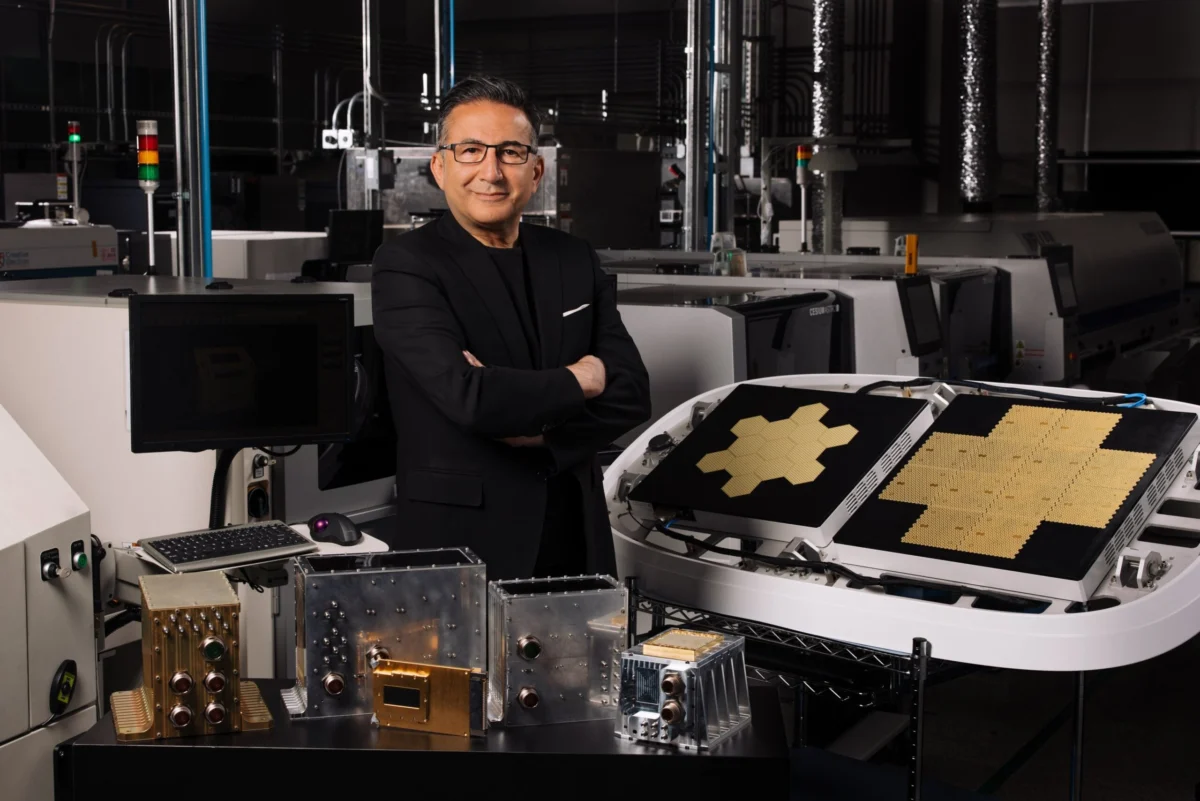
CesiumAstro’s rise has been characterized by a steady trajectory of scaling its hardware capabilities. Founded by industry veteran Shey Sabripour, the company was established with the specific intent of modernizing space-based communications through modular, high-performance systems.
- Early Years: CesiumAstro focused on developing software-defined radio (SDR) platforms that could be reconfigured in orbit, moving away from the "bent-pipe" architectures of traditional satellites.
- Expansion Phase: The company expanded its portfolio to include active phased arrays, allowing for more agile beamforming and tracking capabilities.
- The Search for Integration: Recognizing that the bottleneck for higher performance often lay in the underlying semiconductor chipsets, CesiumAstro began evaluating the market for partners capable of delivering extreme bandwidth and signal precision.
- August 12, 2024: The formal announcement of the Jariet Technologies acquisition marked a turning point, signaling that CesiumAstro was ready to transition from a hardware subsystem provider to a comprehensive mission-system architect.
Supporting Data: Why RF-SoC is the Key
To understand the significance of this deal, one must look at the technical requirements of modern satellite missions. Today’s satellites require increasingly wide bandwidths to handle massive data throughput, often moving into the mmWave spectrum to combat congestion in lower frequency bands.
Jariet’s technology utilizes advanced DSP for Digital Beamforming (DBF). In a traditional analog system, beamforming—the ability to direct a signal to a specific geographic point—is prone to hardware limitations and power inefficiency. Jariet’s RF-SoC allows for digitizing signals closer to the antenna. By doing so, the system can process wideband signals with higher fidelity, lower power consumption, and significantly less latency.
When this is applied to ISR (Intelligence, Surveillance, and Reconnaissance) and electronic warfare, the advantages are multiplicative. An aircraft or satellite equipped with this integrated technology can detect, analyze, and neutralize or relay threats in real-time, using a fraction of the power required by legacy hardware. For a company like CesiumAstro, which supplies both orbital and terrestrial assets, this acquisition effectively shortens the R&D cycle for every product line they offer.
Official Responses and Strategic Vision
The leadership at CesiumAstro has been clear about the intent behind this acquisition. Shey Sabripour, Founder and CEO of CesiumAstro, emphasized that the move is fundamentally about control and speed.
"This acquisition brings a foundational semiconductor capability into CesiumAstro," Sabripour stated. "Integrating advanced mixed-signal semiconductor design in-house gives us greater control over performance from the RF front-end through the complete mission system, while enabling us to field new capabilities faster."
Sabripour’s comments underscore a growing trend in the "NewSpace" economy: the desire to internalize core technologies. In an era of global supply chain volatility, relying on external semiconductor foundries for critical mission-specific chips can lead to delays. By owning the design process, CesiumAstro can tailor its silicon to its specific phased-array antenna designs, creating a "closed-loop" development environment. This ensures that the hardware, firmware, and software are optimized to work together at the lowest possible power state.
Implications for the Industry
The ripple effects of this acquisition will likely be felt across the aerospace and defense sectors for several reasons:
1. Accelerating the "Software-Defined" Shift
The space industry is in the midst of a massive transition toward "software-defined" everything. Much like smartphones replaced dedicated cameras, music players, and GPS units, software-defined payloads are replacing dedicated satellite hardware. CesiumAstro’s acquisition makes them a powerhouse in this arena, as they now possess the silicon-level control to update and upgrade system performance through software patches long after a satellite has reached orbit.
2. Vertical Integration as a Competitive Moat
By controlling the entire stack—from the semiconductor chip to the final terrestrial terminal—CesiumAstro creates a formidable competitive moat. Competitors who continue to assemble systems using off-the-shelf components may find it increasingly difficult to match the power efficiency, signal processing speed, and cost-effectiveness of CesiumAstro’s integrated systems.
3. Impact on National Security
For national security customers, the "trusted supply chain" is paramount. By internalizing semiconductor design, CesiumAstro reduces its reliance on foreign or opaque supply chains. This provides a level of assurance and security that is increasingly demanded by the Department of Defense (DoD) and intelligence agencies. The ability to guarantee the integrity of the signal chain from the chip level upward is a significant selling point for defense contracts.
4. A New Model for Space Companies
If CesiumAstro succeeds in seamlessly integrating Jariet’s workforce and IP, it may set a new precedent for other space-tech firms. We are likely to see more M&A activity where satellite manufacturers acquire specialized semiconductor or software firms to achieve the same type of "full-stack" performance. This suggests a maturing market where the early, fragmented startup phase is giving way to a phase of consolidation and large-scale industrial capability.
Conclusion: The Path Forward
The acquisition of Jariet Technologies is a bold move that aligns perfectly with the current trajectory of the aerospace industry. As satellite constellations grow in size and complexity, the demand for high-performance, low-power, and highly flexible communication systems will only increase.
CesiumAstro has signaled that they are not content with being a niche component supplier. With this deal, they are aiming for the top tier of the industry, positioning themselves as a provider of complete, end-to-end mission solutions. As the company moves to integrate Jariet’s specialized engineering talent and intellectual property into its existing structure, the aerospace community will be watching closely. If they can execute this transition effectively, CesiumAstro will likely emerge not just as a technology supplier, but as a critical infrastructure partner for the next generation of space and multi-domain operations.
For now, the message to the market is clear: the future of space communications is being written in silicon, and CesiumAstro intends to hold the pen.