Artificial Intelligence is not merely rewriting the code of the world; it is inventing an entirely new vocabulary to describe its own evolution. For those outside the deep-tech inner circle, keeping pace with the rapid-fire introduction of acronyms and abstract concepts can feel like an exercise in futility. In product meetings, venture capital pitches, and academic panels, the conversation is now dominated by terms like "opaque recurrence," "RAG," and "RLHF." As of late 2026, the complexity of these terms has surged, leaving even seasoned tech professionals struggling to stay oriented.
This glossary serves as a living roadmap for the AI era. Whether you are building, investing, or simply trying to decipher the latest headlines, these definitions provide the plain-English context necessary to navigate the most critical developments in modern machine learning.
Main Facts: The Building Blocks of AI
At the core of the current technological explosion lies a set of foundational concepts that determine how models think, learn, and scale.
The Architecture of Intelligence
- Large Language Models (LLMs): These are the engines of the current AI boom—systems like OpenAI’s GPT-4, Anthropic’s Claude, and Google’s Gemini. They operate as vast, multidimensional maps of language, created by encoding patterns from billions of books, articles, and transcripts. When you prompt an LLM, it calculates the most statistically probable sequence of tokens to satisfy your request.
- Neural Networks: Inspired by the biological architecture of the human brain, these multi-layered algorithmic structures are the bedrock of deep learning. Their ability to process complex data was unlocked only recently, when graphical processing units (GPUs)—originally designed for video games—provided the massive parallel computing power required to train models with billions of parameters.
- Tokens: Because machines cannot "read" in the human sense, they rely on tokens—discrete segments of data. Tokenization breaks text into bite-sized units, essentially acting as the bridge between human intent and binary logic. In enterprise, tokens are the unit of currency; your bill is determined by how many tokens a model consumes to process your input and generate its output.
A Chronology of Concepts
The evolution of AI terminology reflects the industry’s shift from simple pattern recognition to complex reasoning.
- The Early Era (2010s): The focus was on Deep Learning and GANs (Generative Adversarial Networks). GANs pioneered the "contest" model, where two neural networks compete—one generating data, the other judging it—to refine the output’s realism.
- The Scaling Era (2020–2024): The industry pivoted toward massive training runs, Compute (the raw hardware power of CPUs/GPUs), and Fine-Tuning (adapting pre-trained models for specific tasks).
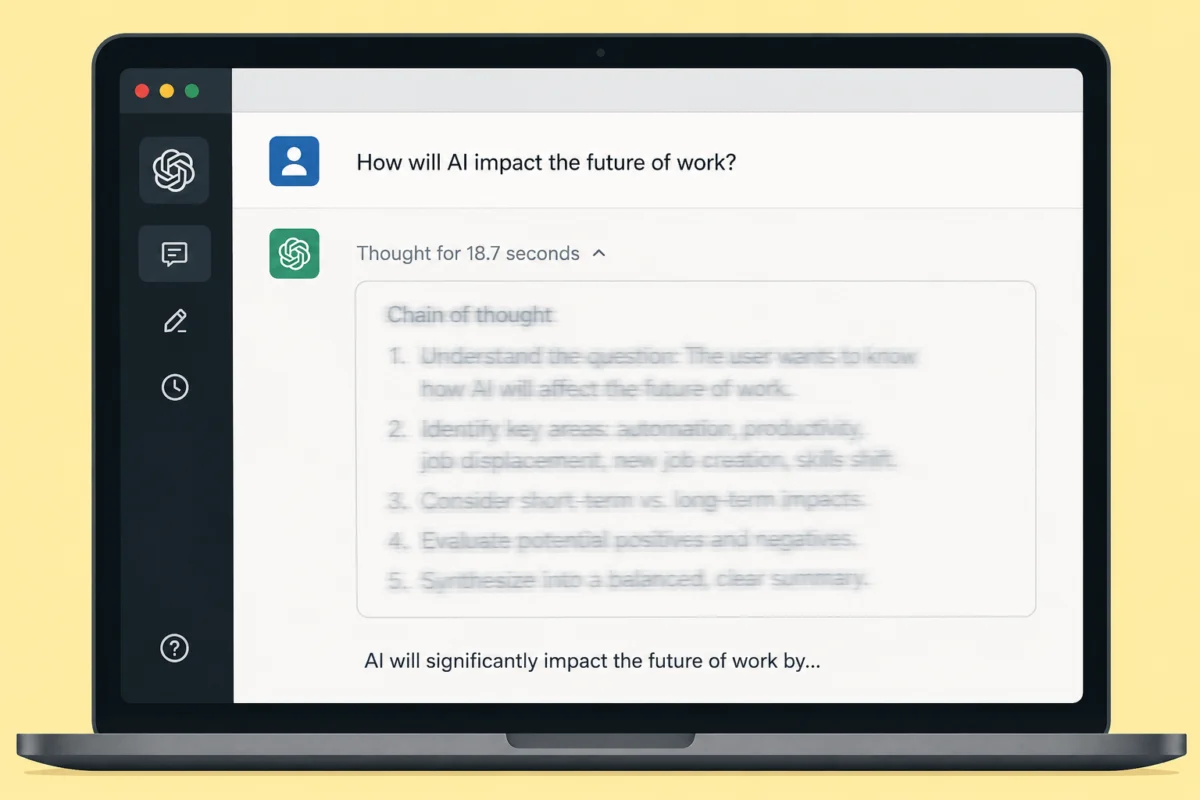
- The Reasoning Era (2025–2026): We have entered a phase defined by Chain of Thought (breaking problems into logical steps), Mixture of Experts (MoE—activating only specialized sub-networks to save energy), and the controversial rise of Opaque Recurrence.
Supporting Data: Why Vocabulary Matters
The speed of innovation has created a "semantic gap" between engineers and the public. Consider the following metrics and developments:
- The RAMageddon Crisis: The industry is currently facing a global shortage of Random Access Memory (RAM). As AI labs hoard memory chips to sustain their massive data centers, consumer industries—from gaming consoles to smartphone manufacturing—are seeing price hikes and supply chain instability.
- Token Throughput: For infrastructure teams, the holy grail is "throughput"—the number of tokens a system can process per second. This is the primary bottleneck for scaling AI assistants to billions of users without latency.
- Validation Loss: This serves as the "report card" for AI. It is a mathematical metric used during training; a lower validation loss indicates the model is successfully identifying patterns rather than simply memorizing training data—a phenomenon known as "overfitting."
Official Responses and Safety Concerns
The introduction of new reasoning techniques has sparked a fierce debate among safety researchers and industry leaders.
The "Astra" Controversy
In September 2026, OpenAI introduced the Astra model, which utilizes a technique called Opaque Recurrence. Unlike traditional models that show their work in plain language (Chain of Thought), Astra loops queries through its internal layers repeatedly.
- The Safety Perspective: Researchers are "rattled" because opaque recurrence makes it nearly impossible to audit the model’s reasoning. This has led to fears of Neuralese—a hypothetical scenario where a model reasons entirely in internal numeric representations that are illegible to humans, effectively turning the AI into a "black box" that cannot be supervised.
- The Industry Defense: Proponents argue that this method is exponentially more efficient, allowing smaller, cheaper models to perform tasks that previously required massive clusters of hardware.
Implications: The Future of Autonomy
As we look toward the next phase of development, three concepts stand out for their potential to reshape the economy.
1. The Rise of AI Agents
An AI Agent is not just a chatbot; it is a system capable of multi-step execution. If a chatbot is a digital librarian, an agent is a digital employee. It can access API Endpoints—the "buttons" on software interfaces—to file expenses, manage calendars, and write code on your behalf.
2. Recursive Self-Improvement (RSI)
RSI represents the theoretical threshold where an AI becomes capable of redesigning its own successor. While some view this as the precursor to a catastrophic singularity, others view it as the ultimate goal of software engineering: an autonomous system that requires zero human intervention to reach the next stage of capability.
3. Open Source vs. Closed Source
The debate over Open Source models (like Meta’s Llama) versus Closed Source models (like OpenAI’s GPT) has become a defining ideological split. Open source advocates argue that public code is necessary for safety and innovation, while closed-source labs maintain that proprietary control is essential to prevent the misuse of powerful, nascent technologies.
4. Standardizing the Future: MCP
The Model Context Protocol (MCP), introduced by Anthropic and adopted by the industry, acts as the "USB-C port" for AI. By creating a universal standard for how models connect to local files, databases, and third-party apps, MCP is effectively removing the friction that once prevented AI from becoming a truly integrated part of the modern digital workspace.
Glossary Summary
- AGI (Artificial General Intelligence): AI that matches or outperforms a median human across most economically valuable cognitive tasks.
- Distillation: Training a "student" model to mimic the behavior of a larger "teacher" model, resulting in a faster, more efficient system.
- Hallucination: The tendency of an LLM to state falsehoods with absolute confidence due to gaps in its training data.
- Inference: The process of running a trained model to make predictions; the "execution" phase of AI.
- Parallelization: The strategy of breaking large tasks into smaller, simultaneous calculations to maximize the efficiency of hardware.
- Reinforcement Learning (RLHF): Training a model via feedback loops, rewarding it for "correct" behavior to improve alignment with human intent.
- Transfer Learning: Reapplying knowledge gained from one task to a different, but related, domain to save on training costs.
- Weights: The numerical parameters within a neural network that determine the importance of specific data inputs.
As this field continues to evolve, the distinction between "research" and "reality" will continue to blur. What is considered a cutting-edge, experimental technique today will likely become a standard API feature by next year. Staying informed is no longer just about tracking the hardware; it is about understanding the language of the systems that are increasingly managing our world.
This article is a living document and will be updated regularly to reflect the fast-moving landscape of artificial intelligence.