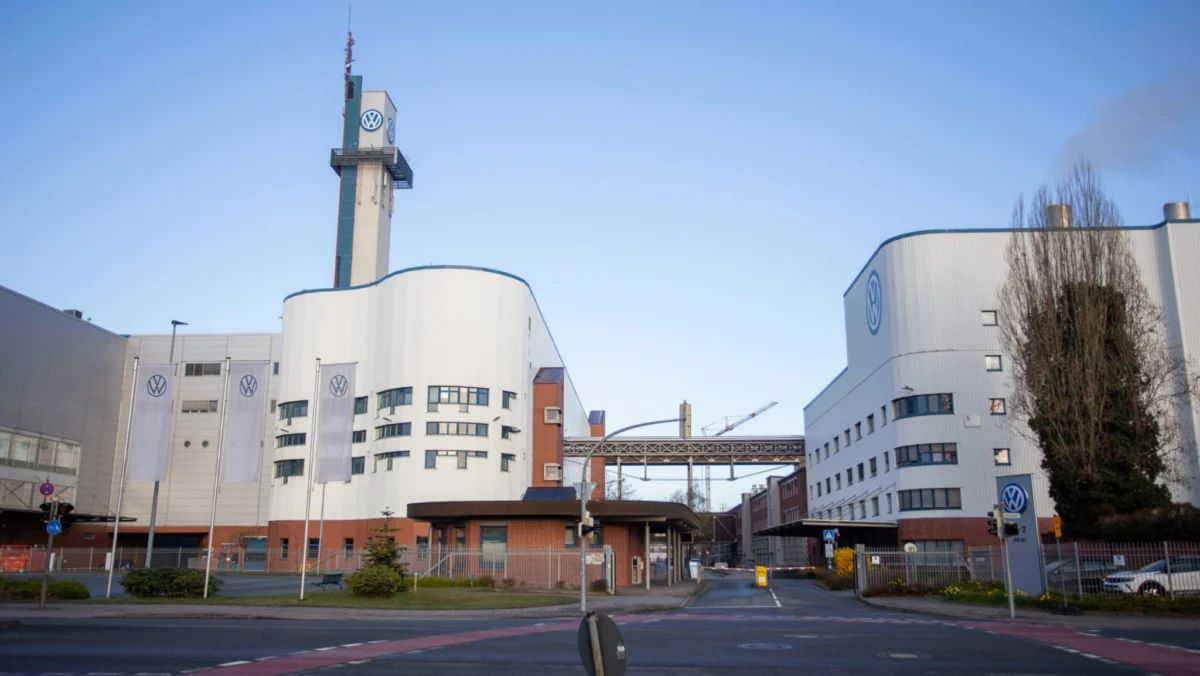
JERUSALEM/OSNABRÜCK — In a landmark development that signals a profound shift in Europe’s industrial defense landscape, Israeli defense giant Rafael Advanced Defense Systems has officially announced a tripartite partnership to transform Volkswagen’s historic manufacturing facility in Osnabrück, Germany, into a premier hub for high-end security and defense production.
The agreement, which involves the German state of Lower Saxony and the private investment firm Aurelius Capital, represents a creative workaround to geopolitical and corporate complexities that had previously stymied a direct collaboration between the Israeli defense contractor and the German automotive titan. By transitioning the site away from consumer automotive manufacturing toward the production of sophisticated defense hardware, the partners aim to secure the facility’s long-term future, preserve thousands of high-skilled jobs, and bolster the European continent’s sovereign defense industrial base.
The Strategic Shift: A New Industrial Horizon
The core of the deal involves a structural realignment of the Osnabrück site. Volkswagen, which had previously signaled its intent to cease operations at the location by 2027, will divest the facility to a new partnership vehicle. Aurelius Capital will serve as the majority stakeholder, supported by the state of Lower Saxony. Once the transfer is complete, Rafael will utilize the facility as its primary production hub within the German theater.
This move effectively pivots a site with 125 years of industrial heritage—most recently known for producing convertibles—into a "Center of Excellence" for security and defense solutions. For Rafael, a leader in global air defense, the agreement provides a critical footprint in the heart of the European Union, facilitating the domestic production of systems designed to protect Germany and its NATO allies.
A Chronology of Collaboration and Obstacles
The road to this agreement has been complex, characterized by months of speculation and high-stakes negotiation.
- May 2026: Initial reports began to circulate suggesting that Rafael was in active talks with Volkswagen to leverage the Osnabrück plant for the production of components for the world-renowned Iron Dome system.
- Summer 2026: Progress appeared to stall. Geopolitical friction, reportedly involving external pressure—including concerns from Qatar, a major shareholder in Volkswagen—cast doubt on a direct joint venture between the car manufacturer and the Israeli firm.
- July 2026: Rafael CEO and President Yoav Tourgeman, speaking to Breaking Defense, publicly signaled the company’s intent to seek out underutilized automotive manufacturing facilities in Europe, hinting at the creative "workaround" strategy that would eventually define the current deal.
- Late August 2026: Following a series of regional defense agreements, including a $3.4 billion deal between Greece and Israel, the momentum for the Osnabrück project reached a critical threshold, leading to the formal signing of a Statement of Intent.
- Present: The parties have entered a phase of detailed negotiations, regulatory assessment, and structural integration, with the State of Lower Saxony committing to act as a bridge for the transition.
Supporting Data: The Expanding European-Israeli Defense Nexus
The Osnabrück deal is not an isolated incident; rather, it is a flagship project within a much larger trend of European nations aggressively upgrading their defense capabilities in the shadow of the ongoing war in Ukraine.
Germany, in particular, has become a primary consumer of Israeli defense technology. The acquisition of the Arrow-3 air defense system, a contract valued at over $6 billion, remains the largest defense export deal in Israel’s history. This shift toward Israeli-designed, locally-produced equipment is designed to minimize supply chain vulnerabilities and ensure that, in the event of a sustained conflict, Europe has the industrial capacity to maintain its own defensive shield.
Rafael’s pedigree in this space is substantial. The company is the architect of the Iron Dome, the David’s Sling interceptor system, and the Trophy Active Protection System—the latter of which has become the gold standard for protecting main battle tanks against anti-armor threats. By producing these technologies in Germany, Rafael is shifting from an "exporter" to an "industrial partner," aligning with European requirements for "Made in Europe" security hardware.
Official Responses and Stakeholder Perspectives
The reception to the deal has been overwhelmingly positive among political and labor leaders in Lower Saxony, who see the partnership as a lifeline for a region facing deindustrialization.
The Perspective of the State
Olaf Lies, the Minister-President of Lower Saxony, has been the project’s most vocal proponent. In a formal statement following the signing, Lies underscored that the agreement provides more than just a temporary fix; it provides a "genuine future perspective."
"Through this Statement of Intent, we are opening up a genuine future perspective for Volkswagen’s Osnabrück site," Lies stated. "This partnership creates realistic opportunities for long-term, highly skilled employment at a location that has stood for industrial excellence for 125 years. The vision is to ensure Osnabrück possesses the industrial foundations necessary to remain relevant in a rapidly changing global security environment."
The Corporate View
For Rafael, the deal represents the fulfillment of a long-term strategic goal. Yoav Tourgeman, President and CEO of Rafael, emphasized the necessity of localizing production. "We are building a long-term industrial relationship with our German partners with the idea that the technology will be fully produced in Germany, to protect Germany and Europe," Tourgeman noted.
Labor and Community Reaction
Local union leaders and the German public broadcaster NDR have reported a sense of relief among the workforce. For the workers of Osnabrück, the transition from the automotive sector to defense production is viewed as a "saving" of the local economy. While the retooling of the plant will require significant retraining, the prospect of long-term contracts in the defense sector offers a stability that the consumer automotive market could no longer guarantee.
Implications: The Future of European Defense Industrial Autonomy
The implications of the Osnabrück transformation are far-reaching, touching upon industrial policy, international relations, and the future of military preparedness in the West.
1. Sovereignty and Supply Chain Security
By moving production to German soil, Germany effectively gains control over its supply chain for critical air defense components. This reduces dependence on transatlantic logistics, which can be vulnerable during periods of high geopolitical tension. The move signals a broader European push toward "strategic autonomy," where the continent seeks to ensure that the tools of its defense are manufactured within its own borders.
2. The Model of "Defense-Dual-Use"
The transformation of an automotive plant into a defense hub suggests a new model for industrial resilience. As the automotive industry faces the challenges of electrification and declining margins, other idle or transitioning facilities may follow the Osnabrück blueprint. It establishes a template for how governments can repurpose manufacturing infrastructure to meet urgent national security requirements without building new facilities from the ground up.
3. A Deepening Israel-Germany Security Partnership
This deal serves as a barometer for the cooling of historical reticence in defense cooperation between Germany and Israel. The level of integration—whereby an Israeli company is effectively embedded into the German industrial base—would have been politically fraught only a decade ago. Today, it is viewed as a pragmatic necessity. The deal confirms that the "Arrow" and "Iron Dome" era of European defense is not merely a purchasing arrangement, but an integrated industrial partnership.
4. Challenges Ahead
Despite the optimism, the transition will not be without hurdles. The "next phase" mentioned in the official statement—comprising regulatory requirements and internal decision-making—is a nod to the significant administrative burden involved. Integrating a high-precision, sensitive defense production line into a facility previously designed for vehicle assembly will require massive capital investment and stringent security vetting of the workforce. Furthermore, navigating the complex export control laws of both Israel and the European Union will remain a constant, albeit manageable, challenge.
Conclusion
The transformation of the Osnabrück site is a defining moment for European industry. By bridging the gap between German manufacturing prowess and Israeli defense innovation, the partnership offers a path forward for a workforce that feared obsolescence, and a solution for a nation that requires immediate, scalable, and sophisticated defense assets. As the project moves into its implementation phase, it will serve as a bellwether for the future of European security, proving that in an era of heightened global threat, the most effective defense strategy may well be the one that turns the factories of the past into the arsenals of the future.